Primary Keyword: Outdoor kitchen planningVariants: Building outdoor kitchen with utilities, Outdoor kitchen gas water electric, Outdoor kitchen design Central Florida
Audience & pain/benefit: Homeowners and property managers seeking to design an outdoor kitchen that is safe, functional, and compliant in Central Florida, with clear understanding of permitting, utility connections, and material choices. The benefit is a smooth process and a reliable, beautiful outdoor living space for cooking, entertaining, and relaxing.
Summary: Planning an outdoor kitchen with gas, water, and electricity requires careful site assessment, local permitting, utility connections, and durable construction choices. In this guide, we share from our experience at GCM Best Services what you need to consider, how to sequence your decisions, and how to avoid common setbacks in the Central Florida climate and regulatory context. The right approach lets you enjoy your outdoor kitchen for years, with proper function and lasting curb appeal.
Outline
- What to consider before planning an outdoor kitchen
- Why location and site preparation matter
- Planning gas, water, and electricity in your design
- Permits, codes, and HOA coordination
- Choosing materials and finishes for outdoors
- Drainage, base, and slab preparation
- Sequencing your build: from foundation to finishes
- Outdoor kitchen features and storage options
- Lighting and ventilation: comfort and safety
- Warranty, maintenance, and care for long life
- Conclusion: Your next step with GCM Best Services
- Frequently asked questions
Every outdoor kitchen starts with a vision but succeeds with a plan.
What to consider before planning an outdoor kitchen
Before drawing lines or choosing finishes, we first work with clients to answer a few foundational questions, because every detail builds on these early choices.
- Purpose: Is your kitchen for entertaining large groups, casual family meals, or gourmet grilling?
- Must-have appliances: Do you need a grill, smoker, pizza oven, fridge, or sink?
- Utilities needed: Will you use gas (natural or propane), water (hot and cold), and electricity (lighting, outlets, refrigerator, fans)?
- Budget and timeline: Understanding your expectations upfront helps us recommend realistic solutions.
Outdoor kitchens are a multi-trade project, and careful planning sets the stage for success, safety, and enjoyment.
Why location and site preparation matter
Where you place your outdoor kitchen is one of your biggest decisions—not just for looks, but for function, safety, and code compliance. At GCM Best Services, we advise thinking through these aspects:
- Wind and smoke direction: Try to avoid prevailing winds blowing smoke toward seating or doorways.
- Proximity to house: Near the house can shorten utility runs, but remember minimum fire separation and venting.
- Sun and shade: Some shade can be welcome, but too much tree cover may add maintenance with falling leaves and limbs.
- Drainage and grade: A flat spot with proper drainage prevents water pooling and surface damage, as we discuss in our drainage solutions article.

We have seen patios that require additional slab work, or the integration of new paver or concrete bases for a stable, lasting build, like those described at our hardscape page.
After site selection, locating existing utilities and mapping new runs can help avoid surprises during the construction phase.
Planning gas, water, and electricity in your design
The biggest difference between a simple grill island and a full-featured outdoor kitchen is the addition of gas, water, and electricity. Getting these elements right is an investment in safety, reliability, and ease of use.
Gas for grills and more: Propane or natural gas?
Gas is often used for grills, side burners, fire features, pizza ovens, and sometimes heaters. According to the 2015 Residential Energy Consumption Survey, over 56 million homes in the U.S. use natural gas for water heating, and more than 54 million use electricity—demonstrating how both sources power many home features.
Natural gas may require running new, code-compliant buried lines from the meter, while propane tanks must be stored and vented according to local rules.
- Decide early which appliances need gas, as this affects permitting and layout.
- Include a gas shutoff (required by code) accessible and labeled on the exterior.
Water: Hot, cold, and drainage needs
If you want a sink, ice maker, or outdoor dishwasher, you’ll need water supply lines (PEX is common for outdoor runs) and a safe, code-approved method for drainage. We recommend:
- Placing water lines below the frost line, even in Florida’s climate, for stability and protection.
- Deciding with your contractor on local code: drain to sewer, gray water reuse, or dry well, as suits your site.
Water lines should be pressure-tested before enclosing them, and drains should have proper slope to avoid backups or odors.
Electricity: Outlets, appliances, and lighting
Running electrical lines to your outdoor kitchen is about more than powering your fridge or blender.
- Plan for dedicated circuits for major appliances—never overload circuits with heavy draws.
- All outdoor outlets should be GFCI-protected and have approved weatherproof covers.
- Think ahead for under-counter, task, and accent lighting, plus fans or heaters for comfort.
Positioning outlets thoughtfully—at least every 6 feet for code, at counter height, plus appliance-specific outlets—avoids frustration later.
If you plan to include an audio system, consider conduit runs for speaker wires.
Bringing all utilities to one central point minimizes slab cuts and speeds up the install.
Permits, codes, and HOA coordination
We guide clients through the full approval process—a point of pride at GCM Best Services. Here is how we manage paperwork and compliance:
- Building permits: Most outdoor kitchens with gas, water, or electric require permits. Plans usually need to show slab, framing, utilities, and clearances.
- Trade-specific permits: Separate permits may be needed for gas, plumbing, and electrical work.
- HOA approval: Neighborhood guidelines can affect finish types, appliance placement, and even shade structures. We streamline submissions and answer board questions.
- Inspections: Each utility phase needs inspection before moving to the next, to verify lines, shutoffs, and safety features.
We track inspection scheduling and handle communication with city or county officials, aiming to keep your project on time and to code. If you want detailed insights about the required permits and contractor process in the state, our guide on concrete repair and contractor licensing can help you understand the bigger picture.
Choosing materials and finishes for outdoors
Outdoor kitchens must stand up to temperature swings, sun, moisture, and insects—all year in Central Florida. That’s why we help homeowners pick finishes not just for style, but for long service life. Here’s how we approach key choices:
- Frame: Galvanized steel studs or concrete masonry units (CMU) are resistant to rust and rot.
- Sheathing: Cement backer board won’t absorb water and resists fire.
- Countertops: Non-combustible, like poured concrete, granite, or engineered stone—not wood or laminate.
- Surfaces: Stone veneer, tile, or stucco adhere well outdoors; painted surfaces need elastomeric or weather-resistant coatings as used by our painting crews.
- Appliances: Stainless steel rated for outdoor use won’t corrode as quickly.
We often build on concrete slabs or paver bases—both options are covered extensively in our dedicated topics on driveway and patio paving and our hardscaping resources. These slabs provide steady support and resist shifting, an asset on Florida soils.
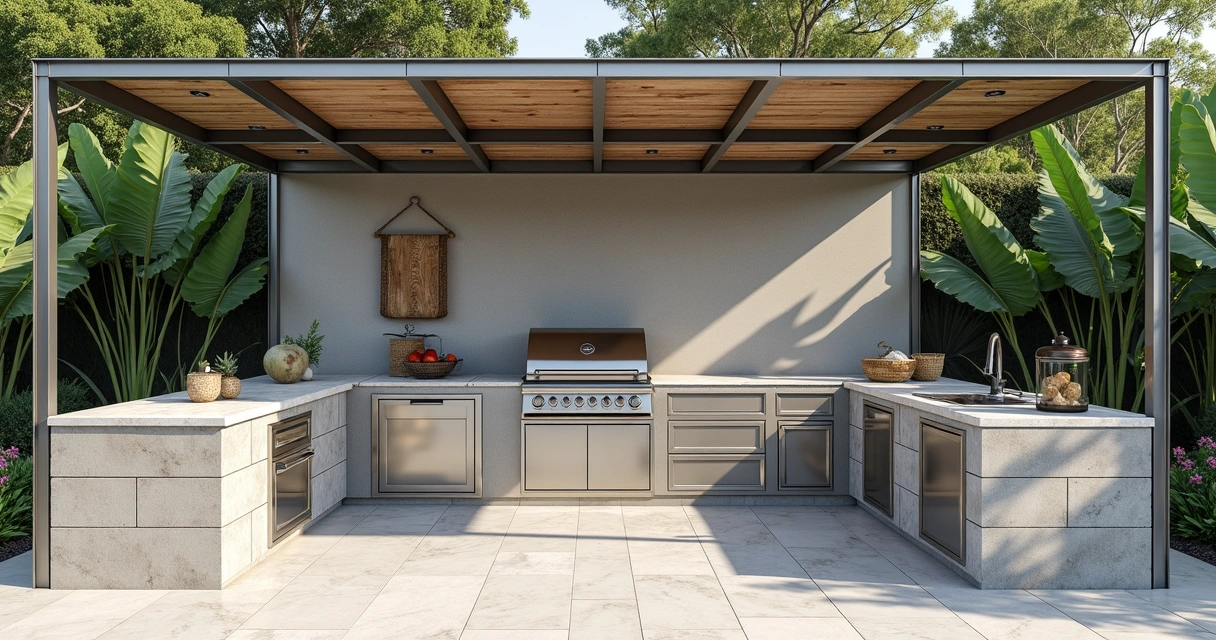
Choosing the right base and finish means less maintenance, better looks, and a kitchen that handles the climate for many seasons.
Drainage, base, and slab preparation
Outdoor kitchen bases do a lot of work. They must support the structure, manage water, and create accessible routes for utilities. We pay close attention to these details:
- Base choice: Well-compacted fill and a concrete slab 4–6″ thick is our standard for soil stability. On pavers, edge restraints and polymeric sand help lock the system.
- Drainage slopes: A minimum of 1/8″ per foot pitch away from walls and toward drains prevents puddling.
- Moisture barrier: Under-slab vapor barriers reduce rising damp; good for both appliances and cabinets.
- Embedded utilities: Pre-lay sleeves for gas, water, and electrical keeps the slab intact and avoids patching later.
We’ve solved base issues for poolside kitchens, lanais, and open patios—each scenario needs the right approach for code and comfort.
Sequencing your build: from foundation to finishes
Few installations go as smoothly as those planned in the correct order. Over the past years, we have learned that scheduling matters for function and inspections:
- Mark and prepare the slab or paver base with all needed utility sleeves placed.
- Pour or set the base material, graded for drainage.
- Frame out cabinets, appliance spaces, and islands, tying in with anchor bolts for storms.
- Rough-in utility lines, then schedule inspections before closing any framing.
- Sheath and apply exterior finishes once the rough utilities are inspected and approved.
- Mount appliances, counters, sinks, and fixtures.
- Connect appliances to gas/water/electric. Final inspection follows.
- Apply touch-up paint or sealer where needed. Schedule your first cookout.
Every step builds on the last. When the sequence is right, the build is faster, inspection passes are easier, and design changes become less disruptive.
Outdoor kitchen features and storage options
Extra convenience matters. From our completed projects—from modest grill islands to full chef’s suites—we recommend reviewing some often-overlooked features:
- Weather-sealed cabinets for utensils
- Pull-out trash and recycling bins
- Chilled drawers and refrigerators with GFCI protection
- Integrated cutting board surfaces (stone or resin)
- Hooks, rails, and under-counter storage
- Outdoor-rated power outlets for blenders and gadgets
- Dedicated propane storage cabinets if not using plumbed gas
What really works is storage that fits your actual cooking style, and appliance choices that don’t limit your menu.
Consider “zones” for prep, cooking, storage, and cleanup. Simple arrangements make a difference at every meal and for clean-up time.
Lighting and ventilation: comfort and safety
Outdoor kitchens benefit from good lighting—not just for visual comfort, but for safety and code compliance. In Florida especially, humidity and bugs make proper venting vital.
- Install adjustable task lights over cooking and prep spaces; use warm LED lighting for ambiance.
- Include pathway lights for stairs or transitions to the house or pool.
- If using a covered lanai, a vent hood above grills is a code requirement and helps prevent stains and smoke buildup.
- Plan fans for airflow if your summer kitchen is enclosed—even screened-in areas can trap heat under the roof.
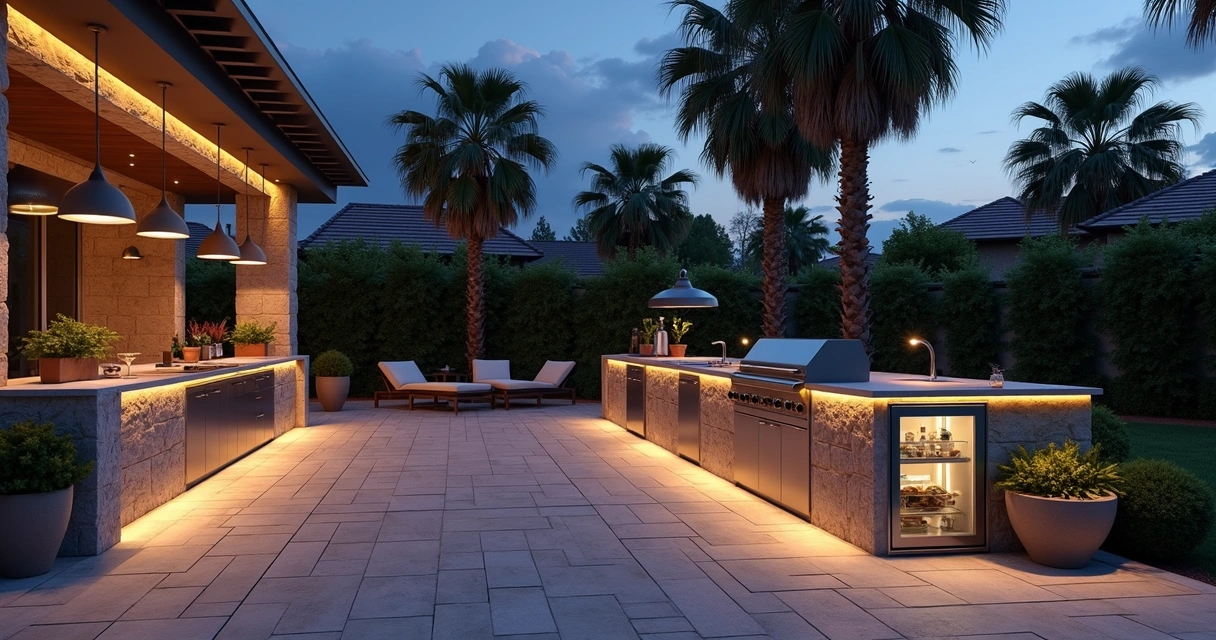
We always test lighting layouts with clients before finalizing locations, helping avoid glare or dark spots.
Warranty, maintenance, and care for long life
No outdoor kitchen is completely “set and forget.” Proper maintenance keeps it safe and beautiful:
- Sealing: Countertops and grout need periodic sealing, especially if using natural stone or pavers.
- Screw checks: Inspect fasteners and appliance connections at least yearly—storms loosen hardware.
- Cleaning: Use gentle cleaners on stainless and stone, avoid steel wool to prevent surface damage.
- Paint/finish renewal: Touch up paint or elastomeric coatings every few years, just as our painting contractors do for high-traffic areas.
At GCM Best Services, every kitchen includes a written warranty and maintenance guide, so you start day one with confidence and a clear plan for care.
Conclusion: your next step with GCM Best Services
Planning an outdoor kitchen with gas, water, and electrical features in Central Florida is one of the most rewarding upgrades for any home or outdoor business space. It is not just about cooking outside—it’s about safe, reliable enjoyment for years ahead.
Our experience at GCM Best Services covers every step, from the first site visit to permits, utility design, slab work, inspections, and the finishing touches that define a true outdoor living hub. Every choice, from drainage to materials, affects how your kitchen will perform for your family and friends, in every season.
If you’re considering this upgrade, we’d be glad to visit your site, share detailed options, and build a quote focused on your specific needs, codes, and ideas. See why so many Central Florida homeowners trust our process and our guarantees.
Ready for a professional quote? 📞 (407) 250-1948 • 24–48h • Orlando, Tampa & area.
Frequently asked questions
How much does an outdoor kitchen cost?
The cost varies widely depending on size, utilities, finish, and appliances. In our experience, a basic outdoor kitchen with a grill, small counter, and no utilities can start around $5,000–$8,000. Adding gas, water, electrical, and premium finishes typically brings the total between $15,000 and $40,000. More elaborate setups with custom structures, pavers, large appliances, or integrated lighting push costs higher. Each project at GCM Best Services receives a detailed line-item quote after our site review, helping you match the design to your budget.
What permits do I need for installation?
Most outdoor kitchens with gas, plumbing, or electrical require permits from your local building department. Typically, you need a building permit and trade-specific permits (gas, plumbing, or electrical) for each utility. Your project might also need HOA approval in regulated neighborhoods. We handle permit research, plan submission, and inspection scheduling for you. It is important to wait for permit approval before starting construction to avoid code violations, as explained in our guide to licensed contractors and repairs.
How to connect gas, water, and electricity?
Utility connections must always follow local building codes and should be performed by licensed professionals. Gas (whether natural or propane) requires code-compliant piping, valves, and shutoffs. Water lines must be pressure-tested and approved for drinking water, while drains may route to sewers or dry wells as permitted. Electrical lines require buried conduit, GFCI outlets, and proper circuit load. We plan utility runs before pouring slabs, get each inspected, and connect appliances to verified, safe lines. This multi-step process is designed for your safety and smooth operation.
Is it safe to use gas outdoors?
When installed by qualified professionals, outdoor gas lines are safe and reliable. All connections should include shutoff valves, be pressure tested, and inspected for leaks. Appliances must be rated for outdoor use, and propane tanks should be stored in ventilated cabinets. Local building code is clear about clearances from structures and open flames. These precautions—from design through inspection—minimize safety risk and align with national and Florida regulations.
What materials work best for outdoor kitchens?
We recommend galvanized steel studs or CMU block frames, cement board sheathing, and non-combustible surfacing for the best durability in humidity, sun, and storms. Countertops like granite, engineered stone, or poured concrete are ideal for weathering the local climate. We choose stainless steel appliances rated for outdoor use. Sealed stone, tile, or durable pavers hold up well under foot traffic and moisture, as demonstrated in our resources on hardscaping and patio paving. Maintenance involves resealing, screw checks, and occasional paint or finish renewals for long life and a fresh look.