At GCM Best Services, families and property owners often ask us what’s the best surface for play areas: artificial turf or poured rubber? Both options appear safe and lush at first glance, but each offers a unique set of benefits (and drawbacks) depending on your property’s needs, climate, and the preferences of those who’ll spend time on them. In Central Florida, the stakes are higher: with hot weather, heavy rains, and year-round outdoor play, the right surface helps keep kids (and adults) safer, more comfortable, and happier. We’ve helped hundreds of clients make informed choices, so we’re drawing on our experience and scientific research to help you decide.
Choose the right surface, and your play area becomes a magnet for joy.
Understanding the fundamentals: What are artificial turf and poured rubber?
Making a decision starts with clear definitions. Artificial turf is a synthetic surface engineered to mimic the look and feel of natural grass, often installed over compacted gravel and sand, with drainage layers, infill materials, and UV-stabilized blades. Poured rubber, on the other hand, is a resilient, continuous, seamless playground surfacing made by mixing rubber granules (usually EPDM or recycled tire rubber) with a binder and then troweling the mix into place. Both offer alternatives to bare dirt, grass, or traditional loose materials like mulch or sand, but how they perform, and the way they look and feel, is quite different.
What do safety studies reveal about impact and injuries?
Safety is always the top priority for any play area. For decades, surface choice has been a key factor in reducing the number and severity of playground injuries. Let’s take a look at what decades of data and recent studies have discovered.
According to North Dakota State University Extension, poured rubber playground surfaces require minimal upkeep in order to retain shock-absorption. This means that, properly installed, poured rubber provides consistent “cushion” for falls, a major consideration for outdoor play areas, especially under swings or climbing equipment. Meanwhile, loose-fill materials such as sand and wood chips can shift, wear thin, and need frequent replenishing to stay safe.
But what about actual injury rates? Research published in a peer-reviewed study reviewing injuries by surface and season found that rubber crumb surfaces showed lower injury rates in certain seasons compared to other surface types. Meanwhile, artificial turf systems are now often engineered with extra layers for shock reduction, but some versions may become firmer over time or under heavy use. Research on artificial turf systems indicates they can be customized to alter their mechanical properties, and the right installation can reduce impact forces significantly. Athletic testers recorded peak contact forces on some turf surfaces exceeding 2,000 N, a relevant detail for high-energy play.
Proper installation and the right underlayer matter as much as turf type for injury reduction.
Comfort, play experience, and accessibility for kids
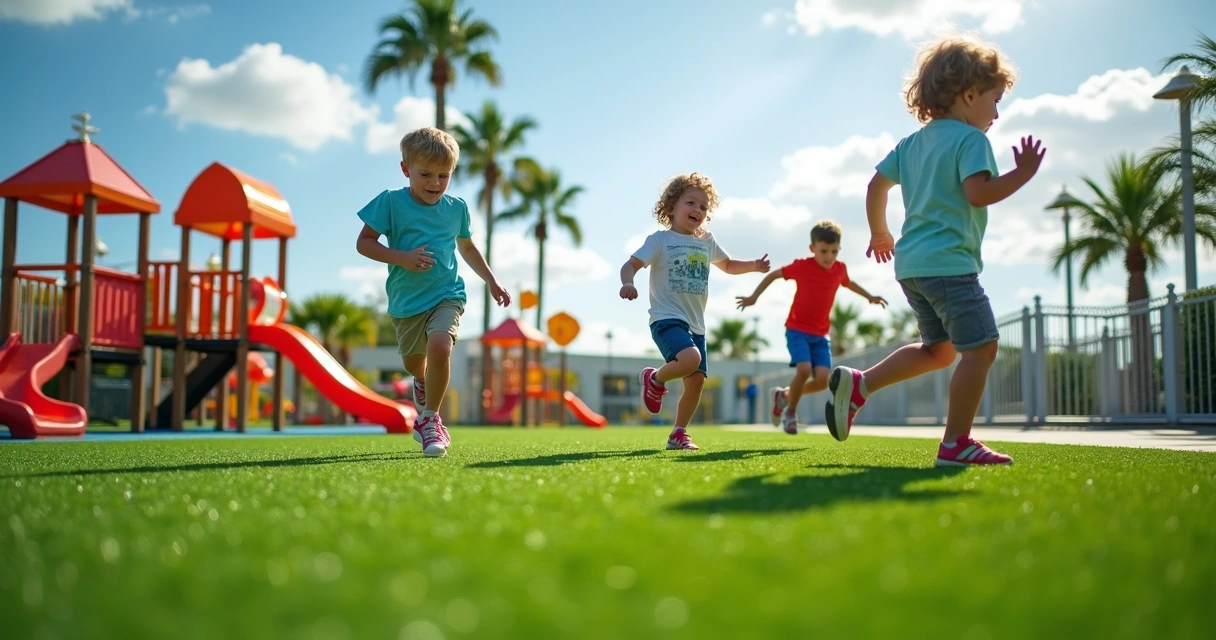
Next to safety, comfort and having a positive play experience are the major drivers in surface selection. Here, it’s not just about falls, it’s about how surfaces handle running, crawling, jumping, or even just sitting in Florida’s sun.
Poured rubber is prized for being smooth, springy and continuous. Wheels, crutches, and walking frames glide easily over its surface, enhancing accessibility. Poured rubber is especially friendly for children with mobility aids, meeting ADA accessibility standards and encouraging inclusive play. When installed in lighter colors and shaded areas, this material stays reasonably comfortable even during hot afternoons.
Artificial turf brings a “real grass” softness that’s hard to match. Most high-quality variants are dense, lush, and soft to the touch – much closer to what most people imagine for play. In fact, a peer-reviewed study of athletic and canine performance on different grounds found that, while natural grass still ranked highest, artificial turf came second, comfortably beating out poured rubber on perceived comfort and play performance.
Both options avoid the abrasion, heat, and spatter issues often seen with concrete or asphalt. However, there’s a real difference in temperature exposure. In full sun, poured rubber, especially in darker colors, can become warm enough to be uncomfortable for bare feet. Modern artificial turf, particularly those installed by experts like GCM Best Services, uses UV-stabilized fibers. Still, on very hot days, both will heat up faster than natural grass.
 Weather resistance and year-round usability in Florida
In Central Florida, weather is a decisive factor in play surface performance. Both poured rubber and artificial turf are engineered to withstand rain, sun, and humidity, but there are some practical differences that stand out the longer you own your surface.
Rain and drainage
Both surfaces feature porous construction: poured rubber is usually installed over a sloped, draining base to prevent standing water, while artificial turf relies on a permeable backing and a well-engineered crushed-stone base to allow rain to move quickly down and away. When installed by professionals like our team, both will perform very well during Central Florida’s frequent storms.
After heavy rains, poured rubber dries quickly and does not develop muddy patches or slippery puddles. With turf, effective drainage design, including paver borders, channel drains, and careful sub-base construction, manages the risk of ponding and keeps the surface firm and mud-free. See more about our approach to artificial turf for Orlando soils on our artificial turf service page.
Heat and UV exposure
Prolonged exposure to sunlight causes fading and surface heating for both materials. Modern artificial turf uses UV-resistant fibers and infills that help prevent fibers from breaking down too quickly or losing color. Poured rubber is best kept in lighter shades, or partially shaded, to minimize surface temperature and fading. Some rubber surfaces may develop fine cracks or hardness over a decade or more of constant sun, but this is rare with premium installations.
Florida sun is powerful, material choice and color make a difference in comfort and longevity.
Maintenance demands: What can you expect long-term?
Most people don’t want to spend their weekends patching holes, resodding grass, or raking mulch back into place. Here, both turf and poured rubber shine compared to natural sod or loose-fill options. But each has specific maintenance needs and lifespans.
Maintaining artificial turf
- Regular raking or brushing, especially to redistribute infill and keep blades upright.
- Occasional rinsing to remove dust, pollen, or pet waste.
- Prompt spot cleaning for spills or gum stuck to fibers.
- Annual professional inspections recommended to check seams, edges, infill depth, and drainage.
We offer maintenance tips and warranty-backed installations so your artificial turf stays lush and inviting for years. Full details are covered at our artificial turf in Orlando resource.
Maintaining poured rubber
- Sweeping debris and leaves off the surface as needed.
- Occasional washing with mild soap and water.
- Repairing damage (such as deep cuts or vandalism) with patching kits.
- Annual checks for surface hardness or cracks, as material may harden with age.
As summarized in the North Dakota State University Extension guide, poured rubber needs minimal ongoing upkeep, keeping it ready for immediate use, with only rare repairs over time.
Spend more time enjoying, less time maintaining.
 Appearance, design freedom, and curb appeal
Looks matter, not just to kids, but to homeowners and property managers thinking about first impressions, neighborhood style, and even HOA requirements.
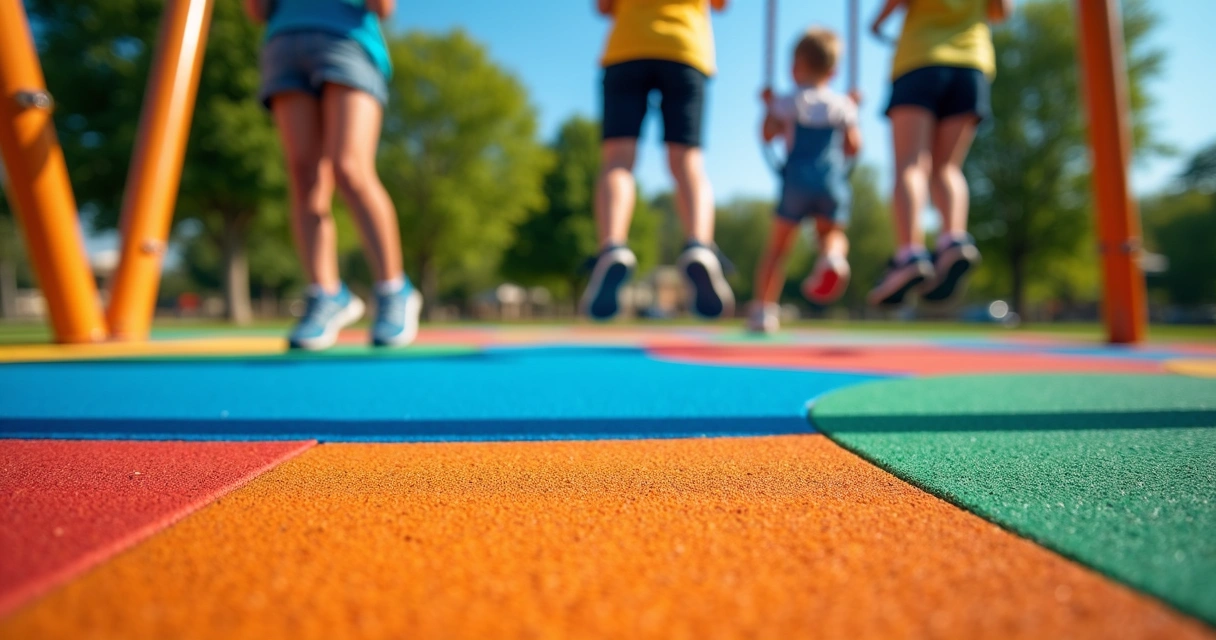
Artificial turf offers a realistic, green, mown-lawn look year-round, which appeals to those who want their play area to blend with grassy lawns or commercial landscapes. Premium turf even includes variegated “blades” and brownish thatch for authenticity. Poured rubber, in contrast, is more modern and bold, available in limitless colors, patterns, and shapes.
Designers regularly combine both: soft rubber under climbing equipment and swings, turf fields for running and playing ball. Our team has helped schools and HOAs match colors and borders to their branding, using combinations of artificial turf, poured rubber, and hardscaping elements such as pavers and low walls for added color and structure.
Durability, warranties, and lifespan expectations
Clients sometimes ask which surface “lasts longer”, but usage and installation quality really control lifespan. With expert installation and proper care, both poured rubber and artificial turf can last 8–15 years, sometimes longer in residential settings with light traffic.
Heavy equipment, vandalism, or neglect will shorten lifespan in both cases. Some poured rubber will need patching over time, especially near high-impact areas (under swings, for example), but it’s easy to repair small spots without replacing the whole surface. Turf can sometimes develop wrinkles or edge lift if not well-secured. Each product installed by GCM Best Services comes with a written warranty.
On commercial or municipal play areas, both surfaces may require more frequent maintenance, especially if thousands of feet use them daily.
Cost factors and budget considerations
Cost is always a big topic. In general, both surfaces require a larger upfront investment than traditional sod or mulch, but lower your maintenance labor, irrigation, mowing, and replacement costs long-term.
Artificial turf cost factors
- Quality of turf (fiber density, UV protection, infill type)
- Site preparation (removal, grading, drainage solutions)
- Border materials (paver edging, transitions to other surfaces)
- Site size and shape complexity
Poured rubber cost factors
- Surface thickness (thicker areas mean more shock absorption, higher cost)
- Color choices and patterns (custom graphics cost more)
- Base preparation (removal, compacting, drainage)
- Total surface area and shape
Most poured rubber surfaces cost more per square foot than mid-grade turf, especially for thick installations or elaborate designs. However, neither option needs weekly mowing, weeding, watering, or routine reapplication like sod or mulch.
Upfront investment rewards you with lower annual costs and more play hours.
Environmental impacts and sustainability
We’re often asked: are these materials “green”? The answer is nuanced and comes down to the specific products selected and your long-term goals.
- Artificial turf reduces the need for irrigation, fertilizers, and pesticides. Over its lifespan, it can help save thousands of gallons of water.
- Poured rubber often uses recycled rubber from tires, keeping material out of landfills. Some systems even accept end-of-life recycling.
Both surfaces can get hot in direct sun and don’t create living habitat the way natural grass does. For yards, some clients install a mix, turf for the open field, native plants at the border, and rubber under equipment. Our hardscape services mean we can integrate drainage, pavers, turf, and planting to suit every need.
 When to choose artificial turf or poured rubber
Every property is unique, but as a starting guide, we suggest:
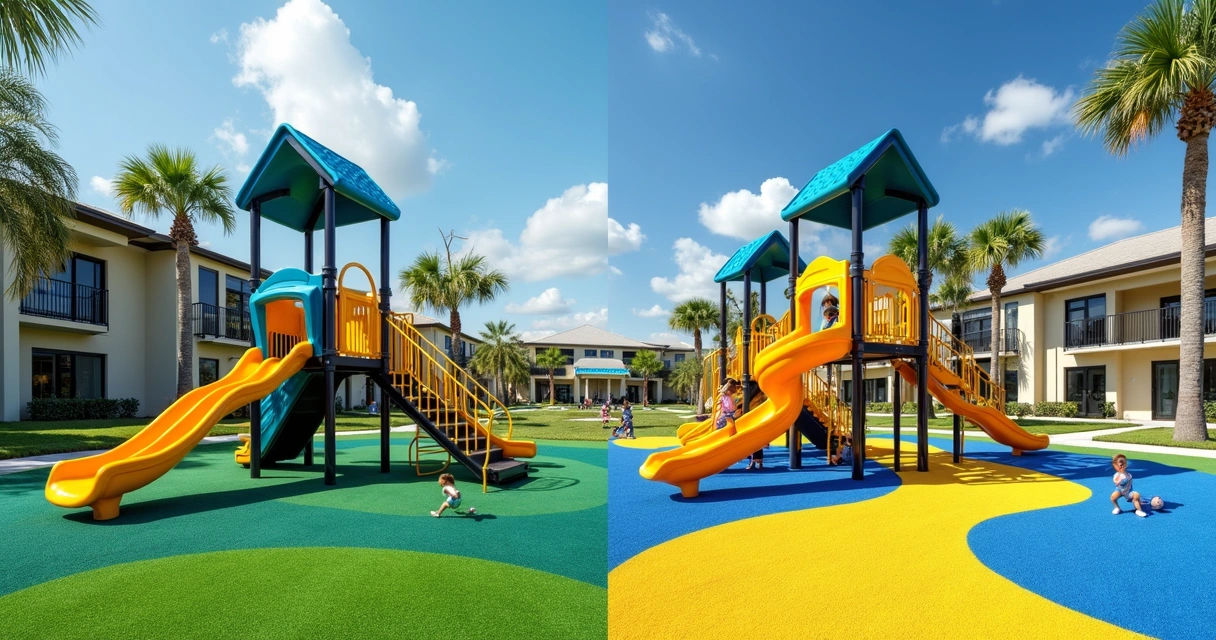
- Choose artificial turf if you want a more natural look, a “lawn-like” feel, improved ball performance, and lush softness year-round.
- Choose poured rubber for seamless ADA accessibility, vibrant colors, easy cleaning, neat borders, and best-in-class fall protection beneath climbing equipment.
- For public parks and schools, consider blends: artificial turf for fields, poured rubber for play zones.
- Both surfaces can be installed together for balanced beauty, safety, and durability.
A final tip: partner with experts who understand not only the materials but the soil, local codes, drainage, and maintenance requirements found in Central Florida. Our team at GCM Best Services manages everything, from HOA paperwork, drainage design, and permits, to written warranties that give families more peace of mind.
Find more about the paver borders, drainage, and custom options that blend well with both surfaces at our driveway and patio paving page.
Conclusion: Artificial turf vs. poured rubber – what’s best for your play area?
Choosing between artificial turf and poured rubber comes down to your needs, style, and budget. After installing both across Orlando and Central Florida, we’ve found:
- Poured rubber wins on fall safety, accessibility, and ease of cleaning.
- Artificial turf wins for looks, comfort under bare feet, and all-ages play.
- Both can be engineered for drainage and shade to combat Florida’s challenging climate.
The best play areas often blend turf and rubber for function and beauty. We believe the smartest project always starts with professional advice.
If you’re ready for a safe, beautiful, and low-maintenance play space designed for our Central Florida climate, reach out for a thorough on-site assessment and a detailed proposal. See the possibilities first-hand and let us turn your vision into a safe reality.
Ready for a professional quote? 📞 (407) 250-1948 • 24–48h • Orlando, Tampa & area.
Frequently asked questions
What is artificial turf for play areas?
Artificial turf for play areas is a man-made surface designed to look and feel like real grass. It’s built from plastic fibers stitched into a backing and installed over a compacted, well-draining base (often with added infill and padding). Modern turf is soft, resilient underfoot, and safe for children to run, jump, and play on. It doesn’t require watering, mowing, or chemical treatments. When professionally installed, it delivers consistent play quality year-round and can be integrated with paver or concrete borders for neat edges.
What is poured rubber for playgrounds?
Poured rubber is a seamless, cushioned playground surfacing made by mixing rubber granules with a binder, then spreading and smoothing the mix in place. It creates a spongy, flexible surface that reduces impact injury risk under swings, slides, or climbing equipment. Available in many colors and shapes, poured rubber meets ADA accessibility standards and is easy to clean. Over a strong base and drainage system, it resists wear and weather, making it a popular option for public and private play spaces.
How much does poured rubber cost?
Costs vary based on thickness, color selection, area size, and site preparation. Generally, poured-in-place rubber is more expensive upfront than artificial turf per square foot, especially for custom graphics or thicker surfaces for maximum fall protection. However, poured rubber often requires less ongoing upkeep (no mowing, weeding, or replacement of loose material). For the most accurate price, it’s best to get a custom site evaluation from a professional installer who can factor in local conditions, drainage needs, and any unique features you want to include.
Is artificial turf safe for kids?
Modern artificial turf is engineered for safety, built to reduce falls, eliminate mud, and prevent contact with pesticides or fertilizers. Safety padding can be installed beneath turf to improve fall protection in key areas. All materials used by GCM Best Services are tested for lead, allergens, and durability. One caveat: On very hot, sunny days, the surface may warm up, so consider some shaded areas or light watering for comfort when play is at its peak.
Which surface is easier to maintain?
Both poured rubber and artificial turf require much less maintenance than natural grass or loose mulch. Poured rubber is the easiest: just regular sweeping, rinsing, and occasional repairs for cuts or vandalism. Artificial turf requires brushing or raking to keep blades upright and infill distributed, plus regular rinsing. Neither surface needs irrigation, mowing, or chemical weed treatments, so both are excellent choices for families or managers who want more time to play and less to “fix” the surface.