Border weeds are a real nuisance for anyone enjoying a yard, driveway, or landscape in Central Florida. We have noticed this pain point repeatedly with our customers at GCM Best Services. Unwanted weeds don’t just look messy: they break apart pavers, lift turf edges, create trip hazards, and require constant work if not addressed correctly. Understanding why weeds appear at turf and paver borders—then using the right strategies—is the first step toward a hassle-free, healthy landscape that lasts.
Less mess, fewer weeds. That’s how outdoor spaces should feel.
In this article, we want to share field-tested methods that have proven effective in our concrete, paver, and artificial turf work throughout Orlando and surrounding Central Florida. We also highlight research from leading universities, so you know your maintenance plan is grounded in real science.
Why weeds thrive at turf and paver edges
Before sharing practical solutions, let’s quickly address why weeds show up in these transition areas so often. Weeds need three main things to grow: soil, moisture, and sunlight. Even the smallest gap between slabs of concrete or next to a turf edge can collect organic debris, which eventually turns into enough soil for weeds to sprout.
According to Cornell University, “weeds readily establish in cracks, joints and depressions where soil collects on hard surfaces, causing slipperiness, enlargement of cracks, destabilized joints and reduced pavement lifespan.” We see this almost every week on Orlando driveways, walkways, and patios—especially as summer storms tumble leaves and dirt into every edge.
Top causes of border weed growth
We commonly identify these sources:
- Gaps between hardscapes and turf: Even a 1/8-inch opening is enough for wind-blown seeds to settle.
- Poor compaction or improper sub-base: This lets soil migrate and collect under paver/turf edges.
- Moisture retention close to borders: Over-irrigation, poor drainage, or low spots hold water, helping weed roots anchor deeply.
- Organic debris from mowing, leaf litter, or pet use: This provides food for weeds, accelerating sprouting.
- Sunlight exposure: Borders usually receive light runoff from pavers or reflective heat, warming the soil faster for weed seeds.
With Central Florida’s fast-growing weeds—from nutsedge to crabgrass and dollarweed—borders need more than a quick fix.
How weed problems reduce paver and turf life
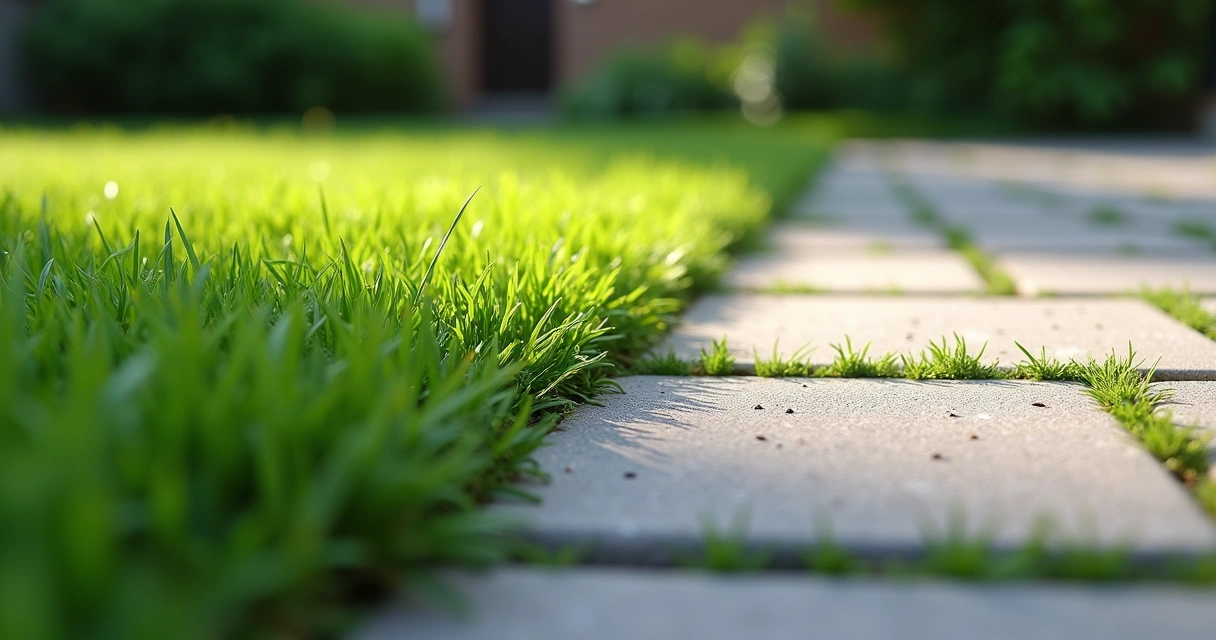
When weeds appear at the meeting points of artificial turf and paver installs, it’s not just a cosmetic issue. Weeds cause mechanical damage.
According to research from Cornell University, root systems can lift pavers, widen cracks, and weaken joint stabilization sand. Sidewalk and driveway margins are “ideal” for aggressive species like nutsedge and knotweed, according to Purdue University. They even point out that proactive treatments and correct construction techniques limit structural problems and the need for costly repairs.
We have witnessed plenty of “sawtooth” turf edges and loose walkways in subdivisions where the right weed-control steps were skipped, especially after heavy storms or months of mowing.
Building strong borders: Start with construction
We believe the best weed barrier is built during initial construction. It’s far easier to stop weeds at the start than fight them every year after the project is finished.
Step-by-step construction best practices
From our experience at GCM Best Services, these practical steps give optimal results:
- Sub-base preparation: We recommend a minimum of 6–8 inches of compacted sub-base (limestone screenings or crushed stone) under all pavers and turf perimeters. This limits soil migration and future shifting. Proper compaction also prevents air and water “pockets” where seeds could land and sprout.
- Edge restraint installation: Secure paver borders with professional-grade plastic, aluminum, or poured-concrete restraints. For artificial turf, stabilized bender board or hidden concrete curbs hold edges in place and reduce invisible gaps for wind or soil movement.
- Separation layers: Always use separate bedding (like washed sand) and weed-control fabric between soil and installed surfaces. For turf, non-woven geotextile fabric performs better than plastic sheeting, because it allows water to drain while blocking roots.
- Borders graded for runoff: Border slopes should always direct water away from seams. We check that all bordering surfaces (pavers, concrete, turf) drain freely to avoid ponding, which encourages both weeds and moss.
A strong install also means fewer edges for pests to invade. If you want to learn more about professional hardscape practices or what materials work for your project, our hardscape design and construction guide answers many questions for Central Florida properties.
Proven weed barriers and landscape fabrics
Weed barriers act as frontline defense beneath pavers and turf. While some older advice suggested only plastic, research (including Clemson University and Cornell University) finds that modern geotextile fabrics and organic mulch can outperform plastic in most cases.
Choosing fabrics and mulches
- Non-woven geotextile fabric: For borders and under turf, these fabrics block roots while allowing excess rainwater to drain away.
- Woven landscape fabric: Works well beneath pavers and gravel pathways, but only if sharp, heavy-grade fabrics are used.
- Organic mulches (bark, pine straw): Layered at 2–4 inches, organic mulch suppresses new weeds and improves soil over time, as found in Cornell University guidance.
- Polymeric sand for paver joints: This sand “locks” when wet and forms a hard joint, minimizing weed-friendly cracks.
A mix of these methods will do more for border weed control than any one product used alone. This is one of the reasons we always blend several strategies for clients who want a low-maintenance yard.
Laying fabrics and mulch properly
Correct installation makes landscape fabric last. We cut fabric to fully cover the border area, tucking it under edging material. Then we lightly stake it to prevent movement before adding pavers, turf, or mulch.
Overlap, tuck, and anchor every edge—loose fabric lets weeds back in.
Remember to refresh mulch every 2–3 years, as recommended by Cornell University, to keep coverage high and sunlight out of weed seeds.
Sealing and stabilizing paver joints
Open joints between pavers or turf seams make easy targets for annual bluegrass, sedge, and other quick-growing weeds. Modern sand “locking” systems stop this process at the source.
- Polymeric sand: This sand contains special polymers that activate with water, hardening inside paver joints. It prevents most seeds from sprouting and helps avoid shifting over time. We always brush the sand into every gap and tamp the surface before misting.
- Joint sealer: For high-traffic or heavily shaded areas, we may finish paver joints with a silane/siloxane sealer. This keeps moisture (and weed seeds) out while protecting the color of your pavers or bricks.
For a deeper guide to joint products and stabilizers, we recommend our article on preventing weeds between pavers in Orlando, where we break down which sands and sealers work in Florida weather.
Artificial turf: Special challenges at borders
Artificial turf has unique strengths for weed control—no soil above the barrier, limited debris, and tailored infills. But even the best turf needs some border reinforcement.
Seam sealing and perimeter infill
We recommend these tactics for turf edging:
- Bonded seams: All turf joins, especially where turf meets pavers, concrete, or bed edging, should be glued and double staked. This eliminates gaps for weeds or ant tunnels.
- Stabilized base material: At GCM Best Services, we use a 4–6 inch layer of compacted, permeable rock (like granite fines) instead of regular soil for artificial turf base. This stops roots from pushing up and allows Florida rain to drain fast.
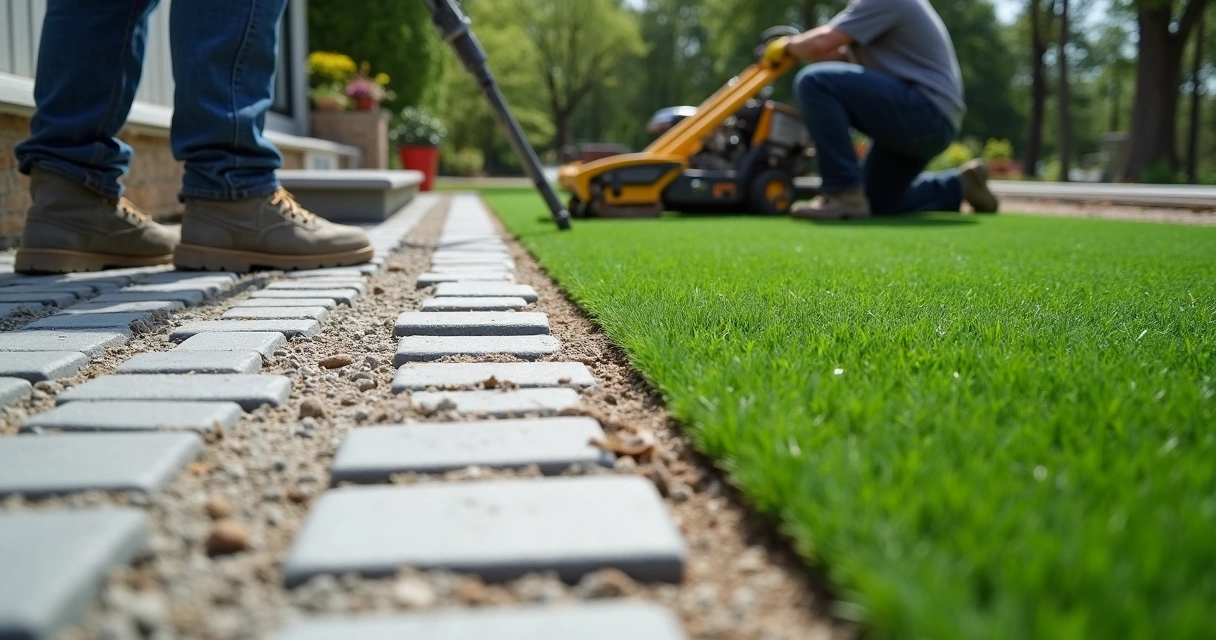
- Edging solutions: We install aluminum edging or bender board along every turf perimeter. When turf borders a patio or walkway, we tuck the edge just beneath paver level for a seamless finish.
- Correct infill: Choose antimicrobial, rounded sand or coated granules that discourage seed collection and act against organic buildup.
If you’re considering low-maintenance outdoor spaces, our artificial turf installation guide explains how these methods reduce upkeep for Florida homeowners and property managers.
Organic mulch and living borders: A proven buffer
For landscape beds next to pavers or turf, organic mulch creates a “weed buffer.” This barrier limits weed establishment and blends border transitions for a professional finish.
- Pine bark or shredded hardwood mulch: Maintains moisture, stays in place, and slowly improves soil structure, according to landscape barrier studies from Cornell.
- Decorative stone or gravel: Adds weight and helps shade soil surfaces along paver/turf edges. Just be sure to use weed fabric beneath for the best effect.
- Mow-free border plants: Low, dense plants like liriope or dwarf mondo grass provide living barriers that shade soil and reduce light for weed seeds.
A mulch or vegetative strip between pavers and turf lowers weed problems by directing foot traffic and reducing mower “spray” of soil and seeds into borders.
Regular maintenance that discourages weeds
No matter how perfectly a border was built, some airborne or animal-dropped weed seeds will find a way to settle. We stay on top of emerging weeds with a few key maintenance habits.
The value of seasonal inspections
Inspection is the real secret! In our experience, just 10–15 minutes every three to four weeks stops small weeds from becoming heavy infestations.
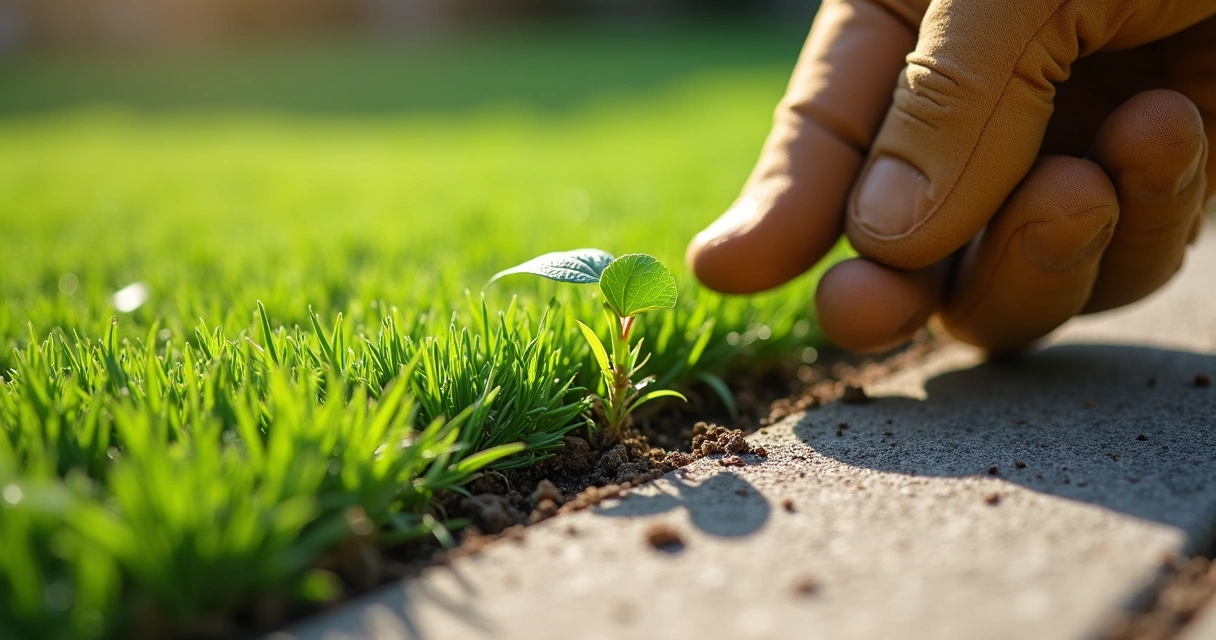
- Pull weeds early: Remove tiny weed seedlings before they mature and spread seeds further.
- Hand tools for edges: Use a thin-blade weeder, handheld cultivator, or even a butter knife to lift weeds when roots are short. Avoid disturbing the sand or base material too much.
- Top up sand/mulch: Replace polymeric sand or mulch as needed, especially after storms.
- Spot-treat persistent weeds: For perennial border invaders like nutsedge, manually dig out runners and rhizomes, taking the whole root system.
According to Clemson University, deep-rooted perennials like bermudagrass or nutsedge sometimes need multiple treatments or removal before installation for best control.
Correct irrigation and drainage: Stop feeding the weeds
Water is often overlooked—borders that stay too wet are prime spots for weed spread. The University of California IPM program highlights that poor irrigation and turf stress invite weeds such as annual bluegrass, crabgrass, dallisgrass, and nutsedge. We align all turf and paver installs so sprinkler heads do not overspray onto paver joints or mulch borders, and we set all border slopes to encourage runoff.
If you see water pooling at any edge, adjust your system and consider minor grading or French drains. Our hardscaping services include customized drainage plans for every install.
Seasonal tips for weed management in Central Florida
Florida’s warmth means weed cycles are almost year-round, but some seasons bring special problems.
- Late winter to early spring: Annual weed seeds begin germinating in February and March, so inspect and treat early.
- Summer rainy season: Frequent heavy rain moves seeds into cracks and may erode sand/mulch. Watch for nutsedge and crabgrass especially.
- Autumn: Falling leaves and debris must be quickly removed from borders to limit buildup and rot.
We find that customers who schedule a full yard “border reset” each spring cut their weed work in half for the rest of the year. Boost your results by reading more about our patio and driveway approaches in the driveway and patio paving guide.
Should you use chemical weed control at borders?
While we focus on building and maintaining borders with non-chemical methods, there are moments where a targeted application of a weed control solution makes sense. For spot-treating persistent species—like nutsedge nestled deep into turf edges or tough perennials rooted in compacted joints—careful, limited application is sometimes the only quick option. Always use products labeled safe for use near pavers and artificial turf, and follow manufacturer instructions.
However, we find that strong construction and routine manual removal keep chemical needs very minimal. For most homes and businesses, natural methods and regular checks make a chemical-free strategy both realistic and successful.
Integrating new borders with existing landscapes
When adding new pavers, turf, or mulch to an area that was previously planted or unmaintained, we highly recommend eradicating existing weeds and removing at least the top 2–3 inches of organic soil. This step helps ensure seeds and root pieces do not survive underneath your new borders.
Clemson University guides suggest solarizing (using clear plastic to heat-kill weeds) for several weeks before new installation for the most persistent perennial invaders.
Summary: The right mix for strong, weed-free borders
Ensuring long-term weed control at turf and paver borders means using a combination of strategies:
- Invest in quality construction and professional edging from the start
- Choose the right barrier materials (geo-fabrics, organic mulch, polymeric sand)
- Maintain optimal grading and irrigation for fast drainage and drier borders
- Adopt a regular monitoring and spot-removal routine
Every yard or property in Central Florida presents unique challenges, but these foundational steps remove most of the worry. Our hands-on experience at GCM Best Services shows that with a little planning, and the right balance of materials and care, you can enjoy clean, weed-resistant borders for years.
Plan it well, check it often—leave the borders clean.
Ready for professional help keeping your landscape borders clear?
A solid, low-maintenance border is about more than looks. It’s peace of mind, lasting curb appeal, and lower costs down the road. If you’re ready for a quote—or want advice for a new project or a tough weed question—contact our Central Florida team at GCM Best Services.
Ready for a professional quote? 📞 (407) 250-1948 • 24–48h • Orlando, Tampa & area.
Frequently asked questions
What is the best border for weeds?
The most effective border for weed prevention combines a solid edge restraint (such as concrete or aluminum edging), a geotextile fabric layer, and a 2–4 inch buffer zone of organic mulch. This approach blocks root intrusion and seed establishment more reliably than single-material borders.
How to stop weeds between pavers?
Fill paver joints with polymeric sand, ensure proper compaction, and use joint sealers in areas with repeated weed issues. Keep organic debris swept away and refresh sand as needed after storms. Manual removal of early seedlings and seasonal spot-checks help keep paver surfaces mostly weed-free with little effort.
Is landscape fabric worth using here?
Yes, non-woven geotextile fabric effectively blocks most weed roots while allowing rain to drain away. Landscape fabric is especially useful under artificial turf and hardscape borders, but it should always be combined with a layer of mulch or gravel to extend its lifespan and improve weed prevention.
How often should I check for weeds?
A quick inspection every 3–4 weeks during the growing season prevents major weed buildup and keeps routine upkeep simple. Focus on border areas after heavy storms or lawn work, when weed seeds are most likely to settle. Early attention saves hours of future labor.
What is the easiest way to remove weeds?
Pulling small weeds by hand is fastest and least disruptive, especially when the soil is moist or weeds are less than two inches tall. For deeper-rooted perennial weeds, use a thin blade weeder or trowel to remove the entire root. Avoid disturbing the stability of joint sand or mulch buffers as you work.
For more hands-on guidance or advice, or to discover how our hardscaping and turf solutions work across Central Florida, explore our resources at GCM Best Services and get started on a cleaner, more enjoyable landscape today.