When we think of Central Florida, two things come to mind: abundant sunshine and unpredictable rain. Downpours can drench concrete driveways, patios, and walkways in minutes, leaving plenty of moisture behind. If that water seeps into your concrete, it makes way for cracks, stains, mildew, or worse. At GCM Best Services, we know a good sealer can save our projects from these problems, giving longer life and cleaner looks to every outdoor surface. In this guide, we want to help you choose the best concrete sealer for your property and conditions.
Florida rain is not gentle or rare—protecting concrete is a must.
We’ll walk through what sealers do, the types available, how Florida weather changes our choices, and what features to prioritize. After seeing so many failed DIY applications and inadequate products over the years, we can spot the difference between quick fixes and real protection.
Understanding concrete sealers: why they matter in rain-prone Florida
Concrete sealers aren’t just an upsell. They are the barrier standing between concrete and the elements. In Central Florida, rain isn’t just about getting wet—water that penetrates concrete brings along minerals, fertilizer runoff, leaves, and mold spores. When the surface is unprotected, dark stains, flaking, or early breakdown usually follow.
We’ve learned that no matter how well we install a slab (using a compacted sub-base and good joints, for example), skipping sealer never goes unnoticed after the first heavy storm season. From garage floors to paver patios, a quality protective layer pays off.
- Sealers block water and contaminants.
- They prevent stains from leaves or rust marks from sprinklers.
- They slow down color fading in outdoor spaces.
- They help limit mold and mildew spread in shady, damp corners.
Unsealed surfaces are open invitations for trouble. For Central Florida, skipping this step is like installing a new roof but leaving out half the shingles.
Types of concrete sealers available
There is no one-size-fits-all sealer. In our work with various concrete surfaces and locations across Orlando and beyond, we’ve seen the pros and cons of each style. Let’s break down the main kinds:
Penetrating sealers
Silane, siloxane, siliconate, and silicate sealers don’t just sit on top – they soak into the pores and react within. They form a nearly invisible shield that repels water and salt but doesn’t change the appearance.
- Best for plain driveways, patios, and walkways.
- Excellent for exposed areas hammered by rain, sprinklers, and car tires.
- Let concrete “breathe,” so trapped moisture can exit.
Based on our experience, these work well when the goal is protection more than shine. They’re long-lasting and low-maintenance, a top pick for many homes.
Film-forming sealers (acrylic, epoxy, polyurethane, polyaspartic)
These create a visible film or coating on the surface. They can make colors pop, deepen tones, and add a glossy finish. They work well when you want visual enhancement or extra toughness for stains and tire marks.
- Great for decorative concrete, colored/stamped patios, and garage floors.
- Offer solid stain and scratch resistance.
- Usually need more prep—especially in Florida humidity—to ensure adhesion.
- Gloss can get slippery unless treated for grip.
Our garage and interior coatings often use 100% solids epoxy or polyaspartic for fast cure times and water resistance. On exterior patios, acrylics are common, but reapplication is needed more frequently when exposed to constant sun and rain mix.
Hybrid or specialty sealers
Some products blend penetrating and film-forming features or include additives for better mildew resistance or anti-slip textures. We see these as good solutions in areas where dual protection is needed—such as walkways with decorative finishes in shady backyards.
Key features to consider in Central Florida
Central Florida weather is unique. From surprise summer storms to high humidity and harsh sun, our concrete takes a beating. When choosing a sealer, we put performance in this environment first:
- Water repellency is the main line of defense. Sealers designed for high-rain climates block liquid but still let moisture vapor escape, which reduces the risk of bubbling and peeling.
- UV resistance is big. The sun’s intensity can turn sealers yellow or crumbly if not rated for outdoor use in hot climates.
- Slip resistance matters—especially for pool decks and walkways. Rain-soaked surfaces must be safe. We sometimes add non-slip granules for film-forming coatings.
- Mildew and algae resistance is handy for shaded areas or north-facing patios, where humidity lingers.
- Compatibility with existing sealers or stains if you’re re-sealing.
We often explain to customers that the wrong product, even from well-known brands, can make Florida problems worse—not better.
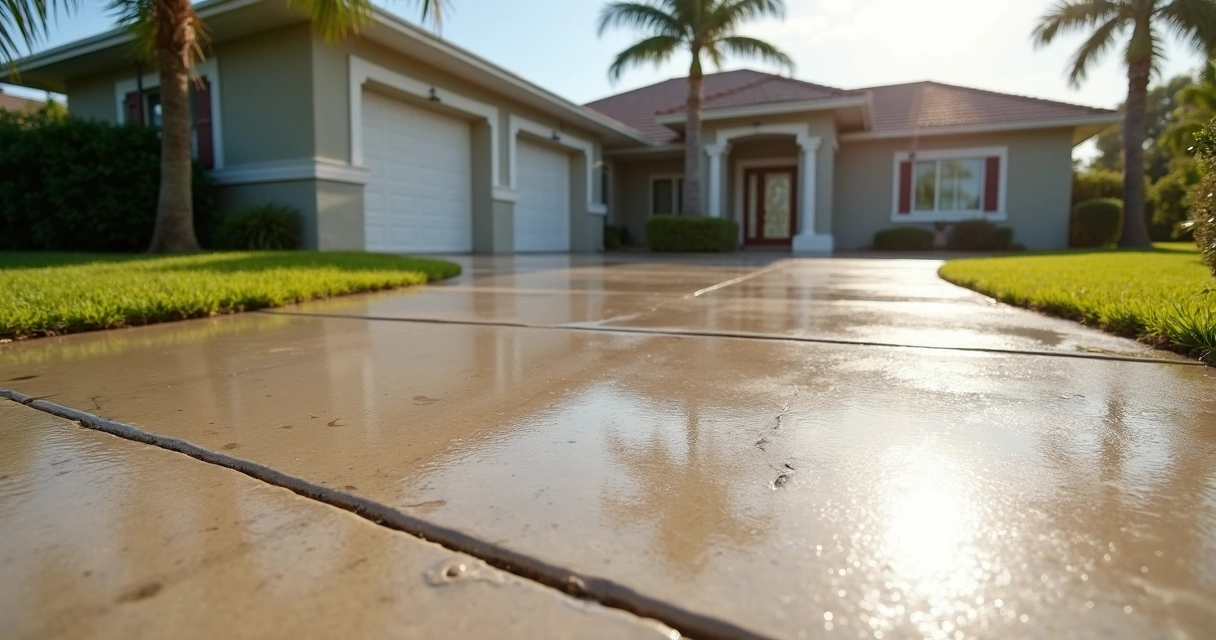
Concrete surface and use: matching the sealer
Not every surface needs the same type of protection, even in the same yard. Here’s what we look for when matching sealers to projects:
- Driveways handle tire marks, oil, and the most water run-off. They need a deep-penetrating water repellent, sometimes topped with a film for gloss or color, but only if slip hazards can be managed.
- Patios and walkways often get more shade and slower dry times, so mildew resistance and breathability are priorities.
- Pool decks require serious slip resistance and the ability to handle both foot traffic and harsh water chemistry.
- Decorative/stamped/colored concrete needs UV protection to keep colors from fading, plus sealing that won’t turn milky if water gets trapped.
In some projects, like full summer kitchens or paver borders, we integrate drainage and choose sealers that keep patterns looking sharp. If you want more info on preventing cracks in these surfaces, you might find this guide helpful: how to prevent cracks in Florida concrete patios and driveways.
Comparing water-based and solvent-based sealers
We always discuss this with homeowners and businesses—weighing their priorities helps pick the right base.
Water-based sealers
- Lower odor and easier cleanup (water soap instead of solvents).
- Usually a softer, more natural semi-gloss or matte finish.
- Better for homes with kids, pets, and sensitive landscaping nearby.
- Good environmental safety in most brands.
Recent generations of water-based acrylics and epoxies have come a long way in durability for Central Florida, though hot, rainy spells can lengthen cure times.
Solvent-based sealers
- Bring richer color and a glossier “wet look.”
- Excellent bonding to decorative or stamped surfaces.
- Often dry faster and cure more reliably in humid periods.
- Stronger odor and careful handling required for application.
For heavy-duty garage coatings or retail walkways, solvents are sometimes the go-to for their toughness, but we always keep ventilation and weather windows in mind.
Common mistakes to avoid in Central Florida sealer selection
After years of fixing DIY jobs and tired coatings gone bad, these are the top slip-ups that we see:
- Picking interior-only or low-grade products for exterior areas.
- Applying on a wet, dirty, or moldy surface. Even good sealers will fail without prep.
- Relying on cheap film-forming “quick sealers” that trap moisture and turn cloudy or peel after a few storms.
- Skipping slip resistance, especially around pools and entries.
- Assuming one coat is enough. Many concrete types in Florida, especially porches or overlays, need multiple applications.
Sealer performance starts with a good install. We always follow up with a full written warranty, because a bad sealer job now usually means a bigger fix later.
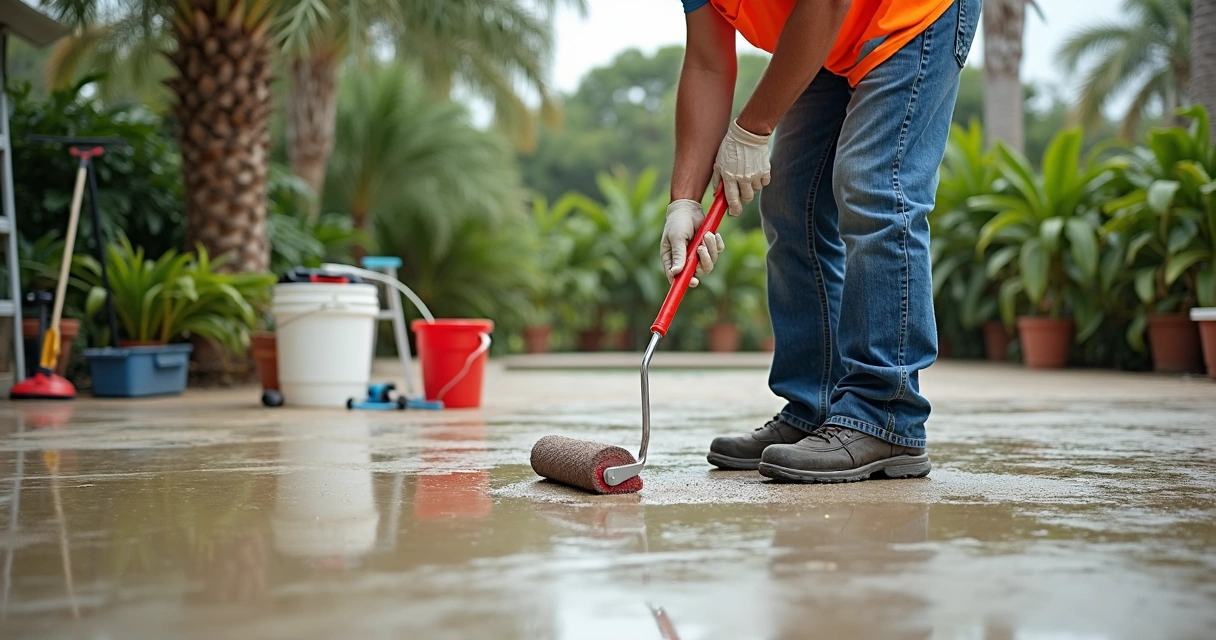
The role of drainage: more than just sealing
Sealers shine when used alongside smart drainage design. In Central Florida, pooling water is the biggest threat to any protected surface. We always include drainage planning in our workflow at GCM Best Services. If water can collect, even the best sealer gets overwhelmed over time.
Features we integrate include:
- Proper grading and slope away from buildings.
- Strategic placement of expansion joints to direct water flow.
- Permeable edges, such as paver or turf borders to filter runoff.
- Hidden French drains or swales for larger patios and pool decks.
Sealer is only half the equation without keeping water moving in the right direction. For more insights on picking the right contractor for drainage and concrete work, check out our guide: choosing the right concrete company in Orlando.
Choosing by warranty and maintenance expectations
We get this question all the time: “How long will my sealer last?” The answer depends on product choice, exposure, and regular upkeep. Here’s how we break it down:
- Penetrating sealers usually last 3–7 years outdoors, sometimes longer if traffic is light.
- Acrylics generally offer 1–3 years before another coat is needed.
- Epoxy/polyaspartic films can last 5–10 years inside, but outdoors, sun and heavy rain may shorten this.
- Warranty terms are only as good as the prep and application—always read the fine print and keep receipts!
At GCM Best Services, we provide a written warranty and a tailored maintenance plan. Our routine includes watching for fading, water penetration, and stains, then spot cleaning and recoating as needed. We believe in photos and open communication to back up our work.
Step-by-step process for picking the right sealer
- Assess your surface. Concrete age, wear, staining, and texture affect product choice. Is it a high-traffic driveway, a shaded patio, or a showpiece pool deck?
- Check for previous sealers. Some types are tricky to cover—you may need to strip the old coating first.
- Test for moisture. Dryness is required for all applications. We use standard moisture meters or patch tests.
- Prioritize protection. For Florida rain, water repellency always gets top billing, but don’t ignore slip resistance, UV stability, and mold protection.
- Balance looks and upkeep. Glossy coatings may require more frequent cleaning and re-application. Penetrating sealers offer simplicity but less shine.
- Include drainage planning. If water isn’t moving away from the concrete, no sealer will last indefinitely.
- Evaluate product warranties and read real-life feedback for reference.
- Consider professional installation for large, exposed, or decorative areas. Proper prep (like grinding, joint resealing, or repair) sets the foundation for best results.
If your current concrete is suffering from cracks or peeling, it might be helpful to review our licensed contractor guide: concrete repair for Central Florida. Applying a sealer without addressing damage could trap problems inside.
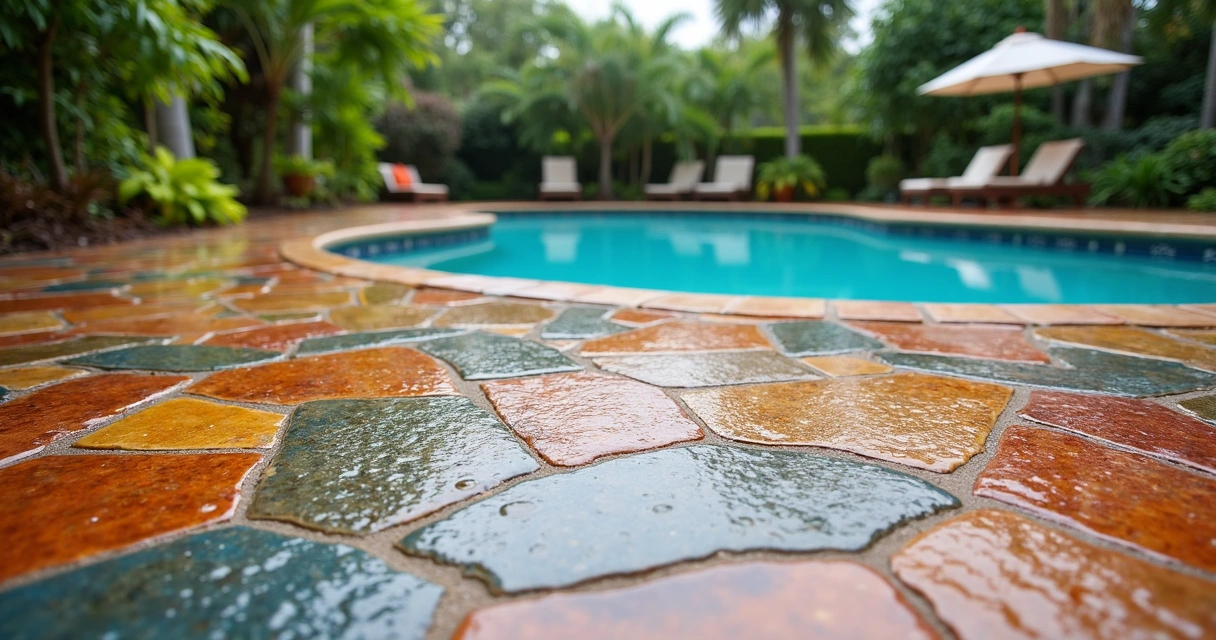
Special topics: pavers, turf, and artificial features
Not all outdoor spaces are a single slab. Pavers, borders, and artificial turf have their own sealing and drainage quirks. For pavers, we often use breathable sealers designed to lock joint sand and repel weeds. For more details on this, our resource covers it well: preventing weeds between pavers in Orlando.
Artificial turf and landscape features can add runoff pressure to nearby concrete—making rain protection even more valuable. At GCM Best Services, each project blends function and finish for real curb appeal.
When to call in professional help
DIY sealers from home centers may work for very small, simple areas, but several signs signal when it’s time to get a pro involved:
- Large or high-traffic surfaces.
- Decorative, colored, or stamped surfaces where a bad sealer choice can mean a costly redo.
- Surfaces with lots of stains, cracks, or prior coatings to address first.
- When you want a warranty or expect a long service life under Florida’s unique climate.
At GCM Best Services, we’re proud of our clean, OSHA-safe job sites, transparent communication, and no-obligation estimates. We always give a maintenance guide so you’re set for long-term success. If you want to schedule a free site assessment or get our tailored recommendations, just reach out.
Conclusion: invest in protection for every rainy season
In Central Florida, rain isn’t the exception—it’s the rule. The right concrete sealer is the difference between a surface that lasts and one that quickly shows stains, cracks, or fading. We’ve seen firsthand just how much frustration and expense you can spare by making smart choices from the start. From knowing your surfaces to matching product features and planning for drainage, you’re setting your property up for longer life and more curb appeal.
Don’t let another Florida rainstorm undo your investment. Choose wisely and protect your space today.
If you need help picking the best concrete sealer or want a trusted, local estimate, reach out to us at GCM Best Services. We’re here to ensure your patios, driveways, and walkways stand strong rain or shine.
Frequently asked questions
What is a concrete sealer?
A concrete sealer is a protective coating or treatment applied to concrete surfaces to prevent water, stains, and contaminants from penetrating the material. It can either create a visible film on the surface (like acrylics or epoxies) or penetrate deep into the pores (like silane/siloxane) to block moisture. Sealers also help shield concrete from mold, fading, and freeze-thaw damage—especially valuable in rain-heavy climates like Central Florida.
How to pick a sealer for rain?
The best sealer for rain protection is one that prioritizes water repellency, allows for moisture vapor to escape, and suits your surface type. For Florida homes, we recommend penetrating sealers for plain driveways and patios, and slip-resistant, UV-stable films for decorative or high-traffic areas. Always consider local climate, surface condition, and drainage when making your selection.
Which sealer works best in Florida?
In our experience at GCM Best Services, penetrating (silane/siloxane) sealers excel for most outdoor surfaces in Central Florida because they block rain and still let moisture out, greatly reducing mold and stains. For colored or stamped areas, UV-resistant acrylic or polyaspartic coatings can be great, as long as slip resistance and reapplication cycles are managed. Tailoring protection to each surface produces the best results in our humid, rainy region.
How often should I reseal concrete?
Outdoor concrete in Florida usually needs resealing every 2–5 years, depending on the product used, exposure, and traffic. Penetrating sealers can last up to 7 years, while acrylic and water-based films generally require refreshment every 1–3 years. High-traffic or south-facing surfaces may need more frequent care. Regular checks for fading, water absorption, or stains help set the timing.
Where to buy good concrete sealers?
Quality concrete sealers can be found through specialty construction suppliers, paint stores, or from local contractors familiar with the Florida climate. We recommend avoiding one-size-fits-all big-box brands for large or exposed projects. Instead, shop with knowledgeable pros or request product recommendations during an on-site estimate to ensure the right match for your conditions. If you want hands-on help or pro installation with written warranties, contact our team at GCM Best Services.
Ready for a professional quote? 📞 (407) 250-1948 • 24–48h • Orlando, Tampa & area.