Primary keyword: water feature designVariants: water features with pavers, natural stone landscaping, backyard water feature ideas
Audience: Homeowners and property managers in Central Florida looking to boost outdoor space value and appeal.
Pain/benefit: Struggling with bland yards or poor drainage? We guide you to create a stunning, low-maintenance water feature using durable pavers and natural stone that stands up to Florida’s climate.
Summary: Water features have the unique power to turn any Orlando or Central Florida landscape into an inviting, tranquil oasis. Using pavers and natural stone, we achieve a balance of beauty, function, and durability—that matters in our unpredictable weather. This article lays out key steps and creative ideas for designing your own water haven, always considering practical aspects like drainage, longevity, and upkeep.
Outline
- Why choose pavers and natural stone for water features?
- Initial planning and placement options
- Popular types of water features
- Choosing pavers and stone: types, textures, and colors
- Drainage, stability, and permitting in Central Florida
- Step-by-step: building a paver and stone water feature
- Finishing touches: integrating lighting, plants, and art
- Maintenance tips for lasting beauty
- Conclusion and next steps
- FAQ
Ready for a professional quote? 📞 (407) 250-1948 • 24–48h • Orlando, Tampa & area.
Why choose pavers and natural stone for water features?
From classic backyard fountains to meandering streams, the key to a lasting water feature is material. Here in Central Florida and Orlando, weather and soil conditions matter. At GCM Best Services, we’ve found that blending pavers with natural stone maximizes both style and function for outdoor water features. But why is this combination so popular?
- Durability in Florida’s climate. Both pavers and stone withstand intense sun, heavy rains, and storm winds.
- Slip-resistant surfaces when wet keep your space safer for family and guests.
- Options for colors, shapes, and textures to match any design vision—from modern minimalist to Old World charm.
- Pavers lay evenly and can channel water, reducing puddling or erosion around features.
- Natural stone brings unique character and organic beauty that manufactured options just can’t replicate.
Combining the structured lines of pavers with the natural shapes of stone softens hardscape edges, letting your water feature become a true focal point that blends with the outdoors. GCM Best Services specializes in this integration, always optimizing for function and aesthetics in Central Florida landscapes.
Initial planning and placement options
Design always begins with site selection. Ask yourself: Where will my water feature look best, and function best? Placement isn’t just about visibility. It also shapes sound, safety, and how your new feature fits existing hardscape and drainage. Here’s how we recommend approaching planning:
- Observe your yard at different times of day to find spots with natural shade, or where you want to draw attention.
- Consider sightlines from indoors—visible from your favorite window or patio?
- Watch how rainwater moves: is your chosen spot low-lying or prone to runoff?
- Keep in mind proximity to utilities for pumps or lighting, as well as electrical code for backyard installations.
- Leave enough access for maintenance, especially if you’re adding plants or fish.
A beautiful water feature is both seen and heard.
Think too about scale and shape. A large, bubbling rock in a courtyard looks different than a flowing stream beside a screen enclosure or pool. At GCM Best Services, we measure twice and plan drainage from the start—saving time and frustration later on.
Popular types of water features
Water features come in many forms. Your choice will set the mood and define the materials required:
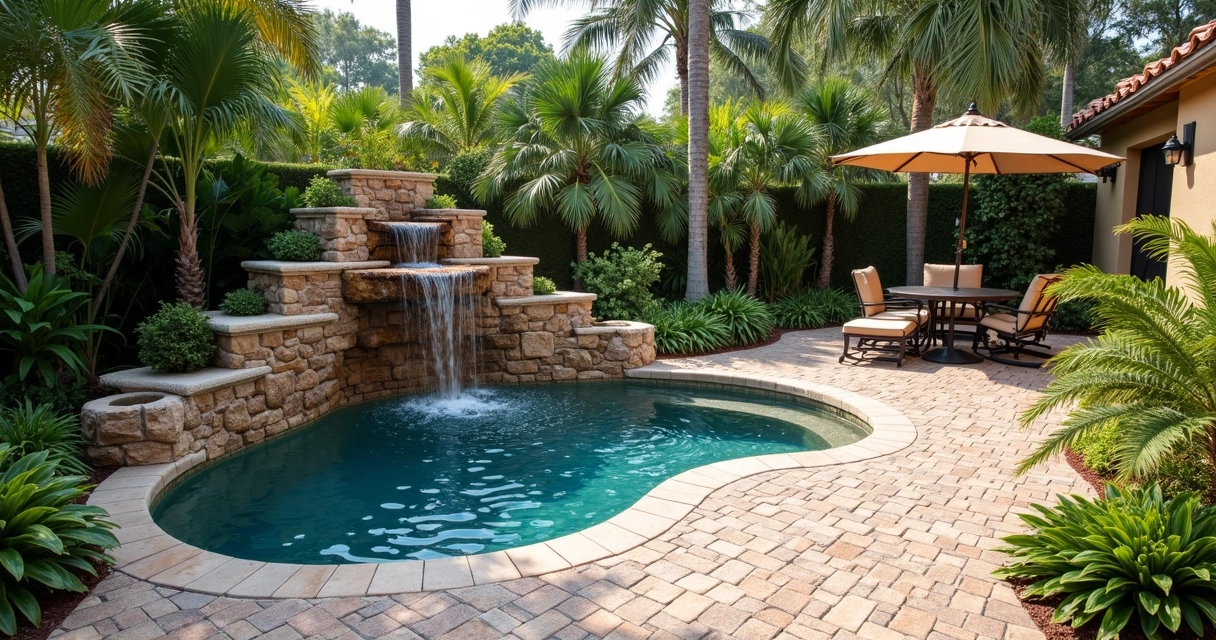
- Fountains: Freestanding or multi-tiered, often built with stacked stone or nestled into circular paver surrounds.
- Pondless waterfalls: Water cascades over stone but collects in a hidden basin below—great for small yards or families with kids.
- Naturalistic streams: Meandering water set between large stones and stepping pavers, bordered by landscaping.
- Reflecting pools: Clean-lined basins edged in smooth pavers, for a modern, mirror-like appearance.
- Wall water features: Water flows down a stone or tile backdrop, perfect for limited space or along patio walls.
Each of these can be customized for scale, complexity, and budget. For inspiration, sites like our hardscape projects in Orlando show examples of pavers and stone working together in local settings.
Choosing pavers and stone: types, textures, and colors
Material selection can make or break the finished look. At GCM Best Services, we love guiding clients through these choices to get a personalized result:
Pavers: shape, finish, and color
For patios and walkways around water features, we find certain paver options stand out in Central Florida:
- Interlocking concrete pavers—durable, with lots of shape and color choices, making curves and circles simple.
- Permeable pavers—let water filter through, excellent where drainage is needed.
- Textured finishes—slip-resistant and great for around wet areas; think tumbled, brushed, or exposed aggregate.
- Color choices—a spectrum from sandy creams to deep charcoals, matching local stone for a natural effect.
Natural stone: types and placement
Every piece of stone is unique. In our experience, most backyard water features benefit from Florida’s locally available or well-suited stones:
- Limestone—light-colored, with soft edges; stays cooler underfoot.
- Slate—offers strong color contrast, often used for wall features or flat coping.
- River rock and pebble—rounded, for lining streams or pools.
- Flagstone—irregular shapes for natural stepping paths and pool edges.
Texture is everything near water. Polished stones may be slippery, while rough-cut edges offer grip and visual interest.
Mixing materials for effect
Pairing a neutral paver patio with a stone centerpiece is a common and effective way to create a focal point. You can also blend paver borders with irregular flagstone for a wilder, waterfall-like edge. For even more backyard ideas, check out hardscaping inspiration on our blog.
Drainage, stability, and permitting in Central Florida
Weather in our region means we have to pay special attention to how water moves, flows, and drains. Standing water around any feature leads to erosion, algae, or structural problems. That’s why our process at GCM Best Services always includes:
- Assessment of site slope, rain patterns, and existing soil conditions.
- Compacted sub-bases (typically 6–8” for patios or stonework).
- Use of rebar or mesh reinforcement as needed for structural integrity in larger concrete or slab work.
- Drainage channels or hidden French drains beneath and around water features to reroute excess water safely.
- Consideration of pool codes, permits, and HOA guidelines for any plumbing or construction.
Good drainage is invisible—until the first rainstorm.
Our team manages permits and city requirements, so you avoid project holdups. Learn more about paver maintenance to keep your water feature area weed-free and beautiful year-round.
Step-by-step: building a paver and stone water feature
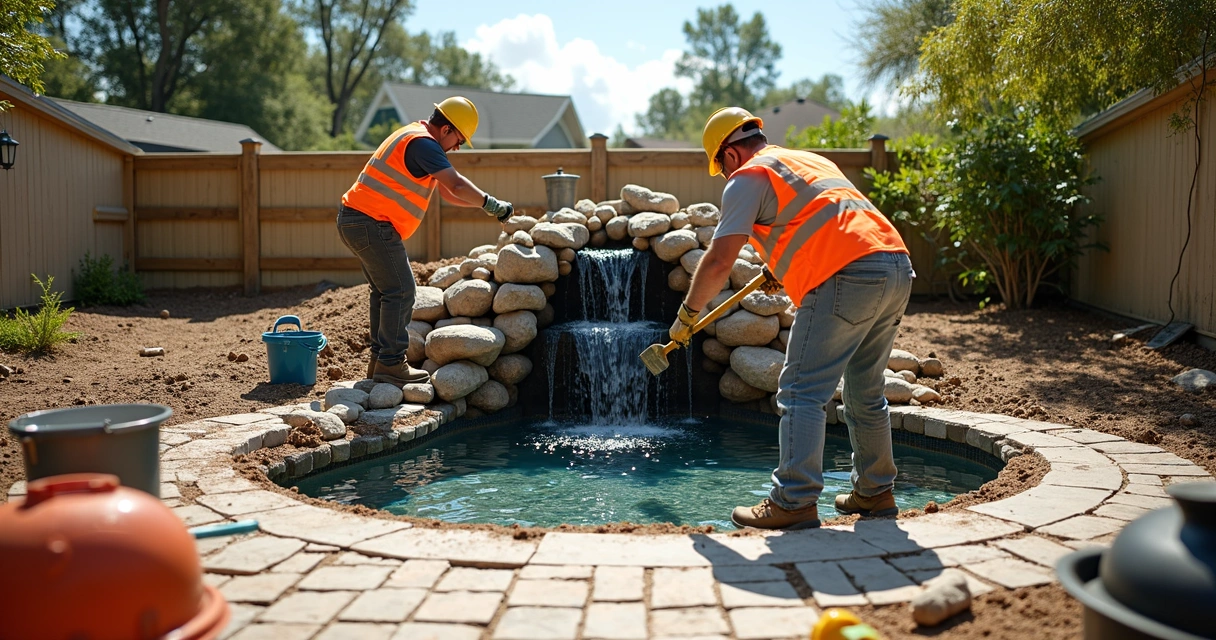
Let’s walk through the construction of a classic paver-surround pondless waterfall, a choice that suits many Central Florida homes for its safety and space-saving design.
- Mark the area and excavate. Use marking paint to outline your feature and surrounding patio. Dig to planned depth, accounting for a compacted gravel sub-base and the reservoir.
- Establish the base. Lay a tough geo-textile underlayment to keep soil from mixing with the gravel. Add a 6–8” layer of compacted base rock.
- Set your reservoir. Install a lined basin (heavy-duty pond liner or modular reservoir). Test for level and ensure fittings for pumps or drains are accessible.
- Begin stone placement. Largest stones anchor the waterfall or stream. Stagger for natural cascades, leaving room for water to flow over, under, and around.
- Lay pavers. Build the patio or walkway around the basin, using edge restraints and compacted sand for stability. Stagger joints for strength, and cut curves if desired with a masonry saw.
- Add plumbing and pump. Connect pump lines from the hidden basin to the top of your waterfall, checking all connections for leaks.
- Fill and test. Run the pump, watching the flow along stone surfaces. Adjust placement for sound and splash—sound is shaped by rock position and drop height.
- Edge with stone and plantings. Use smaller river rocks or cobbles to disguise the liner and blend the feature with the landscape. Add mulch and perimeter plants as desired.
Finishing touches: integrating lighting, plants, and art
Once the hardscape is complete, it’s the finishing details that make your water feature sing. In our projects, we often:
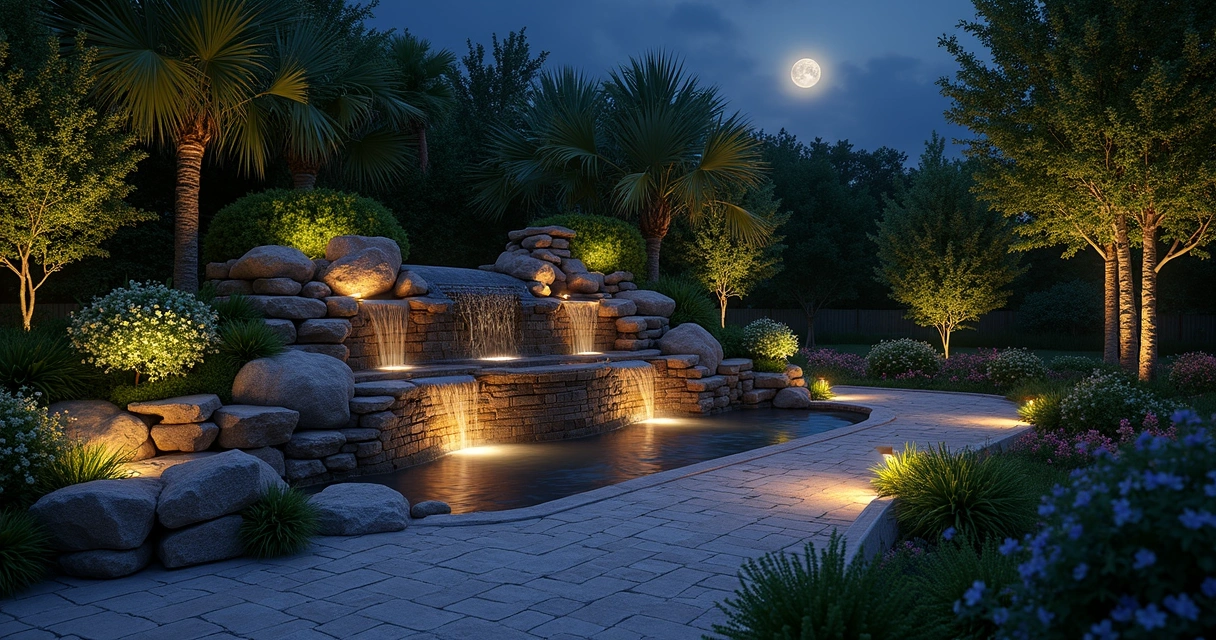
- Install LED lighting. Submersible or in-ground fixtures highlight moving water, add safety, and extend enjoyment into the evening. Warm white is most natural.
- Choose appropriate plants—moisture-loving grasses, canna lilies, or low ferns help soften stone edges while thriving in Florida’s humidity.
- Add aquatic or marginal plants for ecological balance, which helps control algae and attracts pollinators.
- Use unique garden art or sculptures to personalize the space. These can be nestled among rocks or set on paver pedestals for dramatic effect.
Browse our hardscape solutions for ideas pairing stonework, lighting, and integrated planting in Central Florida settings.
Maintenance tips for lasting beauty
Low-maintenance doesn’t mean no maintenance. Here’s how we recommend keeping your paver and stone water feature at its best in Florida’s climate:
- Check pump and plumbing monthly for clogs or debris, especially after storms.
- Remove leaves and organic matter before they rot—a net or skimmer basket is helpful.
- Trim back aggressive plants and clean out any algae as needed.
- Watch for paver shifts or settling after heavy rain; replenish polymeric sand in joints to control weeds and movement.
- If using a timer for lights or pump, adjust seasonally for best performance and efficiency.
Well-kept water features are as rewarding in year five as in week one.
Professional cleaning or sealing of stones every 2–3 years keeps colors deep and surfaces easy to clean, which is a service GCM Best Services offers to our clients.
Conclusion: bring lasting beauty to your landscape with GCM Best Services
Designing a water feature with pavers and natural stone is part art, part science—especially in Central Florida’s climate. With thoughtful planning, smart material choices, and expert construction, your outdoor space can be both beautiful and durable, reflecting your own style and bringing peace to every day. Our team at GCM Best Services handles every detail, from the first walk-through to the final guarantee. If you’ve imagined a bubbling fountain, calming pond, or winding stream framed with sturdy, beautiful stone and pavers, we are here to help create it—with photos, clear communication, and reliable timelines.
Ready to see what’s possible in your space? Start with a no-obligation visit to discuss your ideas, and let GCM Best Services recommend a solution designed for your home and your life.
Frequently asked questions
What is a water feature with pavers?
A water feature with pavers uses concrete or stone pavers for the surrounding patio, path, or edging, combined with a water element like a fountain, waterfall, or pond, often anchored by natural stone for visual interest and durability. This approach blends the structured, walkable surfaces of pavers with the organic feel of rock, producing features that are both beautiful and easy to navigate in the landscape.
How to choose the best natural stone?
Look for stone that complements your existing hardscape, thrives in Florida’s climate, and provides a safe, textured surface around water. Limestone and river rock are popular for their light color and cooling properties, while slate adds dramatic color. Consider mix, size, and roughness for slip-resistance. Always request samples or see installed projects before making your final pick to ensure you like the color and character in natural light.
Is it worth it to use pavers?
Yes—pavers provide stability, easy maintenance, and visual consistency, making them an excellent choice for areas around water features. They’re designed to handle Central Florida’s soil movement and rainfall while keeping pathways firm and safe. Interlocking pavers can also be lifted and replaced if repairs or design changes are needed, which is more flexible than poured concrete.
How much does a water feature cost?
Costs range widely depending on scale, complexity, and material. A small pondless waterfall with surrounding pavers may start around a few thousand dollars, while larger or custom designs with lighting, elaborate stonework, and extensive planting can go up in price. The true value comes from choosing durable materials and expert installation, resulting in reduced long-term repair and maintenance costs. For a precise estimate, it’s best to schedule a site visit with our team at GCM Best Services so we can factor in your vision and site conditions.
Where can I buy quality pavers and stone?
You can source pavers and natural stone through professional suppliers who focus on landscaping and hardscaping products. Partnering with experts ensures you get the right materials for Central Florida’s climate and soil. If you work with GCM Best Services, sourcing, selection, and installation are all handled as part of our full-service process. We can show you material options and guide you toward styles that deliver both visual appeal and performance.
If you’re searching for backyard inspiration, explore more at our driveway and patio paver gallery to see how pavers and stone shape beautiful, functional outdoor living in Orlando and beyond.