When working with epoxy outdoors in Central Florida, shade plays a major role in both curing and the consistency of color. For projects as diverse as patios, driveways, garage floors and pool decks, understanding how shade impacts outcomes can save money, time, and frustration. At GCM Best Services, we’ve seen how carefully managed shade can protect beautiful finishes—or how unexpected shadows can lead to uneven curing or visible color differences. Here, we’ll clarify the science and share hands-on lessons so your next concrete or coating project looks its best for years.
Sun and shade—they can change everything when it comes to epoxy outdoors.
Epoxy curing basics: What you must know first
Before discussing shade, let’s make sure we’re all on the same page about epoxy curing. Epoxy cures through a chemical reaction of resin and hardener. Unlike paints that “dry,” epoxy needs the right temperature, humidity, and surface prep to harden fully. Outdoors, weather and sun can introduce lots of variables. In Florida, curing is rarely just about “waiting”—it’s about carefully managing the environment.
- Temperature: Curing speeds up in heat, slows in cold.
- Humidity: Too much moisture can cloud or “blush” the finish.
- UV exposure: Sunlight degrades and discolors epoxy over time.
- Surface: Clean, dry, and rough enable best results.
Failure to cure evenly leads to weak spots, soft finishes, and color inconsistency. Each of these trouble points is affected directly by the presence—or the absence—of shade during application and curing.
How does shade affect epoxy curing?
Shade is a double-edged sword. On hot summer days, shade may protect the epoxy surface from rapid heating. That’s usually good news for working time and surface flow. But shadows in the wrong place at the wrong time can spell uneven curing and color. It’s worth planning to control shade, not just hope for the best.
Shade slows down the chemical reaction
Epoxy cures faster when warm. In cool, shaded conditions, the reaction slows. Inconsistent shade across a surface creates areas that harden at different rates. If the sun moves during curing, this can produce “waves” of hardness or create soft and glossy or tacky patches.
- Under trees or buildings, shaded areas might stay cool, causing slow or incomplete cure.
- Sun-exposed areas warm up, curing faster.
- Differences in heat and cure rate can cause texture, gloss or color variations.
This is why we at GCM Best Services always evaluate the path of sun and shade throughout the day when scheduling epoxy jobs.

Wind and shade combine
Shade can also affect wind patterns across a jobsite. We’ve noticed that breezy shaded areas cool down faster, while sun-exposed areas not only heat, but sometimes dry out the surface too fast, leading to bubbling or a “cratering” effect. Outdoor curing is rarely static.
Trouble with “partial cover”
Partial shade—think of a lattice, or a tree’s dappled shadow—often results in spotted or streaky appearances if not planned for. This usually isn’t realized until the project is done and the surface is viewed in angled daylight the next day.
A single afternoon cloud, or a shadow from last-minute lawn furniture, can mark an otherwise perfect surface.
Color consistency: the hidden risk of shade outdoors
Epoxy’s color is sensitive not only to the original mix but also to how the resin cures. Shade affects temperature and humidity, and both change how color develops during curing. Sometimes, even pigments or flakes broadcast onto the surface react differently in shade compared to full sun.
Color inconsistency is often the first problem a homeowner notices—but it’s usually the last one a DIY installer expects. That’s what makes the subject so essential in professional work.
Shade and sunlight affect pigment development
Epoxy pigments, dyes, and additives do not all behave the same way. According to this research on color stability of thermal-insulating epoxy coatings (https://pmc.ncbi.nlm.nih.gov/articles/PMC9105866/), exposure to solar radiation and time causes measurable color tone changes. The relationship is simple: the more sun, the higher the chance of color fading or altering over time. However, shadows cast during curing reduce this direct UV exposure, sometimes helping to preserve initial color—but quite often resulting in patchy or “mottled” tones due to the mix of environments.
- In the sun: faster curing, potentially lighter or faded look, yellowing over time.
- In the shade: slower cure, deeper or glossier color, sometimes even “chalky” appearance if humidity is high.
- Where sun and shadow meet: lines or blotches can appear, distracting from the overall effect.
Additives and their color response under shade
Research into plant-based additives, such as the study assessing turmeric and garlic in epoxies (https://pmc.ncbi.nlm.nih.gov/articles/PMC12692808/), shows that even the choice of colorant can radically change shade’s impact. Turmeric produced a visible color shift (ΔE = 9.26) toward yellow, while garlic had almost no effect (ΔE = 0.05). What this means in practice is that, outdoors, the kind of additive or pigment you use matters just as much as the curing environment.
Moisture condensation in shade
One trap that beginners—and even some pros—sometimes fall into is dew or condensation in shaded areas. As night falls and temperatures drop, shaded areas may grow damp or even collect a film of water on uncured epoxy. This can “blush” the finish, making it cloudy, milky, or slightly discolored.
Managing shade: How we control outdoor results
To get professional, predictable results, we never leave the effect of shade to chance. At GCM Best Services, our process for outdoor epoxy application follows several clear steps:
- Site and shade assessment: Before mixing, we walk the surface, monitoring sun, shade, and wind across the hours when application and initial cure take place. We use sun path apps and schedule jobs accordingly to limit moving shadows.
- Surface prep and tenting: Whenever possible, we’ll use temporary shading or tents to even things out. For driveways or patios, we may even wait for a consistent forecast rather than rush into less-than-ideal conditions.
- Batch control: We mix smaller batches for large areas, and blend at cut lines, so sun/shade transitions never land in the middle of a surface.
- Moisture monitoring: We always test for dew or condensation if curing is expected overnight.
You’ll see this meticulous approach recommended in any guide to licensed concrete and coating applications, because it really works.
Epoxy and color: Case studies from Florida jobs
From pool decks to driveways and garage slabs, we’ve handled every kind of outdoor epoxy scenario Central Florida has to offer.
- Driveway with striped shade: We once resurfaced a driveway where a palm tree cast thin shadows across the area right around noon. Left unmanaged, the result would have been faint striping—clear to the eye at midday, invisible at other times. By scheduling the pour early in the morning, we avoided the issue entirely.
- Patio with shifting roofline: The shade shifted as the sun moved, so we installed a temporary cover and worked rapidly in sections, blending edges with an overlap technique.
- Warehouse epoxy color matching: Indoors, lights are constant, but a nearby skylight created a lighter patch where crates had blocked sunlight during initial curing. The fix required a gentle sanding and recoat for an even tone.
Shade issues can crop up in countless forms. The only way to ensure a positive result is to approach each one methodically, with local experience. Our concrete and coatings team know Orlando’s quirks better than anyone.
The science behind color shift: Sun, pigment, and epoxy aging
Epoxy color changes don’t just happen during the initial cure. According to research on color stability under environmental exposure (https://pmc.ncbi.nlm.nih.gov/articles/PMC9105866/), the real shift happens over the lifetime of the surface, with sunlight and weather combining forces. In southern climates, daily sun exposure can yellow or fade epoxies, while shaded areas remain darker and more original in tone.
Even a perfectly-applied surface may take on a checkerboard look after a year if some parts are in shade and others are not.
This is why we pay close attention to permanent shade (from trees, rooflines, or neighboring structures) before recommending specific coloring systems or protective topcoats for our customers.
Practical ways to promote even curing outdoors
Achieving uniform epoxy curing and color outdoors in Florida isn’t impossible—it just takes planning, patience, and the right techniques.
- Watch the weather: Schedule application for stable, dry weather with as little shade shift as possible. If cloudy, make sure the whole surface receives equal exposure.
- Temporary covers: Use tents or tarps to block direct sun or remove dappled shade. Work in cool, consistent light.
- Apply in “bands”: Work in whole sections. Don’t leave a line between sun and shade for any part of the curing process.
- Control moisture: Do not apply if dew, rain, or condensation is possible before full cure.
- Choose the right products: Ask about UV-stable, colorfast epoxies, especially for pool decks or any exposed, sunlit surfaces. We use 100% solids and polyaspartics for this reason.
Consistent results outdoors start with predictable conditions—but finishes that hold up long-term require the right chemistry.
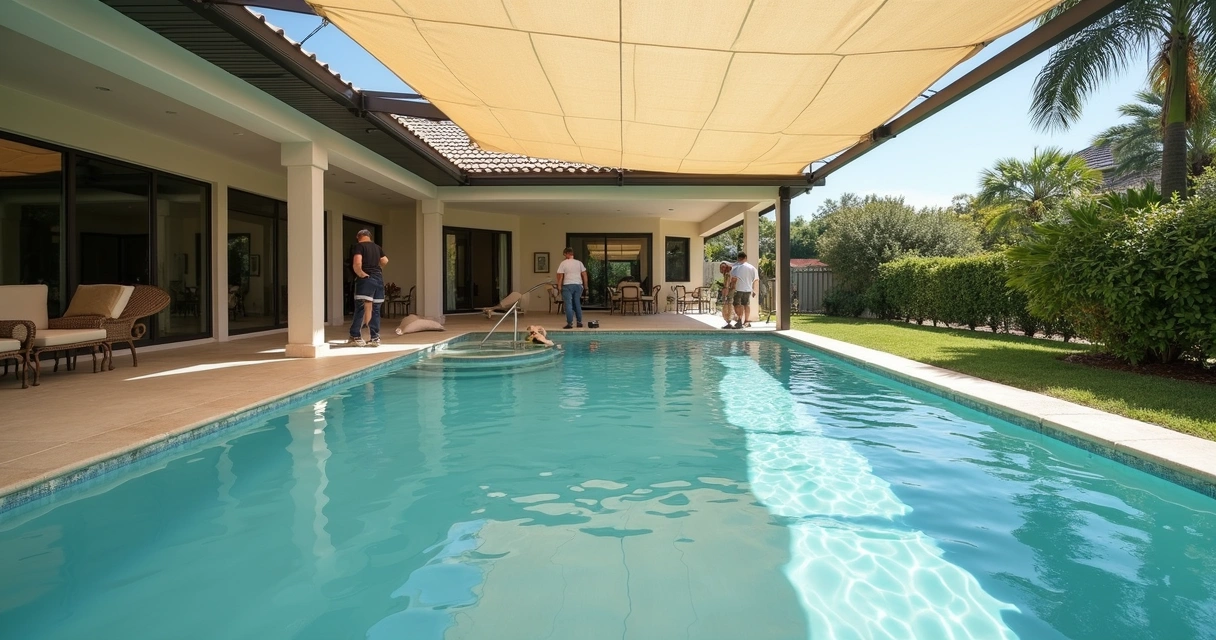
Why color and shade matter for Orlando’s homeowners
Florida’s intense sun and rapid weather changes create challenges for any exterior finish—epoxy even more so. At GCM Best Services, we see that color consistency isn’t just a matter of looks; it’s a sign that the surface was cured evenly, meaning good adhesion, longer life, and easier cleaning. We recommend reviewing our best practices for patio and driveway integrity to keep your slab in prime condition before applying any surface coatings.
For projects like patios, garage floors, pool decks, and more, our customers often ask how to combine pavers, turf, and concrete in a way that resists cracking and color fade over time. We do this by coordinating the timing and application of each material—a subject we go into detail in our resource on hardscape solutions for Central Florida.
Feedback from Central Florida property owners
Homeowners usually report one of two outcomes after a DIY outdoor epoxy project: relief that everything looks smooth and matches—or the frustration of lines, spots, or patchwork gloss. Most times, the difference came down to how much shade moved during curing, or if the weather changed.
Working with the sun and shade, not against them, leads to better results.
Key takeaways for better outdoor epoxy results
- Monitor shade before, during, and after application: Plan timing to limit moving or patchy shadows.
- Blend edges and batches at “cut lines”, not in mid-slab: This keeps any tiny cure variations invisible to the eye.
- Control humidity and dew risk in shaded zones: Epoxy blushing or clouding is often caused by moisture.
- Select UV-stable, colorfast chemicals for all exterior jobs: Ask your contractor or supplier.
- For complex layouts, consider professional support: Combining pavers, turf, or concrete with epoxy can look spectacular, but only when done with experience.
What about color flakes and textures in epoxy?
Adding color flakes or quartz does two things. First, it helps mask any slight imperfections in batch color or gloss. Second, it increases slip resistance. However, even with flakes, different drying rates caused by shade or sun can still make for visible differences. We make sure to broadcast flakes evenly and back-roll when the mix is still in the workable window.
Long-term color: Sun, shade, and maintenance
Over time, epoxies exposed to sun (even with UV-stable formulas) will lose some vibrancy. Long-term testing of outdoor epoxy color has shown a direct link between solar radiation, time, and shift in tone. Shaded areas remain darker and more “original” in tone, which can be either a benefit or a disadvantage, depending on design intent. Regular cleaning and periodic resealing keep all areas looking fresher for longer.
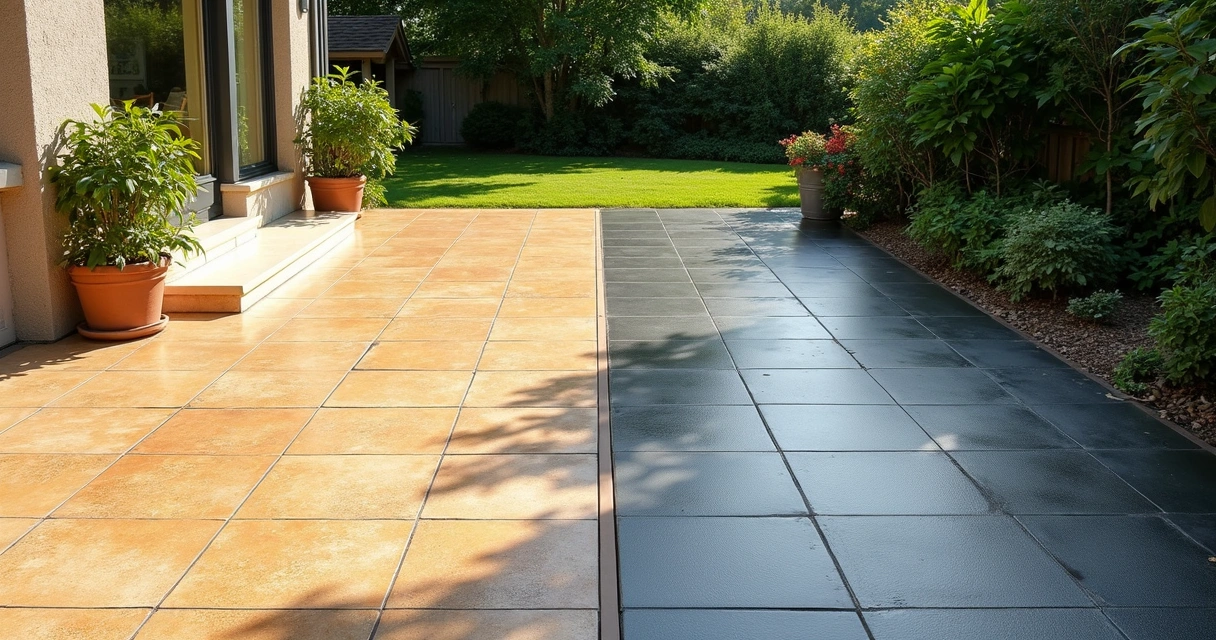
Integrating epoxy with other hardscaping surfaces
If you’re combining epoxy with concrete, pavers, or turf, shade effects can be magnified. Each material reacts differently to sun or shade—and mismatched colors or aging effects can stand out. Our guidance on paver care and weed prevention also addresses how to keep adjacent surfaces clean and color-matched.
Conclusion: Why right timing and shade control give you the best result
Epoxy curing and color consistency outdoors are deeply affected by shade. Uneven exposure to sun and shade can cause streaks, patchy curing, and color mismatch—sometimes even leading to premature failure in Central Florida’s climate. At GCM Best Services, we take a scientific and practical approach to ensure your exterior surfaces are applied and cured under the most consistent conditions possible. Managing shade and sun, choosing the right materials, and timing every step means a beautiful, long-lasting result that keeps its color and strength. If you want professional, warrantied outcomes with visible proof, trust a team that treats every outdoor surface as unique.
Ready to get started with an expert assessment of your project? Our team works with sun, shade, and Florida’s unique challenges to deliver beautiful, permanent finishes.
Ready for a professional quote? 📞 (407) 250-1948 • 24–48h • Orlando, Tampa & area.
Frequently asked questions
What is epoxy curing in the shade?
Epoxy curing in the shade means that the chemical hardening reaction happens at a cooler, less UV-exposed temperature compared to full sun. This slower cure can lead to differences in gloss, texture, and hardness vs. sun-exposed areas. Uneven curing may appear if the surface is partly in shade and partly in sun for any significant period.
How does shade affect epoxy color?
Shade can lead to deeper or more original pigment tones, but in mixed environments it often produces patchy or uneven color when compared to sun-cured areas. The differences can include gloss, brightness, and even finish texture—especially if the base color or additives are sensitive to temperature and humidity during cure.
Can I cure epoxy outdoors in shade?
Yes, you can cure epoxy outdoors in the shade, and in Florida it’s sometimes preferred to avoid overheating. However, it’s important to ensure that the entire surface receives consistent shade and temperature for the duration of the curing process. Moving or patchy shade elevates the risk of uneven curing and color.
Is color consistency better in sunlight?
Not always. While full sun can give a uniform color in some cases, it also increases the risk of yellowing, fading, or overheating the surface, which may cause defects. The best color consistency comes from maintaining stable, even exposure—either in full shade or soft daylight, but not a mix.
How to get even epoxy color outdoors?
To get even epoxy color outdoors, plan so the entire area has the same exposure (all sun or all shade) for at least the initial cure window, use UV-stable color additives, and apply in complete sections rather than small patches. Avoid partial shade and finish all edges with overlapping blending techniques.