Primary keyword: multi-level patio design
Variants: Florida patio design, sloped yard patio, Orlando outdoor living, layered hardscape construction
Audience: Homeowners, property managers, and business owners in Central Florida seeking attractive and practical outdoor solutions for sloped or uneven lots.
Pain/benefit: Challenging grades make standard patios impractical; multi-level patios transform unusable slopes into elegant, durable outdoor living zones.
Summary: Multi-level patios unlock a world of outdoor possibilities for Florida properties struggling with slopes and uneven land. The right design choices, materials, and drainage strategies can turn even the trickiest lot into a long-lasting, useful retreat. In this article, we’ll walk you through each of the steps required, the specific local soil conditions, and why a contractor like GCM Best Services makes all the difference for Central Florida projects.
Outline
- Why multi-level patios work for Florida lots
- Understanding Florida soil and site challenges
- First steps: assessment, survey, and vision
- Detailed planning: structure, layout, and flow
- Materials that last in Florida’s climate
- Foundation and sub-base: the root of a stable patio
- Drainage and water management for multi-level patios
- Safe transitions: steps, walls, and railings
- Finishing touches: surfaces, lighting, and landscaping
- Permits, inspections, and code in Central Florida
- Case study: bringing it together in Orlando
- Conclusion and next steps
- Frequently asked questions
Outdoor dreams come to life—even on a slope.
Why multi-level patios work for Florida lots
Traditional patios often fail when installed on sloped or irregular ground, especially in Central Florida where sandy soil, rapid rainfall, and odd lot shapes add to the design puzzle. Multi-level patios, on the other hand, allow us to craft distinct outdoor spaces—each adapted to elevation, use, and view. Imagine a grilling station on one level, a shaded lounge below, and a flower bed cascading between—each connected but uniquely purposeful.
Multi-level patios not only maximize usable space but also add depth and character to a yard. On properties that drop off quickly or rise towards the back, flat patios can look shoehorned-in or, worse, invite water problems. By stepping the design, we can create zones for dining, entertaining, play, or quiet retreat—all with better drainage and easier maintenance.
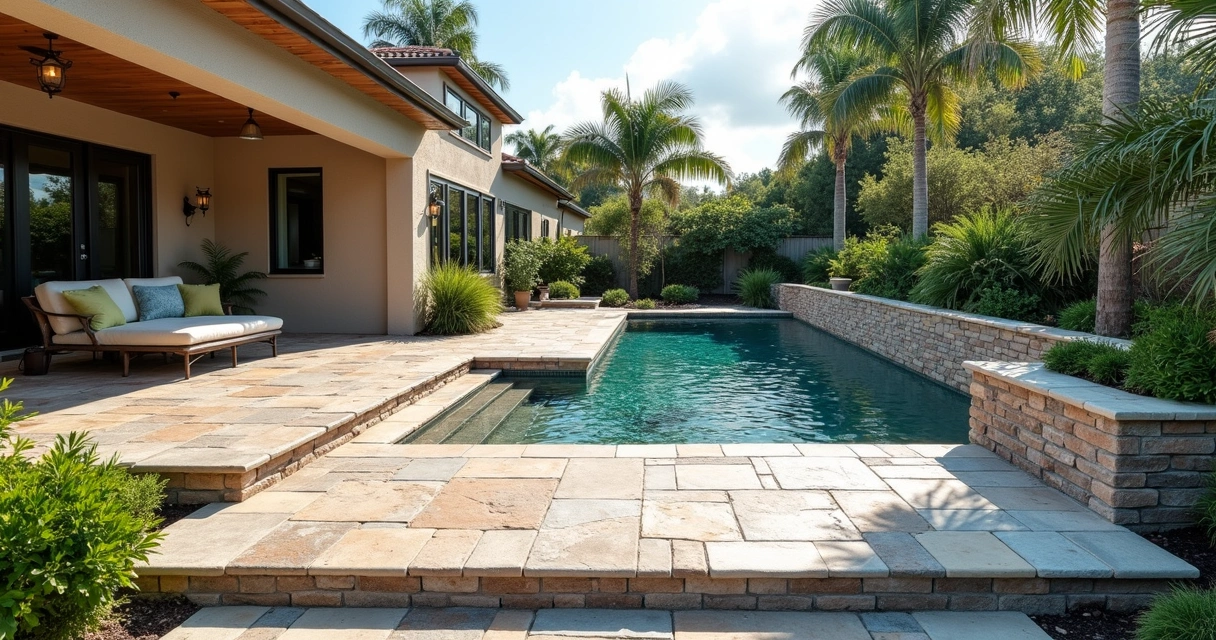
In our experience at GCM Best Services, we’ve seen neighbors admiring newly built, terraced patios and asking about the smart transitions and crisp lines. Multi-level patios offer that “wow” factor, all while solving tough problems under the surface.
Understanding Florida soil and site challenges
Florida presents a unique mix of soils and geologic quirks. Every decision we make—down to how deep we dig or what materials we choose—starts with the ground itself.
Common soil issues in Central Florida
- Highly sandy Myakka soil: Drains fast, struggles to hold nutrients or moisture, according to University of Florida’s Gardening Solutions.
- Areas of compacted urban soil: Construction activities crush pore spaces, restricting drainage and plant growth (UF IFAS Extension).
- Expansive clays in North Florida: The Florida Department of Environmental Protection notes these “problem soils” can expand or shrink with rain, stressing foundations.
- Histosols in wetlands/low areas: Very low bulk density and poor load-bearing, which limits what we can build (University of Florida).
Even within Orlando, two adjacent homes might have very different soil profiles. That’s why we always start with a site-specific assessment—including probing for fill, checking for buried debris, and sometimes recommending a professional soil test if we suspect clays or organic soils that could settle.
The ground below decides how your patio performs above.
First steps: assessment, survey, and vision
The first thing we do is walk the lot—with eyes open for problem spots other contractors might skip. For homeowners, this is the time to dream, sketch, and gather inspiration, but for builders like us, it’s the moment to spot the things that make or break a hardscape project.
Checklist for a thorough assessment
- Take elevation points for key areas (house, yard, trees, easements)
- Locate utilities (water, gas, electric, irrigation, drains)
- Map the sun’s path to guide placement of seating, shade, and steps
- Study water runoff patterns after rain
- Review any HOA guidelines or city ordinances
- Assess soil stability and drainage by probe or test
With these details, we can advise which parts of the yard can support a large slab, which need pavers or retaining walls, and where drainage or erosion control will matter most. This is also when we want homeowners to describe how the space will be used—quiet morning coffee, large gatherings, play, pets, or maybe all of the above.
Detailed planning: structure, layout, and flow
Once we understand the land’s limits and potential, we move to the drawing board. Good planning is about getting the flow and function right, not just the look. A successful multi-level patio works like a set of outdoor living rooms, each tuned to grade, purpose, and comfort.
Three planning secrets for great flow
- Connect spaces naturally. Step heights should be comfortable to walk, with landings wide enough for furniture where needed.
- Maximize views and privacy. Place seating to boost lake, garden, or pool vistas, and use frameworks or screens to block unwanted sights.
- Integrate utility with style. Retaining walls can double as seating; steps can play off landscape lighting; railings may support planters or even integrate with screening.
We use 3D design tools to help visualize the steps and connect levels, but what matters most is how it feels as you walk through the completed space. No dead ends. No awkward climbs. Comfortable transitions.
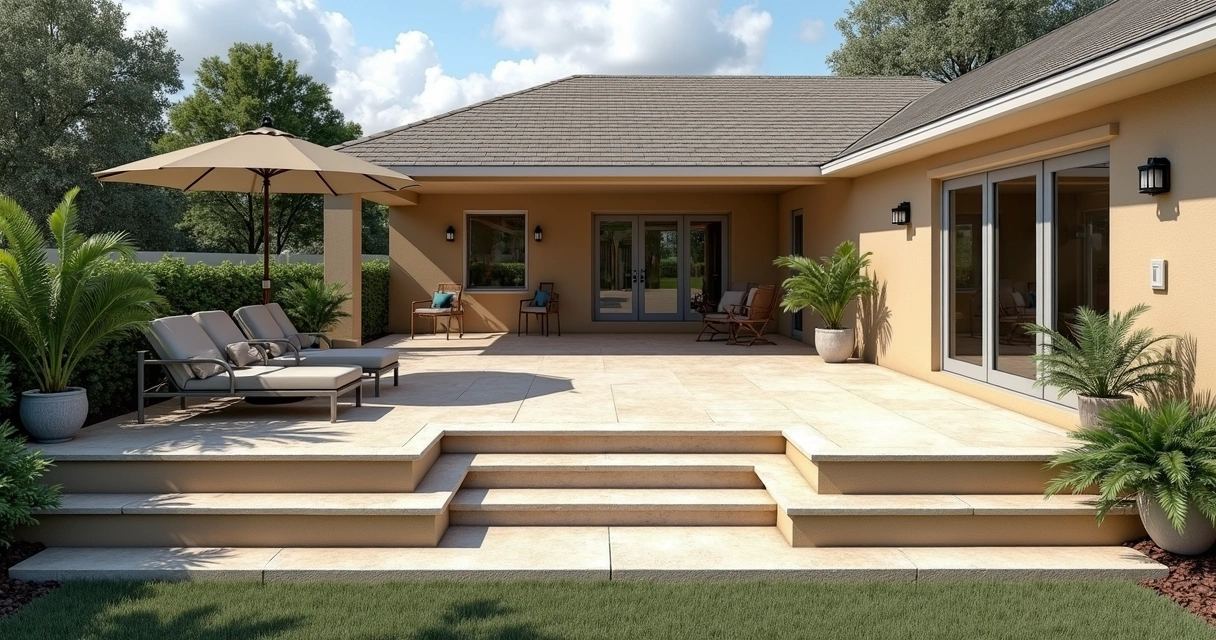
In every plan, we suggest a balance: hardscape where you host, green where you rest your eyes, and smart transitions to lead people—and water—where you want them to go.
Materials that last in Florida’s climate
Florida’s sun, rain, and humidity can break down outdoor materials fast. That’s why we recommend certain products, like concrete, brick, pavers, and high-performance coatings, which have a proven track record in the region. For those considering patios, we love to share the options you can discover in our overview of hardscape solutions.
Top choices for patios in Central Florida
- Concrete: Durable for heavy furniture, can be poured in steps and given non-slip finishes. Proper jointing and reinforcement (rebar or mesh) help it resist cracking from soil movement and heavy rain.
- Pavers: Aesthetic flexibility, easy repairs, and excellent for permeable installations (paired with good sub-base prep). Sanded joints allow water movement and reduce puddling.
- Natural stone (when suitable): For portions of the patio with stable, well-draining soil, stone provides premium texture and aging, though it needs careful layout to avoid uneven settling.
- Brick: Timeless Florida style, especially when installed with polymeric sand and edge restraints for long-term stability (see patio paving best practices).
- Composite decking: In specific cases over very poor soil, low-maintenance products can work for certain tiers or balconies, but always paired with solid framing.
When selecting finishes, high-build coatings and color-matched concrete sealers keep stains at bay and brighten up the space, while resilient paver sealants extend the life and color of brick or stone.
Foundation and sub-base: the root of a stable patio
Surprisingly, most patio problems have nothing to do with surface—but everything to do with what’s underneath. If the foundation isn’t right, cracks, settlement, and loose pavers will follow, fast. For multi-level patios, this work becomes even more critical.
What goes under your patio in Florida?
- 6-8″ of compacted sub-base material, adjusted for soil type (see the Florida Department of Environmental Protection for problem soil guidelines).
- Concrete mix of 3,000–4,000 PSI strength for slabs, fiber mesh for added stability, and rebar as needed.
- Proper geotextile barrier to separate soil and stone, reducing weed and root intrusion.
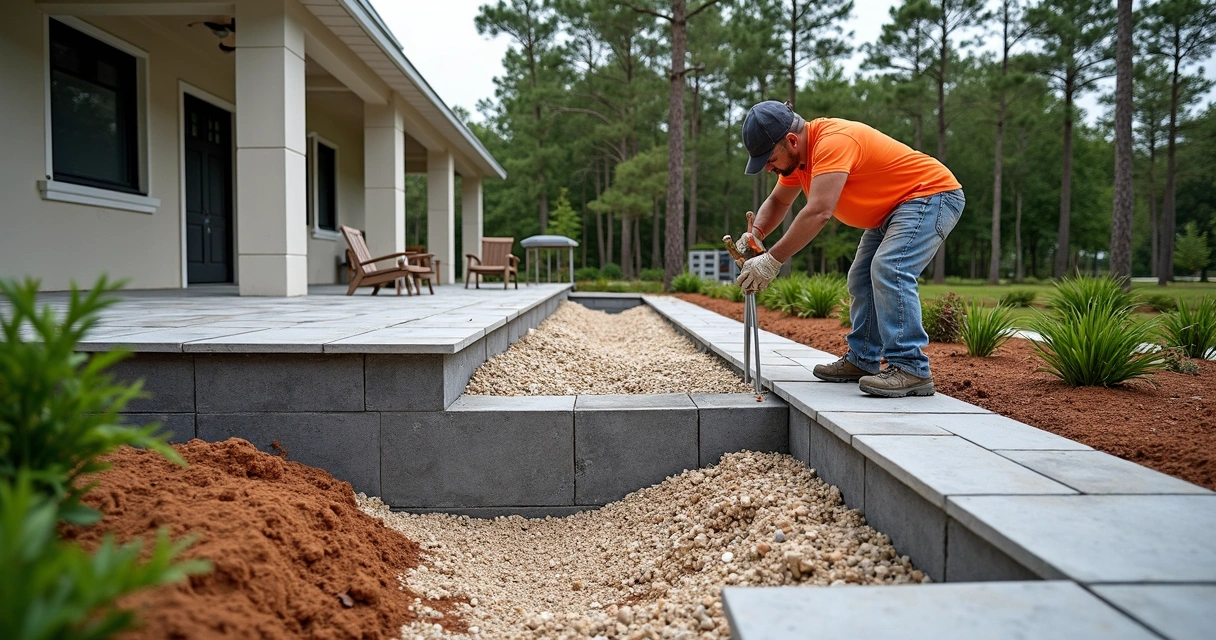
- Drainage piping or gravel beds beneath low steps or walls to keep water from pooling and causing erosion.
We always consider compaction, especially since studies by IFAS Extension highlight that highly compacted soil can lead to long-term plant and drainage issues. Careful construction keeps the patio rock solid and helps nearby landscaping thrive.
Drainage and water management for multi-level patios
Water is usually the main reason patios fail. In Central Florida, sudden storms mean poorly planned patios can become ponds or—worse—damage house foundations or neighbor’s yards. Water must flow away, not pool, and reach safe outlets quickly.
Best practices for draining multi-level patios
- Pitch each patio surface at least 1/8″ per foot away from buildings
- Layer drains or French drains at step-down points between patio tiers
- Use channel drains at the base of retaining walls and at the lowest level
- Plant beds and turf strips double as buffer zones to absorb extra runoff
- Choose permeable pavers for some spaces to let rain soak in
In projects requiring paved areas, advanced drainage tips are detailed at our drainage solutions for paver patios page. It’s always better to over-engineer water management than risk costly repairs.
On especially flood-prone or coastal lots, state-financed projects may require a sea-level impact projection study to plan for long-term water rise and resilience—so large or commercial projects always start here.
Safe transitions: steps, walls, and railings
Each tier in a multi-level patio needs to connect safely and attractively. Our priority is keeping step risers uniform, making sure handrails meet local code, and that walls—whether for structure or style—hold up for years.
- Use broad, low-rise steps for comfort (typical Florida standard: 4-6″ risers; 12″-16″ tread depth)
- Add LED tread lighting for slip prevention on nighttime transitions
- Retaining walls built with concrete, stone, or modular block—engineered for Florida soils and matching the overall style
- Pillars, rails, and fencing for both protection and decorative accent
Every detail is checked during our walkthrough. Where drop-offs exceed code requirements, we install strong, corrosion-resistant railings or raised planters. The goal: beauty, comfort, and no trip hazards.
Finishing touches: surfaces, lighting, and landscaping
With the patio structure complete, little details bring the space to life. We suggest high-build elastomeric coatings for concrete, which resist stains and mildew; color-coordinated polymeric or sanded joints for pavers and brick; and sealed natural stone for longevity. Wherever possible, we aim for blends that match the home and landscape, as shown in our paving project gallery.
- LED or solar lighting tucked along steps, walls, or under benches for safety and ambiance
- Movable planters or built-in landscape beds for green visual breaks
- Drip irrigation for planters and turf for thriving color all summer
- Weatherproof furnishings designed for year-round Florida use
- Screen enclosure tie-ins to keep insects at bay over select levels
We often add accent borders in contrasting colors, wide landings for outdoor kitchens, and artificial turf sections where grass might not survive.
Permits, inspections, and code in Central Florida
Every city and county in Central Florida has codes that govern how high a patio or wall can be, safety rail mandates, setback distances, and rules about stormwater runoff. Skipping permits or falling short of code can mean fines, forced removal, or denied insurance claims after a storm.
GCM Best Services manages permits, HOA approvals, and required inspections from first sketch to final walkthrough. We coordinate drainage inspection, compaction logs, and compliance with all wind-load and impact safety standards (especially for features like screen enclosures or structural walls).
Case study: bringing it together in Orlando
We had a client in suburban Orlando who wanted an outdoor kitchen, lounge, and fire pit space on a sloped quarter-acre lot facing a conservation area. The back already held patches of standing water after storms, and trees lined the property line.
- Step 1: We mapped the grade and found a two-foot drop from the house to the yard’s edge.
- Step 2: The design team created three tiers—a grilling and prep zone nearest the house (poured, sealed concrete), a wider paver terrace for lounging (with drainage layers and a French drain), and finally a sunken fire pit circle linked by wide steps and gentle LED lighting.
- Step 3: Sub-base excavation and proper compaction, plus integrated drains, kept water away even during 2023’s record rains.
- Step 4: The built-in retaining walls served as both structure and benches, with artificial turf around the fire pit for barefoot comfort.
Neighbors were impressed how seamlessly the three levels blended. Months later, the owner described it as “the only place in the house that’s never soggy.”
Conclusion and next steps
Designing multi-level patios on challenging Florida lots takes site-specific planning, durable materials, expert drainage, and a builder who listens and adapts. At GCM Best Services, we believe every yard can be transformed into inviting, safe, and long-lasting outdoor living—even if it starts with a slope, sand, or tough soil.
If you’re ready to see what your property could become, let us guide the way. Schedule a free, no-obligation visit to discuss your ideas. We’ll walk the lot with you, provide a detailed estimate, and craft a plan that brings out the best in your unique space.
Ready for a professional quote? 📞 (407) 250-1948 • 24–48h • Orlando, Tampa & area.
Frequently asked questions
What is a multi-level patio?
A multi-level patio is an outdoor living area built with two or more levels, often connected by steps, retaining walls, or sloped transitions, to adapt to changes in elevation. This approach is ideal for sloped or uneven Florida yards where a single flat patio would be either impractical or visually disconnected. Multi-level patios create separate spaces for various uses—dining, entertaining, relaxing—each at the right height and grade for comfort and drainage.
How to design patios on sloped lots?
Designing patios on sloped lots starts with a careful survey of the property’s grades and water flow. We recommend mapping elevation changes, identifying trouble spots, and considering multiple ‘tiers’ that break each significant change in elevation into a usable space. Key steps include stabilizing the sub-base, integrating retaining walls, installing steps with uniform risers, and planning for drainage at every level. Each tier should connect naturally, and materials should be chosen for both load and weather resistance.
Is it worth it to build multi-level patios?
Multi-level patios add value by making previously unusable or problematic outdoor spaces accessible, comfortable, and visually appealing. In our experience, they often solve persistent water or drainage problems, help prevent erosion, and increase property value. Owners appreciate the options for different outdoor activities, the improved curb appeal, and easier maintenance compared to sloped lawns.
What materials work best in Florida patios?
The best materials for Florida patios are those that resist heat, moisture, and heavy rainfall. We typically use poured concrete with proper reinforcement, high-quality interlocking pavers, durable brick, and engineered retaining wall systems. Special sealants, slip-resistant finishes, and drainage layers further protect surfaces over time. Some projects blend hard materials with artificial turf or natural stone in stable areas for added texture and flexibility.
How much do multi-level patios cost?
Costs vary widely depending on site conditions, materials chosen, number of levels, and extra features like walls, lighting, or built-in kitchens. In Central Florida, a simple two-tier concrete patio may start from $8,000–$12,000, but complex designs with stone walls, extensive drainage, and features like fire pits can run much higher. We always provide a detailed estimate after a site visit, factoring in drainage, permits, and code compliance for your property and goals.