Electric vehicles are no longer a curiosity—they are now a daily sight on Florida’s streets and driveways. With over 334,800 EVs and 70,400 plug-in hybrids registered statewide in 2024, the demand for reliable home charging has never been higher. In our experience at GCM Best Services, homeowners trust us to make their garages ready for Level 2 chargers, aligning function, safety, and code compliance with Florida’s unique climate and housing styles.
This guide is for Florida residents considering an EV charger outlet setup in their garages. If you want to understand the basics, assess your electrical system, plan for permitting, and avoid common missteps, we’ll give you a clear, step-by-step plan—grounded in local code and practical realities. Whether your home is a newer build or several decades old, we’ll draw on our years of experience and regional expertise so you can charge with peace of mind.
EV adoption in Florida is transforming garages and neighborhoods.
- Primary keyword: EV charger outlet installation Florida
- Variants: install outlet for EV charger in garage, Florida EV charger outlet requirements, Orlando garage EV charger setup
Audience: Homeowners in Central Florida who want efficient, code-compliant in-garage EV charging.
Pain/Benefit: Confusion about electrical upgrades, permitting, and best practices for adding a safe, reliable outlet for EV charging at home.
Ready for a professional quote? 📞 (407) 250-1948 • 24–48h • Orlando, Tampa & area.
Outline
- Why more Florida homeowners need garage EV charging
- Understanding EV charger levels and outlet types
- State and local electrical codes you must follow
- Step-by-step: How to plan your garage EV charger outlet
- Electrical panel evaluation and upgrades
- Drainage, humidity, and wall considerations for Florida garages
- Permitting and HOA requirements in Central Florida
- Preparing for installation day
- After installation: Safety checks and warranty
- Conclusion
- FAQ
Why more Florida homeowners need garage EV charging
Florida’s EV landscape is changing rapidly. According to Climate Central, there were roughly 11,100 public EV chargers statewide as of early 2025, making Florida third in the U.S. for charger count. But these public chargers, while growing, cannot yet meet the daily needs of the hundreds of thousands of plug-in vehicles already here.
Most EV owners trust their home charger for overnight charging—convenient, cost-effective, and always available. For working families, retirees, and landlords with tenants, reliable home charging is no longer optional if you want the full benefit of going electric.
Adding a dedicated outlet in your garage can:
- Enable fast, overnight charging without visiting public stations
- Increase your home’s value as EVs become common in the resale market
- Reduce range anxiety and last-minute dashes for public charging
- Control costs and charging times, using off-peak energy rates if your utility supports them
At GCM Best Services, we work with Florida homeowners who say charging at home allows them to enjoy owning an EV instead of managing a hassle. This is the new normal. But, as with many electrical projects, the solution must fit the property and local rules.
Understanding EV charger levels and outlet types
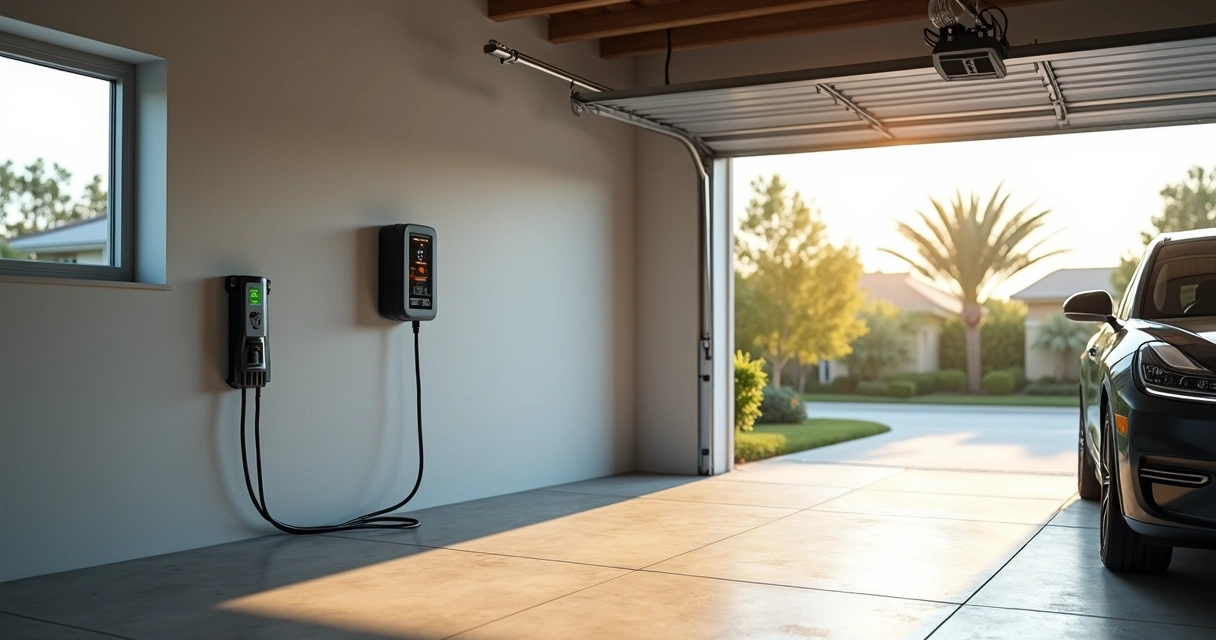
When people ask us where to start, we always explain: The “charger” in a typical home setup refers to both the cable and the wall-mounted equipment, but the dedicated outlet is what unlocks faster charging.
What are Level 1 and Level 2 chargers?
Level 1 chargers use a standard household 120V outlet and deliver roughly 2–5 miles of charge per hour. For many EV owners, that is too slow for daily use, especially if driving more than 30 miles a day. Level 2 chargers use a 208–240V outlet—think of an upgraded dryer or range outlet—adding anywhere from 10 up to 20 miles of range per hour, as explained in depth by the University of Florida’s Warrington College of Business. For overnight or weekend charging, Level 2 is the preferred choice for single-family homes and small businesses.
Outlet types for garage EV charging
The most common outlets for residential Level 2 charging are:
- NEMA 14-50: A 50A, 240V outlet (also used for electric ranges or RVs), compatible with most EV wall chargers
- NEMA 6-50: A 50A, 240V outlet (formerly used for welders or heavy equipment), suitable for many EV chargers, but check specs
Which outlet you need depends on your vehicle’s charging requirements and the charger brand you intend to use. We often help homeowners review their EV manuals and utility panel ratings to select the right match.
State and local electrical codes you must follow
Florida regulates Electric Vehicle Supply Equipment (EVSE) under laws aligned to the National Electrical Code (NEC/NFPA 70) and the local Florida Building Code. Key requirements are summarized by Cornell Law School’s Legal Information Institute and updated for safety as EVs become common.
All new EV charging outlets must be installed by following the NEC for wiring, breaker size, GFCI protection, and conduit specifications. These rules are in place to protect you and your property. Local code officials in Orlando and throughout Central Florida may have additional requirements depending on your jurisdiction or HOA. At GCM Best Services, we always examine these standards before starting the work, ensuring no shortcuts are taken.
Common code elements for Florida EV charger outlets
- Correct breaker sizing (usually 40–50 amps for most Level 2 chargers)
- Dedicated circuit, separate from other appliances
- Copper wiring sized per code (no undersized conductors)
- GFCI protection, especially in garages prone to moisture
- Weather-resistant (WR) outlets if installed in carports or near exterior
- All work inspected and permitted by your city or county
Upgrading for an EV charger should never be a “DIY and forget” project. Safety, liability, and home warranty protection require the right steps from the start.
Step-by-step: How to plan your garage EV charger outlet
We believe the most frustration-free upgrades start with a clear, detailed plan. Here’s what our process looks like at GCM Best Services—not just in theory, but as practiced across countless Florida homes:
1. Assess your driving and charging needs
Determine how much range you use daily, your preferred charging times, and whether guests or multiple drivers will need access. Some families install dual outlets or future-proof their panel for growing demand.
2. Identify the best location
We recommend placing the outlet close to where you usually park, with enough cord reach for your vehicle’s charge port. Wall height, proximity to a main panel, and clearance above any water or debris zone are also key.
3. Review your electrical panel’s capacity
According to the Electrical Safety Foundation International, 65% of EV owners found they required electrical panel upgrades for home charging. Common causes are full panels, undersized main service, or outdated breakers. A licensed contractor can check load calculations to ensure your system can safely handle the increased amperage.
4. Get a permitting and code compliance check
Ask about your local permitting process. Many cities in Central Florida now expedite EV charger permits if you follow NEC and include a diagram of the charging circuit. Neighborhoods with active HOAs may require you to submit plans or seek pre-approval before work starts.
5. Schedule installation after all checks are complete
Only after you’ve cleared panel capacity, outlet location, and both permit and code approval should you schedule the final install. A transparent contractor, like our team at GCM Best Services, will communicate timelines, coordinate inspections, and provide photo documentation at every stage.
Electrical panel evaluation and upgrades
Many homes in Florida—especially those built before 2000—have main panels sized for the electrical needs of the original build. Adding a 40–50 amp EV charger load can stress an older system. We often hear from clients:
“My panel looks full, but I’m not sure if there’s capacity left.”
A professional load calculation will compare your panel’s total amps against all active circuits, including HVAC, appliances, and planned upgrades. If there’s not enough headroom, options include:
- Installing a subpanel dedicated to garage or outbuilding charging
- Upgrading the main panel to higher capacity (200A or more)
- Load management devices to prevent over-draw if you do not want a panel replacement
These upgrades can add cost and time, but they are often needed to ensure safe, long-term operation. Florida’s heat places additional stress on electrical gear—another reason why we recommend robust planning and quality parts, not cutting corners on panel size or wiring.
Drainage, humidity, and wall considerations for Florida garages
Why does local climate matter? We see more outlet issues in Central Florida garages due to:
- High humidity causing corrosion in outlets or conduit
- Garage flood events from intense summer rains
- Unfinished block or stucco walls, leading to water seepage behind installations
As specialists in Florida exterior improvements, our team at GCM Best Services will always recommend wall finishes, placement height, and outlet covers that limit risk. We also ensure the use of WR-rated outlets, proper drip loops, and sealed conduit connections. These details help protect your investment and meet insurance guidelines.
Permitting and HOA requirements in Central Florida
In our experience, the fastest installations are those with permits and neighbor/HOA sign-offs secured before work begins. Failing to get a permit can lead to “red-tagged” jobs (work halted), fines, or insurance coverage issues down the road.
Typical steps for a permitted garage EV outlet:
- Submit plans (equipment spec sheet, circuit diagram) to the city or county
- Apply for a building/electrical permit (may be online or in-person)
- Post permit on-site before work begins
- Arrange for final inspection post-install, ensuring code compliance and proper labeling
HOAs may have additional submission rules, especially for exterior or carport outlets visible in the community. Our team provides all required documents, photographs, and warranty paperwork that HOAs and city officials typically request. Choosing contractors familiar with Orlando’s permit system can significantly reduce headaches.
Preparing for installation day
When installation day arrives, everything should be in place for a safe, smooth process:
- Accessibility: Clear the garage wall where the outlet, wiring, and charger will be installed
- Panel access: Make sure nothing blocks the path to your main electrical panel
- Parking: Move your vehicle out, so technicians can work efficiently and avoid dings or scratches
- Pets/children: Keep them safely away from work areas during installation
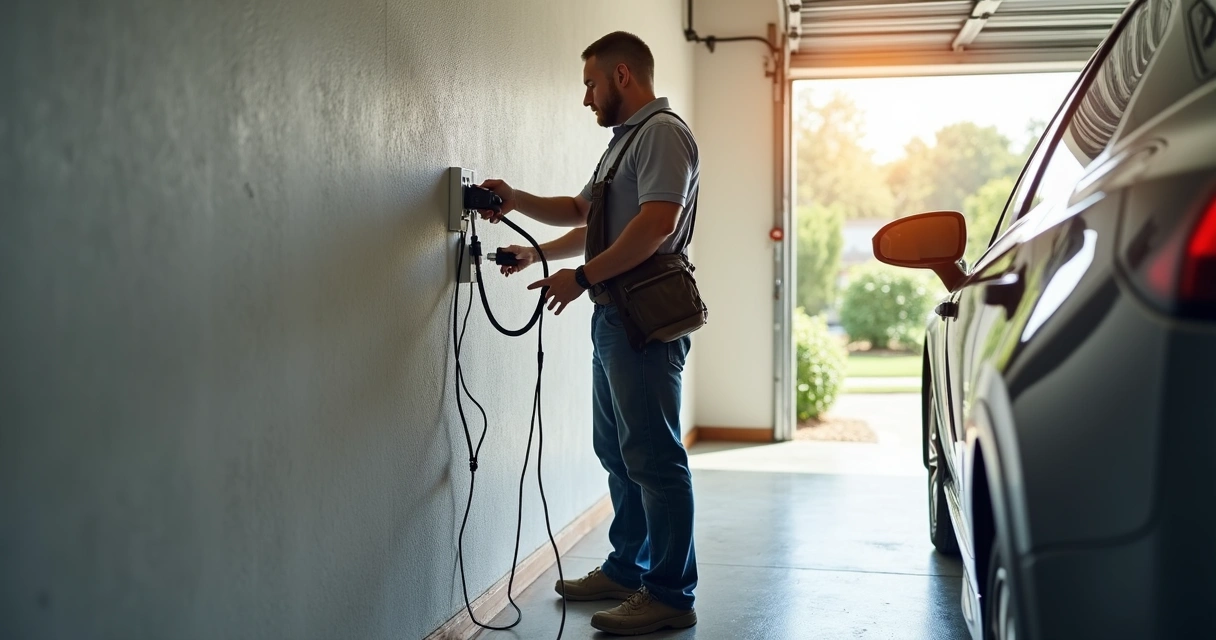
The average Level 2 garage outlet install takes 3–6 hours if panel upgrades are not required. Complex jobs, such as new panel/service or trenching a subpanel, may take longer.
After installation: Safety checks and warranty
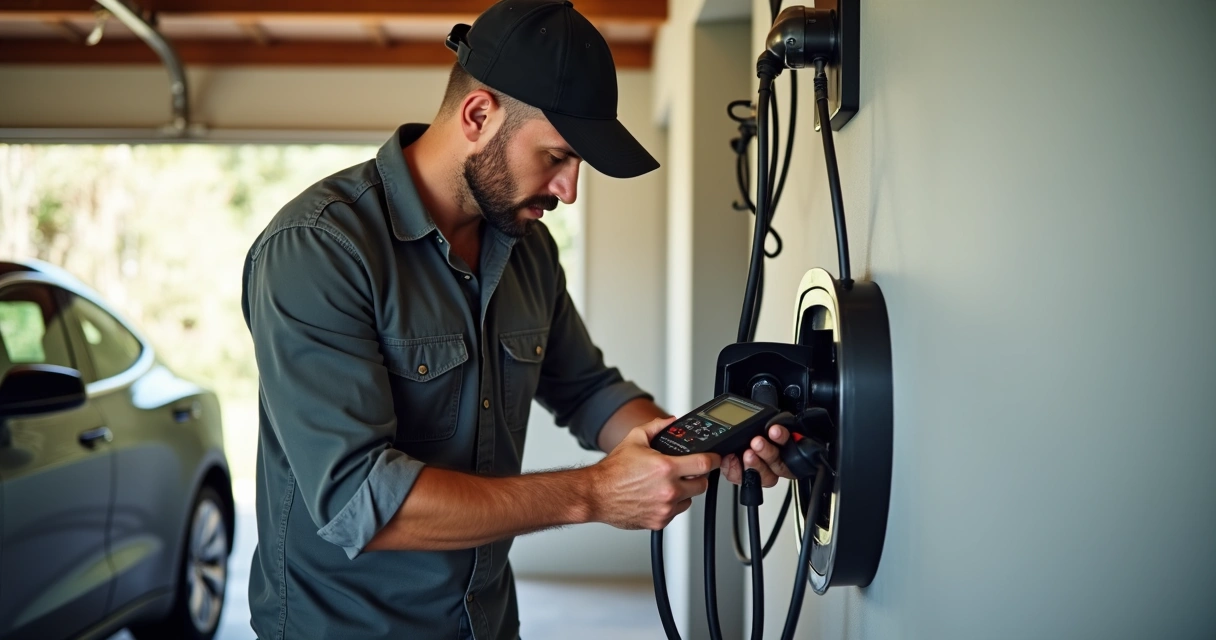
All new EV outlet installations should be tested with specialty equipment to confirm:
- Correct voltage and polarity at the outlet
- Proper GFCI functionality (if required)
- Circuit labeling and emergency shutoff clearly posted
- Photo documentation for records and insurance
Insist on a written warranty covering both labor and materials, as well as a maintenance guide for long-term safety.
At GCM Best Services, we support our clients with service follow-ups, help with insurance questions, and maintenance reminders as your vehicle (or needs) change. We draw on years of experience in Central Florida’s unique garages—whether you’re dealing with moisture-prone block walls or a modern, energy-efficient build.
You can find more information on our process, warranties, and related garage improvements (including concrete, screen enclosures, and drainage) in our GCM Best Services blog.
Conclusion
Adding an outlet for an EV charger in your Florida garage means much more than plugging into the future. It’s about charging at home, enjoying new technology, and knowing you did the job right—safe, legal, and made to last for years.
As the state with the third highest number of public EV chargers—yet more than 400,000 plug-in vehicles—most Floridians still charge at home. Making your space ready is an upgrade in convenience, property value, and peace of mind.
If you are considering a new EV or looking to upgrade your electrical system, we welcome your questions at GCM Best Services. Our licensed and insured team focuses on clear communication, local expertise, and solutions that fit your home and lifestyle. Start by reviewing related home upgrade ideas in our concrete projects or hardscaping improvements.
Ready for a professional quote? 📞 (407) 250-1948 • 24–48h • Orlando, Tampa & area.
Frequently asked questions
How much does outlet installation cost?
The average cost to install a dedicated 240V outlet (NEMA 14-50 or similar) for a Level 2 EV charger in Florida garages typically ranges from $800 to $2,500, depending on panel distance, required upgrades, and wall finishes. If an electrical panel upgrade is needed, costs may rise to $2,000–$3,500 for panel replacement and up to $6,000 for extensive service work, as reported in charging cost studies from the University of Florida Warrington. We recommend requesting a site assessment and clear, written estimate.
What type of outlet do I need?
Most residential EV owners in Florida use a NEMA 14-50, 240V, 50A outlet for Level 2 charging, but always verify the requirements of your charger and vehicle. Some setups use a NEMA 6-50 (less common) or a hardwired charger if local code permits. Review your vehicle and charger manual, or consult a qualified installer for guidance.
Is a permit required for installation?
Yes, Florida law requires a building/electrical permit for new EV charger outlet installations in homes and garages. Permitting helps ensure safe, code-compliant work and is required by many insurance providers. Check local building departments or ask your contractor to handle the permit process for you, as described in Florida regulations summarized by Cornell Law School.
Can I install an outlet myself?
We strongly recommend hiring a licensed electrician or contractor for EV charger outlet installations in Florida. This ensures safety, code compliance, warranty protection, and smooth permitting. Incorrect installation may pose fire hazards, insurance risks, or result in costly corrections if inspected post-factum.
How long does installation usually take?
Most standard Level 2 outlet installations are completed in 3–6 hours if the electrical panel is accessible and has enough capacity. Complex projects, such as panel upgrades or new subpanel runs, may require a full day or more, including inspections, as found in data from the Electrical Safety Foundation International. Clear communication and planning can minimize downtime.