Pets are part of our families. In Florida, where our sunny climate draws families and their pets outdoors year-round, screen enclosures serve as vital spaces for safe play, fresh air, and bug-free relaxation. At GCM Best Services, we know that upgrading a typical enclosure for pet-friendly use can bring peace of mind while safeguarding your investment. In this guide, we explain what makes an outdoor space pet-ready, outline high-value upgrades, and offer insight into trends, costs, and real-world performance. Our experience in Central Florida, paired with animal welfare research, shapes every recommendation.
Pet happiness starts with a safe, thoughtfully upgraded enclosure.
Why pet-friendly upgrades matter in Florida homes
We see it across Orlando, Tampa, and surrounding areas: nearly every client with a backyard, patio, or pool also has a pet or plans to get one. Florida leads the way in pet ownership, with shelters reporting hundreds of thousands of animals entering homes each year. According to data from Florida animal sheltering data, over 350,000 animals entered shelters in 2021 alone. Our projects frequently focus on adapting outdoor living spaces to suit both people and animals—especially dogs and cats, but also birds, rabbits, and other companions.
There are several reasons why we think pet-friendly upgrades add so much value:
- Pets love time outdoors but need boundaries to stay safe from wildlife, traffic, and Florida’s sudden storms.
- Bugs, allergens, UV rays, and sharp landscaping can all affect their health and comfort.
- An enclosure that’s not designed for pets risks damage, escapes, injury, and expensive repairs during Florida’s intense summer weather.
The trend toward pet-inclusive design isn’t slowing down. A University of Florida study in 2024 found that animal admissions are rising, but save rates are also improving, meaning more pets are finding homes—many in Central Florida. As we see more families considering pet adoptions, making exterior spaces ready for furry (or feathered) friends is top of mind for homeowners and property managers.
What truly makes an enclosure “pet-friendly”?
Not all enclosures are created equal. When a project comes to us labeled as “pet-proof,” we look well beyond the screen itself.
Here’s what we believe distinguishes a genuinely pet-ready enclosure:
- Durable, scratch- and tear-resistant screening that resists claws and bites
- Properly reinforced doors, hardware, and frames that keep pets in—and wildlife out
- Safe, non-toxic surfaces and finishes for floors, doors, and ledges
- Excellent drainage to keep paws dry and prevent mold or mildew
- Shaded areas and ventilation to combat heat stress
- Secure pet doors or entrances for convenient access
- Easy-to-clean features for accident-prone puppies or older pets
- Protection from mosquitoes and larger pests that can harm pets
Without these elements, many standard enclosures can quickly get torn or pose hazards. We’ve seen everything from dogs charging at squirrels and ripping out mesh to cats finding weak corners and slipping through. By anticipating these real-world behaviors, we help families avoid repeat repairs and keep everyone safe.
The most valuable pet-friendly screen upgrades
Let’s review the core upgrades we install most often for pet owners in Central Florida.
Reinforced pet-resistant screens
Most screen failures in Florida come from pets scratching, chewing, or leaning against mesh that wasn’t meant for rough use. Standard pool and patio screen might be great for bugs, but it stretches, sags, and tears easily under claws.
Pet mesh—sometimes called “pet-proof screen”—uses a heavier vinyl-coated polyester weave, about 7-10 times stronger than fiberglass mesh. It stands up to sharp nails, teeth, and repeated jumping. Dogs and active cats rarely manage to damage quality pet mesh, and it lasts longer than lighter screen in our humid, high-wind climate.
We recommend pet screen for:
- Lower panels of pool cages and lanais where pets interact most
- Screen doors with regular push or scratch attempts
- Any enclosure near high-traffic play or exercise areas
Besides its strength, quality pet mesh maintains visibility and airflow. For clients in Orlando or Lakeland, where summer heat can be relentless, airflow matters just as much as tear-resistance.
Safe and secure pet doors
Cats and dogs need access, but not an escape route. We install pet doors sized for each animal, with locking flaps and chew-resistant frames. Our preferred doors have weatherstripping to keep out bugs and a cover to secure the space at night. Some even include RFID or magnet locks so only your pet gets through—a big comfort for clients worried about raccoons or neighborhood strays.
We install pet doors with:
- Strong aluminum or steel-framed construction
- Reinforced hardware and latches
- Placement that doesn’t compromise structural integrity
Heavy-duty doors, frames, and fasteners
We find that pet activity, including jumping, scratching, or leaning, can weaken weak frames and cheap door hardware much faster than normal use.
So we use:
- Heavy-duty aluminum for doors and door thresholds
- Self-closing hinges and slam-proof latches
- Hurricane-rated fasteners, even for interior doors, to keep pets safe in storms
All doors are engineered for Central Florida wind loads, and when we upgrade hardware, we align with local codes for hurricane resistance.
Scratch-resistant and non-slip flooring
Flooring matters just as much as the screens. For covered patios and pool decks, we advise:
- Textured concrete finishes that don’t hurt paws
- Epoxy or polyaspartic coatings with built-in anti-slip texture
- No sharp expansion joints
- Drainage systems that prevent puddling and algae growth
- Polymeric sand in paver joints for smooth, weed-resistant surfaces
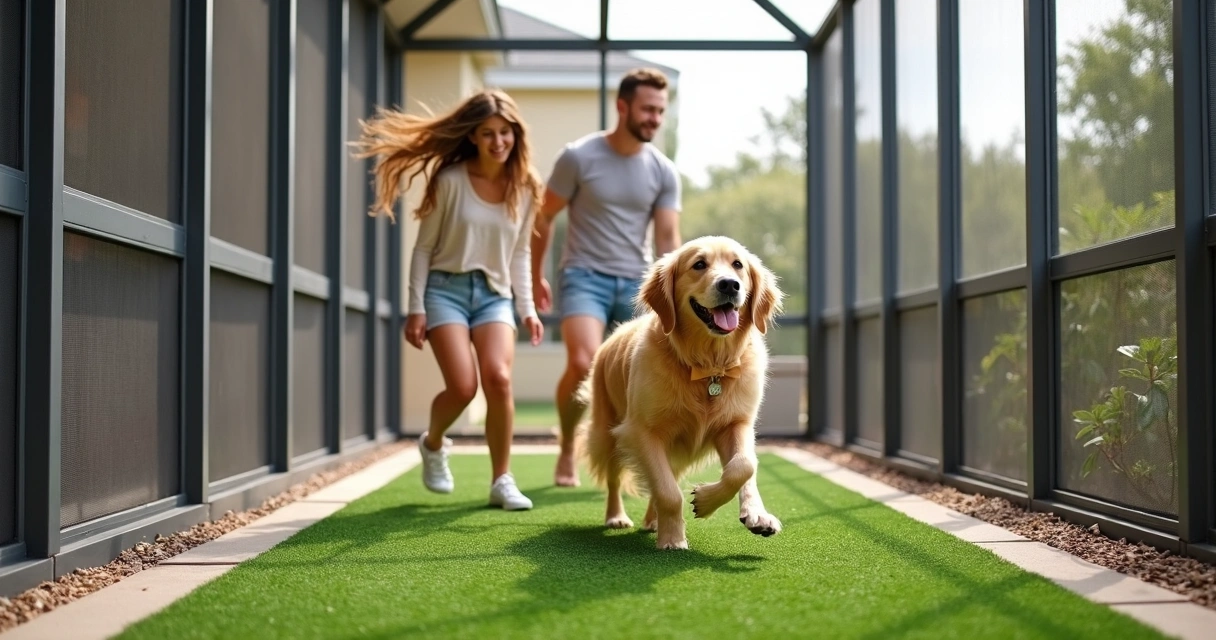
On some projects in Orlando or Sanford, clients choose artificial turf for a cool, drainable, dog-friendly surface that minimizes mess and cleaning. Where turf meets pavers or concrete, we compact edges to prevent paw injuries or trip hazards.
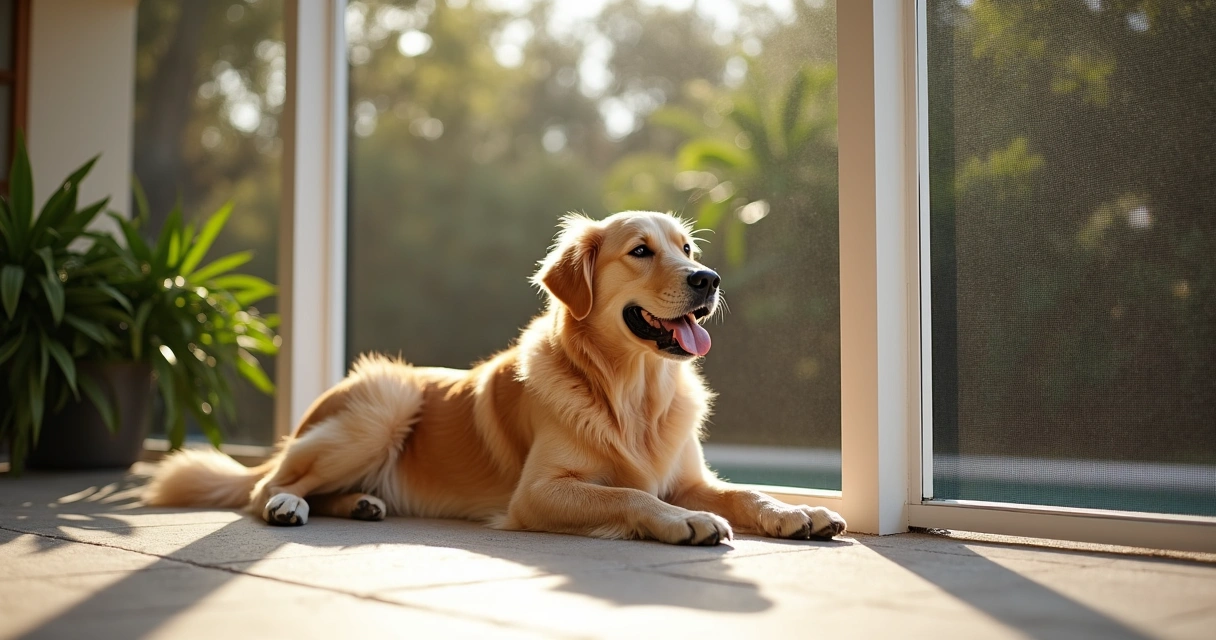
Shading, shelter, and ventilation
Pets are more vulnerable to Florida’s heat and sun than we are. Enclosures should always offer:
- Shaded zones via solid roof panels or UV-blocking screen
- Open sides or roof vents for airflow
- Surface finishes that stay cool, like light-colored pavers
We sometimes incorporate retractable sun shades or solid panels over part of the enclosure, creating spaces where pets can cool off quickly.
Safe, non-toxic materials
Not all building materials are created with pets in mind. Some paints, coatings, and composite boards contain chemicals that can irritate skin, damage paws, or pose risks if chewed. We always use non-toxic, pet-safe coatings and sealants on floors, doors, and hardware, especially in enclosures with curious young animals.
Plus, we avoid sharp hardware, clipped mesh edges, or exposed screws—small details that make a big difference on curious noses and paws.
Smart drainage systems
Standing water is the enemy of clean paws, fresh air, and healthy pets. Pet-friendly enclosures must have:
- Sloped slabs or paver decks for quick draining
- Permeable turf or stone in play areas
- Channel drains at low points
- Gutter extensions to divert water away from high-traffic zones
This isn’t just about comfort—it fights mold, mildew, and disease risks for both pets and people.
Real results: What families in Central Florida are choosing
We see a wide range of upgrades in action across Florida homes, from simple swaps to major overhauls. A few telling examples:
- In Daytona Beach, a family with three rescue dogs opted for full-height pet mesh along their lanai and added a double-flap pet door. Clawed panels are now a thing of the past.
- In Kissimmee, one client needed their enclosure to work for elderly cats. We included slip-resistant flooring and shade sails, preventing joint pain and sun exposure.
- A project in Sanford required reinforced door hardware for a German Shepherd known for charging at door handles. Upgrades included steel security latches and triple-hinge hardware.
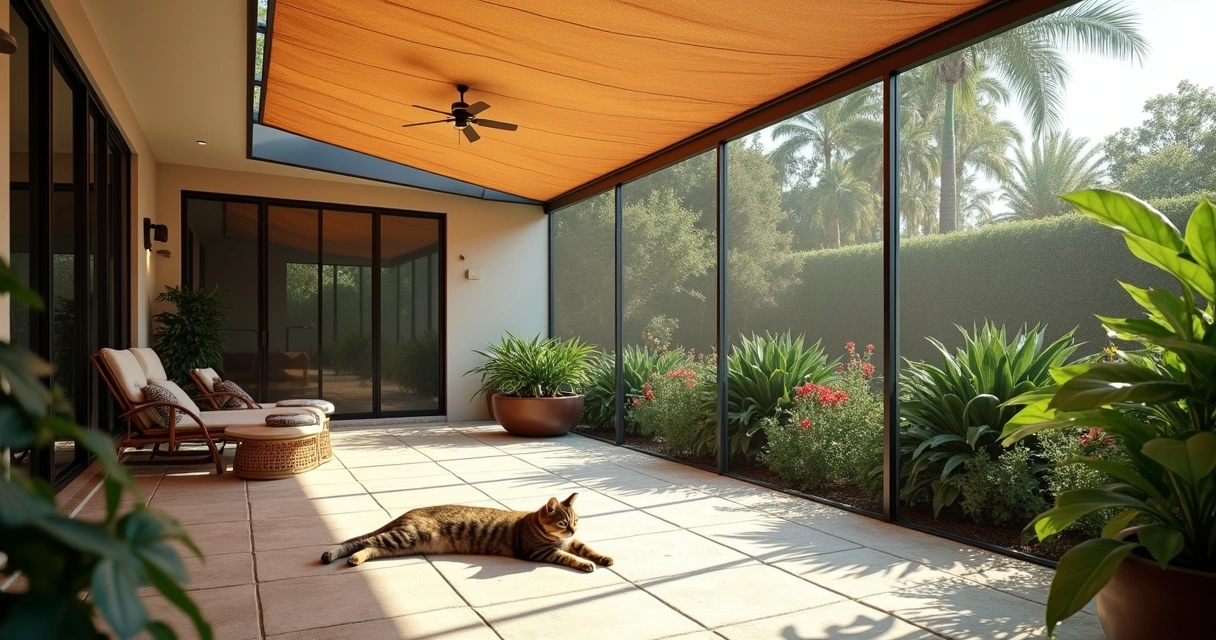
How upgrades protect your investment
Many pet owners worry about upfront costs. The real question is risk: “If I skip pet-proof upgrades, will I pay more over time?” Our experience says yes. Standard screens (or flooring) simply don’t survive repeated pet activity or hurricane season. Pet mesh and reinforced hardware may cost more to install, but cut annual repairs dramatically.
The right upgrades extend enclosure life, reduce repair bills, and add property value—especially as more buyers insist on pet-friendly features. For multi-family units or rentals, pet-proofing may be the difference between passed inspections and failed ones.
Planning your pet-ready upgrade: What we recommend
Every enclosure is unique, but our process always starts with a free on-site consultation. We look for:
- What kind of pets use the area? What are their habits and needs?
- Current screen, frame, and door condition for signs of wear or risk
- Drainage, shade, and ventilation performance
- Access points and escape hazards
- Client pain points—are there recurring repairs, neighbor or HOA concerns, or special mobility needs?
From there, we recommend a customized combination of upgrades—choosing only what’s necessary, fitting every budget, and always working with proper permits and HOA guidelines. At every step, we document work with photos and provide a written warranty.
For homes in Daytona Beach, Kissimmee, Lakeland, and throughout Central Florida, we stay current on wind-load and animal safety codes—so owners have one less thing to worry about.
What about maintenance and warranty?
Pet-proof materials usually need less frequent replacement or repair than standard mesh. Still, we urge clients to:
- Inspect screens and doors every few months for signs of wear
- Keep floors clean and dry to avoid slips or paw irritation
- Address drainage and shade adjustments after every rainy season
- Follow warranty and care instructions for best longevity
We back every pet-safe installation with clear documentation and a written warranty—no surprises, no fine print.
Trends: Pet-friendly outdoor spaces in 2024 and beyond
The culture of pet inclusion is growing. Florida’s shelters are saving more animals each year, as shown by the latest University of Florida report. Many of these animals end up in newly constructed or renovated homes.
The upgrades we’re being asked for now go beyond the basics:
- Integrating artificial turf “potty zones” bordered by pavers for easy cleaning
- LED perimeter lighting for nighttime play and pet supervision
- Custom-built cat “patios” (also called “catios”) with vertical climbing, birdwatching stations, and escape-proof mesh
- Enclosing open patio kitchens and grilling areas with pet-safe panels
- Smart home connections that monitor enclosure doors and alert for open/closed status
At GCM Best Services, we build every enclosure to suit the needs of the whole family—and pets are always included.
Conclusion: Why pet-friendly upgrades are worth it
In Florida, a screened enclosure is more than extra square footage—it’s the backyard’s beating heart, essential for comfort, health, and fun. Upgrading for pet safety not only protects your pets; it preserves your investment and adds daily peace of mind.
If you’re ready to give every member of your family—including the four-legged ones—a safe, comfortable outdoor haven, we’re here to help. Our team handles everything from assessment to installation, permits, HOA concerns, and warranty—all with honest advice and clear communication. Learn more about our approach at GCM Best Services and see how a well-designed outdoor area can truly welcome every family member.
Ready for a professional quote? 📞 (407) 250-1948 • 24–48h • Orlando, Tampa & area.
Frequently asked questions
What is a pet-friendly screen enclosure?
A pet-friendly screen enclosure is an outdoor living space designed with specific features to keep pets secure, safe, and comfortable.This usually means reinforced, tear-resistant screening, safe doors, pet access points, and easy-to-clean surfaces that withstand Florida’s climate and typical pet behaviors.
How to upgrade an enclosure for pets?
We recommend replacing standard mesh with pet-specific screen, adding secure pet doors, reinforcing frames and hardware, improving drainage and flooring, and ensuring shaded, well-ventilated zones.It’s also smart to use non-toxic finishes and remove sharp edges or hardware that could harm paws or curious noses.A professional assessment by GCM Best Services can identify your home’s precise needs and the most reliable solutions.
What are the best pet-safe screens?
The best pet-safe screens are vinyl-coated polyester mesh, sometimes called “pet mesh” or “pet-resistant screen.”These are much thicker and more durable than standard fiberglass or aluminum mesh.They resist clawing, chewing, and pressure, maintain clear views and airflow, and are designed specifically to prevent escapes and fast wear.
How much do pet-proof upgrades cost?
Costs vary based on enclosure size, desired features, and local permitting.Simple upgrades like pet mesh replacement for lower panels may cost a few hundred dollars; full enclosure retrofits, new pet doors, reinforced framing, and specialty flooring or turf can range much higher.We always supply a free on-site estimate to match your needs and budget, providing written details so you know exactly what to expect.
Is it worth it to upgrade screens?
In our experience, pet-proof upgrades pay off by preventing damage, reducing annual repairs, keeping pets safe, and increasing your property value.Many families in Central Florida recoup the cost by avoiding frequent mesh replacements and injuries.If you have (or plan to adopt) pets, making your enclosure pet-friendly is a decision you’re unlikely to regret.