Primary keyword: aluminum vs PVC rails with composite deckingVariants: composite deck railing choices, best railing for composite deck, aluminum or PVC rails comparison
Audience pain/benefit: Homeowners and property managers seeking a low-maintenance, long-lasting, and attractive deck railing solution that withstands Florida’s climate.
Summary: The choice between aluminum and PVC deck rails can significantly impact the durability, look, and ease of care for composite decking—especially in Orlando and Central Florida’s challenging climate. In this article, we at GCM Best Services will compare the features, pros and cons, and real-world considerations of both railing types. Our goal is to help you make a decision that fits your style preferences, budget, and the long-term value of your exterior space.
Outline
- Understanding railing material options for composite decking
- Why railing choice matters in Florida’s climate
- Aluminum railing: structure, strengths, and limitations
- Construction and appearance
- Performance with composite decks
- Durability and weather resistance
- PVC railing: style, benefits, and drawbacks
- Construction and look
- Compatibility with composite decking
- Weathering, UV, and lifespan
- Key decision factors: aesthetics, code, usability, and price
- Visual impact and curb appeal
- Building codes, wind loads, and inspections
- Maintenance and cleaning
- Budget considerations
- Installation and project management with GCM Best Services
- Long-term ownership: repairs, warranty, and upgrades
- Environmental and resale value considerations
- Conclusion: Making the best railing choice for your composite deck
- Frequently asked questions about aluminum and PVC deck rails
The right railing completes your deck—it’s all about fit, form, and lasting value.
Understanding railing material options for composite decking
Composite decking offers the promise of weather-resistant beauty without constant sanding, staining, or sealing. Yet, the railing you select can affect safety, longevity, and even the style of your deck for years to come. Most composite decks are paired with either aluminum or PVC (vinyl) rails, each with unique properties and installation details. At GCM Best Services, we’ve seen how the compatibility of railing and deck boards shapes the entire project success.
Aluminum rails are made from extruded, powder-coated metal, while PVC rails are hollow or reinforced plastic profiles engineered for outdoor use. Both are resistant to rot and insect damage—vital in Central Florida—but their performance over time, appearance, and cost may differ widely.
Let’s consider what railing does for your space:
- Ensures family and guests are safe at height.
- Frames and enhances curb appeal.
- Withstands weather, sunlight, and activity.
- Helps express your unique design preferences.
While railing may seem like a small detail, its selection is just as important as the decking itself. Poorly chosen or installed rails can lead to cup marks, warping, loose posts, or even failed deck inspections—none of which we want for our clients.
Why railing choice matters in Florida’s climate
Central Florida brings intense sun, heavy rains, high humidity, salt air, and risk of tropical storms. These conditions can quickly degrade lesser materials. We know that picking a railing system rated for Florida is non-negotiable for long-term performance.
Neighborhood and HOA rules, as well as local codes, often require rails to meet specific height, load, and spacing demands. Orlando-area projects frequently call for hurricane-ready fastening or impact-resistant rails, especially near coastal regions or for higher decks. At GCM Best Services, we integrate building code compliance and wind-load analysis into every design, aiming to avoid expensive corrections or retrofits later.
Aluminum and PVC both resist rust and insects, but their reactions to intense sunlight and moisture can differ. Direct, year-round sun can bleach or make some plastics brittle over time—while aluminum, if left uncoated or scratched, may start to corrode.
Aluminum railing: structure, strengths, and limitations
Construction and appearance
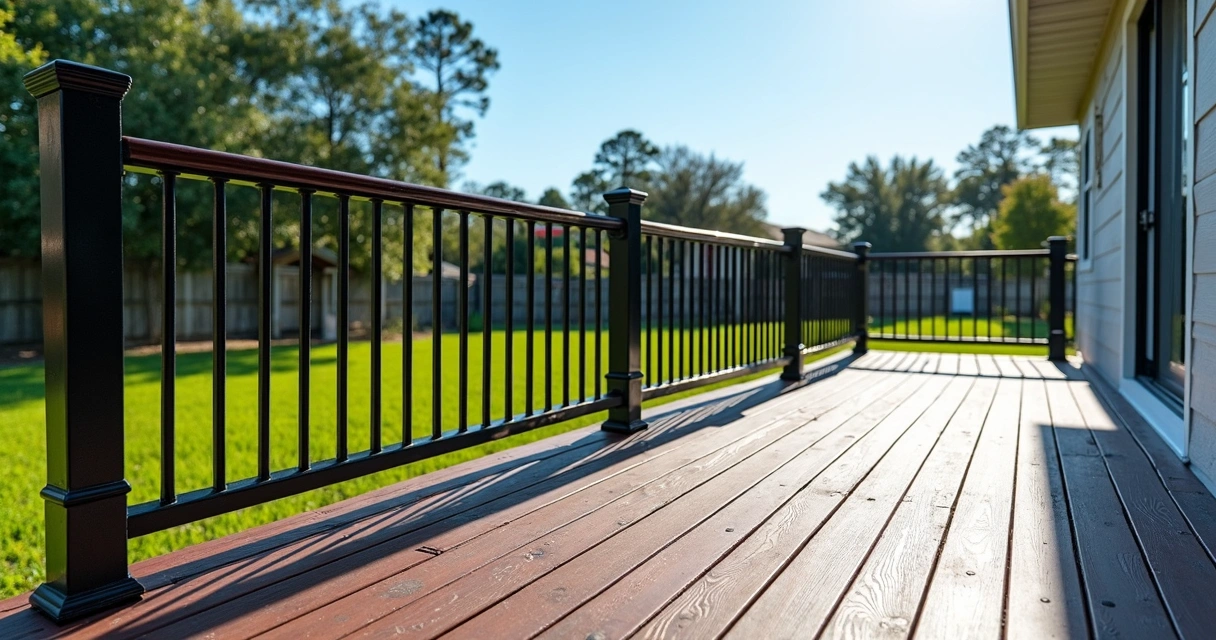
Aluminum deck rails are assembled from metal posts, top and bottom rails, balusters, and brackets. Most systems come powder-coated in a range of colors like black, white, or bronze. Some feature sleek lines for a modern look; others mimic traditional wrought iron, with decorative details or scrolls.
Powder-coating is key—it seals the aluminum, adds color, and prevents oxidation. When working with us at GCM Best Services, we always recommend durable, multi-step finishes over single-process coats, as they last longer against Florida sun and rain.
Performance with composite decks
Aluminum pairs well with composite decking. Its rigidity means it’s not easily bent or warped by summer heat. With the right brackets and fasteners, it secures firmly into composite or concrete substructures and accommodates deck movement across seasons.
We find that aluminum is one of the most reliable choices for decks higher than 30 inches off the ground, as required by code in many Orlando and Central Florida homes and businesses. Many aluminum systems also allow for integrated lighting, glass panels, or cable infill, supporting creative designs.
Durability and weather resistance
Aluminum railing stands up well to salt, moisture, and heat when properly finished, with little to no rusting or fading over time. Routine cleaning with soap and water is usually enough. Scratches should be immediately touched up to avoid exposure of bare metal.
In rare cases, cheaper aluminum systems may be thin or poorly welded, which can lead to dents or loose balusters with rough use. We always recommend well-reviewed brands with a proven track record, especially when children or frequent guests will use the deck.
PVC railing: style, benefits, and drawbacks
Construction and look
PVC (or vinyl) railings are made from high-strength plastic manufactured in hollow or foam-filled profiles. Installation is typically over pressure-treated wood or composite posts, with snap-in baluster systems and concealed fasteners.
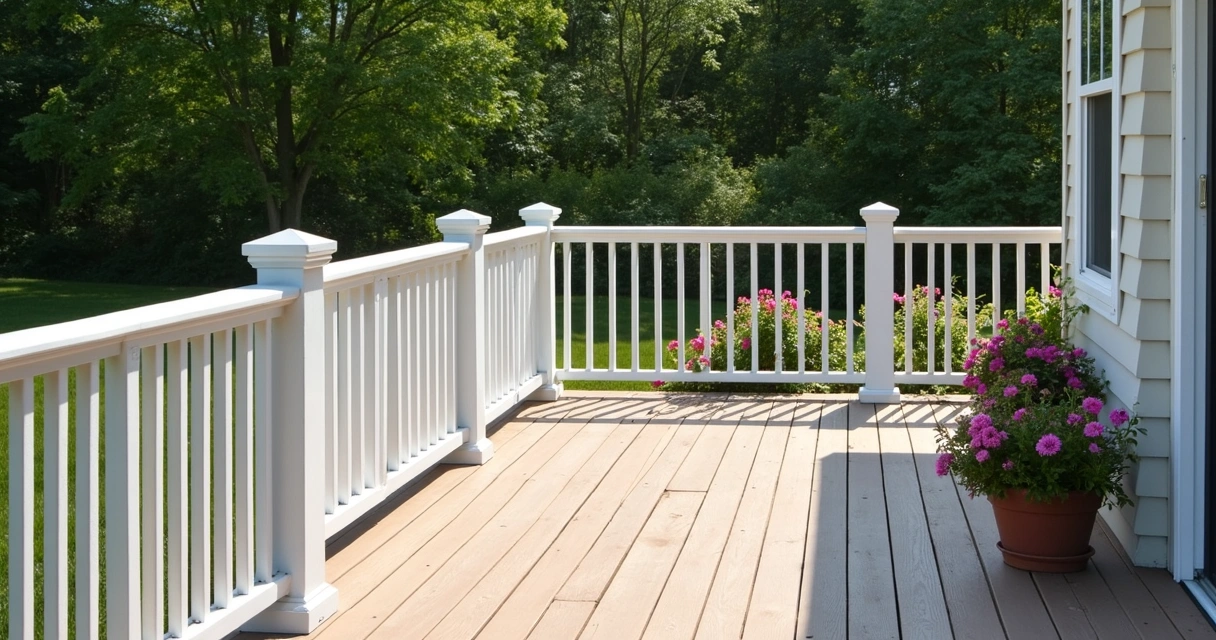
Styles range from simple white lines to ornate, wood-look caps and decorative details. Most are white, tan, or grey, which suit coastal and traditional home designs. At GCM Best Services, we can also source PVC rails with woodgrain textures or custom color accents if you want to match your composite boards.
Compatibility with composite decking
PVC rails are designed for ease of use. They do not heat up as much as metal, which is a comfort advantage in full-sun spots. Pairing PVC rails with composite decks provides a unified, low-maintenance surface—especially for families worried about splinters or rust marks.
However, we’ve seen that PVC rails can sometimes feel “softer” or more flexible than aluminum, especially on longer spans. Adding metal reinforcement inside PVC rails is one solution when strength is required by code. This works well for code compliance but may add some cost.
Weathering, UV, and lifespan
PVC is not affected by moisture, rot, or insects, but long-term sun or impact may cause fading or surface cracking after many years—especially with budget rails or poor installation. Frequent cleaning and avoiding harsh chemicals help maintain gloss and color.
- PVC can become discolored by mildew or pollen, so regular washing is recommended.
- Quality PVC rails are engineered for UV resistance, but total lifespan depends on thickness, reinforcement, and brand specifications.
Key decision factors: aesthetics, code, usability, and price
Visual impact and curb appeal
Both aluminum and PVC railings can be made to look attractive. We recommend considering:
- Does your home’s style lean toward modern and minimal, or classic/southern?
- Would a color contrast highlight the deck, or do you prefer a monochrome look?
- Will you add lighting, glass panels, or unique details?
Aluminum typically offers a sleek, contemporary style, while PVC provides a traditional or coastal look—choose what aligns with your taste and property value goals.
Building codes, wind loads, and inspections
Central Florida has unique code requirements for deck railings—height, baluster spacing, load limits, and especially hurricane resistance near coastal or high-wind locations. We at GCM Best Services guide all clients through design, HOA, and city or county permits.
Aluminum railings usually meet or exceed code load requirements for safety and wind, making them suitable for both residential and commercial decks. If you want a rooftop or multistory deck, aluminum may be the right choice.
PVC rails are often code-compliant for standard heights and typical backyard decks. When higher loads are needed, internal steel or aluminum stiffeners may be added.
Maintenance and cleaning
Low maintenance is a main reason our clients pick composite decking. The railing should match that promise:
- Aluminum: Rinse with water and mild soap; inspect annually for scratches or dings.
- PVC: Wash with a hose or gentle cleaner as needed; avoid abrasive pads or pressure washing at high settings.
As a tip, PVC may show pollen, sap, or mildew more than dark aluminum, so decks under trees may need more washing.
Budget considerations
In most cases, basic PVC railing systems start at a lower cost than aluminum. However, higher-end PVC with reinforcement can approach or exceed the cost of some aluminum systems. We remind our clients that cost also reflects lifespan, warranty, and local code requirements.
When planning your deck or outdoor living upgrade, a professional quote will help you get a true apples-to-apples comparison, including material, installation, and compliance costs.
Installation and project management with GCM Best Services
Choosing the ideal railing is just the first step—proper installation, code paperwork, and quality management are what make the investment last.
At GCM Best Services, our process for Orlando and Central Florida deck railings follows these steps:
- On-site, free consultation to review the deck, goals, and code/HOA needs.
- Customized estimate detailing railing brand, finish, and upgrades.
- Engineering and permit handling for fast approval.
- Scheduled installation with clean jobsites (OSHA safety and neatness).
- Final walkthrough and written warranty, with care guidelines for your specific railing type.
Our project managers check all rails for evenness, proper spacing, and secure anchoring to composite, concrete, or masonry. We include drainage and integrate with lighting, turf, pavers, or outdoor kitchens when requested for a unified space.

Long-term ownership: repairs, warranty, and upgrades
A good railing should last as long as your composite decking or longer. Both aluminum and premium PVC rails can offer warranties of 10+ years against structural failure or excessive fading. At GCM Best Services, we provide written warranties and a maintenance guide tailored for your system.
If a part gets damaged, aluminum balusters and posts are usually easier to replace without disturbing the rest of the system. Scratches can often be touched up with approved paints. For PVC, matching color and surface texture after repair can be a challenge, as older rails may have faded.
If you want to add upgrades—like lighting, new infill, or retrofit hurricane hardware—aluminum is typically more flexible. It bolts easily into new attachments or newel posts, supporting changes as codes or family needs shift over time.
Routine checkups every year can head off issues before they become severe, like loose brackets, warping, or faded finish. We’re happy to help with these “deck tune-ups.”
Environmental and resale value considerations
Sustainability and resale value matter for many Orlando-area owners. Aluminum’s recycled content makes it popular for green builds; most systems use a high percentage of reclaimed material. It’s also fully recyclable at the end of its life.
PVC railing is usually not recycled after removal, but it offers long-term resistance to decay, reducing the need for frequent replacement. Color-stable PVC with UV inhibitors can look good for decades.
When selling a home, updated rails—especially aluminum—signal low maintenance and updated safety to buyers. It’s a detail that can set your composite deck apart from others when it’s time to list your home.
Curious how these factors play out on real Orlando hardscaping or want to see more examples? Our project portfolio and resource pages provide images, guides, and inspiration: see ideas for deck and patio upgrades at our hardscaping category, or learn about subsurface prep, drainage, and code-friendly solutions on our hardscape resource hub. Our blog covers project stories and how exterior upgrades can increase comfort and value.
Conclusion: Making the best railing choice for your composite deck
Both aluminum and PVC rails offer low-maintenance, attractive options for composite decking, but their strengths serve different needs. Aluminum is the perennial favorite for high strength, flexibility, and a modern look—plus excellent code compliance for safety and wind in Orlando and Central Florida. PVC shines for cost, comfort in the sun, and traditional looks, though it needs the right reinforcement for larger decks.
Our advice? Weigh your goals for safety, style, and effort now—then consider your plans for the long term. No matter which you choose, expert installation and support from our GCM Best Services team ensures your investment stays beautiful and safe—year after year.
If you’re ready for a professional quote, or want a design recommendation for your composite deck in Orlando, Tampa, or anywhere in Central Florida, our team is here to help. We can show you aluminum and PVC rail samples, share project photos, and walk you through code requirements with no pressure—just clarity and expertise, start to finish.
Looking for more exterior inspiration? Discover transformative patios, driveways, or pavers at our design center or browse featured work in Orlando and beyond. Ready for a professional quote? 📞 (407) 250-1948 • 24–48h • Orlando, Tampa & area.
Frequently asked questions about aluminum and PVC deck rails
What is the difference between aluminum and PVC rails?
Aluminum rails are made of powder-coated metal, offering high strength, a modern appearance, and exceptional resistance to wind and impact; PVC rails are constructed from durable plastic, often with a classic or coastal look, and excel in resisting moisture and rot. Aluminum is rigid and slim-profiled, while PVC may be softer to the touch, cooler in sunlight, and available in fewer bold colors. Both are low-maintenance but respond differently to sun, impact, and code requirements.
Is aluminum railing better than PVC?
“Better” depends on your goals: aluminum often outperforms PVC in load strength, hurricane resistance, and lifespan, making it ideal for elevated or commercial decks. PVC excels for cost, comfort, and traditional looks when used on typical backyard decks. In our experience at GCM Best Services, aluminum is usually the best pick when strict codes, spanning strength, or future upgrades are priorities.
How much do aluminum and PVC rails cost?
PVC deck railing is typically less expensive upfront than aluminum, with basic PVC systems starting at a lower per-linear-foot price. Aluminum railing systems have a higher initial investment but may cost less over decades due to fewer repairs or code issues. If you choose upgraded PVC (with internal metal reinforcements), the total project cost can match or exceed mid-range aluminum. The installed price relies on length, height, chosen style, and labor complexity—so we always recommend asking for a detailed estimate.
Are aluminum or PVC rails easier to install?
Both aluminum and PVC rails are designed for relatively quick installation, but PVC often offers quicker assembly for basic rail types due to snap-together connections and lighter weight. Aluminum may take slightly longer because it requires careful cutting, accurate fastening, and touch-ups on install points to protect the powder coating. The right choice also depends on the experience of the installer and site conditions—both will benefit from professional measurement, base prep, and secure anchoring.
Which railing type lasts longer with composite decking?
Both systems are engineered for longevity, but aluminum usually outlasts PVC in terms of color stability, structural integrity, and repairability, especially in Florida’s intense weather. Premium PVC rails can provide a service life of 20+ years with regular care; however, aluminum rails—with quality powder coating and routine inspection—often last even longer with minimal maintenance. Matching your chosen rail to climate, deck use, and care expectations is key for the best results.