Primary keyword: garage door coatings for salt air and humidity
Variants: salt air resistant garage coatings, garage door coating for humidity, best paint for garage doors Central Florida
Audience: Homeowners and businesses in Central Florida who want to protect garage doors from salt air and moisture damage.
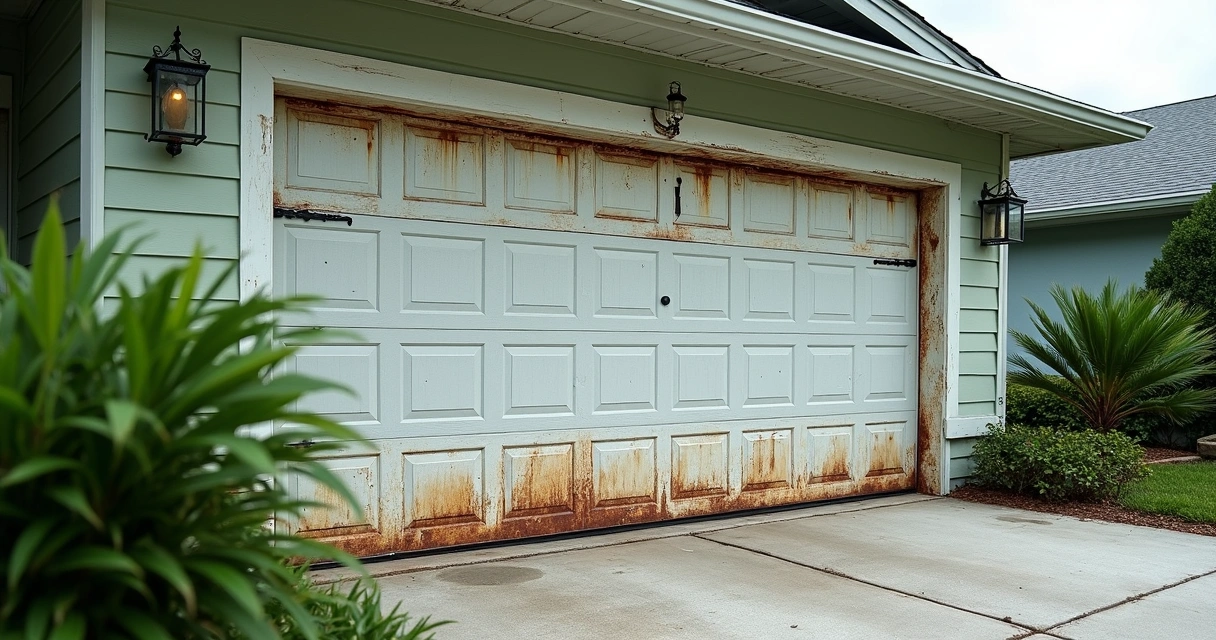
Pain: Frequent rust, corrosion, peeling, and staining on garage doors due to humid and salty environments.
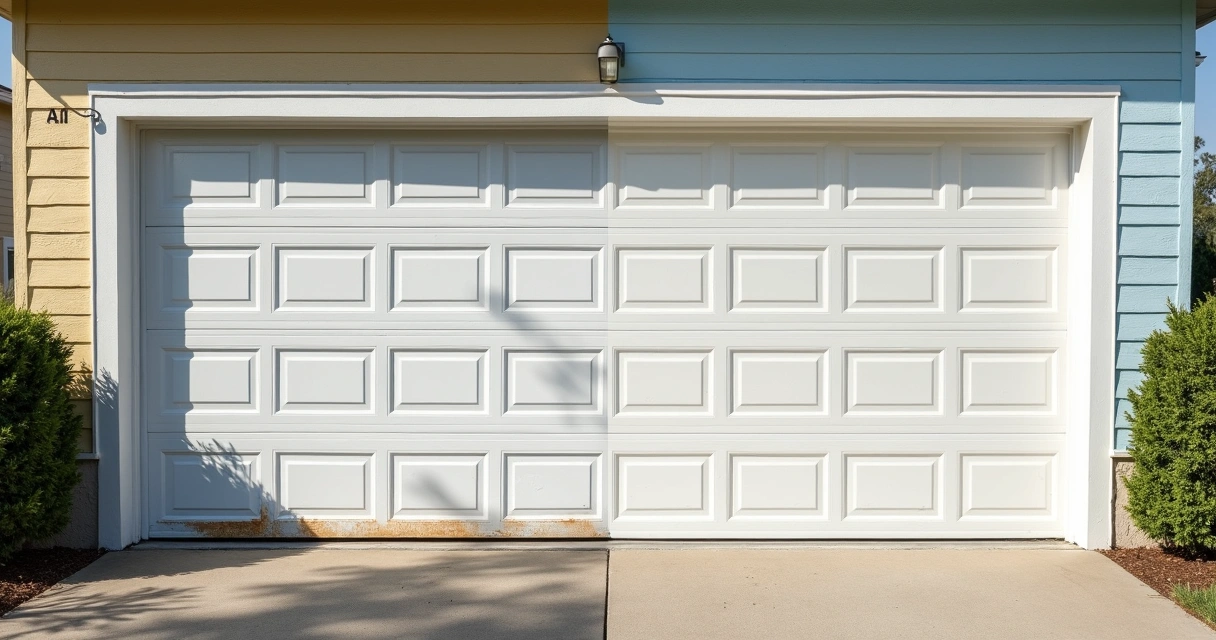
Benefit: Longer-lasting, attractive, and low-maintenance garage doors that stand up to the toughest Florida conditions.
Garage doors in Central Florida face a tough battle every day. Salt air, drenching humidity, and sudden storms test not just metals and finishes, but also a homeowner’s patience. We know that finding a garage door coating that can truly withstand these relentless elements isn’t easy. In this article, we share what we have learned in our years serving the region. We’ll compare the best garage door coatings and help you pick a solution that brings lasting curb appeal and real protection to your property. As a licensed and insured contractor, GCM Best Services has seen the results of both good and poor coating choices up close.
Outline
- Understanding the challenges: Salt air and humidity
- What to look for in a garage door coating
- Paints vs. specialty coatings
- Types of garage door coatings
- Acrylic latex paints
- Epoxy-based coatings
- Polyurethane coatings
- Polyaspartic coatings
- Powder coatings
- Comparative performance in salt air and humidity
- Chemical resistance
- Moisture barrier properties
- UV stability
- Adhesion and flexibility
- Application considerations for Florida
- Warranty, maintenance, and real-world results
- Choosing the right solution for your property
Central Florida’s real enemy isn’t just rain—it’s the invisible combination of salt and humidity.
Understanding the challenges: Salt air and humidity in Central Florida
Why do garage doors in Orlando, Tampa, and coastal Florida wear out so quickly? The answer lies in the subtropical climate. Even several miles inland, the salty breeze travels along with moisture-rich air, landing softly on metal, vinyl, and even concrete surfaces.
With average relative humidity regularly above 70%, and salt traces from both the Gulf and Atlantic, coatings are tested daily. High humidity can accelerate corrosion, foster mold, and degrade paints. Meanwhile, salt is the silent intruder, sneaking into microscopic pores, then drawing in water to fuel rust and peeling.
Coating failure isn’t just ugly. Over time, these issues can lower your property’s value and even void warranties. According to NIST research, high humidity amplifies photodegradation in common coatings, meaning finishes break down much faster in Florida’s conditions. The garage door, as one of the largest and most visible features, demands a good defense.
What to look for in a garage door coating
When we help customers at GCM Best Services, we always start with a checklist:
- Is it resistant to salt and moisture penetration?
- Does it offer flexibility to expand and contract with temperature swings?
- Is there proven UV protection for resistance to sun fading and chalking?
- Will it stay adhered to either steel, aluminum, or composite doors?
- Does it support easy cleaning for mold and pollen?
- Is there a reasonable life expectancy and a warranty?
Any garage coating that performs poorly in just one of these areas won’t be a good fit for Central Florida. Florida’s sun and storms are patient; over the years, they will find any weak spot.
Paints vs. specialty coatings: Which holds up better?
The old standby for most homeowners is paint. Most doors in Florida neighborhoods still have a layer of standard exterior latex or oil-based paint. While affordable and available in many colors, these paints struggle after a few years outdoors.
Specialty coatings—including epoxies, polyurethanes, polyaspartics, and even newer water-based chemistry—are designed for harsher roles. They bond tighter. They resist salt, water, and sunlight better. The up-front investment is higher, but the lifespan can often triple (or more) that of ordinary paint under Florida’s stress test.
Cheaper isn’t always better. In Central Florida, spending a little more means saving a lot later.
Types of garage door coatings
Acrylic latex paints
Many newer garage doors start with a factory acrylic finish. Acrylic latex is popular for repainting since it’s easy to work with and water-cleanup. Quality versions have good UV resistance, which helps prevent fading. However, studies from NIST show that acrylic-melamine coatings can rapidly lose durability when exposed to high humidity, suffering from quicker photodegradation (NIST research). Salt air can also leach through hairline cracks and undermine adhesion, leading to peeling.
Epoxy-based coatings
Epoxies create a durable shell over metal and composite materials. They’re frequently used in commercial settings, garages, and warehouses for both floors and doors. When epoxy is properly applied—usually over a primed and prepped door—it boasts excellent adhesion and forms a dense barrier against water and salt. Still, pure epoxies are sensitive to UV light; without an additional UV-stable topcoat, they may yellow or chalk, especially on south- and west-facing doors.
Polyurethane coatings
Polyurethanes stand out for their balance of flexibility and toughness. These coatings build a waterproof and salt-resistant film that cures to a semi-gloss or gloss finish. Polyurethanes don’t get brittle, so they resist cracks caused by expansion and contraction. They’re also available as two-component (catalyzed) systems or easier-to-apply single-part products. The best types are UV stablilized and have a strong record outdoors in marine and coastal settings.
Polyaspartic coatings
Polyaspartics are a newer class, related chemically to polyurethanes. Known for lightning-fast cures and exceptional UV resistance, these coatings have surged in popularity for high-end residential and commercial projects. Polyaspartics repel moisture, resist salt intrusion, and do not fade or yellow under strong sunlight. Application can be tricky, as cure times are short and temperature/humidity control is key, but the payoff is a long-lasting, nearly maintenance-free finish.
Powder coatings
Powder coating is a process applied to some steel and aluminum doors at the factory. The door is coated with powdered resin, then baked, creating a very durable shell. This option is ideal if you have a new door or are ordering custom, as powder coating resists most scratches, corrosion, and color-fading. For existing garage doors, powder coating isn’t practical, as it requires disassembly and specialized ovens.
Comparative performance in salt air and humidity
The real test of a coating is what we see after years in the field. We’ve worked with all of these finishes in Orlando, Tampa, and the coasts—here are some key differences:
Chemical and salt resistance
Salt air is relentless, and its effects show first at the bottom edges of garage doors. Epoxy, polyurethane, and polyaspartic topcoats are specifically engineered to block chloride ions, the chemical foundation of rust. Water-based acrylics offer modest resistance but struggle as soon as a crack or scratch appears.
Moisture barrier properties
Central Florida’s air is a giant, invisible sponge. The best coatings “lock out” this moisture. Polyurethanes and polyaspartics are especially good at excluding water. Interestingly, NIST models show thin polymer films will begin to absorb ambient moisture, which means thickness and proper curing are critical for a real barrier.
UV stability
Most paints fade and chalk in the sun, showing up as powdery residue or a subtle shift in color. Polyurethane and polyaspartic topcoats are designed for outdoor UV exposure and keep their looks far longer than most paints or basic epoxies. This is vital for South-facing doors that get the brunt of afternoon sun.
Adhesion and flexibility
One of the first places a garage coating might peel is at corners, seams, or where the metal bends. Rigid coatings may crack; flexible ones stay put. Polyurethane finishes bridge this gap best. Epoxy has high adhesion strength, but a UV topcoat is needed outdoors for best flexibility and lasting bond.
We often remind our clients:
The perfect garage door coating is one that you never have to think, worry, or complain about.
Application considerations for Florida
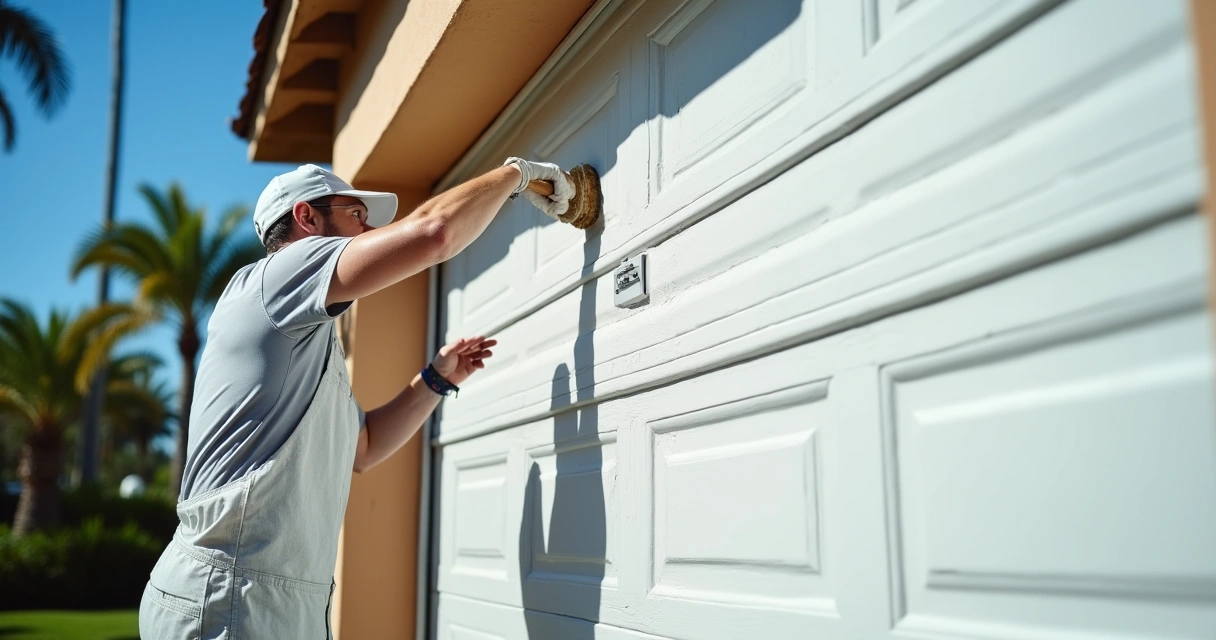
Our experience with GCM Best Services tells us that the best coating will fail if surface preparation or the application process is rushed. Florida’s humidity and temperature swings demand extra care, including:
- Thorough cleaning and removal of old, chalking finishes or rust
- Priming with a product compatible with both metal and the topcoat
- Only applying coatings during moderate temperature ranges
- Allowing each layer enough cure time to prevent trapped moisture
- Finishing with the proper thickness (usually at least two topcoats)
Humidity can extend dry times beyond what’s printed on the label. Even the simplest job needs attention to weather conditions, especially for multi-coat systems.
At GCM Best Services, our teams monitor dew points, plan for early-day applications, and keep a careful record of each project’s conditions. For high-end finishes like polyaspartic, application skill is key, as working times are measured in minutes, not hours.
Warranty, maintenance, and real-world results
Good coatings earn their keep over years. But we know that no protective finish is invincible in Florida. That’s why we always look for:
- Written warranties of at least 5 years for specialty coatings
- Maintenance guidelines that are easy to follow
- Clear paths for touch-up or recoating, should minor damage occur
Polyaspartic and premium polyurethane finishes can exceed 10 years of life if maintained, even under tough conditions. Regular washing (just mild soap and water) helps remove salt and biological matter, extending lifespan. We discourage abrasive scrubbing or pressure washing, as these can open micro-cracks.
Our walkthroughs at the finish of each project include photos, documentation, and a written warranty—part of what sets GCM Best Services apart in the field. We believe a client should never be left guessing about the next steps.
Choosing the right solution for your property
Every project is unique, and the right answer depends on several factors:
- Material of your garage door (steel, aluminum, composite)
- Distance from the coast (more salt as you get closer)
- Sun exposure (direction, shading, or trees nearby)
- Your preference for gloss, matte, or textured finish
- Budget and lifecycle cost considerations
If you need help understanding paver and hardscape durability, or even have questions about how concrete patios and driveways hold up in Central Florida, these resources may help:
- Concrete project insights
- Hardscape and paver solutions
- Driveway and patio paving resources
- Preventing weeds in Orlando pavers
- Reducing cracks in Florida’s concrete
Don’t let your garage door become the weakest link. With the right coating—and a careful application—you get peace of mind and a home exterior that truly shines, year after year.
Great curb appeal starts with protection where it counts.
Conclusion: Lasting garage door protection for Central Florida homes and businesses
Salt air and humidity test every finish—especially on your garage door, which takes the brunt of sun, rain, and sea breeze. Our experience tells us that while no coating is truly “set and forget,” careful selection and proper application of epoxy, polyurethane, or polyaspartic coatings will deliver the best defense in Central Florida.
Don’t settle for a quick paint fix. The right surface prep, a coating built for coastal and humid climates, and periodic gentle maintenance will protect your investment for years to come. GCM Best Services brings decades of local experience to garage coatings and all your exterior projects. Get results you’ll see and warranties you can trust.
Ready for a professional quote? 📞 (407) 250-1948 • 24–48h • Orlando, Tampa & area.
Frequently Asked Questions
What is the best coating for salt air?
The best coating for protection against salt air in Central Florida is typically a polyaspartic or marine-grade polyurethane system—a combination that offers strong resistance to salt intrusion, excellent UV stability, and superior adhesion on both steel and aluminum doors. Powder coatings, if applied at the factory, are also excellent, but not practical for doors already installed. These advanced coatings outperform standard acrylic paints, especially near the coast, where salt exposure is most intense.
How do coatings protect against humidity?
Garage door coatings protect against humidity by forming a dense, continuous barrier over the substrate, preventing water molecules from reaching the underlying metal or composite. Newer formulations (polyurethane, polyaspartic) are engineered to repel water, slow moisture diffusion, and maintain flexibility—key to resisting the expansion and contraction that humidity can cause. Always remember that thickness and careful curing are important, as proven in NIST research showing how thin coatings may slowly absorb moisture over time.
How often should I reapply garage coatings?
Standard exterior paints may need a refresh every 3–5 years in Florida, especially on doors facing west or south. High-end polyaspartic or polyurethane systems, when properly maintained, can last 8–12 years or more before needing another application. Regular cleaning and quick touch-ups of any nicks can further extend the coating’s life.
Is it worth it to coat my garage door?
Absolutely—especially in Central Florida’s climate. A proper garage door coating protects your property’s appearance, reduces frequent maintenance or touch-ups, and may even improve resale value by preventing rust and visible deterioration. Cost is higher upfront for premium systems, but savings on repairs, painting, and replacement add up quickly over time.
Where to find reliable garage door coatings?
For Central Florida, relying on experienced contractors familiar with our local climate is your best option. At GCM Best Services, we offer on-site assessment, customized solutions, and written warranties for all exterior projects, including garage doors. We can walk you through the options, application, and upkeep, ensuring your garage looks its best for years.