Designing outdoor spaces for everyone is not just thoughtful—it’s aligned with current code and community values in Orlando and Central Florida. At GCM Best Services, we see each pool cage and lanai as a pathway to relaxation, family time, and beautiful Florida living. But what if the entry isn’t safe or easy for all? In this article, we will guide you through planning accessible entries for pool cages and lanais, combining practical design, code compliance, and lasting peace of mind for every user. We share not only the rules and standards, but the real, on-the-ground choices that make a backyard welcoming for everyone.
Why accessibility matters for pool and lanai entries
When family, friends, or guests face a physical barrier, it impacts more than just one day by the pool. It limits social time, independence, and a sense of belonging. The poolside and lanai are the heart of many Florida homes—a place for celebrations, BBQs, and quiet mornings.
In our experience, creating an accessible entry is not only about wheelchair users or seniors, but benefits parents with strollers, people recovering from injuries, and those bringing in pool gear. It’s respect, turned into concrete choices.
Good design removes obstacles before they become problems.
Accessibility is also about the law. The 2010 ADA Standards require accessible means of entry at pools. For example, if a pool has more than 300 linear feet of pool wall, two accessible entries are required—one must be a pool lift or sloped entry. For smaller pools, at least one means, such as a pool lift or sloped entry, is required.
We design with these standards from the start. It helps avoid expensive changes later and keeps everyone included.
Understanding standards and codes for accessible entries
Every region has its guidelines, but in Central Florida, we follow both state and federal rules. For pool cages, lanais, or patios in neighborhoods with an HOA, we start with a careful check: what does the law require, and what does your community expect?
- ADA Standards: Pools must provide at least one accessible entry—lift, ramp (sloped entry), or zero-depth if feasible. For pools with extensive wall length, two accessible means are required (U.S. Access Board guidance).
- Florida Building Code: We assess wind load, non-slip surfaces, and threshold height to meet accessibility as well as safety.
- HOA guidelines: Some neighborhoods in Orlando specify appearance, colors, or styles, which influences enclosures and ramps. We help navigate these expectations so changes are approved the first time.
We carefully integrate accessibility into our hardscape services in Orlando, blending requirements, durability, and beauty. By securing permits and handling inspections, we make sure upgrades meet every code before work begins.
Features of an accessible entry: what to consider
Accessible entries are more than “no steps.” They involve dimension, surfacing, and hardware choices to ensure safety, comfort, and usability for everyone. These are the features we focus on:
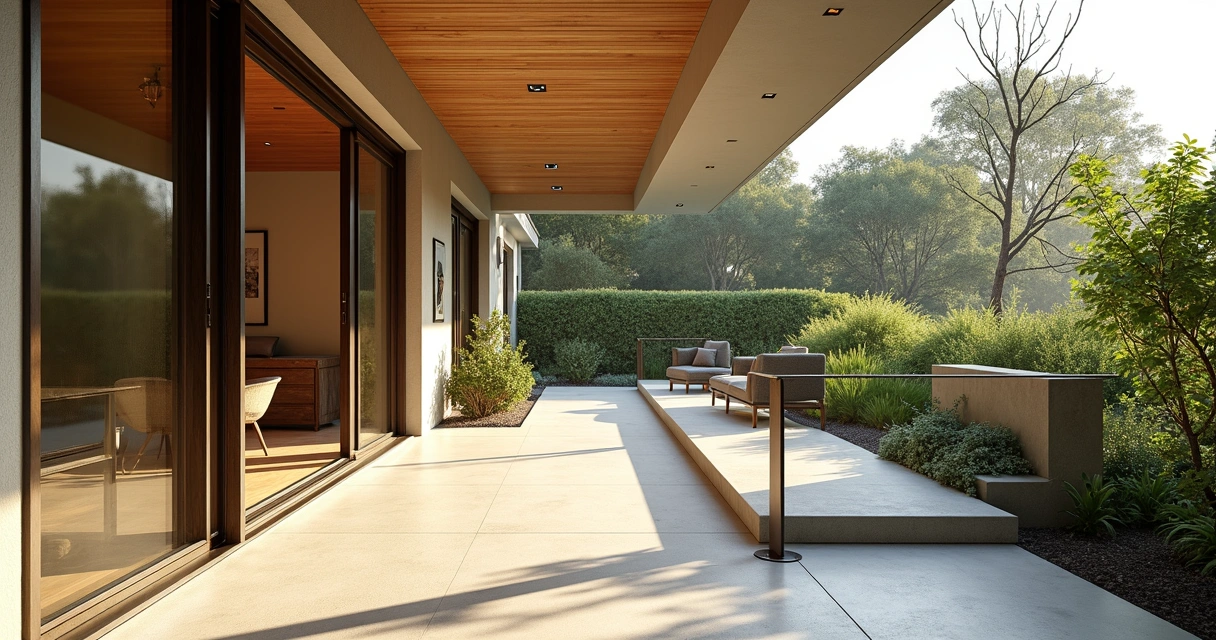
- Sloped entries (ramps): A gentle, continuous slope with a non-slip finish is safest for wheelchairs, walkers, or rolling coolers. The grade should not be steeper than 1:12 (every inch of rise, 12 inches of run).
- Thresholds: Doorway or screen track rises above 1/2 inch block small wheels and increase tripping hazards. We keep transitions smooth and use compliant sill profiles.
- Entry width: The clear width at doors or gates should be at least 36 inches (as required by ADA), supporting mobility devices, strollers, or pool carts.
- Hardware: Lever handles and easy-latch gates allow independent operation. We avoid tight knobs or high thumb latches that some cannot grip.
- Surface and drainage: A non-slip, even surface—concrete, pavers, or textured ramp—is key. Positive drainage ensures water runs away and no algae or moss accumulates to cause slips.
For new screen enclosures, we recommend doors with low sills and reinforced frames. Retrofitting? We can add mini ramps, level pavers at the threshold, and swap old knobs for lever-style handles, all while matching the original appearance.
Step-by-step: how we plan accessible pool cages and lanai entries
Each home and yard is different, but our process is always deliberate. We plan for current and future needs, involving you at every stage. Here is our approach:
Initial site visit and assessment
We walk your space with you, noting grade, current surfacing, and sun exposure. We ask about common visitors (grandparents, kids, caregivers) and any special requirements—favorite lawn activities, pet runs, or storage needs. We also identify drainage challenges or uneven paving, which are very common in Central Florida.
Review rules and preferences
We check the pool and lanai layout against current ADA pool entry rules and local codes. For pool enclosures, we confirm wind load, hurricane fastening, and screen door requirements. If there’s an HOA, we review their appearance and size rules. For appearance, we show samples so you can see and feel finish textures and colors up close.
Concept sketches and estimate
We draft the best options—ramp, wider gates, raised paver paths—so you can visualize. We include product brochures for handles, door frames, and color options. Our estimate is detailed, including all prep, removal, material, and labor costs. By documenting the plan up front, upgrades and accessibility features pass HOA or city review without stress.
Drainage and foundation planning
Drainage is a top concern. A ramp or entry can become slippery if water pools. We use either a sloped base for concrete, or we set pavers with a slight pitch away from doors. For turf or landscaping near the entry, we consider permeable bases and border restraints, so that surface water moves away, not toward the home or pool.
We reference our hardscape design standards at this stage to ensure compatibility with existing patios, paver colors, and coping stones.
Accessibility hardware and finishing touches
Hardware matters more than many realize. We select lever-style handles and gate latches within easy reach (34–48 inches above ground). All hardware is weather-resistant and, if desired, keyless for ease. Entry doors and gates are wide enough for mobility devices, and any screens are reinforced to resist wind and frequent use—benefits for all users.
For new enclosures, we make sure door swing and clearance do not block furniture or foot traffic. For retrofits, we work around existing planters or columns, finding solutions that keep the look cohesive and inviting.
Materials and finishes for accessible entries
Accessible pathways and ramps are exposed to weather, traffic, and—let’s be honest—bare, wet feet. Here is how we think about each material or finish:
- Concrete: Broom or exposed aggregate finish for grip; integrally colored or sealed for style. We manage sub-base compaction and rebar for strength on Florida soils. We install expansion joints and set slopes for drainage, as detailed in our driveway, patio, and paving projects.
- Pavers: Interlocking brick or concrete pavers on a firm, compacted base, often bordered with contrasting color for visual cues. Polymeric sand locks joints but lets water pass through. We match existing patio or walkway colors for a seamless look; see our guide on brick paver installation.
- Artificial turf: For areas needing soft landings or play surfaces, we use high-drainage infill and bonded edges, so turf does not bunch or curl up at ramp or entry borders. Turf integrates cleanly with paver or concrete edges for safe, attractive transitions.
- Screen frames and doors: All-aluminum with reinforced corners; powder-coated to resist scratching and fading. Low-profile tracks reduce tripping. For hurricane resistance, we use hardware and anchors aligned with Florida code.
We always recommend contrasting color strips or tactile warnings at the edge of ramps or change in slope. This is one of those small details that makes a large difference for the visually impaired—or anyone rushing to join the pool fun.
Common accessibility entry upgrades and what to expect
Every yard is unique, but some entry upgrades are requested again and again. Here is what we most often recommend and install:
- Mini ramps at screen doors: Low-slope (1:12 grade) wedge ramps in concrete or paver to bridge from patio slab over the raised screen track.
- Threshold replacement kits: For screen doors or sliders, we retrofit lower profile thresholds with a gentle slope on both sides. No more stuck wheels or tripping toes.
- Wider gates and doorways: Standard enclosures often use 32-inch gates; we replace with 36-inch (or even double-door) entrances for better access.
- Upgraded paving: Replacing cracked or sunken patio segments with even, non-slip surfacing. Matching new pavers or broom-finished concrete to existing surfaces for cohesive look and feel.
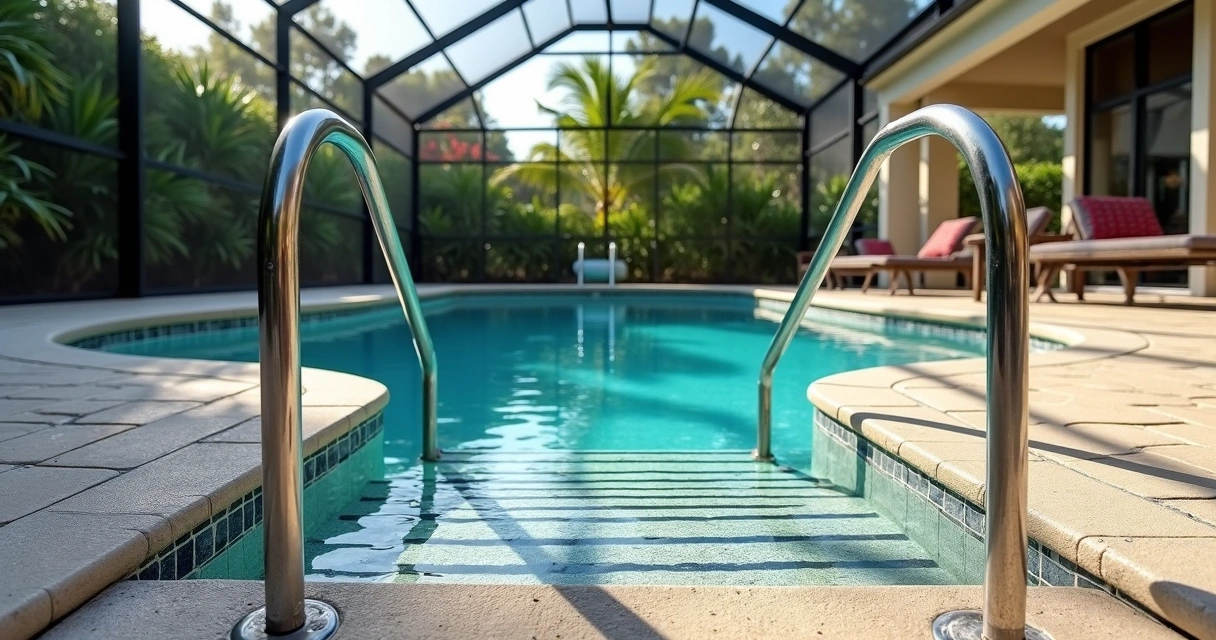
- Handrails: Adding sturdy, corrosion-resistant rails at ramps or steps. Placed to allow “power assist” for wheelchairs, walkers, or simply tired legs.
Installation timelines depend on complexity and permitting. Simple ramp or threshold changes can often be completed in a day or two. Large re-paving or enclosure modifications may require a week—and, as with any exterior work in Florida, weather can affect scheduling.
Integrating accessibility with landscape and lighting
An accessible entry should look inviting—not clinical or out-of-place. One of our favorite challenges is blending new ramps or entries with the vibrant colors and textures of Florida landscapes.
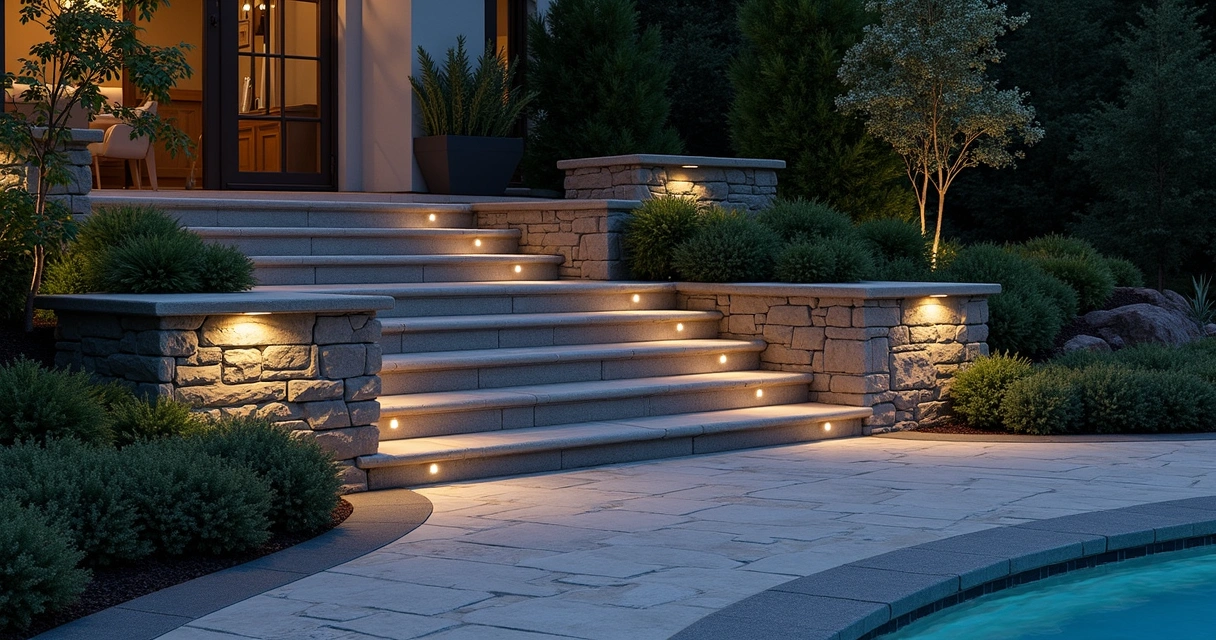
We take into account plant bed locations, irrigation paths, and lawn runoff. Wider paved zones or curves at corners allow smoother turns for wheelchairs or wagons. Landscape lighting (solar or low voltage) at entries and ramps makes nighttime use safer, especially for older guests or small children.
Outdoor lighting also highlights the best features of your hardscape. Spotlights on planters, LED strips along the ramp edge, or path lights at gates make the space both safer and more welcoming after sunset. This matches the philosophy we keep in all our hardscaping projects—function always works hand in hand with beauty.
Maintenance and long-term support
Accessible entries need to last for years and handle Florida’s rain, sun, and use. We recommend a regular sweep and wash to remove sand or algae. Sealed concrete or pavers keep surfaces safe, and hardware should be checked for loose handles or rust. Our written warranty and maintenance guide explain what to expect and look for—so you don’t have to guess.
We always finish each project with a detailed walkthrough, explaining each feature and showing you how to maintain your new entry. When you choose GCM Best Services, you receive full support and guidance from that first call through every sunny weekend in your space.
Conclusion: Every home in Central Florida can be truly welcoming
In our years of work across Orlando and Central Florida, we have seen the pride that comes from a backyard where everyone belongs. The right accessible entry is a simple, powerful gift: independence, safety, and togetherness, from sunrise to sunset and season to season. With standards guiding us and smart materials available, there is no need to settle for less. If you are ready to see what is possible in your space, our team at GCM Best Services is happy to help—start with a conversation and discover the ways we can make your pool cage or lanai entry welcoming for every guest.
Ready for a professional quote? 📞 (407) 250-1948 • 24–48h • Orlando, Tampa & area.
Frequently asked questions
What is an accessible pool cage entry?
An accessible pool cage entry is a doorway or gate designed so people of all abilities can enter and exit the screened enclosure safely and independently. Typically, it has a low or no threshold, a wide opening (at least 36 inches), non-slip ramp or surface, and easy-to-use hardware such as lever handles. These entries are built to meet standards such as the ADA, making them usable for those with mobility aids, strollers, or even rolling pool equipment.
How to make my lanai wheelchair friendly?
To create a wheelchair-friendly lanai, start by ensuring the entryway is at least 36 inches wide for easy rolling access. Upgrade any high thresholds—install gentle slope ramps at entries, use non-slip surfaces, and check that changes in level are minimal. Choose lever handles for doors or gates, keep walkways clear, and provide accessible pathways with stable, even materials such as concrete, pavers, or high-quality turf. If possible, add handrails at ramps and ensure outdoor furniture does not block access. For local code and ADA compliance, review guidance at swimming pool accessibility research.
What materials are best for accessible entries?
Durable, non-slip materials are best for accessible entries. Broom-finished concrete, exposed aggregate, or textured pavers provide grip even when wet, helping prevent slips. For doorways, low-profile aluminum thresholds or retrofitted ramps work well. In play or lawn zones, UV-stabilized artificial turf with a stable base is a soft, accessible option. For hardware, aluminum or stainless lever handles resist corrosion and are easier to use for all ages.
How much does accessibility remodeling cost?
The cost for accessibility upgrades varies based on scope: adding mini ramps or changing threshold profiles may range from $500 to $1,500. Wider door or gate replacement, repaving, or more extensive drainage work could range from $2,000 to $6,000 or more, especially if landscaping or structural changes are needed. We always recommend a detailed on-site estimate so you only pay for improvements that suit your exact space. Accessibility improvements may also qualify for local grants or assistance programs; consult ADA requirements for pools in public settings for more on what may be “readily achievable.”
Are permits needed for accessibility upgrades?
Yes, most accessibility modifications to pool cages, lanais, or patios do require a permit in Central Florida. Structural changes, new ramps, or moving doorways must meet building code and may require city or county inspection. Our team at GCM Best Services manages all permitting and will coordinate any required HOA approvals as well, so your improvements are both legal and long-lasting.