Primary keyword: walkway drainage slopeVariants: walkway slope calculation, drainage slope formula, calculating walkway gradient
Audience: Homeowners, property managers, and builders in Central Florida seeking stable, well-drained walkways.Pain point: Water pools on walkways, causing slipperiness, cracks, or damage.Benefit: Simple, proven slope calculations ensure dry, durable paths for years.
Summary: Calculating the proper slope for walkway drainage is the foundation of durable outdoor surfaces in Florida’s wet, sandy climate. In our work at GCM Best Services, we see the impact that even subtle grading mistakes can create—ponding water, surface erosion, and cracking. Reliable, simple slope formulas are the best way to guarantee water flows off your paths, protecting your investment and keeping your space safe, clean, and appealing. In this article, we share how anyone can calculate walkway slope using basic math, backed by federal standards and field experience.
Outline
- Why walkway drainage slope matters
- Basic concepts behind slope and grading
- Simple formulas for calculating slope
- How to measure and mark slope on site
- Recommended drainage slopes for Florida walkways
- Avoiding common mistakes and issues
- Walkway drainage with different surfaces: concrete, pavers, turf
- How GCM Best Services approaches slope and drainage
- Conclusion and next steps
- FAQs
Why walkway drainage slope matters
Standing water is never just an eyesore on your walkway. It’s a fast track to slippery surfaces, cracks, stains, mosquito breeding, and structural issues. In Florida’s climate, heavy rain is frequent. Water needs a clear path away from every walkway to protect your property and those who use it.
Without a consistent slope, even the best materials cannot keep up with persistent puddling or soil washout beneath the path. This is why, at GCM Best Services, we treat every walkway’s drainage plan as a core part of the build, not a finishing touch.
Water always seeks the lowest point. Give it a controlled path, and your walkway stays beautiful.
Basic concepts behind slope and grading
Slope is a simple measure, but the terminology can be confusing. The main goal is to create a gentle, steady grade that moves water away from where you don’t want it. Let’s break down the language of sloping and grading used in walkway planning:
- Slope (gradient): Describes how much higher one end is compared to the other, over a certain distance. Often expressed as a percentage, ratio (1:50), or angle (degrees).
- Rise: The difference in height (elevation) between two points.
- Run: The horizontal distance between those two points.
- Cross slope: The side-to-side tilt, allowing water to run off the walkway surface, usually a lower percentage than the main (longitudinal) slope.
Getting the rise and run right isn’t just about math. It affects comfort, accessibility, appearance, and longevity. A slope that’s too steep can be unsafe or feel awkward to walk on. Too shallow, and water will linger.
Simple formulas for calculating slope
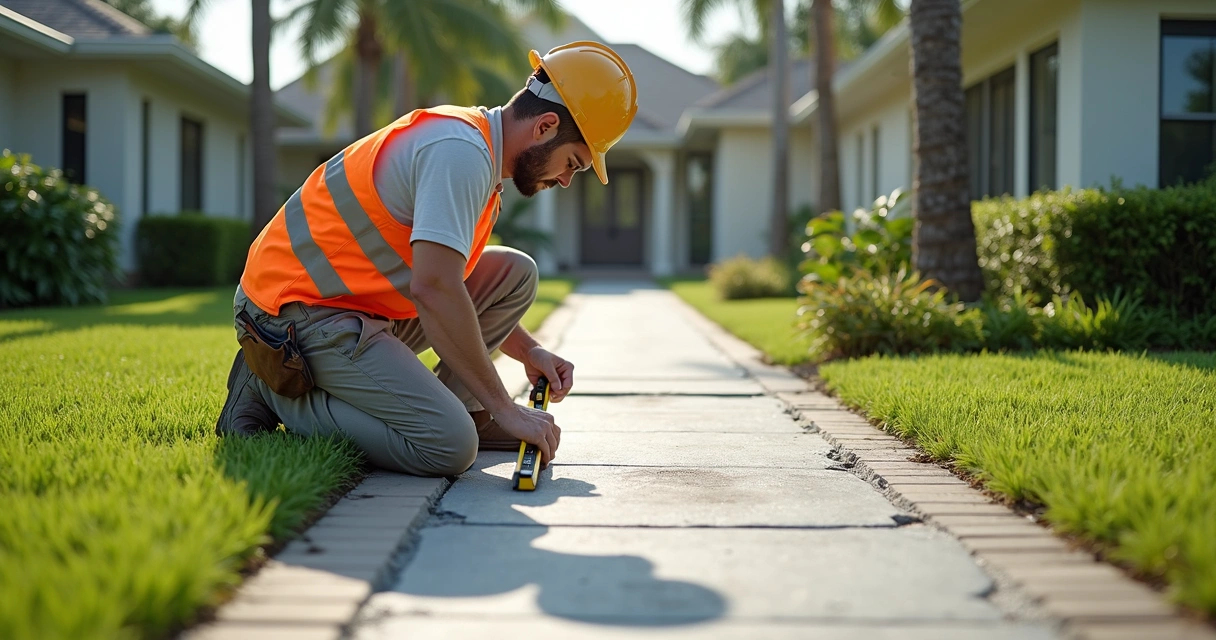
You do not need advanced math to design a walkway with perfect drainage. A few simple formulas, plus a reliable measuring tape, will give you the answers you need:
Percent slope formula
- Find the rise (height change in inches or centimeters).
- Find the run (horizontal distance in feet or meters).
- Percent Slope = (Rise ÷ Run) × 100
For example: If the end of the walkway drops by 3 inches over 10 feet, then:Percent Slope = (3 ÷ (10 × 12)) × 100 = (3 ÷ 120) × 100 ≈ 2.5%
According to the U.S. Geological Survey, this formula is standard for calculating percent slope, and the resulting number lets you compare to guidelines for drainage and accessibility.
Angle of slope
- Angle (degrees) = arctangent (rise ÷ run)
Most walkways for drainage need low angles, typically below 3 degrees, to both drain well and feel comfortable when walking.
Pro tip: For every foot of walkway run, a 1/8 inch drop yields about a 1% slope. Double it for steeper drainage needs.
How to measure and mark slope on site
It may sound technical, but marking out a slope for a new or replacement walkway can be done with basic tools. Here is a workflow we often follow on site:
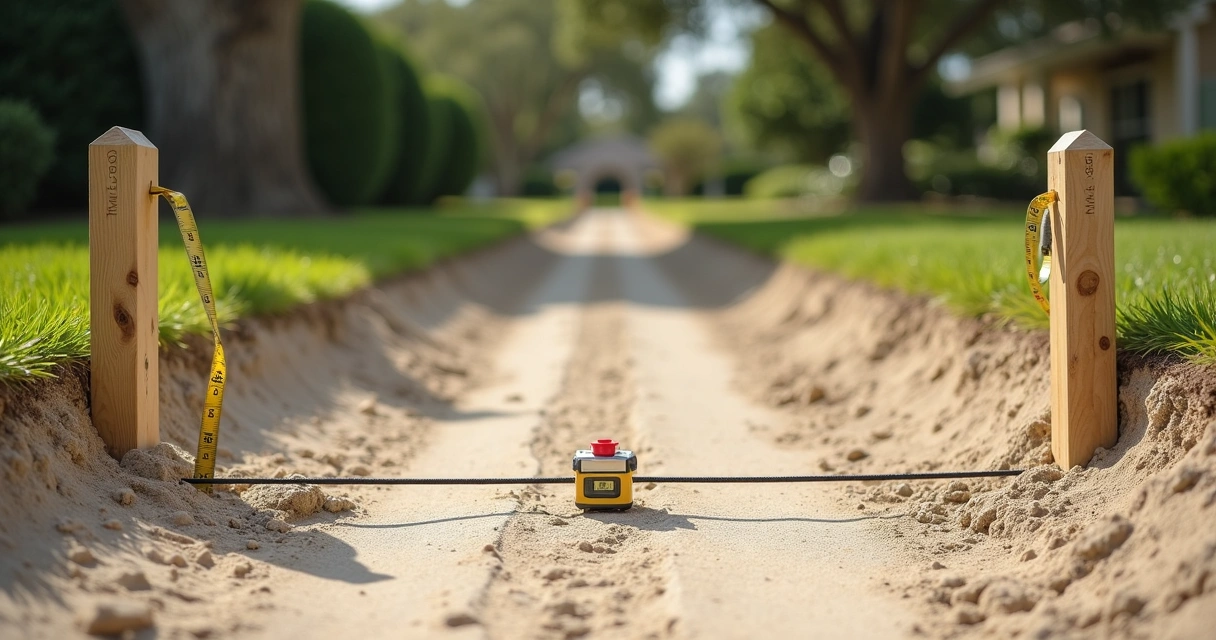
- Mark the walkway’s edges. Use stakes and string to outline starting and ending elevations.
- Establish the high and low points. Usually, the highest elevation is adjacent to a building or the start of the path.
- Calculate the desired amount of drop (rise). For a 20-foot walkway needing a 2% slope, you need a 4.8-inch drop: 20 feet × 12 = 240 inches; 240 × 0.02 = 4.8 inches.
- Use a string line level or laser level. Set the string at the high end, then lower the opposite end to match the calculated drop.
- Mark grades on stakes or measure to the ground at both ends to guide excavation and base preparation.
We frequently encounter sites where the walkway was “eyeballed”—these almost always have drainage problems later.
Recommended drainage slopes for Florida walkways
Choosing the right drainage slope isn’t guesswork. Best practices are shaped by decades of engineering, adjusted for our intense storms. For flat-paved walkways or sidewalks, industry guidance aligns closely:
- The Texas Department of Transportation recommends a pavement cross slope of 2% to promote effective drainage.
- Their studies state a minimum of 1% slope, increased in locations with heavy rainfall.
- For walkways, our own GCM Best Services standards match these: 1.5–2.5% is our “sweet spot.” This balances safety, comfort, and reliable drainage.
Anything below 1% risks standing water, while above 5% can be uncomfortable and hazardous, especially for those with mobility challenges.
A gentle slope keeps water moving—and your walkways clear.
Avoiding common mistakes and issues
Every season, we’re called to assess problems that come from errors in slope. Here are the most common and how to avoid them:
- Grading toward structures: Always slope walkways away from foundations, steps, garages, and pools to prevent infiltration and pooling.
- Flat or reversed slope areas: Even one low spot, where the surface is perfectly flat or dips below grade, will collect water.
- Ignoring cross slope: It’s not just the length—it’s also the width. A gentle cross slope, typically 1–2%, helps water flow to the path’s edge, not just down the length.
- Poor base compaction: A well-sloped surface will still fail if the base settles unevenly. We build our bases from crushed stone or compacted sub-base as seen in our hardscape work.
- Overly steep slopes: Water runs off quickly, but these can become hazardous, especially if algae or debris build up.
The solution is thoughtful planning, double-checking your numbers, and laying out the grades before any material is installed.
Walkway drainage with different surfaces: concrete, pavers, turf
The underlying principles of slope stay consistent, but each surface type benefits from slightly different details:
Concrete walkways
- Use consistent slope and tight tolerances.
- Finish with a slight broom texture for slip resistance during rain.
- Control joints help limit cracking in longer slopes, a method we focus on at GCM Best Services.
- Integrate drainage channels or curb edges where needed, as in our installations described in the St. Cloud installation guide.
Brick and paver walkways
- Base grading is vital—pavers will settle if the sub-base shifts.
- Edge restraints prevent movement that can ruin the slope.
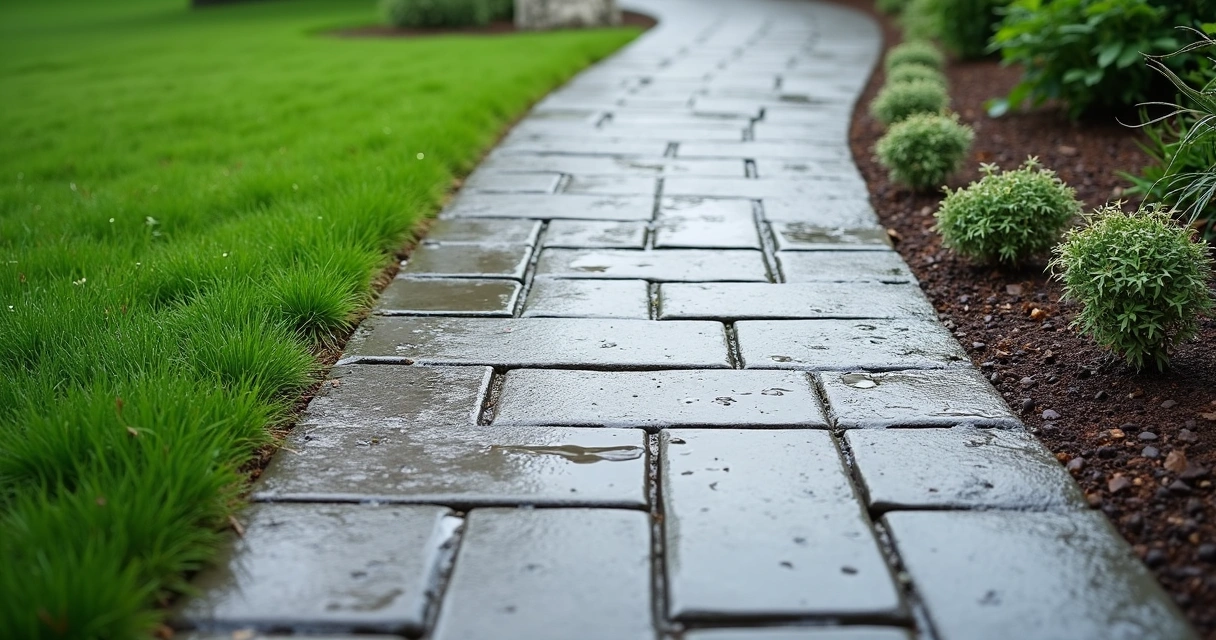
- Polymeric sand and sealing help repel water through joints, supporting positive drainage. Our experience, shared in this paver drainage solutions guide, is especially tailored for Florida’s weather.
Artificial turf walkways
- Install over a well-compacted, free-draining aggregate base.
- Ensure slope is maintained beneath the turf—water needs to move through and out, not just soak in. This is covered in more depth in our hardscape expertise.
- Trim grass height to follow grade for a neat look.
Each surface has drainage strengths and limits—our role is to design the right grade and details for lasting performance.
How GCM Best Services approaches slope and drainage
At GCM Best Services, we never take drainage for granted. Our process is precise, combining local code compliance and on-the-ground experience in Central Florida. Here’s how we approach every walkway:
- On-site consultation: We meet you to walk your property, identify problem areas, and listen to your needs.
- Detailed slope planning: Using laser levels, elevation readings, and simple math, we mark out exact grades before work starts.
- Material matched to site: Soil type, expected use, and adjacent features all guide slope and drainage strategies—whether it’s concrete, pavers, or turf.
- Integrated solutions: Drainage channels, curb drops, or surface textures added as needed. We use photos and notes to verify every step, clear for you and the inspector.
- Final walkthrough and warranty: We check all surfaces together, test water flow if rain is due, and back up our work with a written warranty and care guide.
We also share knowledge with property owners. If you want to learn about related landscape and hardscape approaches, we discuss design ideas and local drainage stories at our hardscaping blog.
Every walkway is a partnership—with you, the site, and the weather.
Conclusion and next steps
Calculating slope for walkway drainage isn’t a complicated puzzle. With a little planning and a few measurements, you can steer water away from your walkways and prevent a lot of future headaches. At GCM Best Services, we use simple, proven formulas and tools, but match them with experience specific to Central Florida’s rain and soil conditions. Whether it’s a straight concrete path, an elegant paver entry, or turf that looks great all year, the right slope makes the difference between surfaces that last and those that disappoint.
Ready for a professional quote? 📞 (407) 250-1948 • 24–48h • Orlando, Tampa & area.
Frequently asked questions
What is walkway drainage slope?
Walkway drainage slope is the gentle incline designed into a walkway surface to encourage water to flow off the path and into drainage areas, preventing standing water and damage. Most often, this is a 1–2% grade, which is roughly 1/8 to 1/4 inch drop per foot of walk length.
How to calculate walkway slope easily?
To calculate walkway slope, measure the height difference from one end of the path to the other (rise) and the horizontal distance between them (run). Then, use the formula: Percent Slope = (Rise ÷ Run) × 100. If the path drops 2 inches over a 10-foot distance, the percent slope is (2 ÷ 120) × 100 ≈ 1.67%. For quick results, a 2% slope is about a 1/4 inch drop per foot.
What is the minimum slope required?
Most guidelines, such as those from the Texas Department of Transportation, recommend a minimum slope of 1% for walkways and paved areas, increasing to 2% in areas with higher rainfall to ensure proper drainage and reduce the risk of water pooling.
Why is drainage slope important?
A good drainage slope allows water to flow away instead of soaking into joints or collecting in low spots. This helps prevent slippery surfaces, trip hazards, erosion, and long-term cracking, extending the life of your walkway and keeping your property neat and safe.
Can I use a level to check slope?
Yes, you can use a carpenter’s level or, for long paths, a string line or laser level to confirm that your walkway has the intended slope. Measuring the height difference across a known length and calculating the drop per foot gives you a simple way to check if the slope meets drainage requirements.