If you own a pool enclosure in Orlando or anywhere across Central Florida, the humidity and salinity of our climate demand extra thought in choice of hardware. At GCM Best Services, we often receive questions about hardware types, coatings, and maintenance routines for pool cages. Many clients want durability, but are frustrated after seeing rust appear just a few seasons after installation. In this article, we’ll break down what causes rust, the science behind hardware choices, and our methods for fighting corrosion—even in Florida’s challenging weather. If you want pool cage upgrades aligned with building codes and a longer life, you’ll find practical details here.
Why rust resistance matters in Florida pool cages
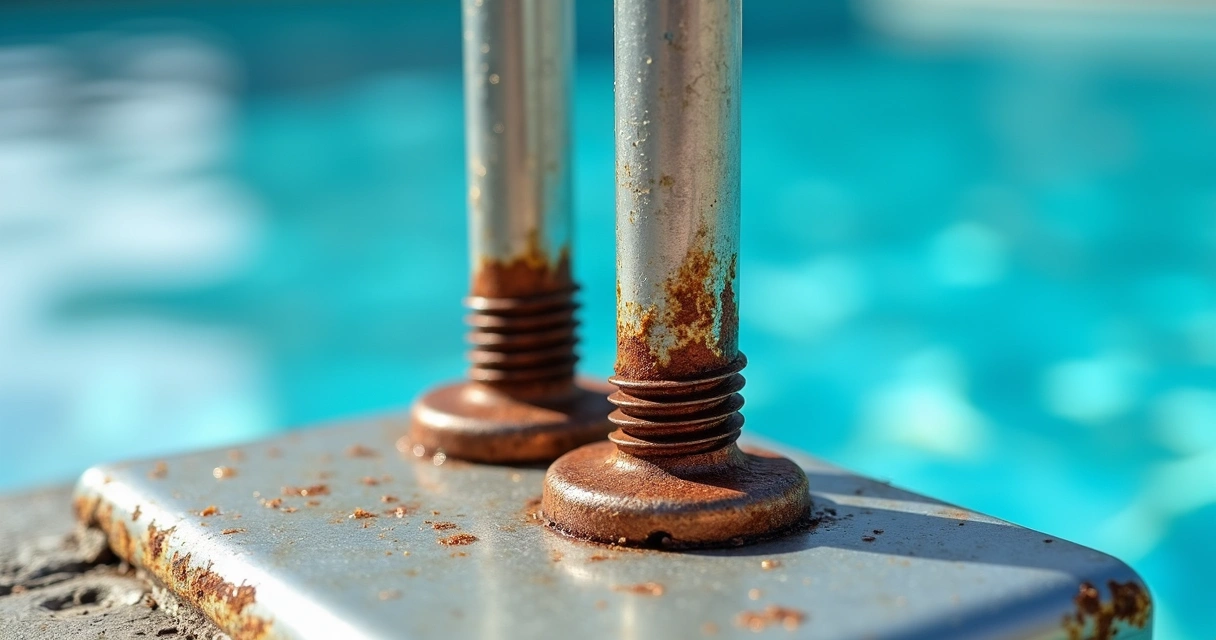
The climate in Central Florida is beautiful but relentless when it comes to pool cages. Humidity, frequent rain, and pool chemicals mix with trace seawater in the air, kicking off the corrosion process. When we talk about rust, we specifically mean the oxidation of iron-containing metals that weakens hardware, causes stains, and eventually undermines the structural stability of the enclosure. Even so-called “marine-grade” finishes can struggle if the wrong metal or coating was chosen for the environment.
Many homes suffer from:
- Loose or seized-up screws that no longer grip aluminum rails
- Discoloration beneath screw heads, especially at the corners
- Panels rattling in the wind because fasteners or brackets failed
- Hardware snapping during hurricane season inspections
- Black streaks or orange stains (signs of galvanic corrosion with aluminum)
We’ve seen all of this in our assessments and repairs. Addressing rust early—or, better yet, preventing it—means you’ll avoid recurring repair bills and protect your investment for many years.
Understanding metal types: what lasts in Florida?
Metal hardware can look almost identical from the outside, yet their performance is drastically different based on composition. Here’s what we know from years of working with enclosures in this region:
Steel: not all types are the same
Plain steel hardware rusts in days without protective coatings. Galvanized steel offers better performance, but even thick coatings can get chipped or scratched during installation, letting rust creep in. The real step up: stainless steel. But even here, the grade matters deeply.
- Type 304 stainless steel: Common in hardware, has good corrosion resistance, but prolonged exposure to salt air or pool chemicals still can cause spotting over time.
- Type 316 stainless steel: Contains extra molybdenum, making it far more resistant to “crevice corrosion” and pitting—which is why we use it for marine or pool-adjacent outdoor installs. In fact, a U.S. Department of Energy study demonstrated the superiority of Type 316 over 304 for resisting crevice corrosion in waters with up to 1,000 mg/L chloride, like what we might see under pool decks or coastal winds.
- Austenitic high-alloy steels: Those with 25% chromium, 5% molybdenum, and 0.2% nitrogen show even higher performance, especially in direct salt spray or flooded zones, as confirmed through DOE research on austenitic steels in seawater (DOE-published study).
Aluminum hardware: benefits and warnings
Aluminum fasteners are lightweight and blend well with enclosure frames, but have weaknesses. Pool chemicals and chlorides in the air can pit them. Plus, aluminum hardware is softer than steel and can round off or break when torqued too tightly. A government technical paper notes that aluminum can corrode rapidly when in contact with wet Portland cement or unfinished concrete. For us, that means extra care when anchoring cage bases into patios or decks.
Zinc-plated, hot-dipped galvanizing, and coatings
On the surface, zinc or hot-dip galvanized finishes give hardware a silvery shine and initial corrosion protection. However, in our subtropical climate, the sacrificial zinc wears off in just a few years, especially if fasteners are scraped or stressed during assembly. Once the steel is exposed, rust advances quickly.
How coatings and finishes extend hardware life
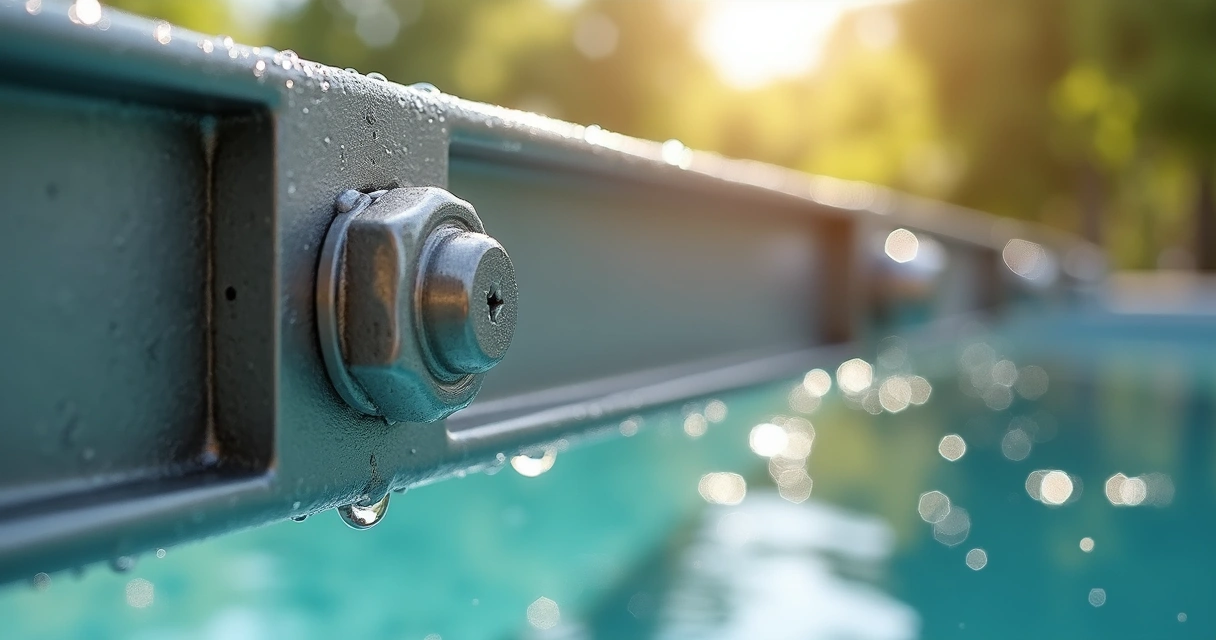
We don’t just look at what metal a screw or bracket is made from—we also look for lasting finishes. Not every coating performs equally well:
- Polymer and epoxy coatings: A quality polymer coating acts as a complete barrier between the hardware and outside elements. If the underlying screw is stainless, this can add decades to service life. Careful install is a must: any scratch or chip can become a rust starting point.
- Electroplated zinc: Often used on budget hardware, it’s thinner and less reliable than hot-dip galvanizing or true stainless. Tends to flake or wear from repeated exposure to wind-blown sand, abrasive pool chemicals, and power-washing.
- Hot-dip galvanizing: This is a robust coating and survives much longer, but it is still vulnerable to cuts and damage. We reserve it for temporary fixes or less exposed applications, rather than as a permanent solution for pool enclosures.
Sometimes clients ask us to assess if it’s worth paying for higher-grade coatings. Our experience suggests that quality coatings pay off many times over in reduced maintenance, less frequent replacements, and less hassle down the road. It’s a classic case of “you get what you pay for,” especially where enclosure bases meet deck or paver edges—areas that see the most moisture and chemical runoff.
Galvanic corrosion: the hidden risk in pool cage hardware
Rust does not act alone. When dissimilar metals meet in the presence of moisture—a certainty with Florida weather—galvanic corrosion can appear unexpectedly. If, for instance, stainless screws are driven directly into aluminum rails with no isolation, the less noble aluminum is more likely to corrode. This often shows up as black streaks or white powder around fastener heads.
- Always pair compatible metals when possible.
- If not possible, use suitable isolator washers or bushings between fastener and frame.
- Watch for signs of “runner” stains on your screen enclosure—these suggest galvanic action is already at work.
That’s why at GCM Best Services, we carefully select hardware and isolation techniques for each install, especially for patios and pool cages integrated with salt-water pools or decks.
How to select screws, bolts, and connectors
The best pool cage hardware is more than just rust-resistant—it must match the structural engineering needs of the enclosure. Here’s our selection process in the field:
- Identify the environmental risk: Is the home near the beach? Does the pool use saltwater chlorination? Is there irrigation overspray on the enclosure?
- Check the local code: Some regions of Central Florida, especially hurricane-prone areas, have specific code requirements for anchoring and wind uplift. These codes may even specify hardware grades/fixes.
- Choose stainless for exposed fasteners: Especially for screws connecting frame to base, tension rods, or critical clip straps. For unmatched performance, we focus on Type 316 or high-allow stainless steels in exposed, high-splash zones.
- Select full-thread when possible: Full-thread screws grip better and distribute load, helping cages withstand wind events and frequent door slamming.
- Avoid mix-and-match repairs: When patching a corroded section, always replace surrounding hardware as well. It prevents the “weakest link” problem where a single leftover steel or zinc screw restarts the corrosion cycle.
- Consider upgraded security/drive heads: Tamper-resistant heads not only deter theft but also resist “cam-out” during tightening, lowering the risk of scarring coatings and making future removal easier for maintenance.
Maintenance and inspection tips for homeowners
Hardware selection is not a substitute for inspection and care. Even the best screws, clamps, and brackets will need an annual check-up in our climate. Here’s what we recommend to our clients at GCM Best Services:
- Rinse enclosure hardware quarterly with a garden hose to remove salt residue and dirt.
- Inspect all fasteners for discoloration or loosening after storms or every six months.
- Replace any hardware showing orange, black, or white stains promptly instead of waiting for total failure.
- Lubricate door hinges and moving connections using a silicone-based spray, not WD-40 (which leaves a residue that can trap dirt).
- Keep paver borders, drains, and surrounding concrete in good repair to limit standing water exposure—see our article on how proper drainage and construction prevent issues.
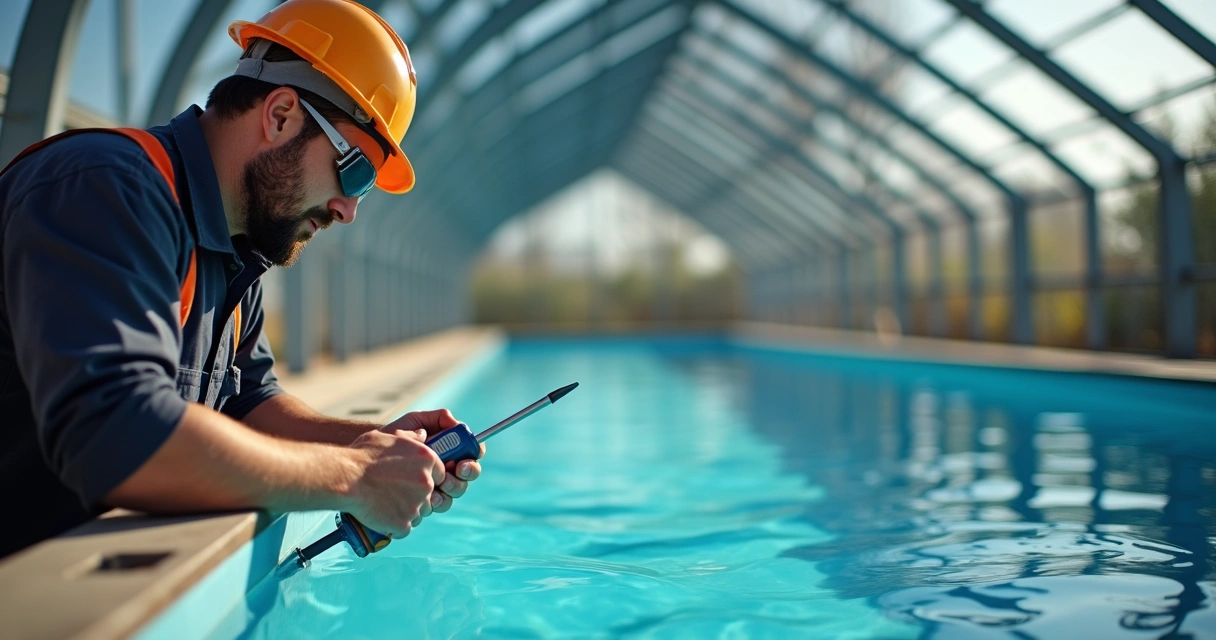
The goal is to act before rust takes over—not after damage has appeared.
Installation methods that increase rust resistance
Choosing the right hardware is step one. Step two is how we install and secure it. Our team at GCM Best Services always follows best practices to maximize lifespan:
- Use torque-limiting tools: To prevent overtightening, which cracks coatings or deforms brackets—making water intrusion likely.
- Pre-drill or clear debris: So screws don’t “self-tap” through tough spots and overheat during installation, stripping coatings along the way.
- Apply touch-up coating: Especially on cut or trimmed sections after fitting, to reseal minor abrasions immediately.
- Seal joints and anchor points: Use approved sealants where hardware meets masonry decks or concrete slabs, blocking chemical-laden water from soaking hardware bases.
- Orient fasteners with drainage in mind: Vertical or angle-driven screws shed water and deter pooling around heads, keeping those crevices drier.
Correct, clean installation not only boosts durability, but also upholds the documented warranty we offer on all new cages and enclosure upgrades across Central Florida.
Specific scenarios: saltwater pools, coastal zones, and older enclosures
Some of our clients have special situations that require even more detailed attention:
Saltwater pool systems
Saltwater chlorinators increase the risk of chloride-induced corrosion. Only top-tier stainless or polymer-coated hardware should be used near these pools, as even minor saltwater mist will drastically accelerate rust on exposed steel. We recommend regular rinsing, and in trickier layouts, even specially isolated brackets.
Homes inside ten miles of the coast
Coastal breezes routinely carry chlorides inland, corroding metals far from the sea’s edge. Here, we treat every hardware decision as if it will be directly sprayed by ocean water, focusing on the highest-resistance products and complete isolation from aluminum frames wherever feasible.
Historic or aging enclosures
Older cages often used basic carbon steel hardware that has failed by now. When replacing, we’ll survey for other environmental problems—like contact with unfinished concrete noted in the General Services Administration’s aluminum technical notes—and correct the setup with modern isolation washers and improved drainage. Sometimes a full hardware replacement is best, as it’s cheaper and more reliable than “spot fixes.”
How we document and guarantee rust resistance at gcm best services
Our clients appreciate seeing proof that the job was done right. For every pool cage hardware upgrade or new build, we:
- Photo-document every critical fastener, showing correct metals and coatings as installed
- Include in writing the hardware specification and estimated lifespan
- Provide a maintenance guide (action steps, frequency, product recommendations)
- Deliver a written, transferable warranty to new homeowners—so property value stays high
We believe in spending time up front, for peace of mind that lasts long after installation.
What if rust already appeared? Our repair protocol
If you discover rust on your pool cage, don’t panic. Here’s our approach:
- Inspect for visible hardware failures—loose or missing screws, damaged connectors, or stains signaling advanced rust
- Remove and replace every affected screw, not just the most rusty ones
- Clean surrounding frame areas, apply rust inhibitors if needed, and touch up all exposed metal surfaces
- Upgrade to superior hardware according to current enclosure location and code
- Review maintenance habits and make suggestions for ongoing care
This is the same process we follow in all our field repairs, no matter the enclosure size or age.
Summary and action steps for Central Florida homeowners
Don’t let your investment rust away. Take control with the right hardware choices.
At GCM Best Services, we believe rust resistance comes down to informed hardware selections, high-quality coatings, smart installation, and regular checks. These steps do more than protect your pool cage—they make your home safer and lengthen the time between repairs or upgrades. For more tips on hardscape and enclosure care, our blog offers additional resources, including concrete and paver care at our dedicated section and recent updates on hardscaping techniques for the Florida climate. You’ll also find our licensed contractor’s guide to concrete repairs helpful if your enclosure is anchored to a patio or new deck.
Want a pro opinion or a warranty-backed upgrade? Ready for a professional quote? 📞 (407) 250-1948 • 24–48h • Orlando, Tampa & area. Visit our blog for more guides and homeowner resources, or ask us for a free on-site enclosure assessment today.
Frequently asked questions about rust resistant hardware for pool cages
What is rust resistant hardware for pool cages?
Rust resistant hardware for pool cages refers to fasteners, screws, bolts, and connectors made from materials or coated with finishes that prevent or slow down corrosion when exposed to moisture, salt, and chemicals. The most reliable options include Type 316 stainless steel, properly coated aluminum, and hardware with specialized polymer or epoxy coatings that block environmental attacks.
How to choose the best hardware material?
We recommend first assessing your property’s proximity to saltwater, humidity, and pool systems. Type 316 stainless steel is an ideal choice for durable, long-term rust resistance, especially for homes near the coast or using saltwater pools, as supported by Department of Energy research. For less exposed areas, upgraded polymer-coated or hot-dip galvanized hardware can be considered, but always match the hardware to your enclosure’s unique risks for best results.
Is stainless steel worth it for pool cages?
Yes, especially in Florida’s climate, investing in stainless steel—preferably Type 316—greatly improves rust resistance and reduces the need for frequent replacement or repair. This choice typically pays off due to lower maintenance and longer hardware service life, according to studies and our experience at GCM Best Services.
Where to buy rust resistant hardware?
High-grade rust resistant hardware can often be sourced through contractors who specialize in outdoor enclosures, like our installation teams at GCM Best Services, or reputable local suppliers who offer true Type 316 or austenitic marine-grade products. Be careful when purchasing hardware yourself, as many retail options may be mislabeled or lack the specifications needed for Central Florida’s climate.
How much does rust proof hardware cost?
Rust proof hardware (such as certified Type 316 stainless) typically costs more than standard zinc-plated or galvanized fasteners—but the price is reasonable when balanced against the cost of repeat repairs or enclosure failures. For most pool cages, upgrading all visible hardware adds a modest percentage to project cost, but can save hundreds or thousands in future repairs. We provide transparent pricing and written warranties with every enclosure project so there are no surprises.