Outdoor kitchens transform patios, backyards, and poolside lanais throughout Central Florida into open-air gathering spaces that invite year-round use. But the Florida climate comes with a challenge: relentless sun, humidity, storms, and insects can take a toll on materials and make even the best-designed summer kitchen feel unwelcoming or hard to maintain unless insulation is addressed thoughtfully. We have helped homeowners and business clients in Orlando and Tampa turn concrete patios and brick paver decks into insulated, functional outdoor kitchens through tested methods that factor in local code, subtropical weather, and real-world comfort.
In this guide, we’ll share what works—and what we’ve learned—about insulating outdoor kitchens so you can grill, entertain, and relax in your space every month of the year. We’ll explore how to choose materials that stand up to Florida’s warmth and moisture, integrate insulation with drainage and ventilation, and avoid mistakes that lead to costly repairs down the road.
Build cool comfort into every season.
Why insulation matters in Florida outdoor kitchens
Experience tells us that insulation for outdoor kitchens isn’t only about keeping out the heat. It’s about protecting your investment, extending appliance life, improving comfort, and making your kitchen usable in every Florida season. The benefits include:
- Keeping cabinet interiors and stored foods cooler
- Reducing sun-heated surface temperatures for countertops and seating
- Controlling humidity to avoid mold, mildew, and musty odors
- Improving energy savings for built-in fridges or ice makers
- Minimizing expansion, contraction, and cracking in masonry and concrete elements
- Blocking pests—especially termites and rodents—from entering hollow wall spaces
Studies from the University of Florida show that termite activity can dramatically reduce insulation performance, with tested material loss and significant decreases in insulating value in hot, moist regions. This is a key reason to include both effective insulation and termite barriers or inspections.
Planning: Florida-specific considerations for outdoor kitchen insulation
Unlike indoor spaces, outdoor kitchens are directly exposed to radiant heat, rain, humidity, and wind. In Central Florida, we look at these conditions before selecting insulation details:
- Solar exposure and direction—south and west-facing kitchens get more sun, making roof and wall insulation a priority
- Humidity and condensation—high moisture means that vapor barriers and moisture-resistant materials are needed
- Wind-driven rain—edges, seams, and enclosure designs must provide weatherproofing without trapping vapor
- Pest pressure—Florida’s termites, ants, and rodents will move through or nest in unprotected insulation
- Hurricane codes and uplift—roofs and attached structures may need special fasteners or frames
In our designs for GCM Best Services, we often choose insulation types and details that deliver cooling without trapping moisture, combine reflective and thermal barriers, and meet both comfort and building code requirements. For more background on materials that work in this region, see our hardscape services in Orlando and related tips.
Types of insulation for outdoor kitchens in Florida
Most Florida outdoor kitchens use one or more of the following insulation products, each suited to different surfaces or structural needs:
- Rigid foam board (extruded or polyiso): A common choice for walls and ceilings inside enclosures, it resists water and delivers high R-value per inch. Can be sealed with foil facing or specialized coatings for extra moisture resistance.
- Closed-cell spray foam: Great for tight spaces or curved walls, offering both insulation and air sealing. The closed-cell variety also resists vapor and adds structural strength.
- Mineral wool (rock or slag): Chosen for fire resistance and durability, especially near grills or smokers. Will not absorb water or support mold, and discourages pests.
- Reflective barriers (foil-faced wraps): Installed under roofing or above ceilings, these reduce radiant heat transfer. Studies by the Florida Solar Energy Center have found that reflective coatings and barriers on exterior surfaces can deliver substantial cooling energy savings, up to 19% on average in field testing of reflective roof coatings.
- Structural insulated panels (SIPs): Prefabricated wall or roof panels with rigid foam core bond directly to plywood or metal facing, delivering high insulation and fast installation for new outdoor buildings.
- Insulating concrete forms (ICFs): Used to pour insulated foundation walls or seating bases, adding both strength and insulation below grade or at the kitchen perimeter.
Each has strengths; we often combine two or more to boost performance, weather resistance, or fire safety depending on the kitchen layout.
Step-by-step: How we insulate Florida outdoor kitchens
Every project has its own requirements, but after years of installation we have found that following a clear process delivers better results. Here’s how we recommend approaching insulation for your outdoor kitchen in Florida:
Start with a solid foundation and drainage
Insulation starts below ground. If the kitchen sits on concrete, pavers, or a slab foundation, integrating proper drainage avoids standing water or soil moisture that could weaken insulation. Our teams at GCM Best Services always:
- Install base layers of compacted aggregate and vapor/moisture barriers before slabs are poured
- Use sloped concrete, drains, or channel systems to direct water away from walls and appliances (see more on this in our Florida drainage guide for pavers)
- Add termite shields and rodent barriers as required by local code
Frame walls and roof for insulation—and endurance
Depending on your kitchen’s size and exposure, walls and ceilings may be framed in wood (with treated lumber), steel studs, or poured CMU block. We recommend:
- Using non-combustible materials (metal or CMU) near grills or high-heat appliances
- Leaving space for both insulation and an air gap where needed for vapor control
- Setting frames to match the thickness of planned insulation boards or panels
- Planning electrical, plumbing, and gas lines to minimize penetrations in insulated walls
Install consistent insulation layers and air/vapor barriers
On most Florida outdoor kitchens, a layered approach works best:
- Attach rigid foam board or mineral wool batts within wall cavities, sealing all seams with foil or moisture-resistant tape.
- Add a continuous vapor barrier (usually foil facing or polyethylene sheeting) on the warm side of the insulation to keep humid outside air from reaching cool, conditioned spaces.
- Where required by code or fire risk, specify fireproof insulation—especially in grilling or smoker zones.
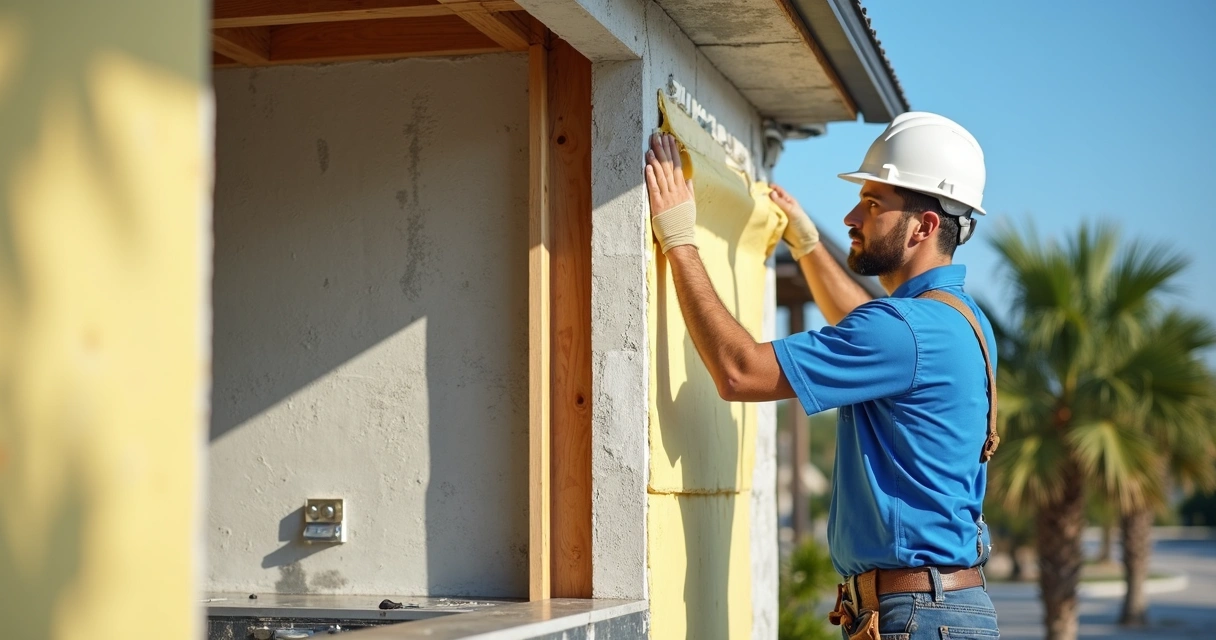
We check that coverings (cement board, stucco, or siding) allow for air circulation when needed but keep out rain and pests. Integrating both air and vapor barriers, as shown by ventilation and moisture studies from the Florida Solar Energy Center, is key to reducing trapped humidity and mold risk in hot, wet weather.
Focus on the roof or overhead enclosure
On covered patios or freestanding pavilions, the roof takes the brunt of Florida’s sun. To insulate overhead areas:
- Install radiant barriers (foil-faced products or reflective coatings) beneath the roof deck to reduce solar heat gain
- Add rigid foam or spray foam insulation above the ceiling, fully sealed at all seams
- Select roofing color and style for maximum reflectivity—field tests have shown white/reflective roofs cut heat load significantly
- Use vented soffits and attic spaces where possible to encourage air movement and reduce trapped heat, referencing attic vent design principles reported in Florida Solar Energy Center lab studies
Seal gaps and penetrations for weather and pests
Even the best insulation won’t work if gaps remain around doors, cabinets, or appliance cutouts. We recommend:
- Sealing holes and junctions with weatherproof caulk or expanding foam (closed-cell types resist moisture/pests)
- Insulating around plumbing and gas lines with fire-rated sleeves or wraps
- Using insect mesh over vents and weep holes to block unwanted critters
Every few years, inspect these seals for shrinkage or damage—especially if you store food or soft goods in your outdoor kitchen.
Moisture and pest control in Florida outdoor kitchens
Moisture intrusion is the number-one cause of insulation failure in Florida outdoor kitchens. We’ve seen even well-built spaces develop leaks, condensation, or hidden damage if not protected. To avoid this:
- Choose only closed-cell insulation or water-impervious board for any surface that may get wet
- Install physical pest barriers at all slab, wall, and ceiling transitions
- Include weep holes or controlled ventilation points to let trapped vapor escape
- Schedule regular inspections to check for termite tunnels or wet insulation; as University of Florida research confirms, termite damage can almost destroy insulating value
“Moisture control = mold and odor control.”
Using the right exterior finish—paint, stucco, or stone that is both water-resistant and vapor-permeable—can help keep insulation dry. For product and material selection tips, our hardscaping resources offer more guidance.
Integrating insulation with outdoor kitchen design
Insulation isn’t just a hidden detail. In well-designed Florida outdoor kitchens, it supports year-round comfort and usability. Here’s how we factor insulation into our design process at GCM Best Services:
- Appliance layout: Place fridges, ice makers, and sinks where they’re sheltered by wall or roof insulation to boost performance and longevity.
- Countertop material: Choose lighter, reflective finishes for worktops exposed to the sun—these stay cooler and don’t transfer as much heat to stored items below.
- Lighting, sound, and storage: Insulated wall cavities can carry wires and cables for LED lighting, speakers, and outlets, all protected from outdoor heat cycles.
- Seating and “comfort zones”: Add insulated screening or half-walls to protect lounge or dining areas from direct sun and storms.
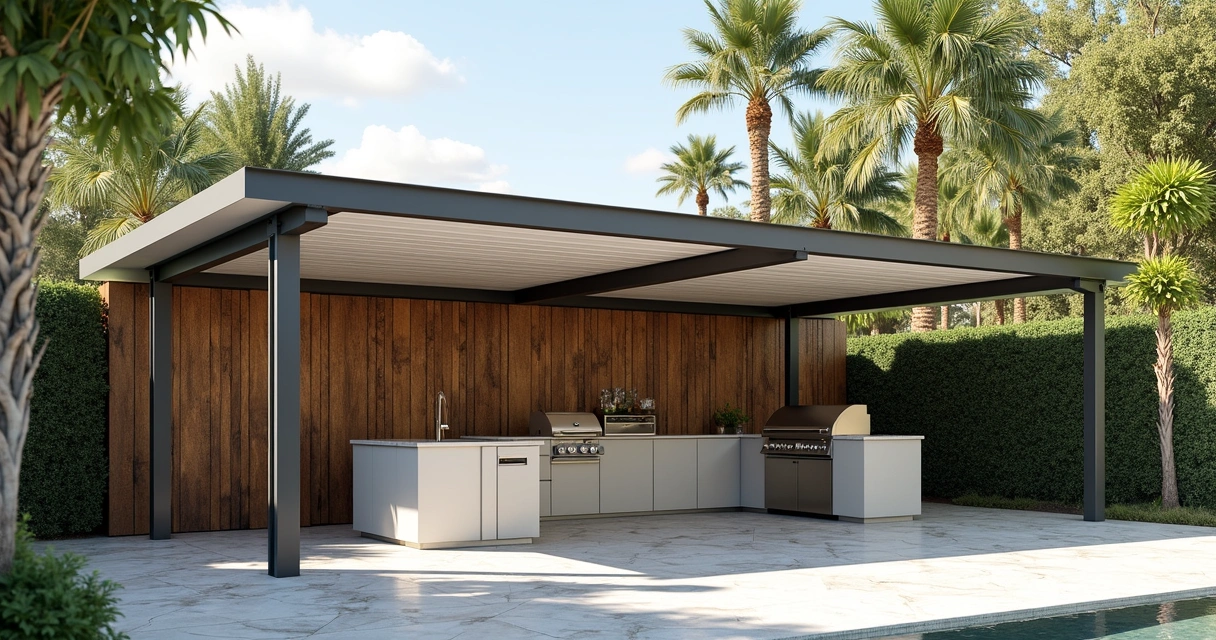
When outdoor kitchens are attached to homes or pool enclosures, it’s especially important to tie insulation, weather barriers, and drainage into the overall structure. We coordinate closely with homeowners and HOAs to handle design, permits, inspections, and long-term maintenance, so the finished kitchen feels like an extension of your home’s comfort—not an afterthought.
Surface finishes, painting, and coatings: Making insulation last
Even the highest R-value insulation will not perform if pairing material fails under UV, rain, or harsh cleaning. For Florida outdoor kitchens, we recommend:
- Elastomeric paints: Flexible surface coatings that shift with masonry and resist cracking, ideal for block or stucco walls over insulated cavities.
- 100% solids epoxy or polyaspartic coatings: On floors, work surfaces, or wall covers, these seal out moisture while creating slip-resistant, easy-to-clean surfaces. (For more on coatings, review our hardscape materials expertise.)
- Professional sealing: For brick or paver decks around outdoor kitchens, sealing prevents water absorption and lock-in of dirt or stains; additional guidance is available in our driveway and patio paving tips.
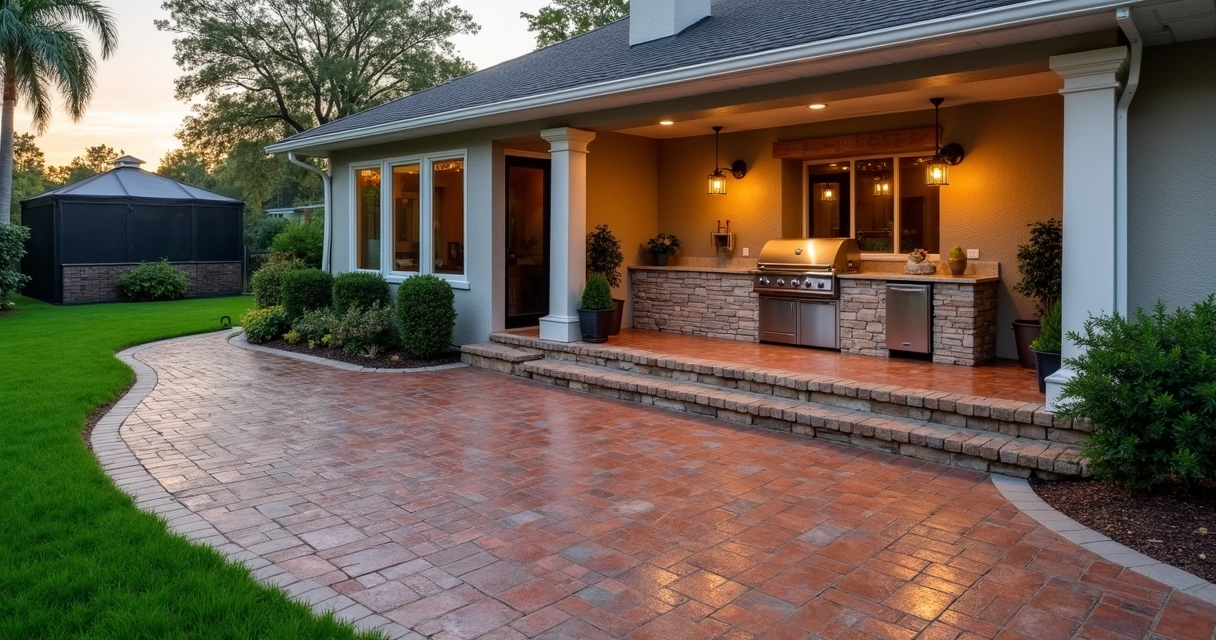
Every finish we use is selected for long-term weather and UV resistance, protecting the layers underneath—including your insulation—from Florida’s climate year after year.
Special considerations for summer kitchens, grills, and built-ins
Many Central Florida outdoor kitchens are designed around built-in grills, pizza ovens, and smokers. Insulation around high-heat appliances must be fire rated, moisture resistant, and able to handle quick temperature swings. We usually recommend:
- Non-combustible supports: CMU block, metal studs, or lined frames for any wall, seat, or counter within 18″ of heat sources
- Fire-rated mineral wool or ceramic fiber: Placed behind and under grill units to avoid melting, shrinking, or flame spread
- Thermal breaks: Small air gaps or special fireproof shields between insulation and metal appliances
- Accessible inspection panels: Allow for periodic checks of insulation near grills for signs of heat damage or pest entry
We tailor each kitchen’s insulated structure to your cooking preferences—ensuring year-round usability whether you’re hosting Fourth of July barbecues or cozy winter pizza nights.
Outdoor kitchens should be as inviting in January as in July.
Outdoor kitchen insulation maintenance
To protect your investment and keep insulation effective, we advise the following maintenance steps:
- Check sealed joints and weatherproof covers after every extreme storm
- Inspect for any staining, musty odors, or insect trails quarterly (especially wood/foam structures)
- Re-coat or reseal surfaces as paint or floor finishes weather over the years
- Schedule professional pest inspections annually; sometimes, fast action saves significant repair costs (termite damage data)
- Clean gutters, downspouts, and nearby drains so water flows away, keeping insulation dry beneath patios or decks
Conclusion: Build outdoor kitchens for comfort and durability, season after season
If you want your Florida outdoor kitchen to pay you back every month of the year—with cool shade, crisp seating, dry storage, and long-lasting finishes—insulation is not optional. It’s the foundation for comfort, efficiency, and easy care, no matter what the Florida weather brings. GCM Best Services brings years of local expertise in concrete, pavers, coatings, drainage, painting, and structure to every project, helping you choose and install insulation that fits your needs, codes, and design goals.
We work with you from the first site visit to the final walkthrough, standing by our work with written warranties and photo documentation. If you are ready to plan an insulated outdoor kitchen or want to check your current setup for upgrades, now is the time to contact us for tailored advice and a no-obligation quote. Start your year-round outdoor kitchen journey—reach out today.
Frequently asked questions about Florida outdoor kitchen insulation
What is the best insulation for Florida kitchens?
The best insulation for outdoor kitchens in Florida combines moisture resistance, fire safety, and pest deterrence. Rigid foam boards (with foil facing), closed-cell spray foam, and mineral wool are the top choices. We often pair radiant barriers or reflective coatings for roofs and use only non-combustible or termite-resistant products, as research from the University of Florida documents how quickly pests can compromise standard insulation types in humid regions.
How to keep outdoor kitchens cool in Florida?
To keep outdoor kitchens cool in Florida, integrate shaded structures, radiant barrier roofing, and wall insulation. Use reflective roof colors, seal gaps, and plan for cross-ventilation where possible. Well-chosen insulation and shading can reduce sun-heated surface temperatures and preserve comfortable seating year-round, supported by proven field testing from the Florida Solar Energy Center on the benefits of reflective and exterior-insulated designs.
Is it worth it to insulate outdoor kitchens?
Insulating outdoor kitchens in Florida protects your investment, boosts comfort, prevents moisture problems, and extends appliance life. Well-insulated spaces are more versatile and need less emergency repair over time. Considering the local climate, insulation reduces energy bills, supports regular use, and preserves value—making it a wise choice for most outdoor kitchen projects in Central Florida.
How much does outdoor kitchen insulation cost?
Costs for insulating an outdoor kitchen in Florida vary by design, materials, and complexity—generally ranging from several hundred to a few thousand dollars. Wall and ceiling insulation (rigid board or spray foam) starts on the lower end, while custom enclosures or structures with specialty finishes add more. Pest treatment and professional sealing also affect the total project budget. We always recommend a personalized assessment to determine accurate costs for your unique layout and goals.
Where to buy outdoor kitchen insulation materials?
Outdoor kitchen insulation materials can be sourced from building supply stores, local distributors, or specialized contractors familiar with Florida codes and pest challenges. We at GCM Best Services select, install, and warranty all insulation layers for quality and code compliance, making sure each material used delivers lasting protection and performance in Central Florida’s climate.
Ready for a professional quote? 📞 (407) 250-1948 • 24–48h • Orlando, Tampa & area.