If you’re planning or refreshing your summer kitchen in Central Florida, lighting deserves just as much thought as grill placement, counter surfaces, or weather protection. In our experience at GCM Best Services, low-voltage lighting brings comfort, safety, and beauty to these outdoor spaces—while saving money and energy. This guide shares our best advice, based on real jobs, current codes, and reliable industry studies, so you can make informed, creative decisions for your own space.
Why low-voltage lighting is a smart choice for summer kitchens
We’ve watched outdoor living areas grow into true extensions of the home. A summer kitchen now hosts everything from weeknight grilling to parties and quiet evenings under the stars. Good lighting helps create these moments—and low-voltage systems are, in many ways, the perfect fit.
Lighting isn’t just about seeing—it’s about feeling welcome and at ease.
What makes low-voltage lighting special?
When we say “low-voltage,” we usually mean 12- or 24-volt operation, instead of the standard 120-volt household current. These systems are typically powered by a transformer that steps down regular power to a safer, lower level. This approach brings several clear benefits for summer kitchens:
- Much lower risk of electrical shock outdoors
- Flexible design and layout, with smaller fixtures and thinner wires
- Easier to add, adjust, or repair lights as your needs change
- Energy savings, especially when paired with modern LED bulbs
According to the U.S. Department of Energy, residential LEDs rated by ENERGY STAR use at least 75% less energy and last 25 times longer than incandescent bulbs. In our installations, we see those savings translate directly into lower electric bills and fewer bulb changes. That’s less hassle and more time enjoying the outdoors.
Key design principles for outdoor kitchen lighting
Every backyard is unique. We’ve seen large poolside kitchens in Lakeland and compact grill islands in Kissimmee (see more at our hardscape work in Kissimmee). Still, some core lighting principles apply in almost every project:
Layer your lighting for comfort and function
There’s no single type of fixture that does it all in a summer kitchen. The best results come from using multiple “layers” of light, each placed with intention. Here are the most common types:
- Task lighting— Illuminates work zones: grills, prep counters, and sinks. Ensures you can cook safely and see what you’re preparing.
- Ambient lighting— Provides general glow or background light. Sets the mood, prevents harsh shadows, and makes the space inviting after sunset.
- Accent lighting— Highlights features like backsplashes, architectural columns, or paver borders. Adds drama, guides the eye, and increases curb appeal.
- Safety and pathway lighting— Marks steps, walkways, and transitions between surfaces. Reduces trip hazards, especially for guests unfamiliar with your layout.
We often combine all four in one project, especially when the summer kitchen connects to the main house or pool deck. Customers appreciate the transformation: what felt like a dark corner becomes the warm heart of the backyard.
Plan for Central Florida’s climate and conditions
The Orlando region’s heat, rain, humidity, and sun can all impact outdoor electrical work. Fixtures and connections need to handle:
- Frequent afternoon downpours
- High UV exposure that can degrade certain materials
- Occasional debris and insects drawn to nighttime light
- Shifting patio pavers or expanding concrete slabs underneath
When we choose products, we look for IP65 or higher weatherproof ratings, shields or covers against water intrusion, and finishes that stand up to fading. It’s also why we use corrosion-resistant wire and connections—the small details that matter long after the first year.
Most popular fixture types for summer kitchens
Designing lighting for a summer kitchen gives us creative freedom. We’ve seen some striking results with these fixture types, each offering unique benefits for style, safety, and visibility.
1. Under-cabinet and under-counter lights
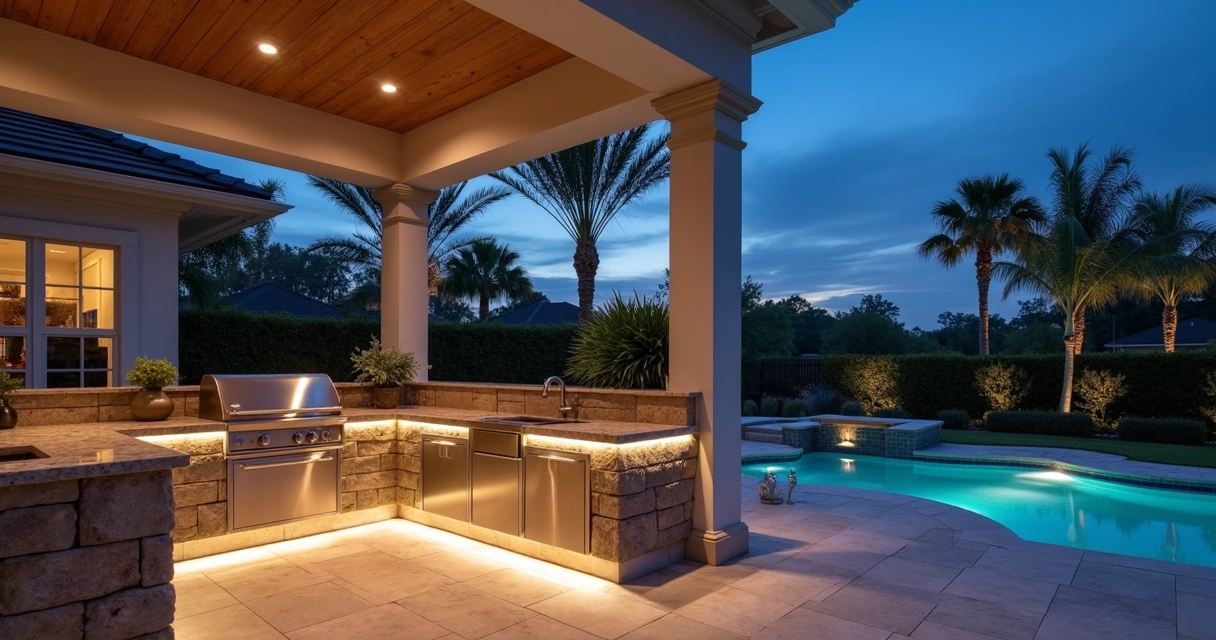
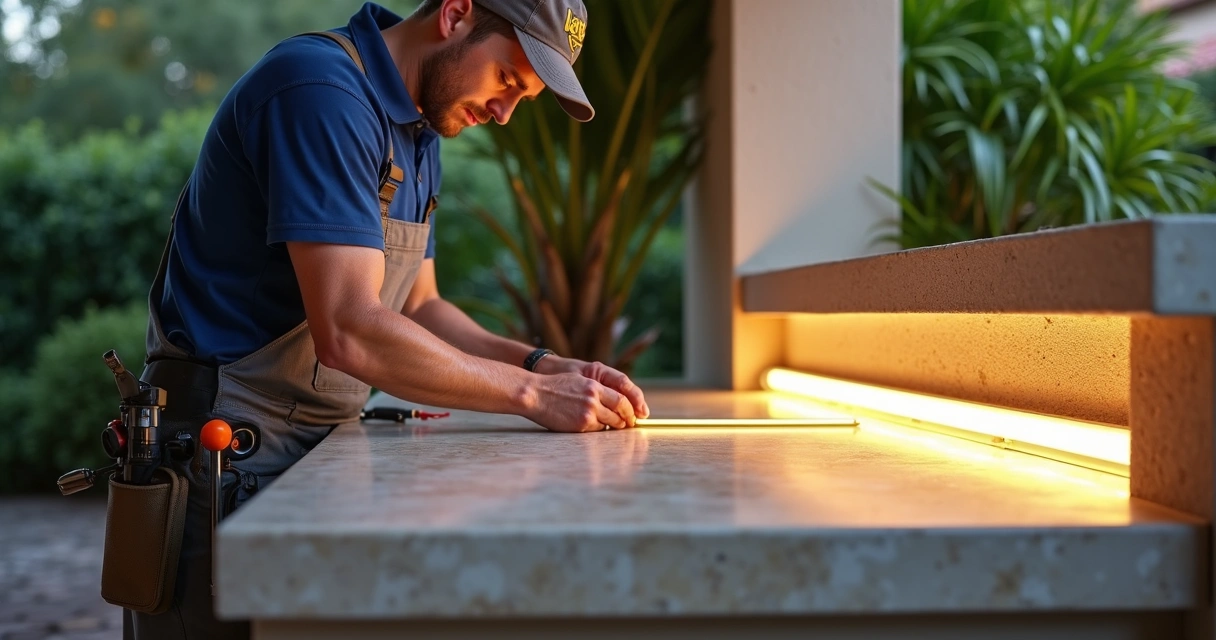
These small, focused fixtures are ideal for illuminating grill surfaces and countertops. With low-voltage LED strip lights, you can achieve even, glare-free light—making food prep a pleasure. Plus, tucked beneath overhangs, they’re naturally shielded from rain.
2. Recessed downlights
Built into soffits or ceilings, these provide broad overhead coverage without taking up space or attracting attention to the fixture itself. They’re a favorite for permanent roofed kitchens.
3. Step and pathway lights
We mount these along steps, retaining wall caps, or at grade beside pathways. Low-voltage options come in compact sizes, minimizing tripping hazards and offering just enough illumination to walk safely.
4. Hardscape lights for paver and stone features
We often integrate low-voltage “hardscape” fixtures into paver borders, seating walls, or outdoor bars. These tiny, durable lights create a soft wash over walkways and surfaces. It’s a perfect fit for backyard renovations involving pavers in Orlando or similar hardscape projects.
5. Pendant and decorative fixtures
For covered kitchens with columns or beams, we sometimes add weather-rated pendant lights. They bring personality and help define dining or conversation areas, blending the style of the indoors with outdoor durability.
6. Spotlights and wall washers
These highlight trees, textured walls, or art elements nearby. Small, adjustable low-voltage spotlights give you flexibility to refresh the look seasonally or as the landscaping matures.
Mixing and matching fixtures creates depth, warmth, and versatility. In our projects, it’s not unusual to see under-counter lights paired with a couple of discreet wall washers and some path lights weaving through the turf.
Choosing the right bulbs: Why LED wins every time
For low-voltage systems, LED bulbs are the standard today. Their advantages are clear, and trusted research backs this up. The U.S. Department of Energy forecasts that by 2035, LED lamps and luminaires will make up 84% of all lighting installations. That’s for a good reason:
- LEDs use far less electricity for the same brightness
- They last many years, often 10-25 times longer than old bulbs
- No heat build-up means less fire risk around cooking equipment
- Options in every color, shade, and dimming level imaginable
- They stand up to vibration and weather changes
Cost is no longer a barrier. Recent U.S. Department of Energy pricing data shows the cost of LEDs has fallen nearly 90% in the past decade. That trend has opened LED up to everyone, not just luxury homes.
We always recommend high-quality LEDs for low-voltage outdoor lighting.
Planning your layout and controls
Every lighting job starts with a plan. In our estimates, we carefully walk the space, looking for:
- Existing power sources—locations of outlets, transformers, or pre-wired junction boxes
- Desired activity zones—prep, cooking, serving, dining, relaxing
- Natural features and hardscapes—pavers, steps, trees, walls
- Potential drainage problems and places where wiring needs protection
We sketch fixture locations on a scaled site plan, paying attention to sight lines so lights aren’t placed where they’ll cause glare or shine into neighbors’ windows. This approach gives an organized result and allows for future upgrades without redoing everything. See how we address lighting and drainage integration in Sanford projects for more context.
Switches, timers, and smart controls
Most summer kitchens benefit from multiple control options, such as:
- Wall-mounted switches for zones (task, ambient, accent)
- Mechanical or digital timers for automatic dusk-to-dawn operation
- Dimmable transformers or smart controllers accessible by app or voice
For Florida homeowners concerned about security and convenience, wi-fi enabled smart switches give remote access even when traveling. Modern transformers make it easy to adjust timing and intensity throughout the year.
Installation: Safety and best practices
Safety is always the priority for outdoor electrical work. We always follow code-compliant installation, grounded connections, and waterproof enclosures—and so should any homeowner or installer. Here are key points for a safe, reliable summer kitchen lighting setup:
- Use a UL-listed low-voltage transformer, plugged into a GFCI (ground-fault circuit interrupter) outlet
- Run outdoor-rated, direct-burial wire at least 6 inches below the surface
- Keep all splices and connectors above grade, in accessible weatherproof boxes
- Secure fixtures firmly to avoid shifting or damage from wind and guests
- Keep wiring away from high-heat areas or where future digging is likely
Weather, pests, or power surges can shorten the life of a poor installation.
We always check permits and coordinate with HOAs when required. Our process at GCM Best Services aligns with the steps we use for every hardscape project, including clean job sites, inspections, and a warranty you can count on.
Saving energy and money: What the research shows
Some of our customers ask, “Will upgrading to low-voltage LED really make a difference?” Research and our own observations say yes. The Interior Lighting Campaign by the U.S. Department of Energy showed $13 million in annual savings across 95 million square feet just from high-efficiency lighting upgrades.
- Lower operating cost: Reduced energy usage and better bulb lifespan
- Longer intervals between replacements, even in tough outdoor conditions
- Less impact on the environment and the local power grid
These savings mean you can justify better fixtures, creative controls, and even professional installation—since the investment pays back over time.
How we coordinate lighting with other outdoor features
Summer kitchens rarely stand alone. Our teams often work on paver patios, retaining walls, artificial turf, and screen enclosures at the same address. Coordination is key for the best outcome.
- Lighting wires can be installed under new concrete, pavers, or turf—before surfaces are finished
- Spotlight placements sometimes shift when a new lanai or pool cage is added
- Drainage planning can avoid problems with water pooling around fixtures or conduit
- Matching fixture finishes to other hardware keeps the space cohesive
It’s easiest to add lighting as part of a larger hardscape or kitchen build.
Maintenance, troubleshooting, and warranties
Modern low-voltage LED systems need little maintenance, but a thoughtful approach keeps everything running smoothly:
- Brush debris away from fixtures after storms or landscaping
- Inspect connections each season for moisture or corrosion
- Replace any burnt out or damaged bulbs with the same type for color consistency
- Adjust spotlight and wall-washer directions as trees or plants grow
- Check timer or smart controls during daylight-saving or power outages
At GCM Best Services, we offer written warranties on all our work, along with a owner’s manual for basic troubleshooting. If anything feels too complex or doesn’t perform as promised, we’re here to make it right.
Making your summer kitchen a destination
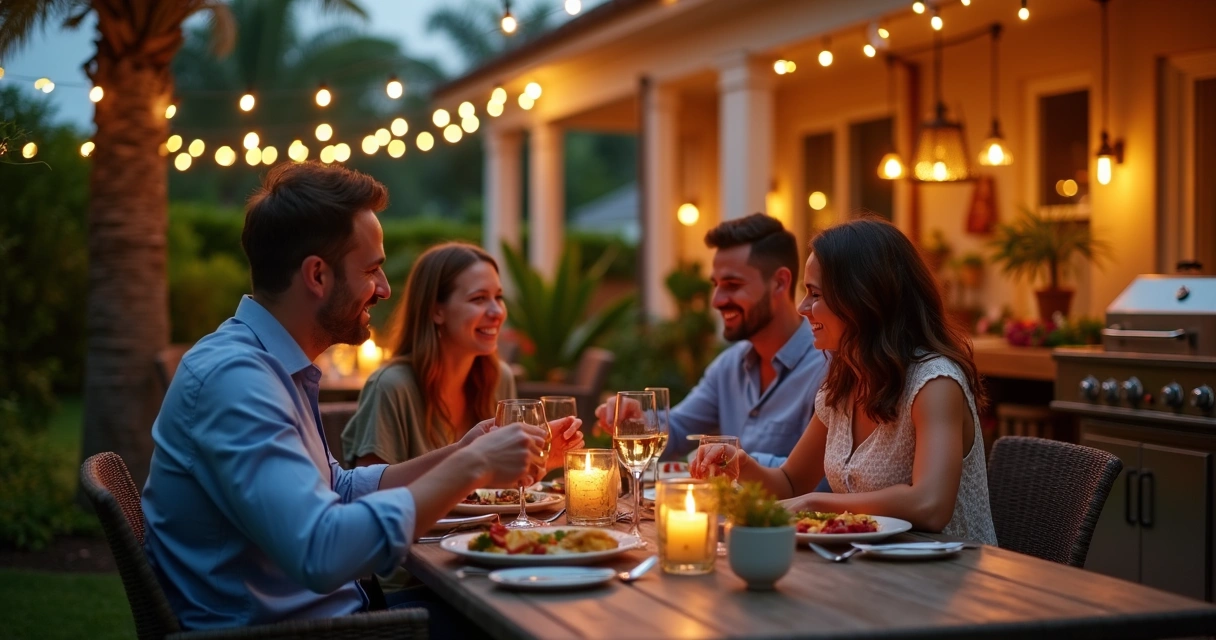
We believe low-voltage lighting isn’t just an upgrade—it transforms a summer kitchen from an afterthought to a favorite gathering place. By planning layers, choosing the right fixtures and bulbs, and focusing on safety and quality, you’ll get a result that works with your lifestyle and budget.
If your outdoor kitchen could use a refresh, consider how thoughtful lighting will change the way you use your home after dark. Questions or ready to take the next step? Our experts at GCM Best Services are here to help Central Florida homeowners design safe, beautiful, and energy-saving outdoor spaces.
Ready for a professional quote? 📞 (407) 250-1948 • 24–48h • Orlando, Tampa & area.
Conclusion
Low-voltage lighting blends practicality, efficiency, and creativity for summer kitchens in Central Florida. It turns functional spaces into inviting retreats, improves safety, and helps real families get more from their investment in backyard living. With the right planning and support—from GCM Best Services—you’ll enjoy years of light, color, and connection outdoors.
Frequently asked questions
What is low-voltage kitchen lighting?
Low-voltage kitchen lighting refers to systems that operate at lower voltages—typically 12 or 24 volts—using a transformer to reduce standard household current. In outdoor kitchens, this approach allows for safer, flexible installation of lighting fixtures such as LEDs, strip lights, and accent washes. These systems are safer to use in damp areas and make it easier to add or move lights as your space evolves.
How to install low-voltage lights safely?
Safe installation starts with a certified weatherproof transformer plugged into a GFCI outlet. Use outdoor-rated direct-burial wire at the correct depth, and keep all connecting points inside weather-sealed boxes. Fixtures should be securely attached and all wiring routed away from heat and high-traffic areas. For large projects or unfamiliar homeowners, hiring a licensed professional like GCM Best Services helps ensure everything aligns with electrical codes and warranty standards.
Is low-voltage lighting worth the cost?
Yes, low-voltage lighting is a cost-effective choice, especially when using energy-efficient LED bulbs. Not only is the upfront material cost typically lower for wiring and transformers, but you’ll also see ongoing savings in your electric bill and bulb replacements. Findings from the U.S. Department of Energy show millions saved every year through high-efficiency lighting, making it a smart investment for homes and businesses alike.
What are the best lights for outdoors?
For outdoor use, look for LED fixtures with an IP65 or higher weather resistance rating, made from materials that can handle sun, rain, and humidity. In summer kitchens, we prefer LEDs for their efficiency, color options, and long lifespan. Task lights, ambient lights, and hardscape-integrated LEDs work together for the best results. Brands and models should be rated for outdoor use and compatible with your low-voltage transformer.
How much does low-voltage lighting cost?
Costs vary with layout, fixture choice, and site complexity. For summer kitchens, a typical installed system might range from several hundred to a few thousand dollars, depending on size and features. The good news—inflation-adjusted LED prices have dropped significantly in the past decade, as confirmed by the U.S. Department of Energy. Factoring energy savings, reduced maintenance, and the added value to your home, most customers find the investment pays for itself over a few years.