Primary keyword: heat absorption on blacktop drivewaysVariants: cool driveway surface, reduce driveway heat, reflective paving solutions
Audience: Homeowners and property managers in Central Florida feeling the sting of hot driveways underfoot.
Pain/Benefit: Reduce surface temperatures for comfort, safety, landscaping health and lower indoor cooling costs.
Blacktop driveways under the Florida sun can turn walking barefoot into a challenge and radiate extra heat into homes, yards, and cars. At GCM Best Services, we hear from property owners each summer seeking relief from the oven-like temperatures of their asphalt. The good news: Practical, proven steps reduce driveway surface heat and boost comfort, curb appeal, and even property value. Let’s walk through the science and the solutions that actually work for Central Florida’s climate.
Outline
- Understanding heat absorption on blacktop
- Why driveways get so hot
- The concept of albedo
- How cool pavement science applies in Florida
- Assessment: Does your driveway need cooling?
- Top strategies to reduce heat absorption
- Reflective sealers and cool coatings
- Color choices: going light
- Shade: landscaping, structures, and screens
- Surface treatments: overlays and alternatives
- Water features and permeable options
- Combining strategies for best results
- Caring for cool driveways
- When to call a professional
- Conclusion and call to action
- Frequently asked questions
Florida driveways do not have to be summertime grills.
Understanding heat absorption on blacktop
Every summer, the surface of a typical blacktop driveway can easily soar past 140°F (60°C) in direct sunlight. Even dusk may not bring much relief, as the asphalt releases warmth back into the air, keeping your yard and even your garage hotter than they should be. But why does blacktop get so hot?
Why driveways get so hot
Blacktop, or asphalt concrete, is made with dark aggregates and bitumen, which absorb sunlight extremely efficiently. This means the material soaks up almost all of the sun’s energy that hits it. Unlike lighter colors that reflect sunlight, dark pavements act like heat sponges.
The real culprit is the low albedo of blacktop. Albedo measures how much sunlight a surface reflects versus absorbs. Black asphalt has an albedo around 0.05-0.10, meaning it reflects just 5-10% of sunlight and absorbs the rest. The Lawrence Berkeley National Laboratory Heat Island Group notes that dark pavement absorbs roughly 80–95% of incoming sunlight, quickly increasing pavement and air temperatures (cool-pavement science).
The concept of albedo
Albedo is a simple measurement but has a huge impact on heat. Raise the albedo (reflectivity), and you lower surface and local air temperatures. Research archived at the U.S. Department of Energy’s OSTI shows that just increasing pavement albedo from 0.1 to 0.35 can lead to measurable annual air-conditioning energy savings and improved air quality (OSTI research report).
For us in Central Florida, this translates to lower cooling bills, less discomfort and longer pavement life. When homeowners come to us at GCM Best Services, many are surprised at how big a difference a small change in reflectivity can make day to day.
How cool pavement science applies in Florida
Florida’s combination of intense sunshine, humidity, and periodic heavy rain creates unique challenges for hardscapes. In our experience, solutions that work up north or in dry climates often need tweaks here. The science of cool pavements, however, is universal—darker surfaces absorb more heat, lighter and more reflective ones stay cooler. Our job is to help you pick solutions that last under Florida’s harsh UV, resist mold or algae, and handle our soils and storms.
In our projects around Orlando and Central Florida, driveway cooling is often about comfort and landscaping, but sometimes also about reducing air conditioning load or keeping pet paws and bare feet safe in the yard. We’ve watched neighbors migrate to the grass to avoid the hot blacktop—there’s a better way.
Assessment: Does your driveway need cooling?
Before investing in a solution, we suggest a quick assessment to clarify needs and priorities. Here are practical questions we encourage homeowners to ask:
- Is walking barefoot or with pet paws unbearable in the summer?
- Does the heat from the driveway affect indoor comfort, or does it “bleed” into garages and entryways?
- Do plants, grass, or turf nearby show stress from the heat?
- Does your car interior overheat just by standing on the driveway?
- Are neighbors’ lighter driveways noticeably cooler to the touch?
These observations guide the solution. Sometimes, as we’ve seen through projects documented with before-and-after thermal images, a 20–30°F difference in surface temperature is possible with even one or two interventions. When cooling a driveway also addresses underlying drainage or surface crack issues, we recommend exploring deeper repairs or upgrades for a complete approach. Our guide to preventing cracks in Florida concrete driveways addresses related durability factors as well.
Top strategies to reduce heat absorption
The right solution or mix of solutions depends on your priorities—cost, appearance, longevity, and performance. Let’s break down what works best for Central Florida homes and businesses.
Reflective sealers and cool coatings
One of the most requested options by our customers at GCM Best Services is the application of reflective sealers or cool coatings. These are not ordinary asphalt sealers, but engineered products designed to:
- Increase the driveway’s albedo, reflecting more sunlight
- Lower surface temperatures by 15–25°F (sometimes more)
- Provide UV and water resistance
- Resist staining, oil, and mild chemicals
Certain coatings have light or white finishes and sometimes can be tinted to appropriate architectural tones. They must be compatible with asphalt and Florida’s UV and humidity. For parking areas or commercial spaces, heavier-duty versions are available.
Scientific studies such as the Lawrence Berkeley National Laboratory’s cool-pavements research document surface temperature drops and reductions in heat island effect. When applied professionally, cool coatings can also extend the life of the asphalt by protecting the surface binder from UV damage.
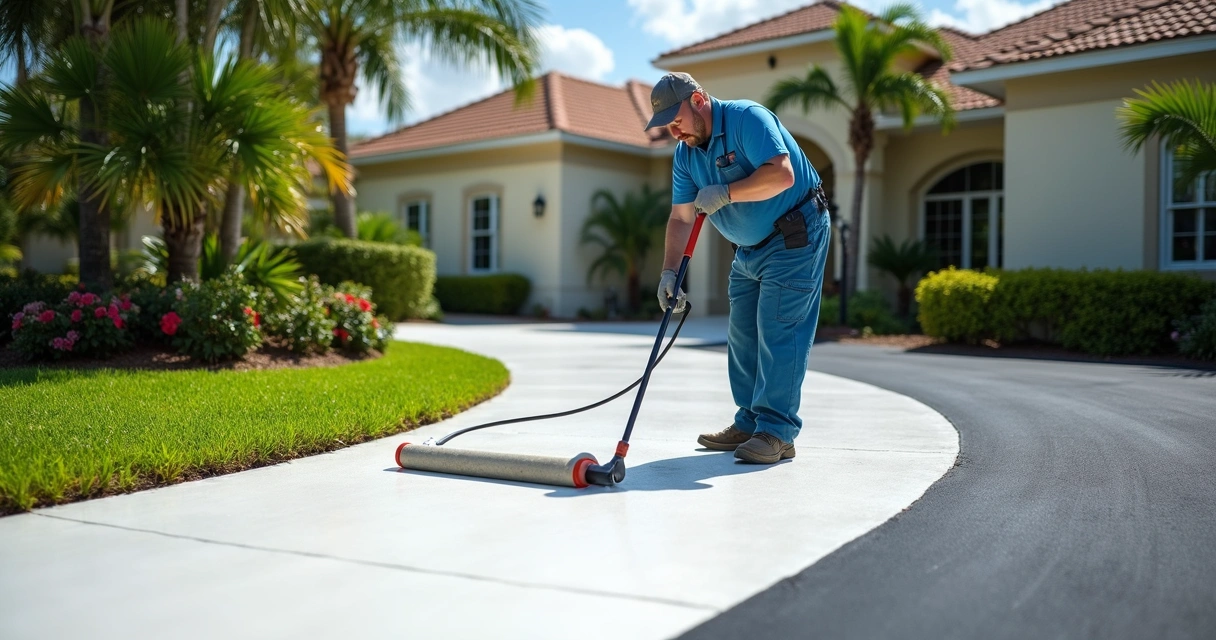
Color choices: Going light
Painting or resurfacing blacktop with lighter colors is another highly effective way to reflect more sunlight and reduce heat absorption. Light gray, soft brown, or even warm beige driveways are possible in today’s market, thanks to advances in concrete stains, specialized coatings, and paver overlays. Not every HOA or neighborhood allows dramatic color changes, so we work with property owners to satisfy compliance requirements.
Key points to consider when choosing color:
- White or near-white reflects the most, dropping surface temps the greatest amount
- Light gray and tan are less prone to visible staining over time
- Textured or “flecked” finishes combine reflective particles to boost overall reflectivity without looking too bright
It’s not always a simple paint job—durable, traffic-rated products must be chosen to avoid peeling or fading after exposure to water and sun. In our experience, the right surface prep and product choice is the difference between a finish that lasts for years and one that fails in the first round of storms.
Shade: Landscaping, structures, and screens
The shade from trees, pergolas, carports, and even well-placed screen enclosures can dramatically lower surface temperatures any time of day. By blocking direct sunlight, these solutions not only keep driveways cooler but also shield vehicles and outdoor living spaces.
Natural shade options:
- Deciduous or broadleaf trees strategically planted along the driveway edge
- Vine-covered trellises or living walls
- Larger shrubs and layered landscaping
Structural shade options:
- Screen enclosures on parking pads or attached to garages—hurricane-resistant and customized for Florida conditions
- Metal or wood carports for permanent, year-round coverage
- Rolling shade screens or retractable canopies for seasonal flexibility
One memorable project in Orlando involved a mix of live oaks and a custom aluminum screen, reducing driveway surface heat by over 25°F in the hottest part of July. It also ended up being a pleasant spot for the kids to play after school—a double win.
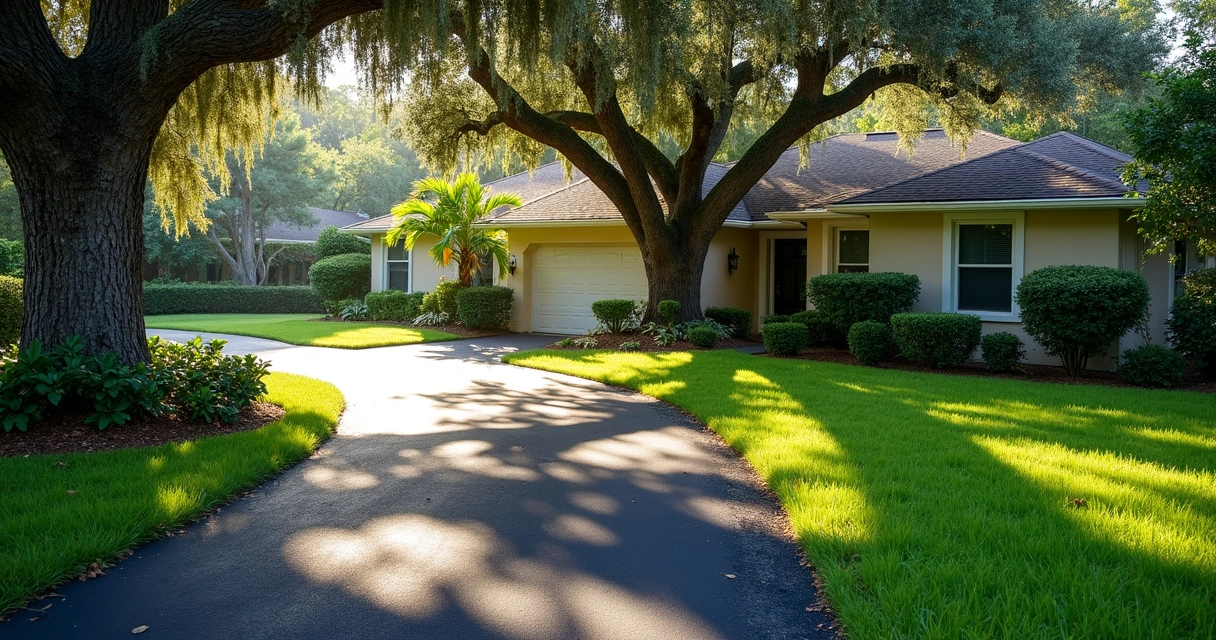
Some solutions, like new planting, take a few years to reach their full effect—so we recommend combining quick fixes like cool coatings with long-term landscaping for best results.
Surface treatments: Overlays and alternatives
When driveways are aging or have long-term issues with cracks, drainage, or sinking, a more permanent fix may be the best investment. In these cases, we help clients consider:
- Concrete or cool-colored paver overlays, which boost reflectivity and allow design freedom
- Exposed aggregate finishes that resist heat and are gentle on bare feet
- Decorative stamped concrete in pale shades, combining function and style
Not all overlays are suitable for every base. We perform detailed site assessments and drainage checks, keeping in mind all city and HOA rules. Our driveway and patio paving solutions break down the options. Properly designed hardscapes also avoid ponding water, which protects the base and finish of cool surfaces.
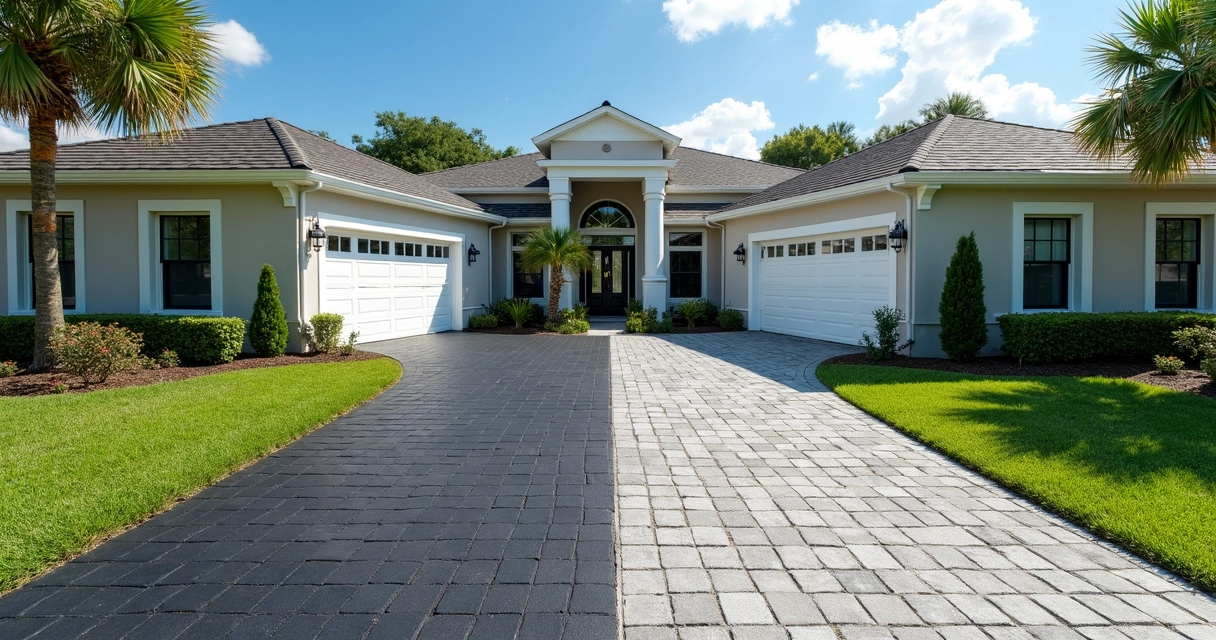
We’ve found pavers especially popular for driveway upgrades, as they combine improved heat management with drainage and curb appeal. When sealed with professional-grade products, they remain easy to clean and keep their colors vivid.
Water features and permeable options
Some clients ask about adding water features or permeable driveways. While trickier with existing blacktop, there are options for renovating with permeable pavers or adding swales along edges. These options can cool adjacent microclimates by adding evaporation and help with water run-off if flooding or ponding is an issue. For more on this, see our insights on drainage and brick paver installations in Florida’s climate.
We also find permeable driveway options helpful for yards where heat and water management together impact plants, grass, or even basement comfort.
Combining strategies for best results
In our experience at GCM Best Services, the best outcomes often come from combining several strategies. For example:
- Install a cool coating and plant new shade trees
- Overlay blacktop with pale pavers and add a carport for full coverage
- Repair drainage while treating the surface to a high-albedo finish
No single upgrade is always enough, but together, they can make a Florida driveway almost comfortable to stand on—even in July. We work closely with homeowners to balance budget, durability, maintenance, and neighbors’ input. Whenever HOA rules or building codes are a consideration, we manage the process so that paperwork is seamless and solutions are long-lasting.
Caring for cool driveways
Maintaining cool driveways takes a little ongoing effort:
- Reapply cool coatings every few years based on manufacturer guidelines
- Prune trees and keep landscaping tidy to optimize shade
- Keep paver joints swept and sealed to lock out stains and weeds
- Manage drainage and clear debris after storms
Modern coatings withstand pressure-washing and most car fluids, though regular inspection for chips or cracks helps keep surfaces working at peak reflectivity. Durable installations from our team come with written warranties and photo documentation. For broader concrete care tips, our concrete insights section covers best practices in Central Florida.
When to call a professional
For many of these approaches, professional installers save time and ensure results. Surface prep, precise mixing, and expert application all make a difference. For more complex upgrades—like overlays, drainage alterations, or HOA-required documentation—our process at GCM Best Services includes:
Free on-site assessment, clear upfront estimates, permits and HOA management, scheduled work, and a written warranty.
It’s what Orlando and Central Florida homeowners have come to expect from us: transparent, efficient, and photo-documented solutions that truly keep driveways cooler and safer year after year.
Conclusion: Cooler driveways create more livable spaces
If you’re tired of blistering driveway temperatures, fading pavement, and extra cooling bills, a range of solutions can help—some fast and simple, others more permanent. Modern coatings, smarter color choices, well-planned shade, upgraded surfaces and proper drainage all work together for a cooler, safer, and more appealing front yard or parking area.
At GCM Best Services, we take pride in custom solutions based on your property and needs. If you want to experience the difference a cool, comfortable driveway makes for your home, reach out for our free, friendly assessment and quote. We are committed to Central Florida’s comfort, safety, and lasting curb appeal.
Cool driveways, cool homes, cool lives.
Ready for a professional quote? 📞 (407) 250-1948 • 24–48h • Orlando, Tampa & area.
Frequently asked questions
How to keep blacktop driveway cooler?
The most effective ways to keep a blacktop driveway cooler include applying reflective or cool-pavement coatings, choosing light-colored surface treatments, adding shade with trees or structures, and ensuring proper drainage and maintenance. Each of these steps interrupts heat absorption, and combining them produces even better results, as we have observed in our Central Florida projects.
What is the best reflective coating?
The best reflective coating is one specifically designed for asphalt that features light colors and high albedo, is rated for vehicle traffic, and holds up to Florida’s UV and rain. High-quality cool-pavement coatings, like those cited in cool surface research, are typically acrylic or elastomeric and provide both comfort and surface protection.
Is it worth it to seal blacktop?
Sealing blacktop is worth it for increasing pavement lifespan, improving appearance, and potentially reducing surface heat if a reflective or cool coating is chosen. Standard black sealers do not reduce heat absorption, but specialized cool coatings offer dual benefits of temperature reduction and protection.
How much does cool pavement cost?
Cool pavement solutions can range from $0.50–$3.00 per square foot for coatings, while paver or concrete overlays may cost more depending on style and existing conditions. According to findings archived at OSTI, raising pavement albedo saves around $0.012 per m² in AC energy and $0.06 per m² in smog-related air quality costs per year. Real-world costs depend on driveway size, surface condition, product quality, and installation method. We always provide detailed, no-obligation estimates.
Can trees help shade my driveway?
Yes, trees are a highly effective and natural way to keep driveways cooler in Florida’s climate. When placed to block midday and afternoon sun, their canopies drastically reduce radiant heat, improve landscape health, and even add property value. Blending shade with other cooling strategies gives the best long-term comfort.
Looking for the right mix of comfort, efficiency, and style for your hardscape? Discover more about modern paving, landscaping, and building options with our expert insights at our hardscape solutions page. Let’s build a cooler Florida—one driveway at a time.