It’s easy to overlook your pool deck until cracks, stains, and faded color start to steal the show. As an experienced Orlando-area contractor, we at GCM Best Services see how the Central Florida sun and rain wear down pool decks. Homeowners and businesses alike face the reality that even high-quality concrete or paver decks can lose their appeal and safety over time. It’s not just about looks, either—deck problems can affect drainage, create trip hazards, and break compliance with local inspection rules.
Fortunately, resurfacing offers a path to restore color, texture, and safety, making your outdoor spaces more inviting. In this technical yet easy guide, we map out the options, process, and decisions every owner faces. Whether you’re staring at plain, faded, or chipped concrete, trying to decide if resurfacing is right, or wondering what it really takes, we explain step by step—without fuss or jargon. Our goal: to help you get the longest life and best value from your pool deck in Central Florida’s climate.
Bring faded decks back to life—with less stress and more confidence.
What causes pool decks to fade and fail over time?
With Florida’s intense sunshine, heat, high humidity, and frequent downpours, pool decking faces year-round punishment. In our experience, several factors are always at play:
- UV exposure: The sun’s rays break down dyes, sealers, and even the concrete surface, causing colors to dull and chalky residue to appear.
- Moisture: Pooled water, rain, and splashes enter cracks, promoting mildew, algae, and slippery surfaces.
- Pool chemicals: Chlorine, salts, and acids from pool water eat away at finishes and accelerate surface degradation.
- Heavy use and abrasion: Furniture, foot traffic, and pool-use grind away at coatings, pavers, or textured finishes.
- Improper drainage: Poor grading or lack of expansion joints causes ponding, leading to cracks and uneven settling.
- Aging and inferior materials: Thin overlays, cheap sealers, or missing reinforcement can all speed up failure.
Many clients are surprised when we explain that, according to Florida Department of Health inspection data for 2024, nearly one out of every three pool and spa facilities had unsatisfactory inspection results. This highlights how essential consistent deck maintenance, proper resurfacing, and professional construction are for pools in our region.
When is resurfacing the right move?
We often walk owners through the telltale signs that mean it’s time to consider resurfacing rather than a quick cosmetic fix:
- Surface colors have faded or become patchy, despite recent cleaning.
- There are spider cracks, chipping, or scaling that pressure washing cannot remove.
- Sections of the deck are slippery, even after treatment.
- Ponding occurs after rain, and drainage patterns appear uneven.
- Mildew, stains, and algae keep returning.
- The deck feels rough or sheds dust—signs the surface is breaking down.
- Repairs blend poorly, with mismatched patches or textures.
If your deck shows these symptoms, resurfacing restores protection, durability, and appearance at a fraction of the cost and hassle of full replacement. It also allows us to address underlying drainage design and reinforcement issues, which cosmetic treatments cannot solve. Resurfacing is especially suitable for properly installed underlying slabs or pavers that have not experienced major structural shifts.
Benefits of pool deck resurfacing for Orlando and Central Florida owners
Resurfacing isn’t just about refreshing the surface color. We see firsthand how it solves multiple problems, and clients appreciate the following benefits:
- Renewed color and curb appeal: Modern overlays, stains, and coatings come in many finishes, from natural stone to vibrant quartz effects.
- Slip-resistance and safety: We can introduce safe, textured finishes aligned with local codes—reducing fall risks around wet pools.
- Improved drainage: Resurfacing is a chance to correct ponding or grade issues, so water moves away from the pool and foundation.
- Mildew and stain resistance: New materials and sealers guard against algae, mildew, and ground-in stains.
- Extended deck life: By protecting the concrete or pavers underneath, overlays and coatings add years of use before repairs or replacement are needed.
- Easier cleaning: A smooth, sealed surface was ranked by many of our clients as their favorite change—making routine cleaning far faster.
- Cost savings: In many cases, resurfacing costs less than half of replacing the entire deck and involves less disruption.
Based on University of Arizona enhancements, projects involving full deck resurfacing and repairs dramatically improved pool safety, usability, and satisfaction in public facilities. This mirrors our experience in Central Florida, where the right process delivers both beauty and performance.
Types of pool deck resurfacing options
We guide owners through a range of solutions, each with its own strengths. The best choice depends on the original deck material, usage, and your vision.
Concrete overlays and microtoppings
Concrete overlays are thin layers—often just 1/8″ to 1/4″ thick—applied over sound slabs. At GCM Best Services, we use high-strength, polymer-modified mixes tailored for Florida conditions. We can achieve broom, trowel, stamped, or exposed aggregate finishes, and add vibrant stains or dye for custom colors. The result is a new wear surface ready to handle sun, water, and foot traffic.
Spray deck or knockdown finishes
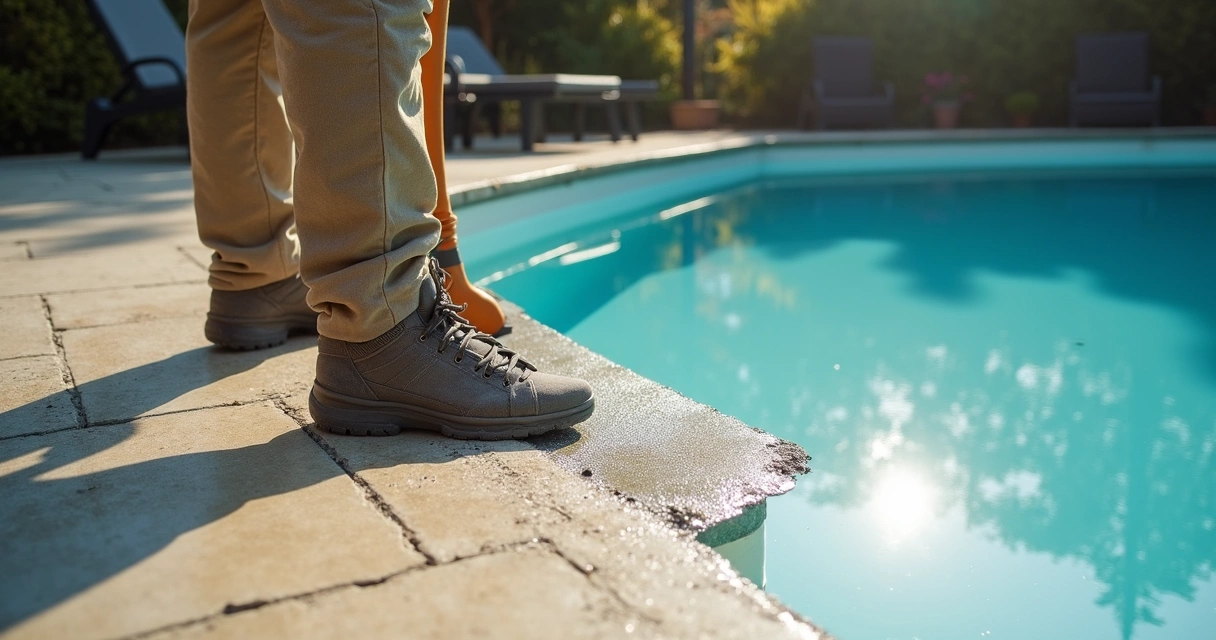
Spray decks use a spray-applied acrylic or cementitious mix, “knocked down” with a trowel for cooling texture and slip-resistance. This is famous around Florida pools for its comfort underfoot, temperature control, and endless color options. We get requests to update faded knockdown textures with modern hues or fresh surface designs.
Stamped concrete resurfaces
Stamped overlays recreate the look of cobblestone, flagstone, brick or tile, but in a seamless, low-maintenance surface. Existing slabs can often be cleaned, primed, and resurfaced with a stamped coating, even if the initial deck lacked texture or pattern.
Epoxy and polyaspartic coatings for pool decks
Epoxy-based coatings, especially the fast-curing versions, offer tough, waterproof, chemical-resistant layers with infinite color flakes or quartz blends. We recommend these in high-traffic or commercial settings requiring durability, or where quick return-to-service matters.
Many owners enjoy the flecked quartz look, which is not just attractive but also highly slip-resistant. When paired with professional grinding and moisture testing, these coatings transform plain concrete into easy-to-clean, vibrant deck spaces.
Paver refinishing and sealing
When pool decks are constructed from brick or concrete pavers, the focus shifts to deep cleaning, joint repair, and application of breathable, UV-stable sealers. We carefully upgrade sanded joints and edge restraints before applying sealers that renew color, repel stains, and keep weeds away.
Some clients ask about replacing broken pavers or integrating artificial turf borders for improved drainage and a modern look—services we manage from start to finish.
Painting and waterproof coatings
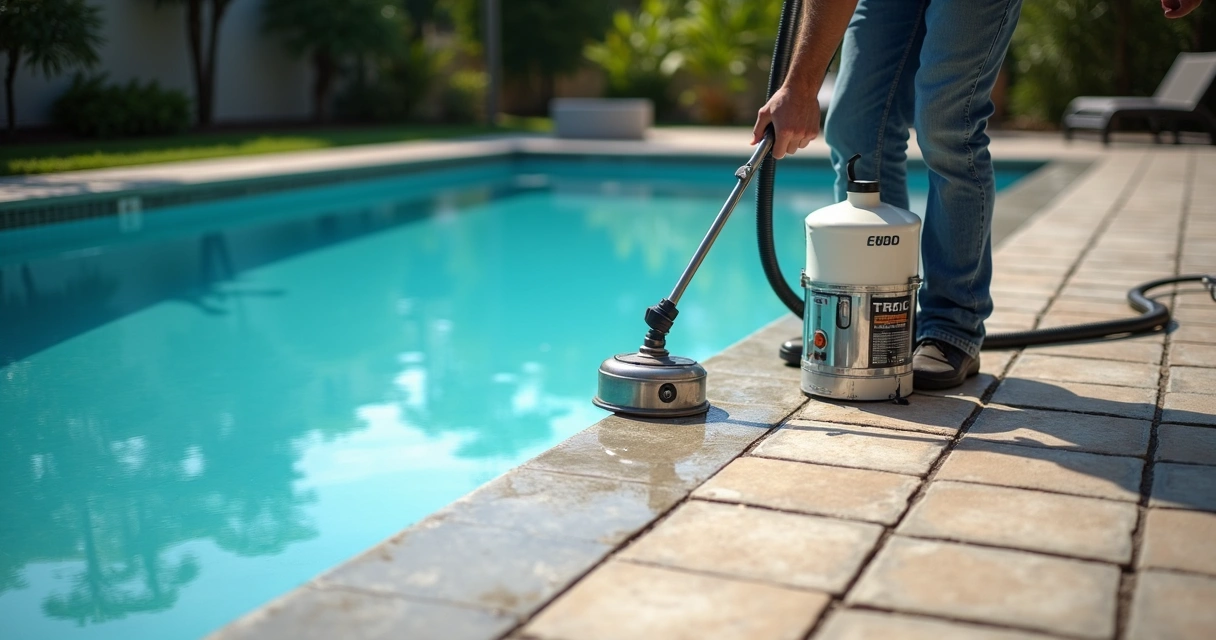
Some owners ask about deck paint as the fastest way to refresh faded color. While specialized deck paints and elastomerics exist—and we use them with proper prep—they do not last as long as textured overlays. Direct exposure, pool chemicals, and weather cycles usually require a new coat every 2-3 years.
The real key is precise surface preparation, such as filling cracks, removing all chalky residue, and priming appropriately. In our view, paint alone is best for less-used residential pools, or where budget is a priority.
What does the resurfacing process look like? Step by step
Each project with GCM Best Services starts the same way: a free, honest walkthrough of your space and needs. From there, we follow these steps:
- Assessment and options: We inspect the slab, drainage, previous coatings, and any HOA or permit requirements. We show before-and-after photos of past projects, so you can see real results.
- Thorough cleaning: Pressure washing, degreasing, mildew removal, and in the case of pavers, joint clearing. This prepares the deck for repair and new materials.
- Crack and surface repairs: Filling spalls, patching chips, and grinding problem areas. For overlays, this step is critical—poor repair leads to visible damage under the new layer.
- Surface preparation: We grind, acid wash, or use specific primers to ensure long-term adhesion, especially important for epoxy or stamped overlays.
- Resurfacing material application: This might be spraying and troweling acrylic or cementitious overlays, rolling on epoxy, or sealing and sanding for paver decks.
- Curing and finishing: We texture, stamp, color, or stain as desired, then apply slip-resistant additives, UV-stable sealers, and final finish coats.
- Final inspection and walkthrough: Before turning things over, we check every detail, explain maintenance, and issue a written warranty as standard.
When required, we obtain permits and coordinate with your HOA. Timelines depend on deck size and method—some coatings allow pool use again in as little as 12-24 hours.
How to choose the right resurfacing system for your pool
There’s no single answer, and we encourage a frank discussion about your goals and budget. These are the questions we use in helping clients decide:
- Do you entertain often, need frequent cleaning, or have children using the pool?
- How much daily sun and shade does the deck receive?
- Is slip-resistance or a specific surface temperature a priority?
- Do you want to match an existing hardscape or create a new design?
- Do you face puddling/standing water, or care about improving drainage?
- Is rapid return-to-service needed, like for commercial pools?
- What is your desired lifespan vs. initial investment?
Our team uses advanced tools to check deck slope, thickness, existing joint placement, moisture, and subgrade condition. We often find solutions overlooked by generic advice sites—each pool deck in Florida has its own details, from soils to shade patterns. If you want to prepare, our articles on crack prevention for Florida concrete patios and the repair process for Central Florida contractors can help you understand long-term deck care.
Permit, code, and warranty considerations
In Central Florida, building codes for pool decks require proper slip-resistance, water drainage away from structures, and compliance with HOA and city guidelines. Repairs or coatings that affect the surface height, drainage, or create new steps may require permits—even for resurfacing.
We manage these regulatory steps for you. For clients, this prevents project shutdowns or failed inspections. We also issue written warranties and provide a maintenance guide.
Given challenge rates in Florida pool inspections, proper documentation and compliance matter. Our crews are trained in OSHA safety, site cleanup, and all work aligns with new wind-load and hurricane resistance when applicable.
Pool deck resurfacing and water efficiency
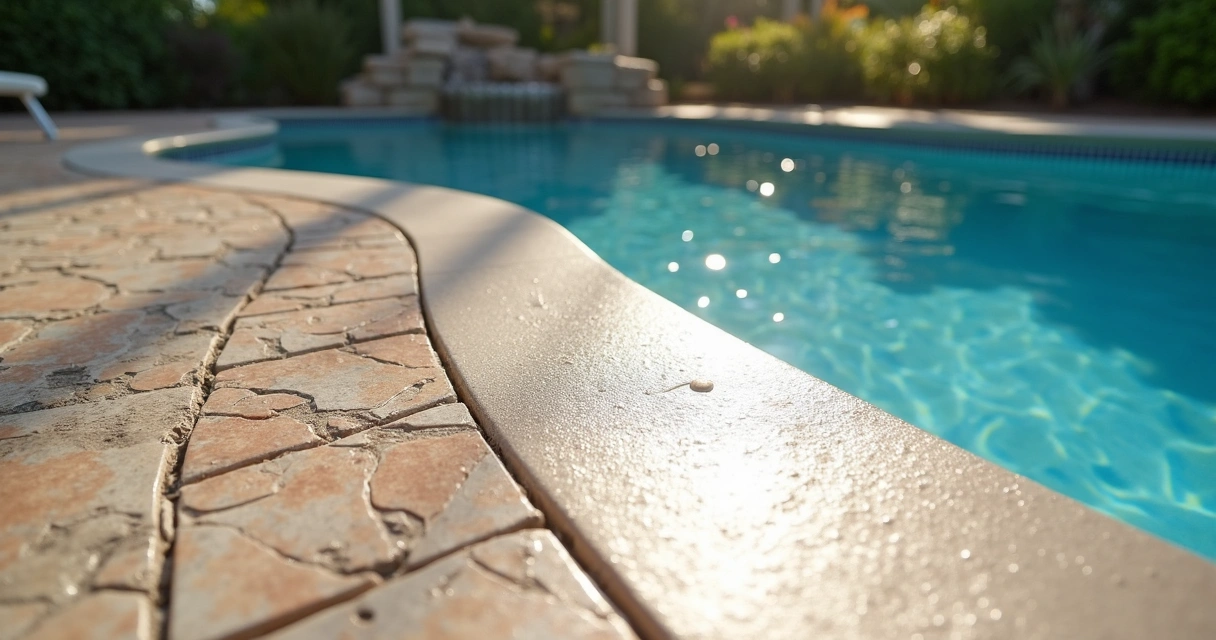
We’re sometimes asked if resurfacing helps save water. The answer is yes—in indirect and direct ways. Smoother decks help reduce wind-driven debris and algae growth, lowering the need for constant hosing and chemical correction. Using slip-resistant textures and correct drainage also means less pooling, so owners spot leaks and runoff sooner. According to the EPA’s WaterSense program, pool covers are the most effective way to cut evaporation (up to 95%). Combined with a sealed and well-designed deck, owners can reduce overall water waste and save money on water and chemicals each season.
How long do resurfaced decks last?
We get this question often. In our Central Florida weather, quality resurfacing performed by licensed, insured pros using modern materials lasts:
- Concrete overlays: 8-15 years, depending on use and material
- Spray deck/knockdown: 6-12 years with good sealers
- Epoxy/polyaspartic: 7-12 years, especially in shaded or covered areas
- Paver sealing: 3-7 years, though pavers themselves last decades with proper sand and compaction
- Paint: 2-4 years before color fade or wear reappears
Regular cleaning and resealing extends the life of any resurfaced deck. Avoid harsh chemicals, maintain expansion joints, and monitor drainage for the best performance year after year.
We recommend an annual inspection for Florida pool decks, especially after hurricanes or major storms.
Preparing for your pool deck resurfacing
Once you decide to resurface, a little prep goes a long way to ensure a smooth project:
- Remove all loose furniture, toys, and potted plants from the deck area.
- Trim back bushes and landscaping near the edge of the deck for clear access.
- Discuss any underground wiring, irrigation, or lighting with us before we start.
- Arrange for pool cover use or plan around swim schedules, especially for commercial facilities or frequent users.
- Notify your HOA and neighbors of the project timeline to prevent any misunderstandings.
We’ll provide a detailed calendar and step-by-step communication throughout.
Why choose GCM Best Services for your pool deck project?
We focus our business on exterior projects that require real expertise—concrete, coatings, pavers, drainage, and outdoor spaces. Owners choose us not just for the finished look, but the full project experience: clear communication, correct materials for Florida’s unique weather, and a transparent process from assessment to final walkthrough. We stand behind our work with photos, documentation, and written warranties.
Our process makes pool deck upgrades as painless as possible, so time at the pool is always time well spent. And when you want to learn more, our articles about concrete surfaces, hardscaping, or choosing the right contractor in Orlando can help you make the right decision for your space.
Conclusion: Faded pool deck? Resurfacing restores safety, beauty, and value
A faded pool deck isn’t just an eyesore. It can also signal risks—from slippery spots to hidden drainage failures—that take away from your poolside experience. Fortunately, resurfacing offers tested solutions, flexible designs, and long-lasting results that strengthen your investment. Every year, we help owners restore safety, improve curb appeal, and enjoy worry-free time outdoors.
Ready to bring your pool deck back to life? We invite you to schedule a free, no-obligation estimate with GCM Best Services and see how simple a backyard transformation can be.
Restore your pool deck—enjoy peace of mind this season and the next.
Ready for a professional quote? 📞 (407) 250-1948 • 24–48h • Orlando, Tampa & area.
Frequently asked questions
What is pool deck resurfacing?
Pool deck resurfacing is the process of applying a new layer or coating over an existing deck to restore surface integrity, color, and texture while repairing minor cracks and imperfections. Depending on your deck material, this can involve cementitious overlays, epoxy coatings, spray textures, or sealing pavers—each designed to extend deck life, add slip resistance, and refresh curb appeal.
How much does resurfacing a pool deck cost?
The cost to resurface a pool deck varies widely based on deck size, the selected resurfacing method, preparation requirements, and material choice. Here in Central Florida, most residential projects range from $7 to $14 per square foot for high-quality overlays or spray finishes, while premium decorative or stamped systems may range higher. We always recommend a detailed on-site estimate, as local conditions and drainage corrections also affect pricing.
How long does resurfacing a pool deck last?
With quality materials and skilled installation like we provide at GCM Best Services, most resurfaced concrete decks last 8-15 years, while spray finishes often deliver 6-12 years of durable use. Epoxy coatings regularly surpass 7 years, and sealed brick/paver decks boast multi-year color and stain protection. Longevity depends on factors like weather, maintenance, and traffic.
Is it worth it to resurface my pool deck?
Resurfacing is usually a strong investment compared to replacement or repeated patching, especially if your underlying deck is sound. Owners benefit from restored safety, improved drainage, and renewed aesthetic value at a fraction of the cost and time of full demolition. Local data and case studies show major safety and satisfaction gains following timely deck resurfacing.
What are the best materials for resurfacing?
The best resurfacing material depends on your pool deck’s starting surface and goals. We often recommend polymer-modified cement overlays for existing concrete, spray/knockdown textures for comfortable slip-resistance, quartz/flake epoxy for high-traffic decks, and UV-stable sealers for paver installations. We tailor the finish, thickness, and process to Central Florida’s sun, rain, and use patterns.