Primary keyword: Retrofitting lanais with solar roof panelsVariants: solar lanai retrofit, solar-powered lanai roof, Florida lanai solar installation
Audience: Homeowners and property managers seeking to use their outdoor lanai space for energy savings, comfort, and added property value.
Pain/Benefit: High energy bills, outdated lanais, and underused backyard spaces vs. independent power, heat reduction, and increased resale appeal.
Summary: Central Florida’s rapid solar adoption makes now an ideal time to retrofit an existing lanai with solar-powered roof panels. In this guide, we explain every step, from structural assessment and permitting to the options for solar panel integration, cost factors, typical timelines, and what to expect for long-term maintenance. If you want independent power and a modern lanai you can use all year, this is the place to start.
- Benefits of solar roof retrofits for lanais
- Assessing suitability of your current lanai
- Understanding panel types, layouts, and integration
- Permitting, HOA, and Florida code
- Structural reinforcements and drainage
- Installation process, disruptions, and timeline
- Cost breakdown and value analysis
- Warranty, maintenance, and future upgrades
- Common questions
- CTA and further resources
Ready for a professional quote? 📞 (407) 250-1948 • 24–48h • Orlando, Tampa & area.
Why solar-powered roofs are gaining popularity across Central Florida
Central Florida’s abundant sunshine is no secret. According to recent studies, Florida leads the Southeast in installed solar capacity, hitting about 13,850 MW by 2024, and the numbers are on pace to double by 2030. This isn’t just a headline, it’s proof that solar works here.
With traditional lanais, you have shade and a breeze, but you still rely on grid electricity for fans, lighting, or outdoor kitchens. Solar panels installed on your existing lanai’s roof can do much more. They:
- Lower your monthly electricity bills by generating your own power on-site
- Help your home stay functional during a power outage (with battery add-ons)
- Give you the freedom to add upgrades like lighting, pool pumps, or kitchen appliances
- Increase resale value by modernizing your home and cutting your energy footprint
- Reduce the heat load on your lanai and home’s main roof
Florida’s strong solar trend means new solutions now exist to adapt older lanais, making them energy contributors instead of just passive shelters.
Solar turns a roof into a resource.
Is your existing lanai a candidate for solar-powered roofing?
Before thinking about wiring or panel types, you need to ensure your current structure is suitable. In our experience at GCM Best Services, not every lanai is ready for this upgrade, but most aluminum, steel, or well-built wood frames in Central Florida can make the leap.
What makes a lanai suitable?
Here are the main factors we assess:
- Roof slope and exposure: A south or west-facing slope, minimum 10–15° pitch, open to sunlight
- Structural capacity: Beams, rafters, or trusses that can handle the added weight of solar modules (about 2.5–4 pounds per square foot for many systems)
- Access for electrical routing: Space to add conduit for wiring through or alongside supporting posts
- Roofing condition: No rot or major corrosion; sound panels and connections
- Permit compliance: Built to code and with records (for HOA and local permitting)
We often find that structures built after 2005, when Florida toughened its hurricane code, require only minor upgrades for solar.
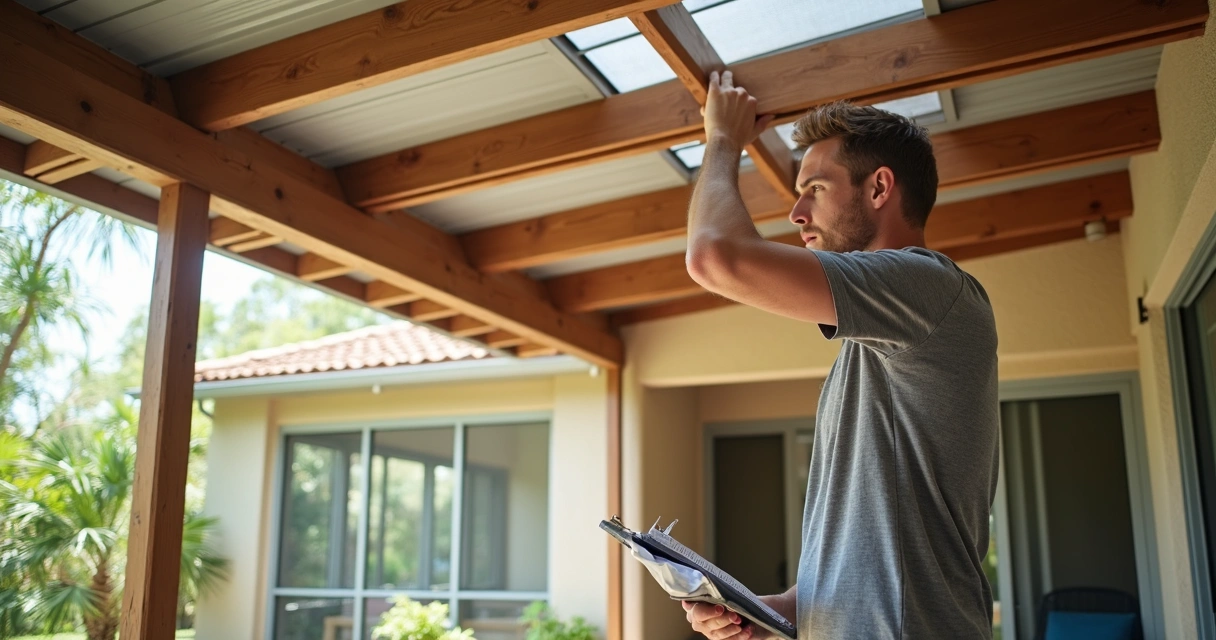
How to start the evaluation
You can do a quick check:
- Look up at noon, does your lanai roof see several hours of direct sun?
- Push on a main beam or post, firm, no flex or creaks?
- Check your HOA docs and permits, was it professionally built?
If you answer “yes” to these, you’re likely in good shape for a solar retrofit.
Types of solar roof systems for lanais
The classic image of shiny panels bolted atop a house roof isn’t your only choice. We use three main approaches for lanais and outdoor living areas in Central Florida:
1. Raised rack-mounted systems
Panels are mounted above your existing roof using special aluminum rails. Weather-resistant flashing and sealants keep water out. This option is popular when you want to retain an existing roof (like insulated aluminum panels) and add solar flexibly.
2. Integrated solar panels
These replace part of the current roofing with panels designed to serve as both the weather barrier and power generator. They provide a clean visual line and are often used when an old roof is being replaced anyway.
3. Solar shingles or tiles
Still newer, solar shingles look almost like standard roofing tiles and can cover the whole lanai, blending style and function. This is popular on homes being fully modernized.
Panel choice depends on your goals, energy, shade, appearance, and budget all matter.
A solar roof can fit yours, not force you to fit it.
Understanding output, power needs, and layout
How much energy can your lanai actually make? For most shade spaces in Orlando, the usable roof area supports a system that generates from 1kW up to about 5kW as a standalone install. That’s enough to power fans, multiple outlets, LED lighting, plus an outdoor fridge or grill station.
According to recent statistics, Florida added more than 50,000 new residential solar systems in 2023. Many choose solar because they want to run more features without raising their electric bill, and, after hurricanes, avoid outages for their outdoor spaces.
- Estimate load: What will you power? (Fans, lights, outlets, kitchen gear)
- Area required: Each 1kW system needs 70–90 sq ft of clear roof space
- Shade and angle: Nearby trees or buildings may reduce effective output
- Connection to home: Will your lanai’s system integrate with your main electrical panel or work independently?
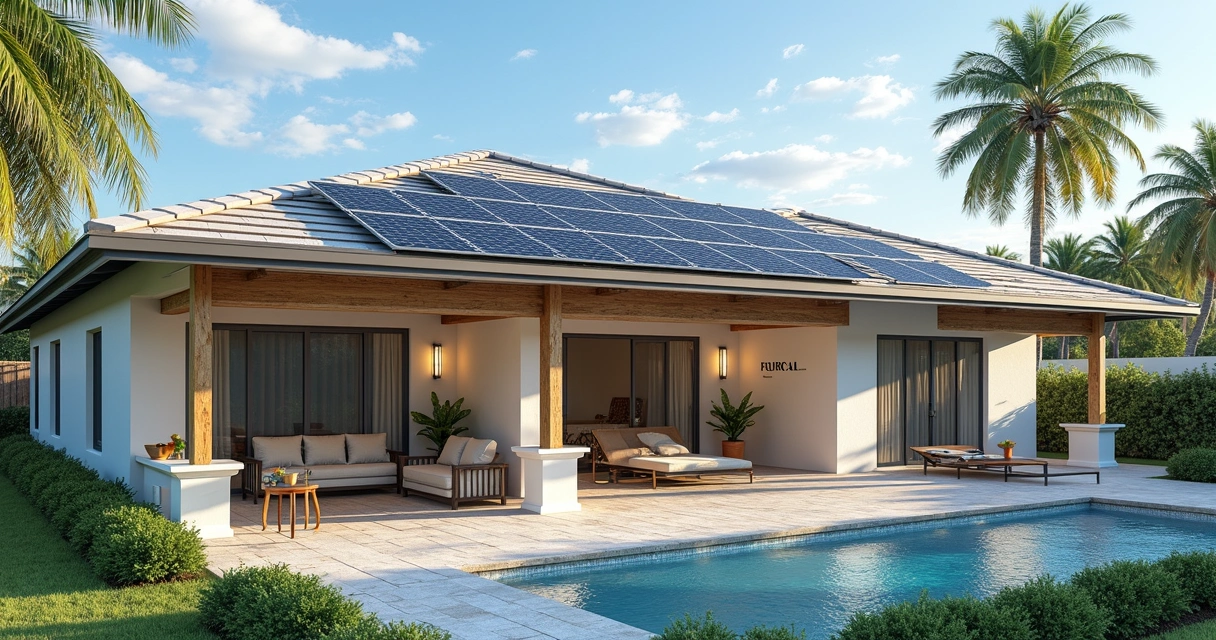
We map out shade, sun, panel spacing, then recommend either grid-tied or battery backup systems based on your goals.
Permitting, HOA approval, and code compliance in Florida
Florida state law generally protects the right to install solar on your property, but local municipalities still require proper permits, and HOA approval is often needed. At GCM Best Services, we manage this paperwork and coordinate inspections.
- Permits: Most counties/towns require a building permit for solar, because it affects the structure, weather-tightness, and electrical wiring.
- HOA: Many homeowners’ associations have their own forms. State statutes keep them from outright banning solar, but details like color or visibility rules may apply.
- Inspections: Expect structural and electrical checks for code alignment, especially wind resistance, water protection, and wiring safety.
Solar projects must meet Florida Building Code, which was updated after major hurricanes to require proper anchorage and uplift resistance for roof attachments. This is essential for long-lasting results.
Strong design, strong permitting, strong roof.
Structural modifications and drainage improvements
Solar panel retrofits don’t just involve new panels, sometimes support beams, posts, or roof decking must be beefed up to carry extra weight or resist wind uplift. In many projects, we:
- Add steel brackets or extra mounting points at roof-to-beam locations
- Upgrade fasteners, hardware, or hurricane clips
- Install upgraded flashing and sealant to prevent leaks
- Improve water drainage paths or add gutters, so that water—the main enemy of Florida lanais—does not back up or pond on the new roof
A properly retrofitted lanai roof should shed water as well as before, if not better, after solar panels are in place.
If your lanai connects to a paver patio, our crews coordinate any drainage, edge restraint, or hardscape repair as part of the upgrade. For more on these services, visit our driveway, patio, and paving solutions.
Step-by-step installation process and timeline
Homeowners in Orlando often ask us: “How long will my space be out of use?” Most solar retrofits completed by GCM Best Services follow this roadmap:
- On-site assessment: Detailed review of structure, solar exposure, electrical and drainage
- Estimate & design: CAD drawing, panel layout, wattage calculations, and projected output
- Permitting & HOA submission: All paperwork, including drainage or hardscape coordination as needed
- Prep & reinforcement: Hardware upgrades, flashings, and support work as indicated by engineering
- Panel mounting & wiring: Panels are mounted, sealed, connected to the home system (or to batteries)
- Testing & inspection: Final city and/or HOA inspections for electrical, water tightness, and roof safety
- Walkthrough & warranty: Final client walk, delivery of maintenance guide and records
Most installs take between 3 and 7 workdays, with the lanai usable again almost immediately after inspections, a timeline that outpaces full roof re-dos. Smaller retrofits (just a few panels, no major structural work) can be faster.
We also work evenings or weekends to keep your household disruptions to a minimum.
Cost overview and payback analysis
Costs can vary, but here’s what we typically see for solar lanai roof retrofits in Central Florida:
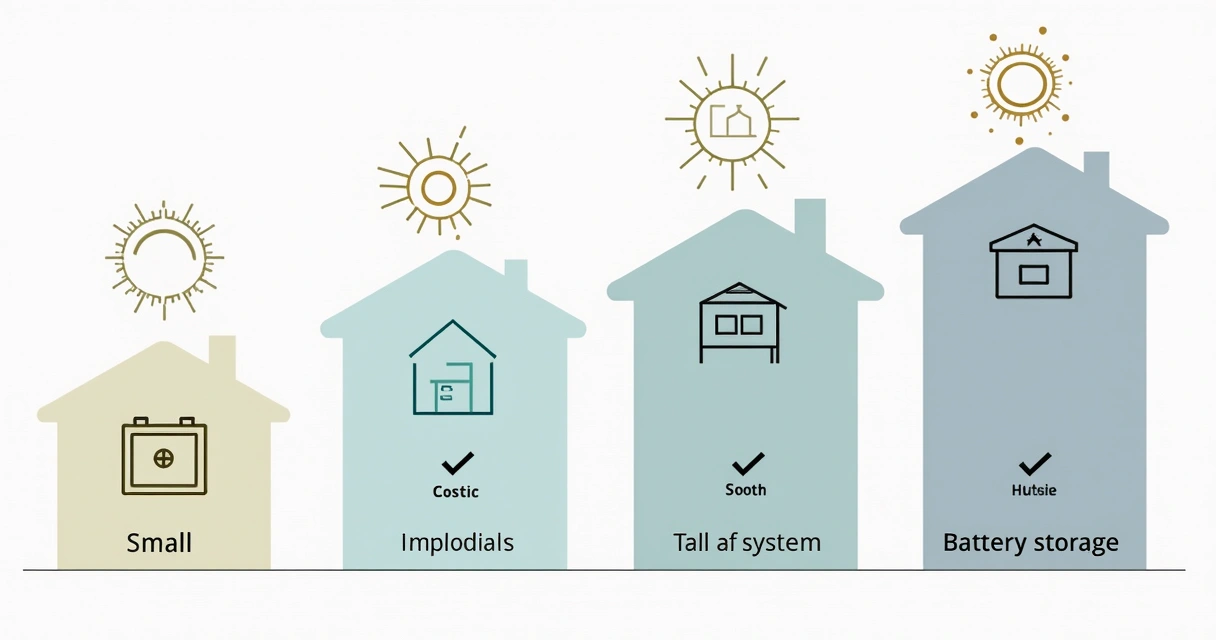
- Partial panel installs: $7,500–$15,000 (1–2 kW, offsets outdoor/garage power)
- Full roof replacements with solar: $18,000–$28,000 (3–5 kW, powers pool, kitchen, outlets)
- Optional battery storage: add $6,000–$20,000 (depending on system, for backup/off-grid)
Most homes recover costs in 7–12 years, based on current electricity rates and rising power prices in Central Florida. Panels last 25+ years, offering two decades of near-free power after you break even.
Local utility incentives and the federal solar tax credit (currently 30% of installed cost, subject to change) can reduce net costs by thousands more. We can include these options in a custom quote.
Warranty, maintenance, and your future-proof lanai
Today’s solar lanai roof components are as rugged as any new home roof. We provide written warranties (often 25 years on power production; 5–10 years on workmanship) and a maintenance plan. Here’s what’s included:
- Annual inspection: Check panel mounts, verify water seals, clean modules
- Warranty support: If a panel under-performs, we replace it
- Maintenance guide: DIY recommendations to keep shade and power output at their best
Panels typically only require occasional rinsing, Florida’s rainy season does most of the work. Electrical components are designed for outdoor heat and humidity.
Adding solar to a lanai also sets you up for future upgrades, like EV charging or hardscape lighting, since most systems are modular and expandable.
How GCM Best Services handles the entire process
Our specialty is in managing every phase, from first discussion to the final warranty packet, and helping you enjoy your lanai at every step. From concept through engineering, HOA documents, installation, and final clean-up, we communicate each milestone.
Because we also provide paver, turf, drainage, and summer kitchen solutions, we take the broader view. If your solar lanai project involves new walkways, modern hardscape, or transitions to artificial turf (as we discuss at our turf guide), it all gets handled, no competing contractors or finger-pointing.
You’ll see photos and receive written warranty details at closeout, and we guarantee permit and code compliance. We can integrate smart controls, lighting, and schedule maintenance on request.
For insight into our broader project work, including patios and walkways, check our hardscaping portfolio.
Conclusion
Retrofitting your existing lanai with solar-powered roof panels is a practical way to tap Central Florida’s sun for comfort and value. Today’s technology, improved hurricane resistance, and Florida-centric incentives make this renovation straightforward and impactful. As a licensed, insured contractor, GCM Best Services delivers a process that is clear, documented, and tailored, from your first question to the last walk-through.
A solar lanai is the future of outdoor living in Florida.
If you’re interested in upgraded shade, energy savings, and worry-free project management in Orlando or across Central Florida, our team at GCM Best Services is ready to help you take the next step. Reach out for a free site assessment, and discover what solar can do for your lanai and your lifestyle.
Ready for a professional quote? 📞 (407) 250-1948 • 24–48h • Orlando, Tampa & area.
Frequently asked questions
What is a solar-powered lanai roof?
A solar-powered lanai roof is a roof system for your backyard screen room or patio that includes solar panels as either an add-on or integrated material, generating electricity while providing shade and rain protection. The panels convert sunlight into electricity, which can be used to power fans, lights, appliances, or even charge batteries for backup power during grid outages.
How much does retrofitting a lanai cost?
The cost for retrofitting a lanai with solar roof panels in Central Florida averages $7,500 to $15,000 for smaller installations, and $18,000 to $28,000 for full roof replacements with higher capacity. Costs depend on panel type, system size, structural upgrades, and whether battery backup is included. Applying the federal solar tax credit and any local incentives can help lower out-of-pocket expenses further.
Is it worth it to install solar panels?
For most homeowners in sunny Florida, solar panel installation is worth it, as it can reduce monthly electric bills, add property value, and give you more freedom during outages or storms. Most systems pay for themselves in 7–12 years. With panels lasting up to 25 years, the financial and lifestyle advantages can be substantial over time.
How long does installation usually take?
Solar lanai retrofits in the Orlando area typically take 3 to 7 workdays for most projects. The exact length depends on system size, structural work needed, the permitting schedule, and if any weather delays occur. Smaller systems, or installs not requiring roof reinforcement, may be completed in just a few days.
Where to find reliable installers near me?
If you are in Orlando or Central Florida, GCM Best Services is a licensed, insured local contractor with experience in lanai and outdoor living solar upgrades. We provide on-site consultation, handle permits, HOA, and warranty all work. For homeowners in other areas, always seek contractors with documented solar, screen enclosure, and roofing expertise, plus valid licenses and local code knowledge.