If you own a home or business near the Central Florida coast, you’ve probably seen what salt-laden air can do. Grills corrode, cabinetry peels, and countertops lose their shine. We’ve helped hundreds of customers protect their outdoor kitchens by using the right materials, smart building practices, and proven maintenance steps. In this guide, we share how to defend your investment against Florida’s relentless salt air—so you enjoy outdoor cooking season after season.
Why Florida’s salt air is tough on outdoor kitchens
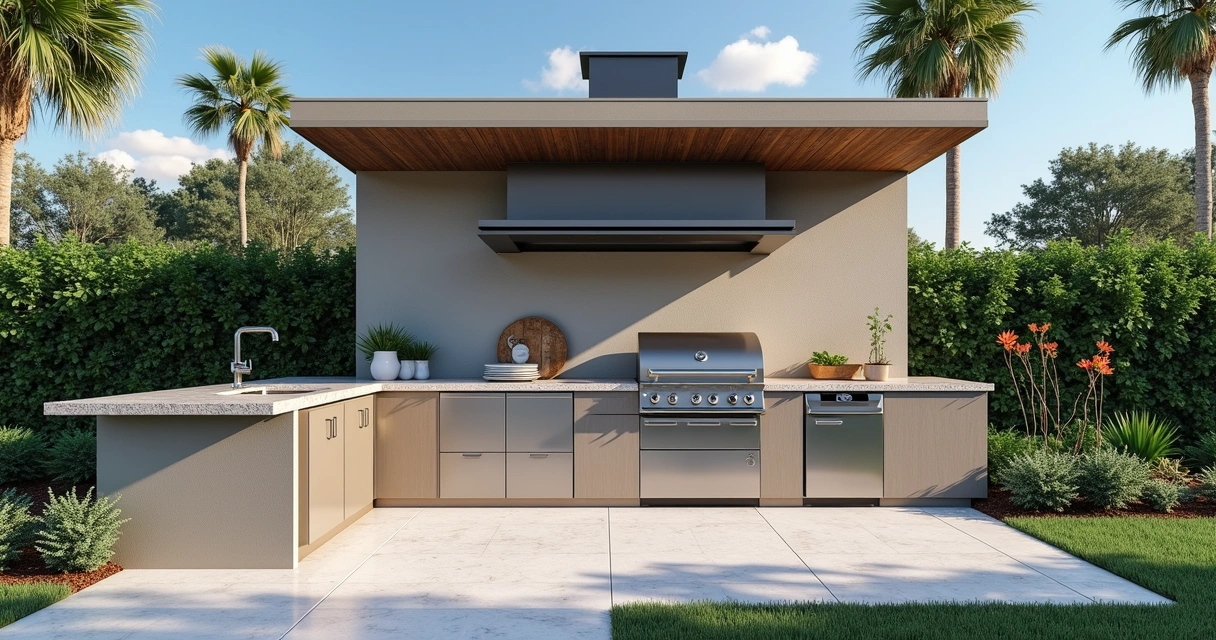
We experience conditions in Central Florida that make outdoor kitchens age faster than in other parts of the country. Salt air, combined with humidity, brings on rapid surface corrosion and material breakdown, especially on metals and unsealed masonry. This is not just a beachfront problem—winds carry salt far inland, reaching communities over 30 miles away.
At GCM Best Services, we’ve seen cases where improperly protected equipment rusts, stains, or swells only months after installation. Understanding what causes this helps our clients make better choices.
How salt air causes corrosion
Salt in the air mainly comes from ocean spray. When these tiny salt particles land on metal and other surfaces, they draw in moisture. This triggers a process called chloride-induced corrosion, which eats away at aluminum, steel, and even hardware used in cabinetry. The GSA guidance on aluminum highlights how even durable grades are vulnerable without coatings or special alloys.
“Salt air finds every weakness in metal.”
Florida’s seasonal factors make it worse
Atmospheric corrosion is not just constant; it also follows a seasonal cycle. According to Kennedy Space Center’s research on corrosion rates, the winter months here bring higher salt deposition and longer “time-of-wetness.” It’s a big reason we recommend extra cleaning and inspections during mild, damp winters.
Choosing the right location and orientation for outdoor kitchens can make a big difference, but a comprehensive protection plan is always needed.
The best materials for resisting salt air in Florida
In our experience, most outdoor kitchen failures start with material choices that weren’t made for Florida’s climate. Not all “outdoor” products are built for salt, sun, and rain.
Stainless steel choices: Not all grades are equal
For grills, appliances, and hardware, 304 stainless steel is the minimum you should consider. It resists surface rust, but if you are closer to the coast or demand the longest service life, 316 stainless is a step up thanks to its extra molybdenum. We see less pitting and staining long-term with 316, especially on hardware and hinges.
Counters and surfaces
Quartz, granite, and concrete are all popular for outdoor counters, each with advantages. But unsealed stone absorbs saltwater and soon shows hairline flaws or staining. We always recommend a waterproof sealer that’s rated for marine exposure. Industry corrosion maps make it clear that porous materials need sealing in coastal climates.
For poured concrete counters, choosing the right mix and finish helps. We use a dense, high-PSI concrete and seal it with breathable, UV-stable coatings to keep salt out but let trapped moisture escape.
Cabinetry and framing
Polymer, powder-coated aluminum, and marine-grade woods like ipe or teak all fare better than basic plywood or standard aluminum. Polymer cabinets don’t swell, and powder coatings form a tough shield against airborne salt.
GCM Best Services sources these options for clients who want their investment to last, integrating them with effective drainage and well-sealed mounting surfaces. Our crack prevention techniques for patios align with this philosophy—good materials are only as reliable as the surfaces and details that surround them.
- 304 or 316 stainless steel for all exposed fasteners and grills
- Non-porous countertop materials properly sealed
- Marine-grade polymers or powder-coated metals for cabinetry
- Closed-cell foam gasketing at joints to reduce salt entry
The role of screening and enclosures
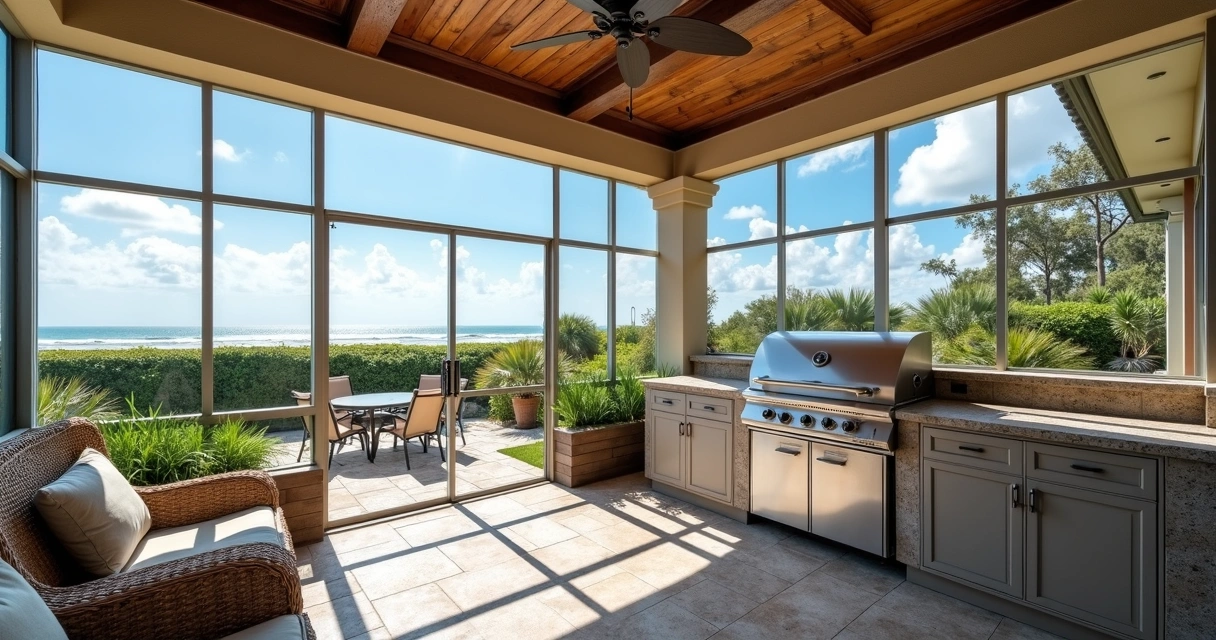
Adding a screen enclosure reduces direct exposure to salty drips and windborne debris. We design pool cages, lanais, or partial screens with code-compliant fasteners and a focus on corrosion resistance. This makes seasonal cleaning easier and shelters high-end appliances from aggressive salt and sun.
Construction practices that improve salt air resistance
Long outdoor kitchen life depends as much on how things are built as what they’re built from. Over the years, we’ve learned that even premium appliances will fail without the right install methods.
Proper spacing and air flow
Installing equipment with gaps around them helps surfaces dry quickly after rain or salt spray. Dense, sealed substrates also allow for fewer nooks where saltwater can gather. When planning a layout, we avoid trapping debris and moisture under or behind cabinets.
Drainage and surface slope
Standing water combines with airborne salt to form miniature ponds of trouble. By following proper slab slopes and drainage planning—something we stress in our outdoor paver and hardscape projects—we keep water moving away. Poor drainage increases salt buildup and speeds up corrosion.
We integrate sloped surfaces and drains beneath kitchen frames and suggest extending drainage planning to adjoining patios. Our deep dive into effective drainage with paver patios applies directly to outdoor kitchen footprints, especially where hard surfaces meet landscape beds.
Sealants and barrier products
Modern waterproof caulks and expanding membranes help block saltwater from entering joints. We use marine-grade silicone or polyurethane for most outdoor kitchen seams. Sealing fasteners and bolt holes stops hidden corrosion. Every spring, we check barriers for gaps or pinholes.
Hidden reinforcements
Stainless or polymer mesh under counters, plastic shims, and self-healing flashing where grout meets countertops all add years of life. Even a minor upgrade in these hidden spots makes a big difference in Florida’s marine air.
Routine cleaning and maintenance: The secret to longevity
We’ve found the simplest step is often the most neglected—regular washing. Even the best materials, if left unwashed, accumulate a salty film that starts corrosion out of sight. Here’s how we coach clients to keep outdoor kitchens at their best.
How often to clean?
Outside of peak use, a monthly fresh water rinse is usually enough in Orlando. If you are within a few miles of the ocean, do this weekly. After strong winds, storms, or pollen events, rinsing again prevents grit and salt from combining on surfaces.
“Salt, rain, and pollen combine—wash them off before they start trouble.”
What to use for cleaning?
- Fresh, clean water (a garden hose is fine)
- Mild pH-neutral soap for tough grime
- Non-abrasive sponges or microfiber cloths
- Never use bleach or strong acids on stainless, stone, or coated aluminum
For tough spots on stainless steel, apply a food-grade stainless cleaner and wipe with the grain. Reapply sealers yearly to counters and exposed concrete.
Maintenance routines that work
- Inspect all metal and fasteners every spring and fall for corrosion “starting points.”
- Touch up coatings, re-seal, or replace gaskets as needed.
- Before rainy season, check all drains and surface slopes are clear.
- Cover occasionally with a heavy-duty, breathable cover when not in frequent use.
Proactive outdoor kitchen care means identifying potential issues before they become costly repairs.
Smart design for years of stress-free use
The best protection begins with design. We guide every client through features that can add both beauty and resilience, creating kitchens built to thrive in Central Florida.
Layouts that limit salt air exposure
Positioning your kitchen away from prevailing winds or using buildings and fences as windbreaks reduces direct salt attack. Integrated pergolas or partial overhead roofs give added protection, while still allowing plenty of natural light.
Flexible add-ons: Covers, storage, and mobility
Using custom-fitted covers for grills and appliances does help—provided the covers are breathable and kept clean. Enclosed storage for utensils and cushions limits exposure to both salt and Florida sun.
Some clients choose cart-based kitchen modules, so they can wheel components into storage during storm season. Our advice is always tailored to your habits and preferences.
Storm smart: Preparing for hurricanes and storms
All of our installations use hurricane-rated fasteners and anchors where code requires. Before a major storm, disconnect gas and power, secure all removable items, and use tie-down anchors for freestanding modules.
For homeowners considering major renovations, our hardscape guides and paver installation best practices help you integrate outdoor kitchens with landscaping upgrades—improving drainage, comfort, and durability in one project.
What about pavers, patios, and backyard integration?
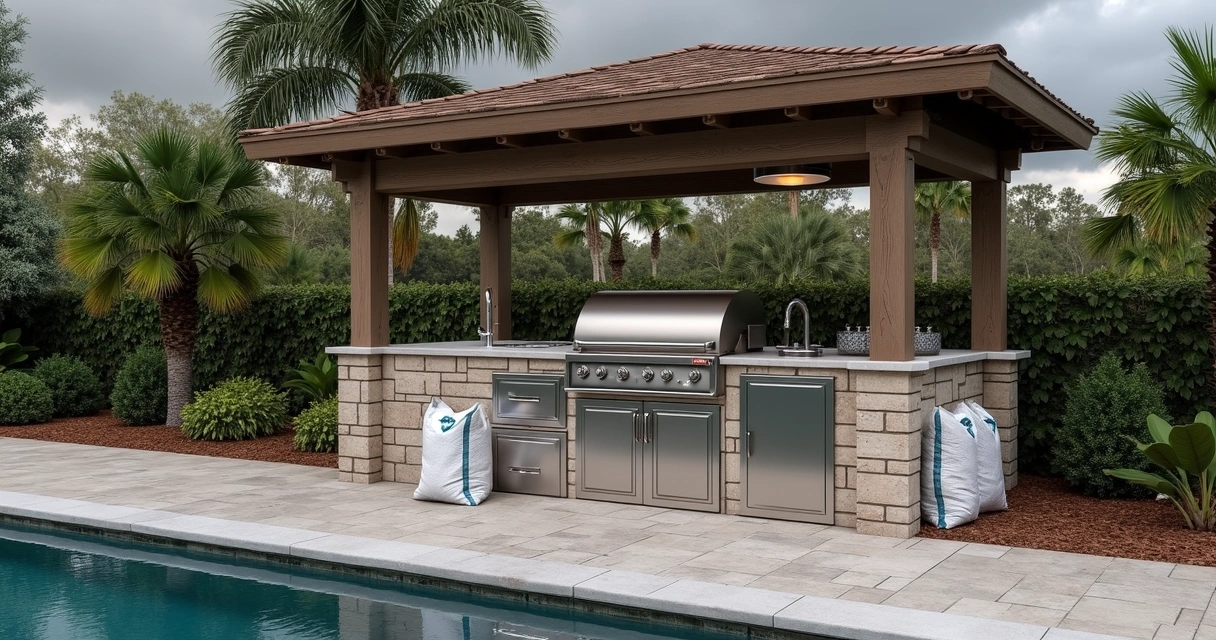
A kitchen is only as solid as the patio beneath it. Paver borders and proper concrete sub-bases help keep kitchens level and drain water quickly after storms. At GCM Best Services, we build on compacted sub-base, set correct slopes, and reinforce key areas to avoid settling or pooling. See our hardscaping resources for real project examples and design ideas.
For seamless backyard upgrades, integrating turf, lighting, and drainage with the kitchen space extends usable living area while keeping everything protected.
What to avoid: Common mistakes with Florida outdoor kitchens
We’ve been called in to rescue projects that failed early for predictable reasons. Here’s our “never again” list for Florida installations:
- Uncoated or low-grade steel hardware (instant rust magnets)
- Improper or incomplete sealing of countertops and joints
- Cabinet bases sitting in standing water or mulch beds
- Skipping drainage planning before pouring slab or laying pavers
- Assuming “outdoor” labels mean salt-resistant
- Ignoring manufacturer care instructions for all appliances and finishes
Avoid shortcuts—long outdoor kitchen life depends on details you see and details you do not.
Conclusion
Florida’s salt air is relentless, but with the right choices, your outdoor kitchen can withstand it for many years. At GCM Best Services, we combine durable materials, good construction practices, and practical maintenance routines to help our clients get the most from their investment. Taking these precautions up front saves time, money, and disappointment later.
If you’re considering a new outdoor kitchen or want to upgrade your backyard living in Orlando or Central Florida, we’re happy to help you plan a project that lasts. You can also read our related guides on crack prevention for patios and drainage for hardscapes.
Ready for a professional quote? 📞 (407) 250-1948 • 24–48h • Orlando, Tampa & area.
Frequently asked questions
What is salt air damage to kitchens?
Salt air damage is the corrosion and material breakdown caused when airborne salt, mostly from the ocean, settles on outdoor kitchen surfaces and components. Florida’s humidity and frequent rain keep these surfaces wet, accelerating rust, swelling, and surface pitting. Regular exposure without protection can shorten the life of grills, cabinets, fasteners, and countertops. Salt-laden air is especially hard on metals and unfinished stone unless sealed and cleaned routinely.
How to protect grills from salt air?
We recommend grills and appliances built from 304 or 316 stainless steel, paired with regular cleaning and inspection. Keeping grills covered with well-fitted, breathable covers when not in use reduces salt settling on surfaces. Anchoring grills so air can flow beneath helps speed up drying after storms. Routine rinsing, especially after periods of high humidity or wind, is the easiest and most effective defense.
What materials resist Florida salt air best?
316 stainless steel, marine-grade polymer cabinetry, sealed natural stone, powder-coated aluminum, and non-porous quartz withstand salt air much better than basic metals or plywood. Dense, well-sealed concrete also holds up well when properly drained and maintained. For exposed fasteners and hardware, only stainless steel or polymer products should be used.
Is it worth it to use covers?
Yes, using covers helps shield grills and appliances from constant salt, sun, and rain—but only if the covers are breathable and not left to collect moisture underneath. Covers prevent dust, debris, and salt film buildup, extending the life and look of all outdoor kitchen components. We advise taking covers off after storms and ensuring the area beneath is dry.
How often should I clean outdoor kitchens?
At a minimum, rinse all surfaces monthly with fresh water. If you live closer to the coastline or after windy periods, do this once a week. Every quarter, inspect for rust spots, loose sealant, and any signs of wear. For heavily used kitchens, clean after each long weekend or event to prevent discoloration and corrosion. Regular, gentle cleaning is the simplest way to prevent salt air from causing trouble.