Primary keyword: Swale vs French drainVariants: French drain for patio runoff, swale drainage for patios, best drainage for patios
Audience: Homeowners and property managers in Central Florida facing patio flooding and runoff problems.Pain/Benefit: Struggling with patio pooling, slippery walkways, or landscaping damage caused by stormwater? Discover solutions that protect your patio and investment.
Every rainy season in Central Florida reminds us just how much water a patio or driveway can collect. Puddles pool. Soil erodes. Slippery patches form. At GCM Best Services, we get frequent calls about standing water, cracking concrete, and musty odors—sometimes more after one bad afternoon thunderstorm than all winter. The answer often comes down to smart design and the right drainage solution. Two proven approaches—swales and French drains—stand out for patios, walkways, and hardscapes. But which one fits your yard, climate, and way of life best? That’s the question we’ll help you answer right here.
Understanding patio runoff in Central Florida
Stormwater runoff from patios and driveways is a big concern, especially in Florida’s wet, sandy climate. According to studies by the University of Georgia Extension, a 3,000 square foot roof can generate nearly 1,869 gallons of runoff with every inch of rainfall. Imagine how that water spreads over patios and paved surfaces—left unmanaged, it seeps under slabs, accelerates cracks, and turns beautiful hardscapes into hazards.
We see it all the time:
- Patios with pooling water and algae staining
- Brick paver walkways that shift or sink
- Lawn edges that never fully dry
Runoff is the silent enemy of every outdoor space. It causes visible damage—and sets the stage for more expensive repairs. In our experience, the solution is rarely just “grade away from the house.” Effective, lasting relief relies on smart surface and subsurface drainage, tailored to your yard’s soil, layout, and use.
Swale drainage: What it is and how it works
A swale is a shallow, gently sloping channel—wide and usually grass- or stone-lined—designed to carry stormwater away from hardscaped areas and direct it to a safe outlet. As the Northern Virginia Soil and Water Conservation District put it in their drainage problem control guide, swales are simple features that prevent erosion, protect landscaping, and handle large volumes of runoff.
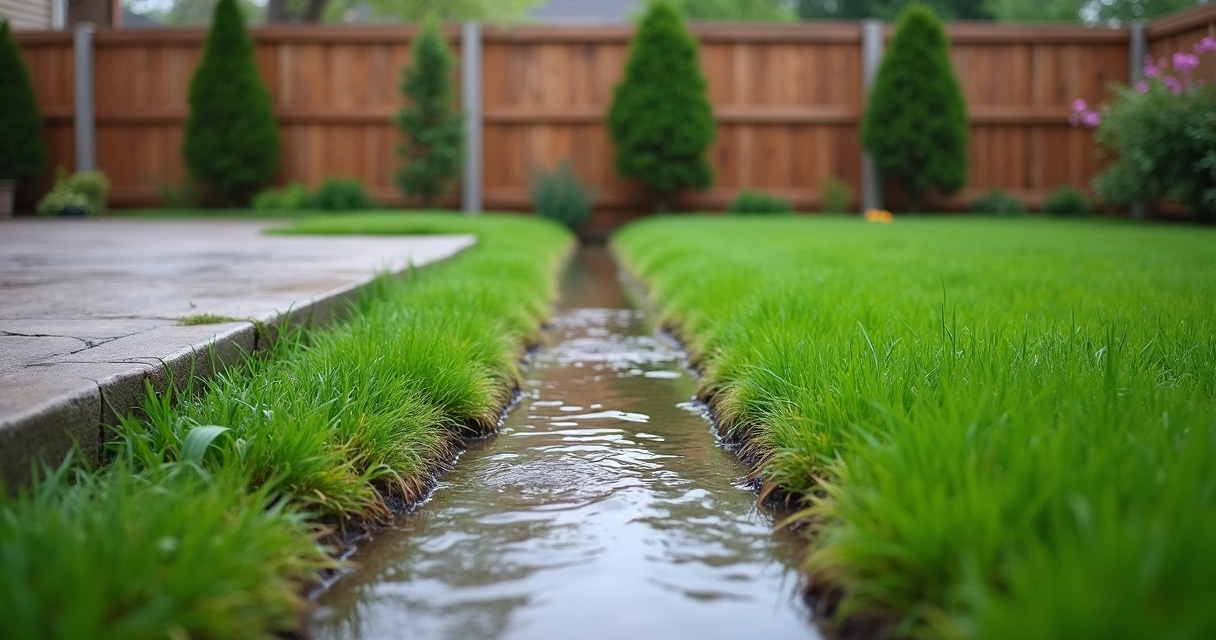
How does a swale improve patio drainage? Swales intercept water before it builds up on your patio surface and channel it safely away, reducing erosion, standing water, and the risk of foundation damage.
Swales can be key for:
- Property lines where runoff flows from neighboring yards
- Large patios with little surrounding soil
- Sunny lawns that make mowing and maintenance easy
- Retrofitting old landscaping with minimal digging
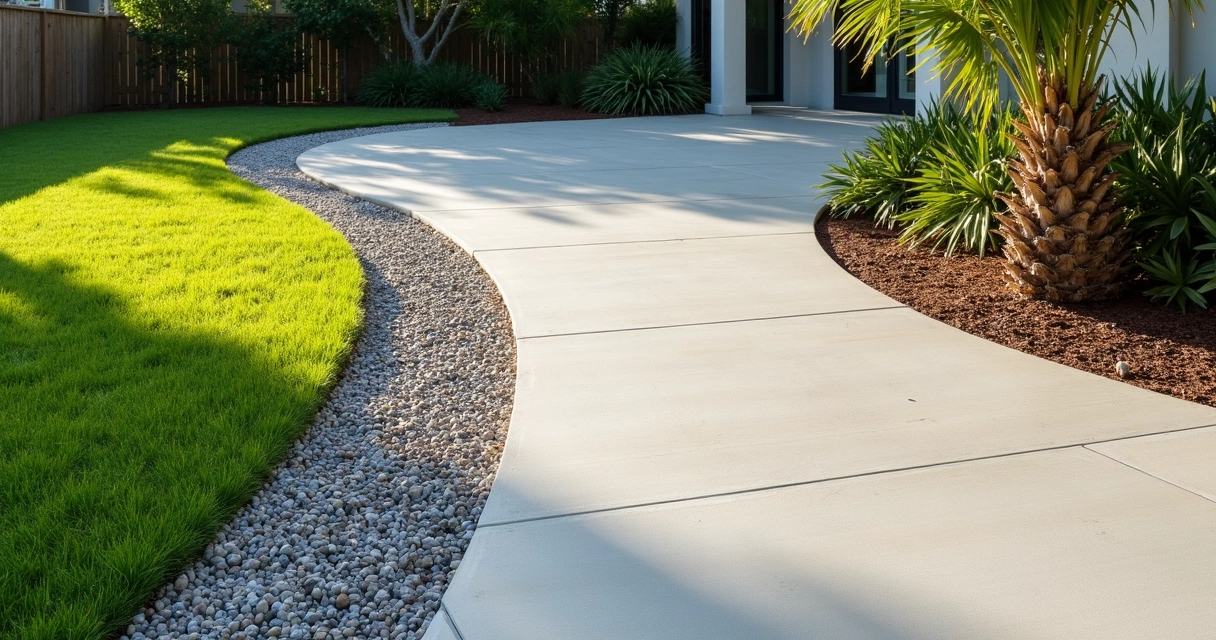
We often recommend a grass-lined swale near patio edges, especially where the yard slopes, and the sandy soil has decent infiltration. In more formal settings, river rock or paver-lined swales work well and can be combined with landscape lighting or beds for a clean finish.
The University of Nebraska–Lincoln Extension highlights that swales not only carry water but also slow it down, trap sediment, reduce erosion, and help stormwater soak into the ground. That means they’re just as helpful for environmental protection as for protecting your patio investment.
Swale installation process
At GCM Best Services, we approach swale installation with a five-step process:
- Analyze site slopes and water flow patterns—mark areas where runoff collects.
- Excavate a shallow trench along the runoff path, with a depth and width matching your site needs (often 6–12″ deep and 2–4 feet wide).
- Line with sod, grass seed, or stone, depending on the look and maintenance you want.
- Blend swale edges into the surrounding lawn for easy mowing and no trip hazards.
- Finish with strategic grading so water flows at a gentle, even pace—slower than a gutter, faster than a soggy lawn.
Every swale is custom-fitted to yard size, patio shape, and local codes for effective stormwater management.
Our team always discusses HOA requirements and helps manage permits—so you don’t have to worry about setbacks or over-engineering.
French drain systems: What they are and why they work
The French drain is a classic, nearly invisible solution for patios that see repeat flooding or where surface drainage is not enough. It’s a gravel-filled trench with a perforated pipe at the bottom, buried so it collects and redirects water before it can cause surface problems.
Invisible, simple, effective.
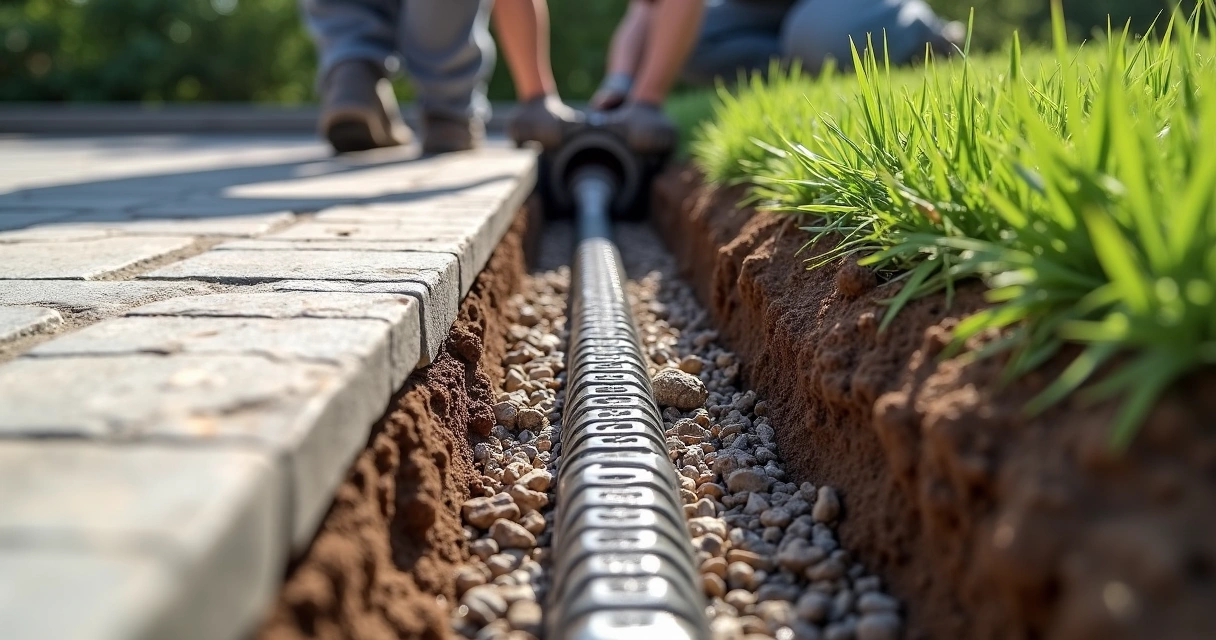
French drains are best suited for locations where:
- Water sits for hours after rain, no matter how you grade the lawn
- Paver patios or concrete slabs have borders that can’t be easily re-sloped
- Tree roots or utility lines make large-scale grading impractical
- You want to preserve the look of a garden or entertainment space, without visible trenches
French drains collect stormwater below the surface and move it to a safe discharge point, such as a dry well or storm sewer, keeping patio surfaces dry and stable.
At GCM Best Services, we use heavy-duty, high-flow pipes, thick gravel bases, and landscape fabric to prevent clogging from soil or mulch. A French drain typically sits 12–24″ deep. For patios, we often run them along one or more edges, ensuring the lowest lying area collects water first.
How a French drain system is built
Installation involves:
- Cutting a trench parallel to the patio or down the slope—width and depth adjusted based on runoff volume and soil type.
- Adding a layer of washed stone (gravel) to support drainage under the pipe.
- Placing perforated PVC or corrugated pipe in the trench, sloping very slightly toward the discharge point.
- Wrapping the pipe with filter fabric to block silt and sand intrusion.
- Backfilling with more gravel, then covering with sod, mulch, or paver borders.
French drains require attention to detail in trench depth, pipe slope, and clean-outs for long-term reliability. We always perform a full site check and recommend the best location to preserve both drainage and landscaping.
Comparing swales and French drains for patio runoff
Both swales and French drains bring real value for managing patio runoff, but their strengths and limitations differ.
Advantages of swales
- Low cost and easy maintenance, especially for lawn or garden settings
- Eco-friendly—promotes groundwater recharge, traps sediment
- Often mowable and blends into landscaping
- No pipes to clog or inspect
- Quick to install—usually done within a day for typical homes
Drawbacks of swales
- Needs space—won’t work in narrow side yards or densely built lots
- Visible—some homeowners prefer not to see drainage channels
- Requires proper grading to prevent standing water in the swale itself
Advantages of French drains
- Invisible—buried under lawn, garden, or patio edge
- Works where grading alone can’t move water
- Great for heavy runoff or clay soils
- Discharges excess water away from patios, driveways, or house foundation
- Can protect roots, pavers, and concrete slabs
Drawbacks of French drains
- Higher upfront cost due to excavation and materials
- Requires clean-outs and periodic inspection
- Can clog if not properly installed or maintained
- Unsuitable for areas with lots of tree roots or utilities unless carefully planned
How to choose: Swale or French drain?
Making the best choice depends on a few simple questions:
- Is there room for a shallow channel in your yard?
- Would a visible grass or stone feature fit with your landscaping style?
- Does water pool mainly at the surface, or soak in and reappear after rain?
- How much runoff does the space really see during a Florida thunderstorm?
- Are there patios, pavers, or walkways that limit your grading options?
In our projects, we often use both systems together. For example, a brick paver patio may have a French drain under its edge, with a swale leading water further downslope where it won’t damage plantings or property. For long, flat yards, swales alone can often protect patios at lower cost.
We always suggest a site visit. That lets us check soil, slope, grades, and pinpoint the best system, tailored for your lawn’s unique needs. Our warranty-backed installations ensure you have peace of mind—drainage done right means fewer worries for years to come.
Real-world applications and local code
In Central Florida—where sudden downpours meet sandy soils—local building codes shape the way patios, driveways, and drainage systems are designed. Many HOAs want to see runoff managed within property lines. Best practices call for deeper sub-bases under hardscapes, just like we do for concrete patios and driveways.
We always:
- Design swales and drains to prevent ponding near structures, patios, and landscaping
- Follow codes for setback, slope, and outfall locations
- Use durable materials—concrete grades, pipe sizes, gravel depths, and turf types that meet Florida standards
When we plan drainage for paver patios, the natural look is important—and so is long-term function. Swales often pair well with walkways, garden beds, and border lighting. French drains hide well beneath new slabs or artificial turf. Both can reduce issues from heavy foot traffic, kids’ play, and pets.
Maintenance and lifespan: What to expect
Properly installed, both swales and French drains can last decades with the right care.
Swales require little more than seasonal mowing, weeding, and the occasional re-grading if heavy rains cause erosion. For stone-lined swales, raking gravel or adding fresh stones keeps them neat.
French drains, by contrast, need observation—look for soft, wet patches, and ensure outlets remain clear. We recommend checking clean-outs every 1–2 years, especially after storms or landscaping activity.
Our drainage jobs at GCM Best Services come with written maintenance tips. We always explain what to watch for, and we’re happy to perform post-storm inspections. Many of our clients appreciate having an annual service plan—it’s peace of mind that extends the life of any drainage system.
Cost comparison between swales and French drains
Budget is always a factor.
- Swale installation—when mowing or reseeding is possible—tends to cost less because it uses existing soil, grass, or simple stone. Most projects run between $10-$25 per linear foot, depending on finish and accessibility.
- French drains—due to the cost of trenching, quality pipe, filter fabric, gravel, and labor—usually range from $30-$70 per linear foot for patio edges.
Complex sites, heavy runoff, or the need for multiple drains can add to costs, but properly executed drainage is always more affordable than repairing damaged patios, foundations, or landscaping after a big flood.
If you want a ballpark estimate for your yard, get in touch for a free on-site assessment—our recommendations are always specific, so you know what you’re paying for and why.
Design tips for seamless patio drainage
Good patio drainage should look as attractive as it is functional. Our design team loves combining swales and French drains with edged paver walks, low-voltage lighting, and lush landscaping. Here are a few of our favorite tips:
- Integrate river rock or cobble swales as Zen-inspired garden features.
- Create shallow, gently curving swales with tall fescue or native grass for a natural look.
- Add French drain outlets behind flower beds, stone walls, or along fences for hidden performance.
- Use polymeric sand and edge restraints on all hardscapes so water stays where you intend.
For more inspiration, check out our hardscaping blog for before-and-after photos and real project stories. Our projects are designed to withstand Florida rain, heat, and time.
Conclusion: Choosing the best solution for your patio runoff
Choosing between a swale and a French drain for your patio comes down to space, style, and how water moves on your property. Both solutions are proven to protect patios from damage, keep landscaping healthy, and improve safety for your family. At GCM Best Services, we take pride in offering clear recommendations, on-time projects, and long-lasting results—supported by photo documentation and written warranties.
Don’t let another rainy season ruin your patio.
Ready for a professional quote? 📞 (407) 250-1948 • 24–48h • Orlando, Tampa & area.
Frequently asked questions
What is a swale for patios?
A swale is a shallow, wide channel, usually lined with grass or stone, that carries stormwater away from hardscaped areas like patios. Swales reduce runoff, slow water movement, and help prevent erosion or pooling on and around concrete or paver surfaces. According to research from the University of Nebraska–Lincoln Extension, swales also help promote water infiltration and protect landscaping.
How does a French drain work?
A French drain is a trench filled with gravel and a perforated pipe that collects water below the ground. The pipe captures subsurface water—even from under patios or walkways—and carries it to a designated outlet or dry well. This hidden solution keeps patio surfaces dry and stable, even after heavy rain. Regular maintenance, like keeping the outlet clear, ensures reliability year after year.
Which is better for heavy rain?
For heavy rain, French drains often outperform swales in tight or high-traffic spaces because they handle large volumes of water below ground and work even when lawns are saturated. However, swales can manage very high surface runoff over a broad area—especially if the yard is spacious and slopes can guide water gently away. The best solution usually combines both, tailored to your property’s slopes, soils, and runoff volume.
How much does a French drain cost?
The cost of a French drain typically runs between $30 and $70 per linear foot for patio applications, depending on trench depth, accessibility, materials, and soil conditions. More complex installations—such as those requiring multiple drains or deep excavation—can be on the higher end. At GCM Best Services, we offer on-site quotes so you know exactly what to expect before any work begins.
Can I install a swale myself?
It’s possible to install a simple grass-lined swale without special equipment, especially for smaller patios in open yards. Success depends on accurate grading, smooth slopes, and careful blending with existing landscaping. For projects near buildings, complex drainage areas, or stiff HOA rules, we recommend working with professionals like GCM Best Services to ensure effective results—and warranty protection for peace of mind.