At GCM Best Services, we know that aluminum enclosures—like pool cages, screened lanais, and patios—add lasting value and comfort to Central Florida homes. However, Florida’s dramatic weather presents real risks. In this article, we explain how wind uplift codes shape the way we design and build aluminum enclosures that can stand firm when storms strike. We believe everyone considering a screen room or pool enclosure should understand what these codes mean, why they are in place, and how the right approach protects your property for years to come.
Building right means building safe—especially when the wind picks up.
What is wind uplift, and why does it matter?
Wind uplift refers to the force that pushes upward on the roof, walls, and fastenings of an enclosure during strong winds. Those winds can whip under and around aluminum structures, especially open-sided ones, creating surprising forces.
When wind meets resistance, it creates pressure differences that can lift roofs, dislodge screens, and stress fasteners to the breaking point. Wind doesn’t just push structures sideways—it pulls at them from below and above, especially during storms.
How wind uplift affects aluminum enclosures
Aluminum enclosures are light, open, and designed for airflow. But these very strengths—openness and lightness—make them more exposed to wind effects. Research, including studies from Oklahoma State University extension, shows that wind forces on open structures can range from 10–11 pounds per square foot (psf) in average 80 mph winds, with peaks of 18 psf along leading edges. Shape, openings, and screening all affect the load distribution.
In Central Florida, frequent storms mean homeowners can’t ignore wind uplift. Structures not designed for these forces can experience damage ranging from loose screens to collapsed frames.
Why do codes matter for wind uplift resistance?
We follow codes not simply for compliance but for real-world durability. Wind uplift codes exist to make sure aluminum enclosures are constructed to withstand expected storm forces in a given location. These codes help minimize the risk of failure—not just to meet insurance or permit requirements, but to safeguard your home, loved ones, and neighbors.
Wind uplift codes set minimum requirements for the strength and fastening methods used in aluminum enclosure construction. They take into account local wind speeds, exposure zones, building occupancy, and roof shapes.
Wind code evolution in Florida
Florida’s building codes have changed dramatically over the past decades, especially after major hurricanes. Wind zone maps now assign different requirements based on the likelihood of strong winds in a given area. In Central Florida (including Orlando and surrounding counties), most local code requirements focus on wind speeds from 120 to 150 mph, depending on proximity to the coast and categorization as “exposure B” or “exposure C.”
Why we use up-to-date codes at GCM Best Services
At GCM Best Services, every enclosure project starts with an evaluation of updated local and Florida Building Code (FBC) wind uplift requirements. We go beyond basics, matching hardware, fasteners, anchors, and structural connections to your site conditions and local wind maps.
What are the key wind uplift code requirements for aluminum enclosures?
Wind uplift codes for aluminum enclosures are detailed and site-specific, but common requirements include:
- Use of approved anchorage systems for the entire structure (footing anchors, base plates, embedded bolts, etc.)
- Engineered aluminum framing sized to resist uplift and lateral loads (with extruded beams, columns, and connectors)
- Installation of hurricane brackets, fasteners, and hardware rated for local wind speeds
- Screen and roof panel attachment methods designed to avoid blowout and tearing
- Drainage and weep holes to avoid water buildup and structural weakening
Codes also require structures to be engineered and, often, signed by a licensed professional for loads specific to the project location and exposure zone.
Understanding wind exposure categories
Wind uplift requirements scale up dramatically when an enclosure is in an “exposure C” zone (open fields, lakes, or areas with few windbreaks), versus “exposure B” (urban, suburban neighborhoods). In “exposure C,” uplift pressures rise, and codes specify upgraded fasteners, thicker extrusions, and more frequent anchoring.
Site-specific engineering
Engineering reports for wind uplift aren’t one-size-fits-all. We provide formal designs, updated for each location, with calculations showing the minimum strength required at each connection—down to the last bolt and anchor. All plans comply with the Florida Building Code and local municipal rules, including HOA guidelines where needed.
How we design and build for wind uplift resistance
Construction details shape the true strength of an aluminum enclosure. At GCM Best Services, we focus on three main things:
- Anchorage strength: How the structure connects to concrete slabs or footers determines how well it resists uplift. We use code-rated anchors, base plates, and chemical fasteners to exceed minimum uplift values.
- Structural connections: All main beams, cross braces, and posts are sized and spaced so that roof, side, and screen framing stay locked together. Brackets, gussets, and stiffeners are added at tension and compression points to avoid separation or failure.
- Hardware and fasteners: We install hurricane clips, stainless steel screws, and hardware with certified uplift ratings. No shortcuts—every connection must deliver as detailed in the engineering plan.
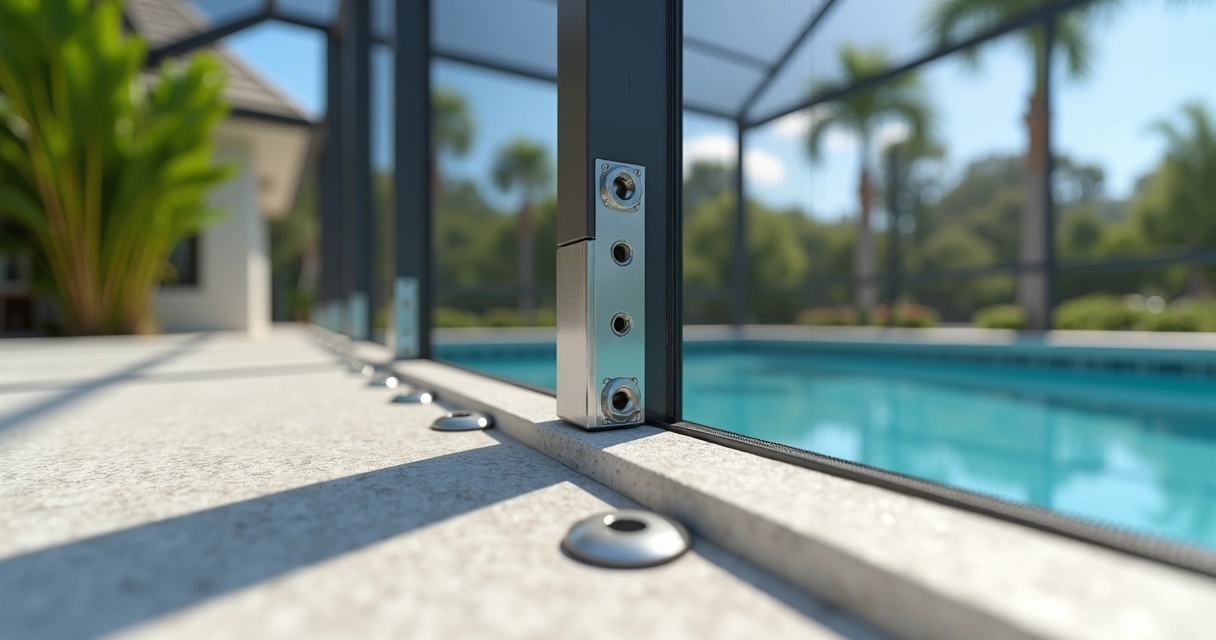
Our approach means structural members are never undersized, and connections are reinforced even in hidden spots. Our crews document each stage with photos for your records and inspection.
Why screen and roof connection details matter
It’s not just about the frame. Mounting screens and roof panels securely is vital. The wind pressure can pull at screen fabric and panels, especially at leading edges and corners. Codes spell out how screens must be attached (with spline, clips, or specialized track), and how roof panels are to be fastened or braced to avoid “peeling” or collapse.
Inspections, permits, and compliance
Wind uplift codes are not optional. In Central Florida, all aluminum enclosure projects must be permitted and pass inspections that specifically check for code-compliant connections and hardware. At GCM Best Services, we:
- Perform full permitting, including plan submittals with wind load calculations
- Coordinate with your HOA and city or county inspectors
- Welcome inspection walk-throughs at foundation, frame, and final stages
- Document all hardware and anchor installations for your records
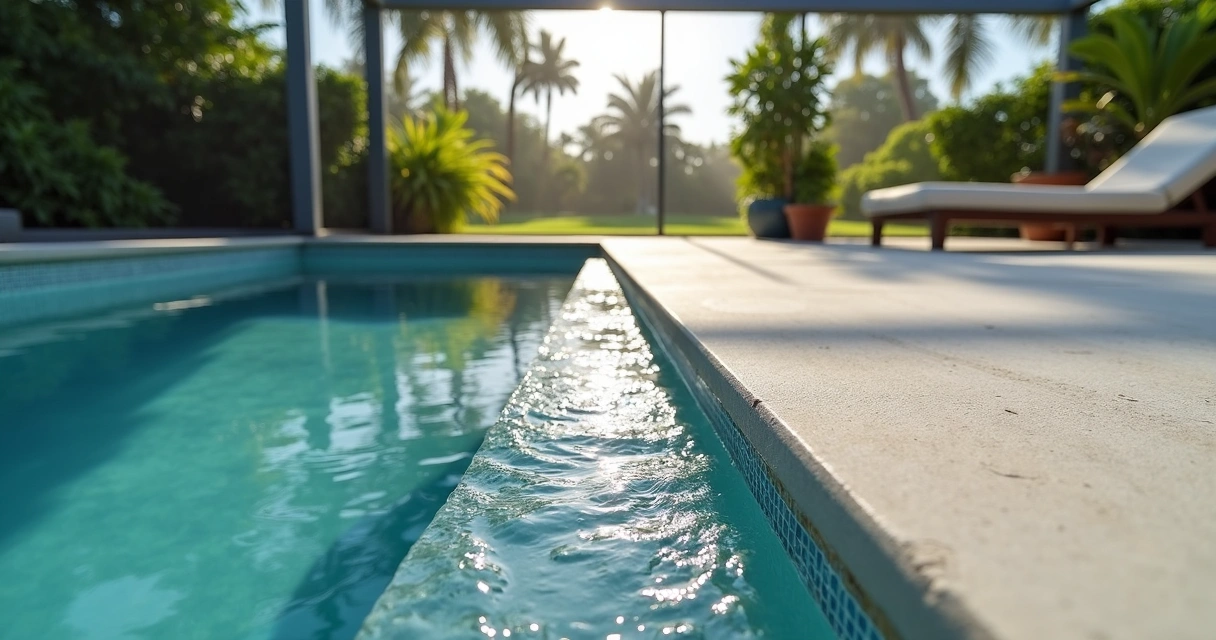
We believe passing inspections isn’t enough—doing the job right the first time protects your investment far beyond a final sign-off.
Understanding the connection to your foundation
The most common failure point in aluminum enclosures during high winds is not the frame itself—it’s the connection to the foundation. Fastener pull-out, base plate slip, or slab cracking can cause a complete disconnect, even if the frame looks secure.
How we reinforce foundation connections
At GCM Best Services, we install footers and slabs with code-specified thickness, reinforcing bars, and proper compaction (see more at our concrete construction articles). We use anchoring systems that match or exceed code pull-out and uplift values, backed by engineering reports. For challenging soils or slopes, we consult on deep footings or specialized anchors.
We often see situations where “standard” anchors, such as simple wedge bolts, are inadequate. Our standard is to use chemical anchors, embedments, or mechanical fasteners rated for both tensile and shear loads that exceed the worst-case scenario uplift for your site.
How roof shapes, screens, and configuration impact wind uplift
Roof shape, enclosure height, and even the size of openings can change how wind flows over and inside a structure. Gabled or domed roofs behave differently from flat roofs. Large spans without interior braces or columns increase the forces at connections.
Studies highlighted by Oklahoma State University extension research show that wind loads can nearly double at corners or when wind hits wide, unobstructed spans. Enclosure height and the size of screen openings change how the pressure moves through and around the structure.
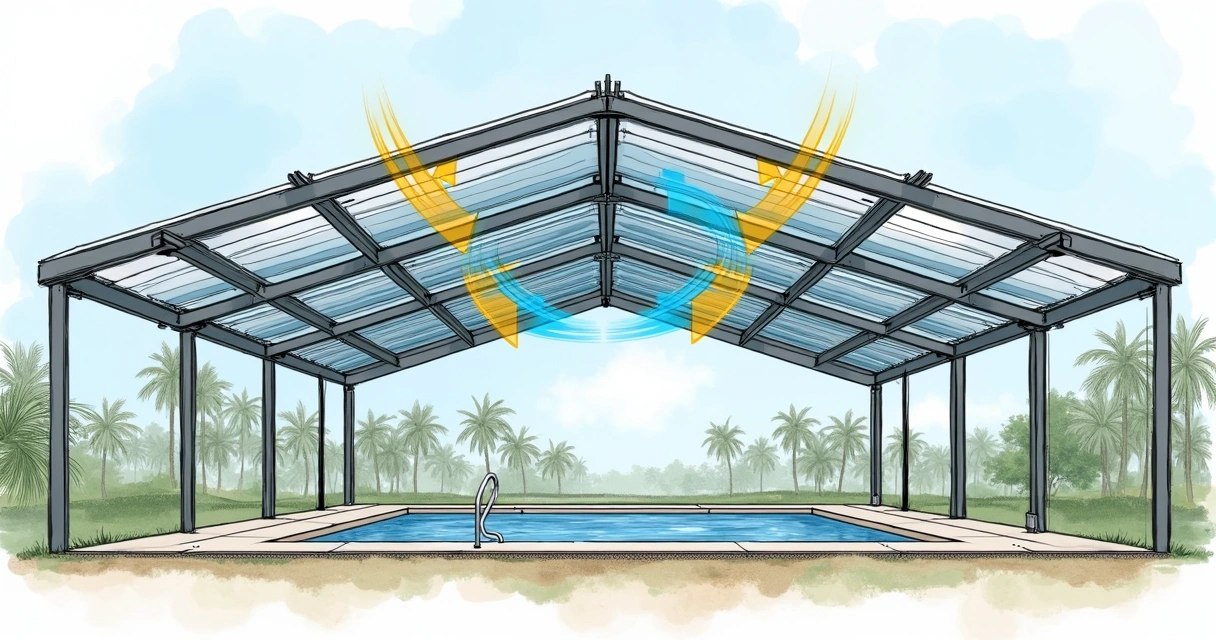
When we design, we account for:
- Peak wind pressures along leading edges
- Zones with greatest uplift risk (roof, eave, corners)
- Internal braces or cross-members for large spans
- Screening types (standard mesh, hurricane screen, solid panels), as each affects airflow and code load calculations
Materials and hardware: What really holds up to Florida’s wind?
All aluminum is not created equal. We specify extrusions that are thick-walled, corrosion resistant, and rated for structural duty. Stainless steel or coated connectors, fasteners, and brackets are chosen for their strength and longevity in Florida’s humid, salty air.
Hurricane-rated hardware must meet both tensile (pull-out) and shear (sideways force) standards for local wind pressures—this is non-negotiable.
We always provide you with a written itemized list of key hardware, anchor types, and installation specs as part of your quote.
Warranty and peace of mind
Every wind-rated enclosure from GCM Best Services comes with a written warranty and a maintenance guide. We stand behind our work because we know that long after the permits and inspections are complete, storms will come.
We offer annual or post-storm inspections to check anchor tightness and frame condition, with rapid repairs if needed. Our crews are trained to spot early signs of wear or movement, protecting your investment for the life of the enclosure.
Protect your investment: Choose expertise built on local knowledge
With decades of experience building code-compliant aluminum enclosures in Central Florida, we help you avoid common pitfalls. We’re familiar with each county’s wind maps, exposure zones, and inspection routines. Our full-service process—from design and permits, to engineering, to construction and warranty—means less stress for you.
You can see more about what goes into strong outdoor structures in our blog and our guides on hardscaping and concrete repair.
We enjoy working with homeowners and property managers from the first site visit to the final walk-through. Our philosophy is simple: build it right, document everything, and back it up with a strong warranty and great communication.
Conclusion: Building for the real Central Florida winds
Understanding wind uplift codes isn’t just a technical detail—it’s the foundation for building outdoor living spaces that last. We believe the right approach means using properly engineered designs, code-rated hardware, and expert construction methods that fit your location and needs. This is how GCM Best Services has helped families across Central Florida relax and enjoy their homes, year after year, without worry.
If you want lasting value and peace of mind, start with wind uplift in mind.
If you’re planning a new aluminum enclosure or upgrading an existing one, we’re here to help you get it right with expert advice and professional construction. Ready for a professional quote? 📞 (407) 250-1948 • 24–48h • Orlando, Tampa & area.
Frequently asked questions
What is wind uplift for enclosures?
Wind uplift is the upward force exerted by strong winds on the roof, walls, and fastenings of aluminum or screened enclosures. This force can lift, loosen, or even detach parts of the structure—especially during powerful storms common in Central Florida. The design of open or screened structures makes them more prone to these forces compared to closed buildings.
Why are wind uplift codes important?
Wind uplift codes set minimum construction standards to ensure aluminum enclosures can withstand expected wind forces in their location. These codes protect both people and property by reducing the risk of damage or collapse during storms. In areas like Central Florida, following these codes is required for permits, insurance, and most importantly, for long-term home safety.
How to meet wind uplift codes?
Meeting wind uplift codes requires a combination of proper engineering, certified materials, and code-rated installation methods. This includes using approved anchors, reinforced aluminum frames, hurricane-rated hardware, and detailed structural connections. At GCM Best Services, we handle all necessary designs, permits, and inspections to make sure every enclosure meets or exceeds local and Florida codes.
What materials resist wind uplift best?
Thick-walled, structural-grade aluminum paired with stainless steel or coated hurricane-rated hardware offers the best resistance to wind uplift for enclosures. Reinforced concrete footers and chemically-anchored bolts also play a major role. These materials are chosen for their proven performance in resisting Florida’s highest wind loads and corrosive climate.
Where to find wind uplift code guidelines?
Up-to-date wind uplift code guidelines are found in the Florida Building Code (FBC), as well as in local city or county amendments. For specific standards regarding aluminum enclosures, official building departments and code reference resources should be used. We recommend consulting licensed contractors like GCM Best Services to interpret these codes for your exact project and location.
For more insights into hardscaping, structural enhancement, and outdoor living durability, browse our hardscaping project gallery and learn about strong concrete for Florida soils in our resource section.