Garage floor epoxy can bring a whole new life to your space. It adds a clean, professional look and makes daily cleaning simpler. Yet in our experience at GCM Best Services, the difference between a beautiful, long-lasting epoxy floor and one that peels or turns blotchy comes down to prep. When a garage floor isn’t prepared the right way, even the highest-quality epoxy can fail—sometimes in weeks, sometimes months later when weather and use have taken their toll. We have seen first-hand how skipping a critical step or making the wrong call can lead to disappointment and costly repairs.
In this article, we’ll walk you through the seven most common garage floor prep mistakes that can cause epoxy coatings to fail, especially in hot, humid, and busy Central Florida garages. We’ll share the science, the small but impactful details, and stories from real local jobs.
Getting the prep wrong means the finish won’t last.
We want you to avoid these issues, whether you’re hiring GCM Best Services or just looking to make the most out of your next garage flooring project.
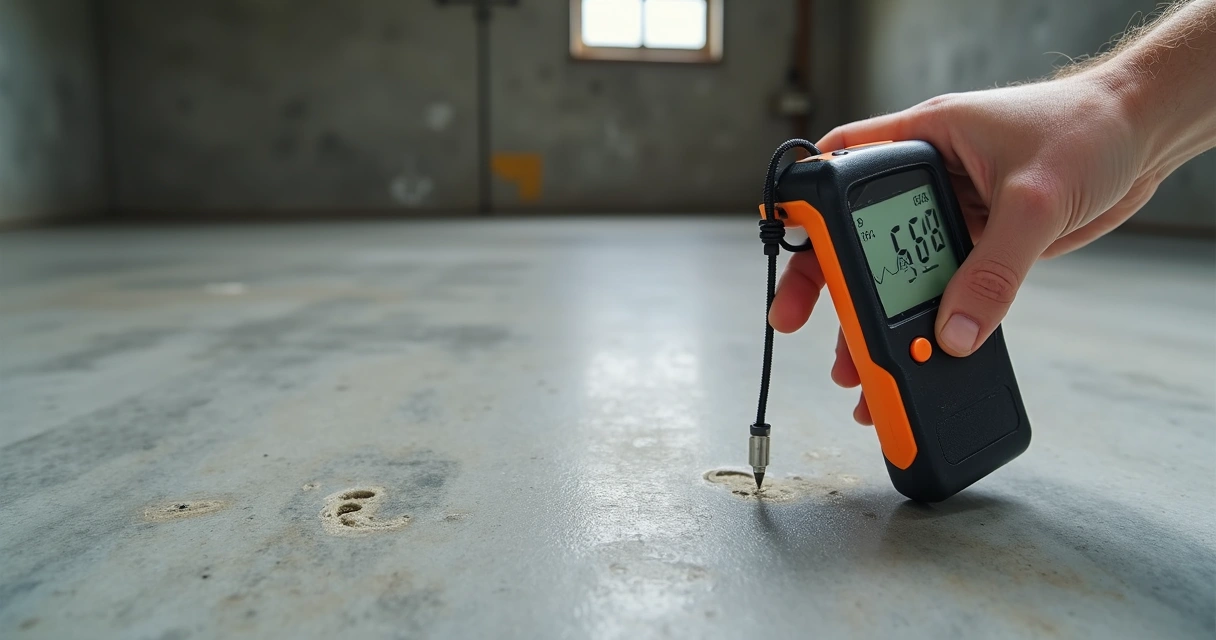
Mistake 1: Not testing for moisture
Concrete may look and feel solid, but it’s porous and absorbs water from below and above. Moisture moves through slabs, especially in Florida, where high humidity and unexpected rains are common. Many homeowners don’t realize how much moisture can be lurking just underneath the surface. If moisture is present when epoxy is applied, it will become trapped, making it hard for the coating to adhere. Over time, this causes bubbles, cloudiness, and eventually peeling.
Professional moisture testing, using tools like calcium chloride kits or electronic meters, must come before any coating project. At GCM Best Services, we always include moisture measurement as a step in our garage floor prep for Central Florida homes. This tells us if the slab is ready, or if it needs to dry longer or get a special vapor barrier installed.
- High humidity under the slab can push moisture through concrete for weeks after a rain.
- Even older floors can develop new moisture issues when landscaping or drainage changes outside.
- Skipping this check risks your new floor from day one.
The peer-reviewed NCBI article on concrete delamination highlights how improper moisture management and incorrect mixing during pouring contribute to floor failures similar to what we’ve witnessed here.
Moisture problems rarely show until after the epoxy fails.
Mistake 2: Skipping or rushing surface cleaning
Every car, tool, or project that’s spent time in your garage leaves behind some residue. Tire marks, old stains, dust, and invisible oil or grease can linger in the concrete’s pores. Simply sweeping or hosing down the floor may help it look cleaner but it’s nowhere near enough for an epoxy project. If dirt, oil, or chemical residues stay on the surface, epoxy can’t form a strong chemical bond—and it will eventually lift or peel.
In our process at GCM Best Services, we use commercial degreasers, scrubbers, and sometimes hot water extraction. We repeat this cleaning until our surface tests clean and passes the water drop test: drops should absorb evenly into the slab, showing it’s free of oil and dust. It can be time-consuming, but we never cut corners here. If you want to learn more about quality concrete prep for durability, check our detailed concrete repair guide.
- Oils, brake fluid, even some leaf stains can keep epoxy from bonding.
- Tiny bits of clay or sand can create small barriers between epoxy and concrete.
- Inferior surface cleaning is the root cause of most garage epoxy issues we see.
If the floor isn’t spotless, the finish will quickly disappoint.
Surface cleaning is not the step to skip.
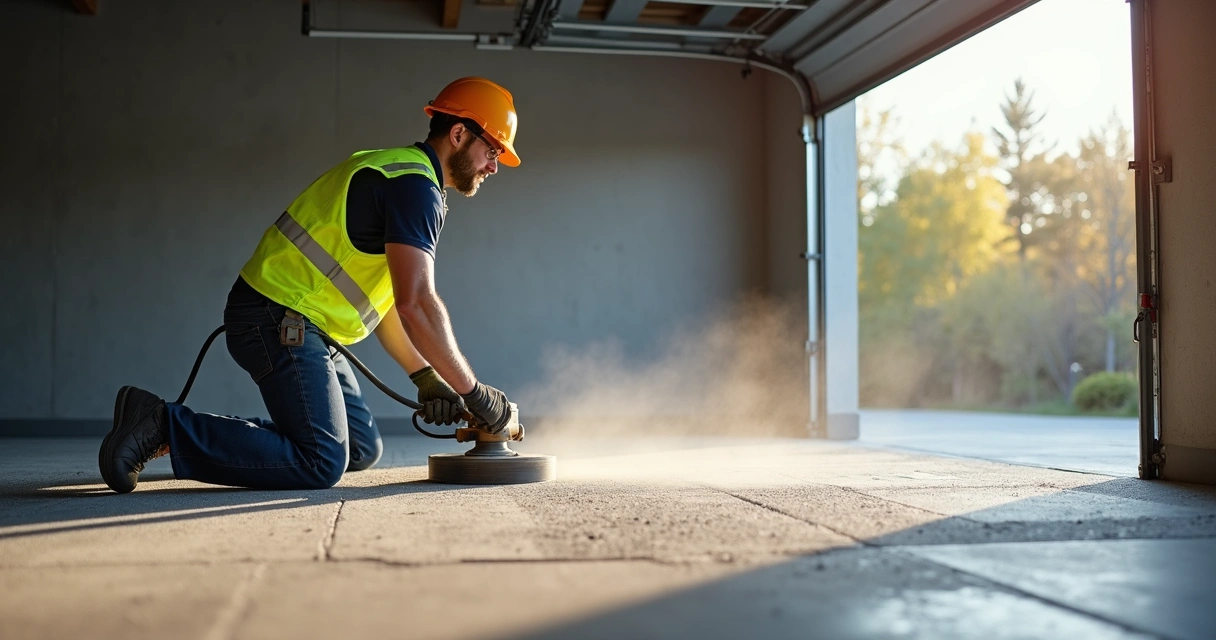
Mistake 3: Not opening the concrete pores (profiling)
Even perfectly clean concrete won’t hold epoxy well if its surface is too smooth. Garage floor slabs often have a “closed” top from their original finishing process. Without roughness, epoxy just sits on top instead of bonding into the pores. This process is called surface profiling. The right way to “open up” the floor depends on its condition and age, but generally, grinding with diamond tools or shot blasting is used to achieve the needed texture.
We often encounter floors treated with acid etching alone, which sometimes works but usually doesn’t offer the same depth or evenness as professional grinding. When prepping for decorative finishes or heavy traffic, GCM Best Services always chooses mechanical grinding to expose the aggregate and create a consistent profile across the entire surface.
Without a proper profile, epoxy peels up in sheets or forms small bald patches.
- Mechanical grinding gives the best substrate for new coatings.
- Acid etching can be unpredictable, sometimes leaving some areas too slick.
- Skipping this step leads to more callbacks and repairs than almost anything else.
You can’t get epoxy to stick to a polished floor.
Mistake 4: Repairing cracks the wrong way
Florida’s soils move and settle. Almost every garage we see, even in brand-new communities, has at least a few cracks. Small cracks are normal, but they must be repaired with the right materials before any coating is applied. We often find garages where cosmetic patching or the wrong filler was used—sometimes even latex or standard concrete, which never bonds properly to the slab’s edges. These areas will expand, shrink, and telegraph through the epoxy, creating visible cracks or causing the coating to delaminate entirely.
Our approach is to clean out each crack with a saw or grinder to reach clean, solid concrete, then fill it with a flexible, epoxy-based patching compound. Once cured, the repair is sanded flush with the floor. Selecting the right repair product is as important as the epoxy itself, and we tailor the solution to Florida’s climate and slab movement. Learn more about these techniques and how they help prevent long-term issues in our prevention guide for cracks in Florida concrete.
- Poor crack repairs ruin the surface continuity and make your floor look old fast.
- Some repair compounds shrink or turn powdery after drying.
- Epoxy will not hide existing movement or flaws.
Cracks always find their way back, unless you handle them properly at the start.
Patching with the wrong products leads to quick failure.
Mistake 5: Ignoring temperature and humidity
Central Florida weather can turn on a dime. Temperature and humidity matter a lot in epoxy chemistry—variations impact curing time and bonding. Epoxy and polyaspartic coatings are designed to work at certain temperature and relative humidity ranges. If you coat a garage when the slab is cold, damp, or the air is above 80% humidity, there’s a strong likelihood of improper curing and weak adhesion.
At GCM Best Services, we always monitor site conditions before starting any coating. For most epoxies, the “sweet spot” is 60-85°F and under 70% relative humidity. We also ensure the floor temperature matches the air, not just the surface, as concrete can hold temperature extremes. If the environment isn’t right, we reschedule to protect the outcome. No schedule is worth a floor that fails.
- High humidity slows down epoxy cure and leads to cloudy patches.
- Cold floors make epoxy too thick to work into pores.
- Rushing during a humid or stormy day increases your risk by a lot.
Weather waits for no one, but the right timing delivers the best finish.
Humidity is the hidden enemy of epoxy floors.
Mistake 6: Using incorrect mixing or application methods
Each type of epoxy and coating blend requires exact measurements and thorough mixing. We sometimes see projects where water was added to thin out the mix, as noted in the NCBI study about improper water addition. This leads to weak layers, poor coverage, and lowers the long-term durability. Just as important is the application technique: rolling or squeegeeing too fast or too slow can cause texture issues, color streaks, or patchy spots.
Our team uses measured ratios and mechanical mixers to ensure the epoxy is always consistent. We mix only what we can use in the open time, so we never rush spreading or leave the mix sitting too long. Application is systematic, with each coat planned for even flow and thickness. Our process combines efficiency with precision, never one at the expense of the other.
- Adding extra water or “stretching” product always leads to weak coatings.
- Incomplete mixing means soft, uncured patches.
- Uneven coverage gives the floor a splotchy, DIY look.
Epoxy prep is a science. Shortcuts ruin results.
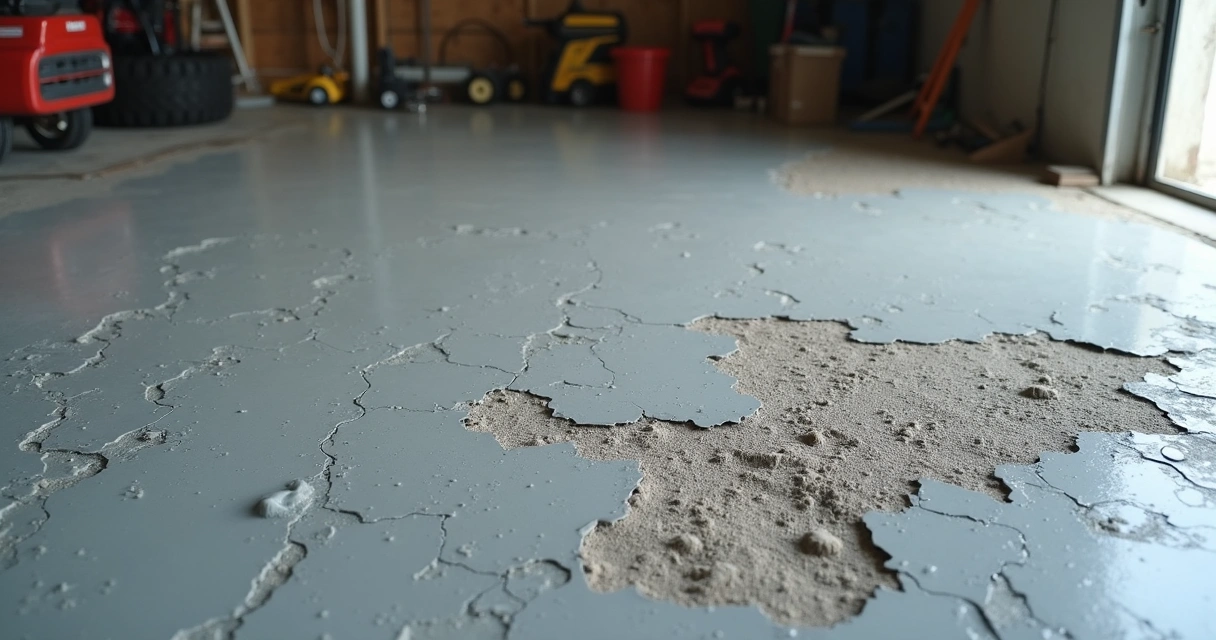
Mistake 7: Ignoring joints and transitions
Most garages have control joints, expansion joints, or transitions where the slab meets the driveway or interior steps. These lines move independently when the weather changes, and if not handled correctly, the epoxy will crack along them. Filling, bridging, or covering these joints with rigid materials leads to alligatoring or delamination over time. We’ve walked into more than one home in Orlando where a perfect floor was ruined just by ignoring these important lines.
At GCM Best Services, we honor every joint. We use specialty flexible fillers in active joints and leave necessary gaps for movement. For thresholds, we create smooth transitions that won’t catch tires or shoes, blending aesthetics with long-term functionality. This is one reason our floors keep looking good, year after year.
- Poor transitions make for ugly edges, tripping hazards, or premature floor damage.
- Filling a moving joint with hard epoxy almost guarantees a crack.
- Flexibility in the right places extends the life of your entire floor.
Details matter—especially where slabs meet or move.
What makes Central Florida garage floors unique?
Florida garages see heavy use and tough weather swings. We deal with local soils that can shift or hold water. Our area’s “breathing” slabs sometimes need drainage design reviewed, much like when we’re planning driveways or patios. If you are curious about what it takes to install long-lasting Central Florida concrete, don’t miss our install tips in the St. Cloud concrete driveways and patios guide.
Many homes in our area already have surface cracks from soil settling or roots. High rain makes moisture vapor a common risk, so we always recommend a tailored approach. With years of experience in the Orlando area, GCM Best Services adapts every prep and installation step for these local challenges.
If you are considering a new floor or have issues with your current finish, we suggest reviewing some of our best advice in the concrete solutions library and our guide to choosing a concrete company in Orlando.
Summary: How to avoid epoxy failures
- Test for moisture—don’t assume it’s dry enough.
- Deep clean until the floor is spotless.
- Profile the surface with grinding, not just etching.
- Repair cracks with epoxy, never cheap fillers.
- Monitor temperature and humidity before starting.
- Mix and apply exactly as the product requires.
- Pay attention to joints and transitions for lasting results.
The longest-lasting floors are those that were prepped right the first time.
Conclusion
We believe a beautiful epoxy garage floor should last for years, stay bonded, and make your daily life easier—not headache-filled. By avoiding these seven common mistakes, and with careful, professional workmanship adapted for Florida’s climate, you dramatically increase the odds that your floor will look great and stay tough. At GCM Best Services, every step in our process is designed to prevent failures before they happen, combining technology, experience, and a dedication to clear communication you won’t find everywhere.
If you’re ready for a professional quote or want us to inspect a problem floor, we’re here to help. Start your conversation with GCM Best Services today and discover how the right preparation creates results you can trust. Ready for a professional quote? 📞 (407) 250-1948 • 24–48h • Orlando, Tampa & area.
Frequently asked questions
What is garage floor prep for epoxy?
Garage floor prep for epoxy means readying the concrete so the epoxy coating bonds well and lasts. This involves several steps: testing for moisture, removing any oil or dirt, mechanically grinding or shot blasting the surface to create the needed texture, repairing cracks with epoxy-based fillers, and ensuring the slab is dry and in the right temperature range. Each of these stages is checked before epoxy is applied so you get a strong, lasting finish.
How to avoid epoxy failure on floors?
To avoid epoxy failure on floors, you must focus on thorough preparation and the right conditions. This includes testing for moisture, deep cleaning the slab, correctly profiling the concrete with grinding, repairing existing damage with appropriate materials, and carefully monitoring temperature and humidity throughout the process. Always follow the epoxy manufacturer’s instructions for mixing and application. Hiring trained professionals, like our team at GCM Best Services, further reduces the risk of failure.
What causes epoxy not to stick?
Epoxy won’t stick to garage floors that are dirty, oily, too smooth, or too damp. Other reasons include improper mixing of the epoxy, application outside of the recommended temperature or humidity range, or skipping the profile step (as when concrete is just acid-washed, not ground). Each of these issues creates a barrier or prevents the epoxy from chemically bonding to the concrete, resulting in peeling or delamination.
Is it worth it to epoxy garage floors?
Yes, epoxy garage floors make cleaning easier, increase durability, and improve the room’s appearance. When done right, epoxy coating resists stains, chemicals, and moisture better than standard paint or bare concrete. The initial investment pays off by reducing maintenance time and protecting the slab from wear and tear. A good epoxy floor also boosts your property value and can serve as a key upgrade if you use your garage as a workspace or showroom.
How much does garage floor epoxy cost?
Garage floor epoxy in Central Florida usually ranges from $4 to $12 per square foot, depending on floor condition, repairs needed, color finishes, and the choice of materials. Single car garages run lower, while large, multi-car spaces, custom color flakes, and decorative options cost more. The prep process (repairs, grinding, etc.) often makes up a significant part of the budget but directly impacts longevity. For a detailed, site-specific estimate, reach out to GCM Best Services for a no-obligation quote.