If you own a home, business, or investment property in Central Florida, a concrete slab is often at the heart of your living or work space—literally forming the foundation beneath your feet. While concrete is strong and weather-resistant, its longevity and stability depend on more than just the initial pour. In our experience at GCM Best Services, proper drainage is a silent hero for every slab project, protecting investments through the region’s heavy rains and unpredictable weather. Unfortunately, drainage issues are among the most common reasons slabs require premature repair or total replacement. We see it every month—often only after damage is already visible.
Understanding the warning signs of drainage trouble can help property owners act early. It’s not only about avoiding ugly cracks or unsafe surfaces; unresolved drainage can risk indoor air quality, lead to costly structural repairs, and even lower property value. As the Federal Highway Administration notes, poor drainage gradually reduces concrete support by undermining the slab’s base. Even homes built on what seem to be slight slopes or solid soil can harbor drainage risks that reveal themselves only over months or years.
We’ll walk you through the top seven warning signs that your concrete slab may have a drainage problem, why they matter, and what action you can take—using real-world expertise in Orlando and across Central Florida. Keep reading for the insights that could save you thousands and preserve the comfort and value of your home or business.
Why drainage matters under concrete slabs
Before we unpack the warning signs, let’s clarify why drainage is critical for any concrete slab, new or old. Even the most robust 3,000–4,000 PSI mix, backed by rebar or mesh, is only as durable as the soil and sub-base beneath it. Poor drainage = unstable support, and that quickly becomes a problem.
According to studies gathered in public health research, a significant number of homes on concrete slabs demonstrate dampness-related damage, making moisture intrusion a frequent issue, not just a fluke. Here in Central Florida, the risk is multiplied by our high water table, intense summer showers, and commonly clay-rich or sandy soils.
- Water can accumulate beneath or beside the slab, washing away sub-base material, causing soil to shrink and swell, or even introducing mold and mildew indoors.
- Standing water on or near slabs may eventually penetrate hairline cracks, making minor issues worse.
“Concrete is permanent only when water doesn’t move where it shouldn’t.”
If your slab isn’t draining well, you may face the following seven warning signs. Let’s break them down one by one—along with specific details we have seen in Central Florida properties.
1. Water pooling on or near the slab
We often notice the first sign of drainage problems even before setting foot on the concrete: visible water pooling on the slab itself or collecting along the slab’s edges after rain or irrigation. While it might seem harmless—a puddle is just a puddle, right?—this surface water is rarely innocent.
A well-designed slab and sub-base encourages water to run off and disperse into drains or away from the foundation. If you regularly spot standing water hours after rainfall:
- The slab may not be sloped correctly (finished grade should slope 2-5% away from the house).
- Your downspouts, gutters, or landscaping may direct water toward—not away from—concrete surfaces.
- Improperly compacted sub-base can develop low spots invisible when dry but obvious when wet.
More than a cosmetic issue, standing water creates hydrostatic pressure on the slab and encourages cracks—something addressed in our post about crack prevention for driveways and patios.
2. Hairline or widening cracks
All concrete eventually develops some cracks from shrinkage, thermal changes, or heavy loads. However, cracks that are quickly widening, branching, or forming patterns can signal drainage trouble underneath the slab. We see these cracks run in “map” or “crazed” patterns, often radiating out from low spots or near joints.
Cracks caused by drainage problems tend to:
- Appear near the center, where water pools under the slab
- Run along the slab edge, following settling of unsupported soil
- Widen over time, especially after heavy rains or increased irrigation
If you see cracks wider than 1/8”, or recently patched cracks that reappear, drainage may be to blame. The Federal Highway Administration explains that inadequate drainage hastens concrete damage by softening support material and inviting movement under the slab. This is why all of our slab projects at GCM Best Services integrate the right base and drainage design from day one.
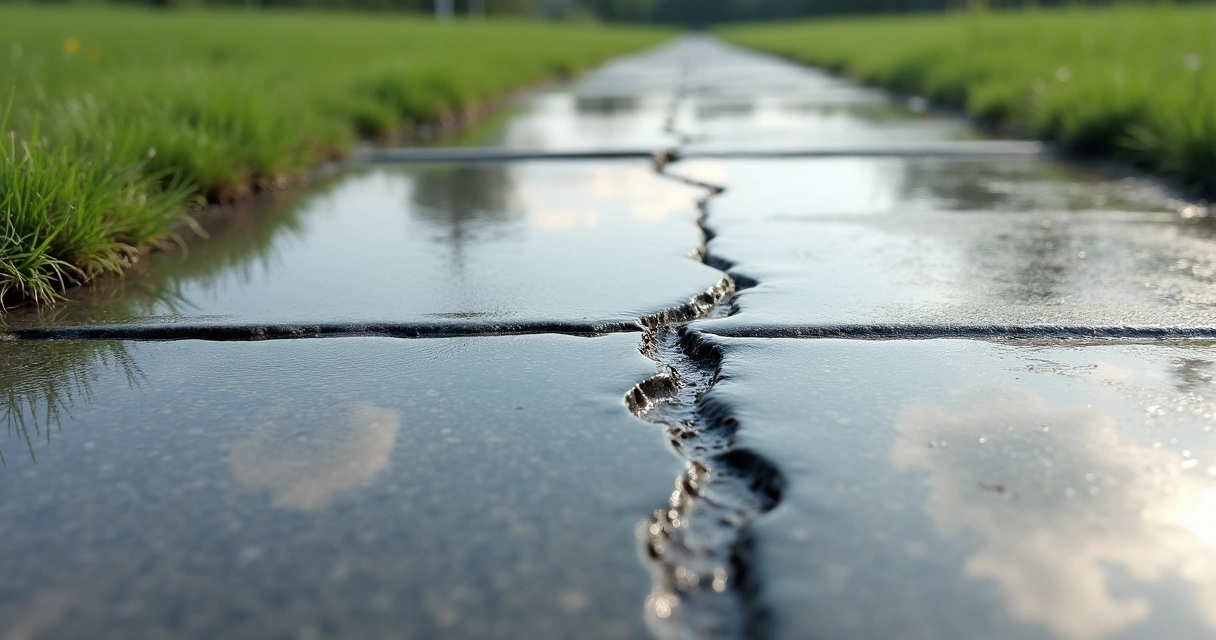
3. Slab settling, tilting, or uneven surfaces
When a slab settles unevenly or feels noticeably higher or lower in one area, it’s often due to washout or erosion of the sub-base beneath. This is usually tied to poor surface or subsurface drainage. One of the surest red flags we notice is when patio furniture starts leaning, someone trips on what was once a level surface, or doors and gates that used to swing freely now jam or scrape the concrete.
Uneven settling usually points to two linked problems: water is entering beneath the slab, and the soil beneath is moving as a result.
- Look for visible dips, humps, or sagging across the slab.
- Gaps may open up between the concrete and adjacent walls, steps, or posts.
- Sometimes, voids can form below the slab, detectable by hollow sounds when tapped.
Our licensed contractors’ guide to concrete repair explains why lifting or replacing sections without fixing drainage almost guarantees repeat problems.
4. Efflorescence or surface discoloration
Sometimes water movement beneath the slab brings mineral salts to the surface, staining concrete with white, chalky lines or splotches. Efflorescence is a signal—not just a blemish—meaning moisture has migrated through or across the slab, often because of poor drainage below.
“Efflorescence is the signature left behind when water escapes concrete, carrying minerals with it.”
This condition tends to appear after heavy rain, especially in shaded or low-lying areas. If you see:
- White powder stains on the surface
- Blotchy or darker areas that never fully dry
- Color differences that map to low areas or cracks
It’s time to investigate drainage and moisture issues at their root. Proper sub-base and slopes, like those in every GCM Best Services slab project, help prevent this sign from rearing its head.
5. Mold, mildew, or musty smells near concrete
We’ve all smelled it before: a stale, musty odor that signals trapped moisture. Mold and mildew thrive on and around concrete slabs when drainage is poor. This happens inside homes with slab-on-grade floors, as well as outdoor patios or garages. According to research on dampness risks in slab foundations, homes in wet climates show higher rates of mold, mildew, and even microbial growth at the slab perimeter.
Check for:
- Musty odors that persist after rain or washing
- Black, green, or white mold colonies around joints, edges, or baseboards
- Indoor humidity or sweating windows in rooms adjacent to the slab
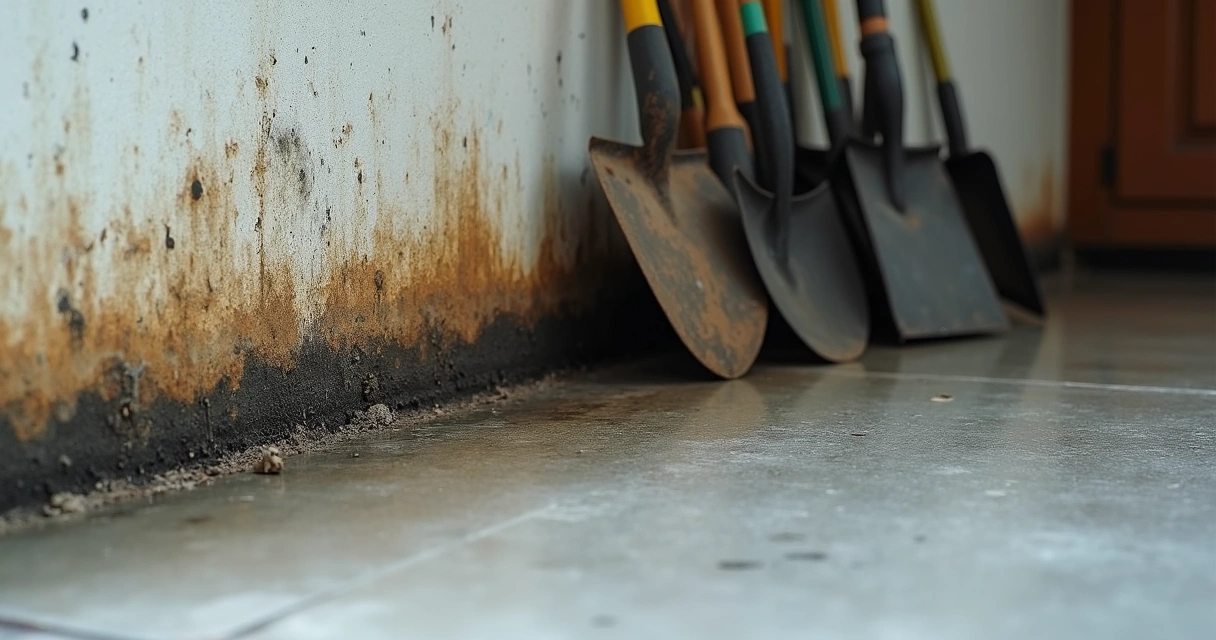
Fixing surface stains without correcting moisture path never addresses the source. This is why, at GCM Best Services, we often recommend integrated drainage and waterproofing solutions during our assessments.
6. Water intrusion into interior spaces
If rain routinely brings water inside your home or business along slab edges, something is wrong with exterior or sub-slab drainage. In Central Florida, this is a common cause of staining, peeling paint, or dampness at the base of walls, especially on the windward side of properties. We sometimes see damage weeks later, in the form of warped flooring, swollen baseboards, or rusty metal fixtures along concrete.
Signs of slab-related water intrusion include:
- Pooled water or dampness near entryways, corners, or low points after storms
- Stains or chalky rings along slab edges, transitions, or thresholds
- Repeated need to run dehumidifiers or mop up wet surfaces indoors
While caulking or patching can help, these are only short-term measures. Long-lasting relief comes from addressing the root cause—usually surface grading and sub-base drainage improvements, like we use on all new slab installations and repairs.
7. Vegetation growth in joints or cracks
Plants growing in or alongside concrete cracks are more than just an eyesore—they signal chronic dampness. We’ve seen tiny weeds or moss sprout in the smallest cracks, sometimes even far from irrigation sources. This tells us moisture is making its way through slab joints or low spots, feeding plant roots from beneath.
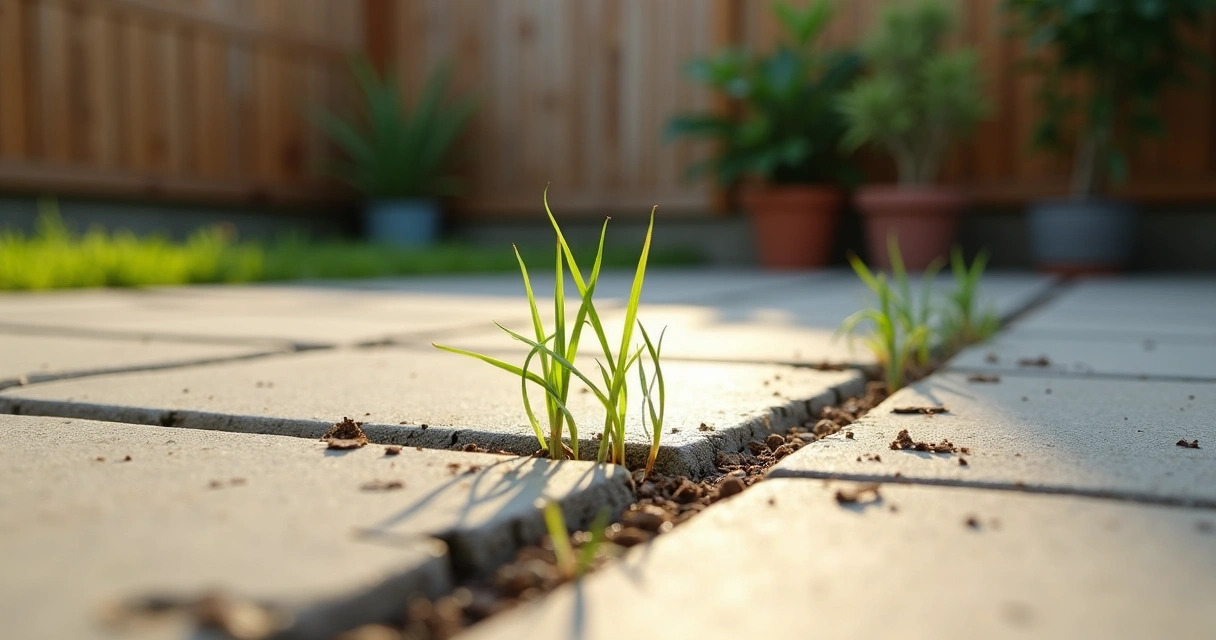
When this growth appears, look deeper for:
- Consistent moisture in cracks even days after rain
- Soil washing onto slab after irrigation or storms
- Worsening crack width, depth, or water retention
Simply pulling weeds won’t resolve drainage. The growth reveals a lasting water supply, which should always be traced to its source. Our repair approach at GCM Best Services combines joint repair with updates to surface grading, landscape drainage, and even root barriers when needed.
What should you do if you spot these signs?
Early warning is power—and with drainage, small fixes often prevent major repairs. If you notice any of these seven signs on your Orlando or Central Florida slab, here’s what we recommend:
- Document the signs: Take photos over several rain cycles. Write down when, where, and how often the signs appear.
- Check for landscaping or surface changes: Has anything in your yard, garden, patio, or driveway changed recently? Sometimes “new” issues connect back to updated irrigation, replaced pavers, or added planting beds.
- Test slope and drainage: Use a level to check slab surface slope; walk with a hose to see water flow directions. Poor grading or a rise in grade toward the slab is a red flag.
- Request a professional slab and drainage assessment: Companies like GCM Best Services offer free on-site visits that look at all layers: sub-base, surface, and adjacent landscaping. We bring in moisture meters and mapping tools to check for hidden risks.
- Don’t delay vital repairs: Waiting may let the damage spread further into your slab, flooring, or even foundation structure. Addressing drainage now is nearly always less costly than waiting.
For detailed regional tips, our guide to driveways and patios in St. Cloud and our category on concrete offer further resources tailored to Central Florida’s weather and soils.
How GCM Best Services designs slabs for lasting drainage
Our approach, specifically tailored for Florida soils, combines knowledge from choosing the right company in Orlando with practical solutions proven across hundreds of jobsites. Here’s how we manage drainage concerns at every stage:
- Compacted sub-base: 6–8″ below slab, with proper stone mixes for permeability and stability
- Specified rebar and mesh: Weak or unreinforced slabs are more vulnerable to drainage-related cracking
- Tailored joints and finishes: Broom, exposed, or stamped finishes include thoughtful joint placement for drainage
- Integrated drains, swales, or French drains: Especially near patios, driveways, or slabs abutting planters or irrigation zones
- Drainage inspections post-pour: We test for water flow both visually and with tools before any area is turned over for use
Combined with our written warranties and photo documentation, this system means every GCM Best Services slab is ready for weather, traffic, and the unique Florida environment. Whether you’re planning a new project, facing recurring slab problems, or want an expert second opinion, we’re here to answer questions and bring the peace of mind only a trusted contractor can deliver.
Conclusion
If you’re seeing water, cracks, unlevel floors, stains, or plant growth on or near your concrete slab, don’t ignore the signs. Prompt action always beats the cost and complication of major repair. In Central Florida, where storms and shifting soils are facts of life, drainage isn’t something we leave to chance at GCM Best Services. Our team combines experience, local knowledge, and proven methods to keep your concrete investment strong, safe, and beautiful for years.
Ready to protect your home or business with a professional drainage and slab assessment? Contact us for a no-obligation inspection, clear recommendations, and the kind of straight talk that’s kept us serving Orlando and beyond for years. You can also check out our extensive guides and resources—your peace of mind is just a visit or a call away.
Ready for a professional quote? 📞 (407) 250-1948 • 24–48h • Orlando, Tampa & area.
Frequently asked questions
What are common signs of drainage issues?
Signs of drainage issues under or around concrete slabs include standing water after rainfall, visible cracks that widen over time, uneven or sunken sections, mold or musty odors, water intrusion into adjacent rooms, surface discoloration (like efflorescence), and plant growth in slab joints or cracks. Any of these warning signs point to water not moving as it should away from your slab. Monitoring and addressing them quickly helps prevent larger problems.
How can I fix slab drainage problems?
Solutions depend on the issue’s source. Options include adding surface and sub-surface drains, improving landscaping grade to slope water away from portions of the slab, repairing cracks and sealing joints, updating gutters and downspouts, or in severe cases, replacing compromised soil and sub-base. It’s best to start with a professional inspection to map out where water is moving and which correction will be most effective for your property layout and soil conditions.
What causes water under a concrete slab?
Water under a slab comes from various sources: improper slope of surrounding surfaces, gutter downspouts discharging near the foundation, heavy rainfall that exceeds drainage capacity, leaking plumbing or irrigation, or a high water table common in areas like Central Florida. Trapped water does the most harm when drainage paths are blocked or the soil beneath cannot absorb and disperse excess moisture.
Is slab drainage repair expensive?
The cost can vary widely based on the degree of damage and the fix needed. Small repairs, like crack sealing or minor grading, are relatively affordable, while larger drainage systems or partial slab replacement can cost more. Addressing problems early almost always saves money compared to letting damage progress, making simple fixes more common than major overhauls.
When should I call a professional?
If you spot two or more warning signs, see rapid changes (like new water intrusion after every rain), or notice safety hazards (such as trip risks from uneven slabs), it’s time to consult a specialist. Professional assessment often finds root causes and recommends the right repair the first time, sparing you from repeated frustration or growing costs. At GCM Best Services, we encourage proactive visits—not just crisis calls—so your concrete and your peace of mind are protected year-round.