Settling concrete slabs are among the most common property headaches in Central Florida. Soft, sandy soils beneath driveways, patios, walkways, and even summer kitchens can allow even new slabs to shift or sink. Many Orlando property owners have faced cracks, ponding water, tripping hazards, and expensive repairs as a result. In our experience at GCM Best Services, we understand that preventing slab settling on sand starts well beneath the concrete itself – with careful preparation, the right materials, and a process built for local conditions.
We’re going to share proven steps to stop slab settlement before it starts, based on engineering standards, research-backed techniques, and our on-the-ground knowledge from years of construction throughout Central Florida. We’ll explain why sandy soils are such a challenge for slabs, what it takes to build a foundation that lasts, and how proactive design can save you time, worry, and money down the road.
Slab settling is a problem you can beat, if you build it right the first time.
Why sandy soils make slabs settle
Florida’s geology is defined by sand: deep, loose, and highly variable. We see all types, from fine beach sand to coarse builder’s sand mixed with shells and clay. Sandy soils drain fast, but they also shift and settle easily.
Concrete slabs settle on sand because sand particles don’t lock together tightly. When subject to rain, traffic, or vibration, sandy subsoils can compact further, leaving empty spaces under the slab. Without proper preparation, the ground moves – and the concrete moves with it.
- The Florida Building Code requires compacted subgrade for all structural slabs. But standard “sand fill” can still settle over time.
- Sandy soils can shift from seasonal moisture changes, irrigation leaks, or improper drainage.
- Without enough compaction or the right mix, the soil won’t fully support the hard concrete above.
Settling is rarely even or predictable. One corner may sink slightly, causing cracks or tilting. Water may sit in low spots, eroding the base further.
According to peer reviewed research from the National Institutes of Health, using cement-mixed gravel can cut time-dependent settlement by up to 78% compared to sandy fill alone. We’ve found that even for small patios, this level of engineering detail pays back in durability and peace of mind.
Soil investigation and subgrade preparation
The foundation of lasting concrete begins with understanding what’s beneath the surface. Many properties around Orlando have been built on fill dirt or “sugar sand,” which varies within just a few feet.
We always start with a site assessment:
- Test soil type and bearing capacity if there is any doubt.
- Look out for organic matter, roots, old construction debris, or soft patches.
- Check for previous repairs or evidence of uneven settling.
- Measure for proper drainage away from the slab location.
Once we’ve confirmed soil conditions, the process involves:
- Excavating to stable material – removing loose sand, topsoil, and debris.
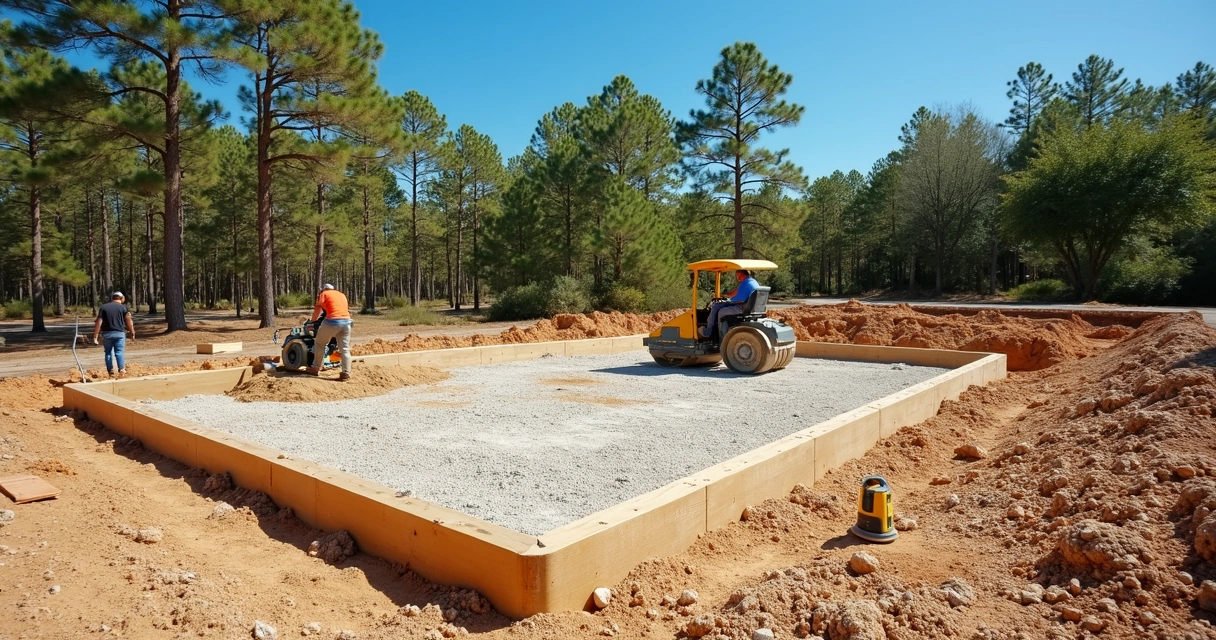
- Installing engineered fill – usually a 6 to 8-inch layer of compacted road base, crushed concrete, or cement-mixed gravel.
- Layering and compacting the base in lifts of 2–3 inches with a vibratory plate compactor or roller, to meet required density.
- Laser-leveling the base, ensuring proper slope (typically 2% for drainage away from structures).
We like to say, “what’s under your slab matters more than what’s on top.” For more details on essential concrete prep and reinforcing, our guide to preventing cracks in Florida concrete covers these best practices.
Choosing the right base material
Sandy fill alone is rarely enough for long-term concrete support. Decades of research and our practical work show that mixing sand with cement, using road base, or adding crushed rock delivers far more strength and stability.
Cement-mixed gravel, as shown in NIH studies, drastically improves slab stability. Mixing just the right amount of Portland cement into base gravel and water creates a “soil-cement” that hardens below the slab. This base acts similarly to a rigid layer, resisting future settling from water and compaction (see here for research).
- Where site soils are very sandy, we may also incorporate clay or construction waste fines (up to 50% by mix, per studies on improved soil-cement treatments), giving better compaction and settlement resistance.
- Alternatively, we use FDOT-certified road base or #57 stone, especially under driveways or vehicle pads.
- On high-end projects, we add a vapor barrier, especially in moisture-prone locations, before the concrete is poured.
Why such detail for a simple slab? Because, in our experience, this investment up front prevents headaches later. Remember:
The right base material is your best insurance against slab settling.
Compaction: techniques that prevent future problems
We see it often – sandy soils look solid when dry, but after a rain or minor vibration, they shift and create voids. That’s why, after preparing the base, compaction is never optional.
- For patios, walks, and light slabs: Use a plate compactor in at least two perpendicular passes over each layer.
- For driveways or heavy slabs: A heavier roller or “jumping jack” tamper adds further density.
- Test base compaction with a steel rod; if it sinks easily, keep compacting.
- Properly compacted soil should not feel spongy or loose under foot.
Some clients are surprised at the time invested here. It’s worth every minute. And it’s why we see fewer warranty claims years later.
Concrete mix and reinforcement for Florida slabs
We recommend and install a minimum 3,000–4,000 PSI ready-mix concrete for exterior slabs. Each project’s specifics, from pool decks to driveways, influence the final mix design. But with sandy soils, a stronger slab helps bridge minor sub-base differences over time.
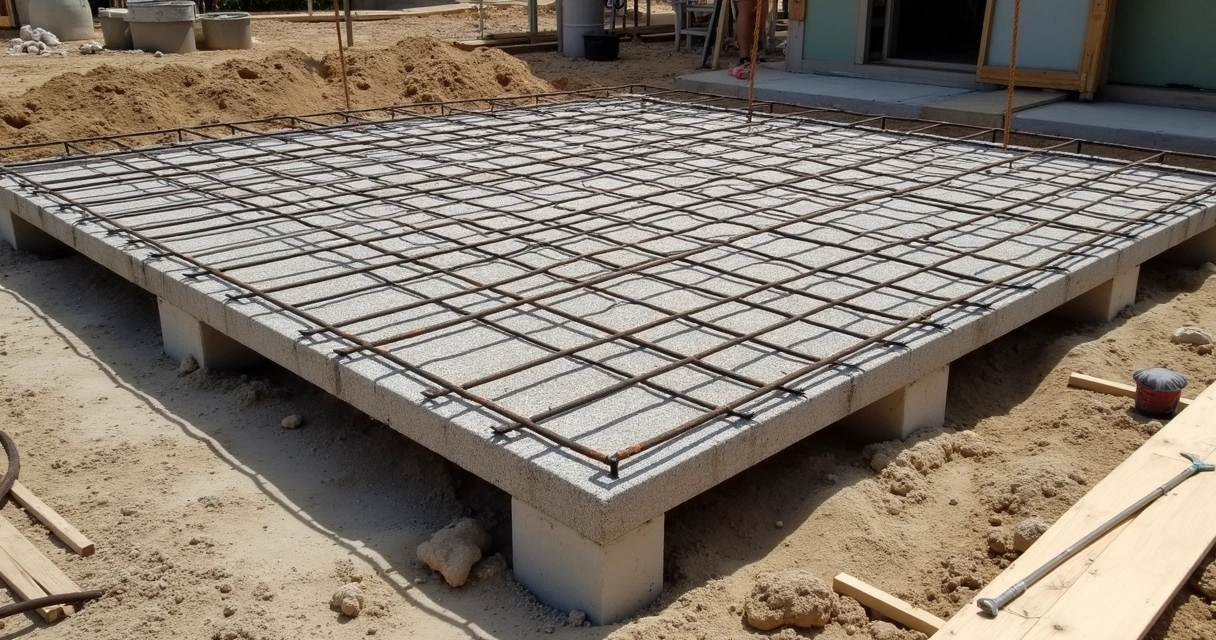
- Reinforce with steel rebar, mesh, or fiber, as called for by the engineer or project design.
- Add control and expansion joints to help manage natural concrete movement, reducing the risk of cracks.
- Use a broom, exposed aggregate, or stamped finish, as needed for traction and appearance.
Reinforcement doesn’t stop settling, but helps keep cracks from opening if base movement does occur. Rebar must be kept in the center third of the slab to be effective – not touching the subgrade. We use chairs or specialty supports to lift mesh or bar into place.
Learn more about slab mix and reinforcement standards in our post on licensed concrete repair in Central Florida.
Integrating proper drainage design
Sandy soils drain well, but only if water has somewhere to go. Poor drainage can erode sub-bases and lead to slab settlement fast. We have seen many projects fail because downspouts, pool backwash, or even sprinkler overspray directed water right under slabs.
- Always slope finished concrete away from buildings by at least 2%.
- Install French drains or daylight pipes under or alongside slabs where needed.
- Route downspouts away from slab edges and joints.
Drainage isn’t an afterthought – it’s built into the plan for every slab by GCM Best Services. When installing driveways or patios in St. Cloud and beyond, we frequently coordinate with landscape design, artificial turf, and paver borders so water flows safely away.
Permitting, inspection, and building code requirements
All new slabs in Central Florida must meet area permitting and code standards. This includes verified soil compaction, approved base materials, slab thickness, and joint placement.
As licensed, insured contractors, we handle all HOA paperwork and required city/county inspections. This extra check helps ensure your slab has the right chance at a long, stable life. We include a written warranty and photos of every project phase so you have full peace of mind.
If you’re unsure about Orlando code or HOA rules for slabs, our guide to choosing a concrete company in Orlando outlines the questions to ask and details to look for.
When is soil stabilization needed?
Some locations in Central Florida have unusually weak or unstable sand. In these cases, we may recommend:
- Mixing cement or polymers directly into the subgrade before slab installation
- Injecting polyurethane foam or grout under existing slabs to fill voids (for stabilization, not just lifting)
- Constructing thicker slabs or switching to pavers and permeable bases if water flow is a concern
Soil stabilization increases support and reduces the risk of chronic settlement beneath concrete. For large, high-value slabs (like garages, warehouses, or pool decks), it may be worthwhile to invest in pro-grade treatments, based on recent research into effective sand-content mixes.
Finishes, curing, and aftercare for stable slabs
Even the best-built slab requires some aftercare. We always recommend:
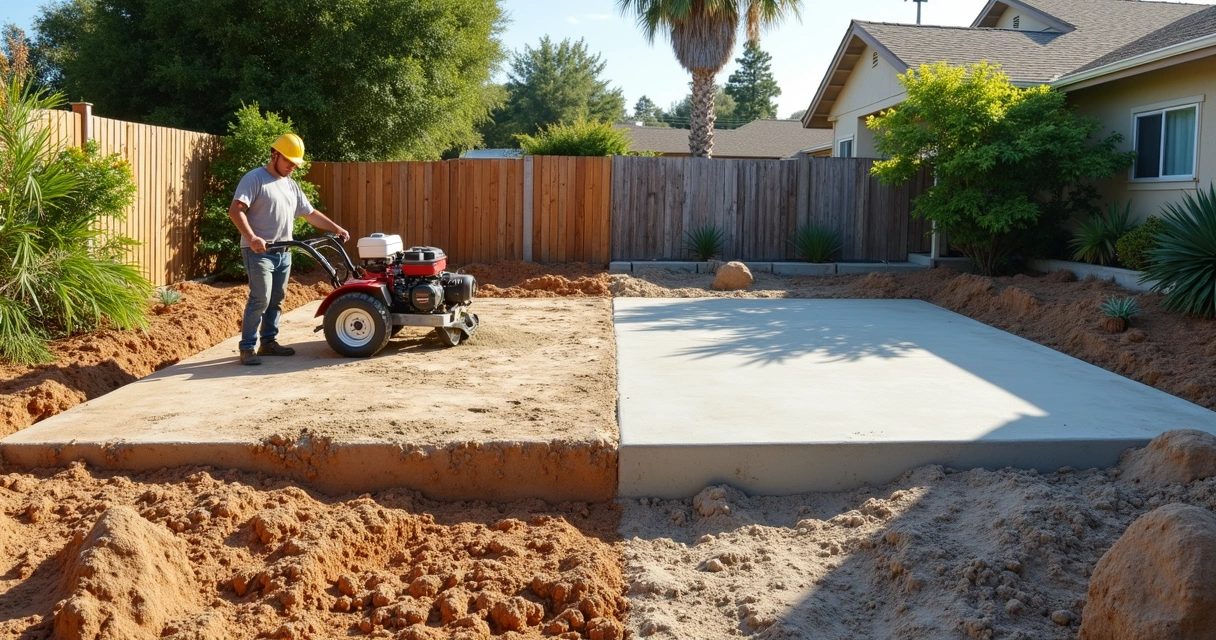
- Allowing a proper cure period for strength (usually 5–7 days for foot traffic, 14–30 days for vehicles, depending on the product used)
- Protecting edges from lawn equipment or impact while the slab is green
- Sealing joints and cracks as soon as they appear, to prevent water from reaching the subgrade
Our work at GCM Best Services comes with written maintenance recommendations, tailored for Florida’s sun, rain, and occasional freeze. Discover more about concrete care and slab maintenance in our dedicated concrete topics section.
Signs a slab is settling – and what to do next
If you notice cracks, sloping, or water pooling near a new or existing slab, the issue may be developing below the surface. Early intervention can save the slab. Common warning signs include:
- Cracks radiating from corners or edges
- Sudden tilting or “rocking” slabs on sidewalks
- Pitting, “hollow” tapping sounds, or sinking at joints
- Drainage changes or unexpected moisture
If you spot any of these red flags, we recommend a professional inspection. A licensed contractor can identify whether settling is minor and manageable, or if repairs like mudjacking, stabilization, or even replacement are wise. Acting early is key.
Concrete alternatives and integrated solutions
On properties where persistent settling risk exists, sometimes the best answer is to rethink the slab: integrating pavers, artificial turf, or building on raised frames, especially for summer kitchens and lanais.
- Interlocking brick or paver installations, set over proper compacted base with polymeric sand, can flex without cracking and are easy to repair.
- Artificial turf systems over stabilized, drained bases offer resilience against erosion or slope issues, and pair well with paver borders.
- Screen enclosures and outdoor kitchens can be designed for both slab and frame support.
For inspiration on design-driven solutions, browse our expert guides and photo galleries at GCM Best Services to see how integrated construction delivers stability and style across Florida landscapes.
Conclusion: Stop slab settling by building for Central Florida soils
Preventing slab settling on Florida’s sandy soils is not luck – it is the result of proven process. At GCM Best Services, we combine site assessment, engineered base materials (including cement-treated and recycled content where appropriate), controlled compaction, and drainage planning to create slabs built for real-world use. Written warranties, ongoing support, and clear communication are part of every job we do.
Whether you need a new driveway, patio, sidewalk, or want to stabilize existing concrete, doing it right pays back for years to come. Don’t trust your largest outdoor surfaces to guesswork or shortcuts: invest a little more up front on foundation, and worry less about repairs. Our team at GCM Best Services is ready to help you design, build, or repair the perfect concrete solution, custom-matched to Florida’s unique challenges and your goals. Reach out for a professional, on-site assessment and discover the difference that a local, detail-oriented contractor can make.
Ready for a professional quote? 📞 (407) 250-1948 • 24–48h • Orlando, Tampa & area.
Frequently asked questions
What causes concrete slabs to settle?
Concrete slabs commonly settle when the soil beneath them compacts, erodes, or shifts. In sandy soils like those found throughout Central Florida, loose particles move more easily, especially with moisture or vibration. Poorly compacted fill, organic material, or improper drainage can all make slabs sink or slope over time.
How to prevent slab settling on sand?
Slab settlement can be avoided by careful excavation of weak material, installing a thick, well-compacted base (such as cement-stabilized gravel), and planning for proper drainage. Reinforcement, control joints, and slab thickness adapted to use are also essential. Following these detailed preparation steps has been shown to reduce settlement dramatically, as outlined in peer-reviewed geotechnical studies.
What is the best base for slabs?
The best base under concrete slabs in Florida’s sandy soils is a compacted layer of cement-mixed gravel or soil-cement, built up at least 6–8 inches thick. This foundation outperforms plain sand, as it resists movement and holds its shape, greatly improving the slab’s stability and lifespan.
Is slab jacking worth it for repairs?
Slab jacking (or mudjacking/polyjacking) can be a cost-effective repair for minor settling, if caught early and the soil below is otherwise stable. The process lifts slabs back to grade and fills voids. However, if underlying drainage, organic soils, or water problems aren’t corrected, future settling or cracks may still occur. Each situation should be professionally evaluated.
How much does slab stabilization cost?
Slab stabilization costs vary widely based on access, area size, and degree of settling. Small stabilization projects (like foam injection or localized soil-cement mixing) can start around several hundred dollars, while full slab removal and replacement with engineered bases may run several thousand for typical driveways or patios. A detailed, site-specific quote with investigation will give the most accurate number.