Stamped concrete has quickly become a favorite choice for homeowners and businesses across Central Florida. At GCM Best Services, we’ve had countless conversations with clients curious if stamped concrete is the right solution for their driveways, patios, walkways, and poolsides. It’s an exciting option—melding durability with decorative style. But is it truly the perfect fit for your project?
In this article, we’ll break down the six key factors you should weigh before choosing stamped concrete for your property. Our goal is to share honest insights based on our field experience across Orlando, St. Cloud, and the greater region. From maintenance realities to cost breakdowns, and how local conditions affect results, our guide will help you make an informed decision.
Stamped concrete shapes first impressions—and daily life.
Let’s look at where stamped concrete shines, where it may pose challenges, and what to expect during every step of the process.
Understanding stamped concrete in the Florida context
Before we get into specific considerations, let’s clarify what stamped concrete really is.
Stamped concrete is poured and colored concrete that’s patterned with specialized mats or tools before it hardens, giving the look of stone, brick, slate, or even wood—without the price and labor of those natural materials. It’s custom finished to match a style, edge layout, or surface texture, with options for slip-resistance and sealer.
In Florida, we must pay attention to ground conditions, heavy rainfall, sunlight exposure, and humidity. At GCM Best Services, we tailor each project for our region’s unique blend of soils, drainage needs, and HOA guidelines.
Six factors to consider before you choose stamped concrete
1. Appearance: Design potential and limitations
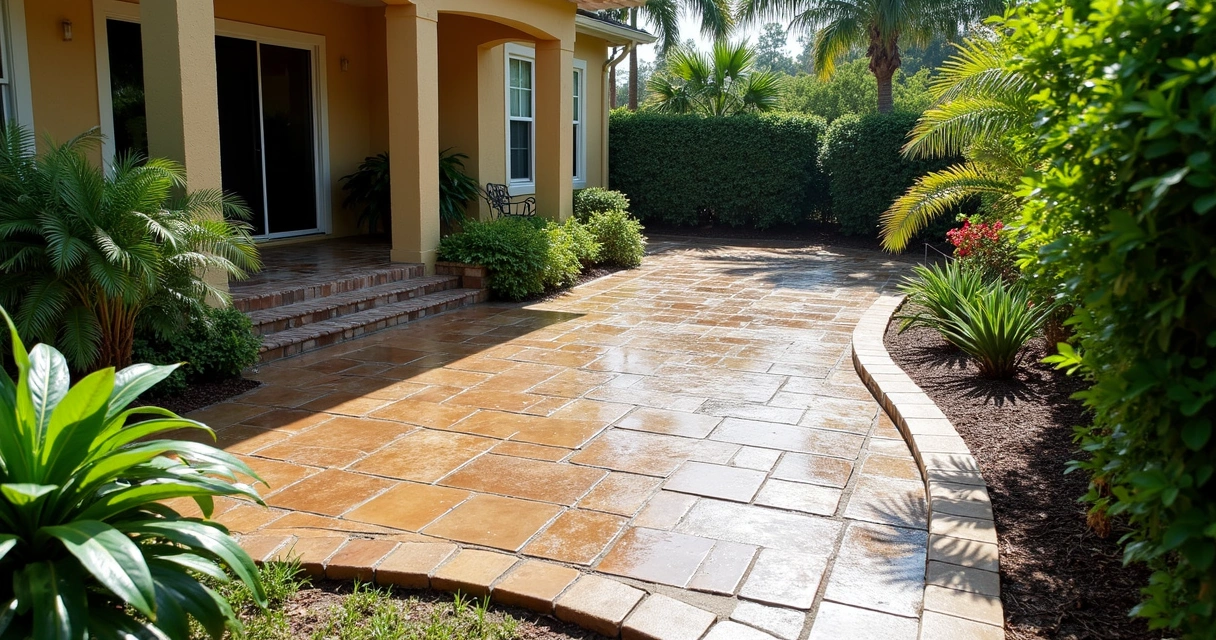
One of the main reasons clients ask about stamped concrete is its eye-catching potential. The allure of a stone-look pool deck or a brick-style walkway at a fraction of the cost is hard to ignore. Patterns range from cobblestone, herringbone, slate, and flagstone, to wood planks, and can be blended for a custom effect. Color palettes are almost limitless since we can tint the concrete in multiple hues or work in contrast with color releases.
But there are natural boundaries. While stamped concrete does a stellar job mimicking natural materials from a distance, close inspection may reveal it as concrete. Some clients love the crisp, uniform look; others prefer the authentic irregularity of real stone. Our recommendation: view real samples before deciding.
Maintenance can also affect looks over time. Heavy abrasion or missed sealing can cause colors to fade or patterns to lose sharpness. At GCM Best Services, we use high-quality colorants and recommend proper sealing schedules for best results.
- Wide range of patterns: from “ashlar slate” to “river rock.”
- Color blending allows for shading and accents.
- Edge shaping and scoring for custom borders.
- Surface texture can be smoothed, broomed, or roughened for grip.
Style starts at the surface—and lasts with good sealing.
2. Durability: Adapting to Florida’s weather conditions
Central Florida’s climate is both a blessing and a challenge for outdoor surfaces. We deal with intense sunlight, frequent rain, and high humidity. For stamped concrete, the physics are clear.
When properly installed on a well-compacted base with quality mix, stamped concrete is a robust, long-lasting surface, suitable for high traffic and frequent storms. Our experience shows that thickness matters: driveways, for instance, should use six to eight inches of compacted sub-base, reinforced with rebar or welded wire mesh. Expansion joints and well-planned drainage keep slabs from moving or cracking as soils shift.
Common durability topics we discuss:
- Cracking: Most minor cracks are cosmetic. Strategic joints and correct thickness greatly reduce risk.
- Ponding: Flat surfaces need graded slopes and drains—especially in Florida rains.
- UV fading: High-quality sealers hinder sun bleaching and preserve color vibrancy.
- Freeze-thaw is rare in Florida, but occasional cold snaps call for well-cured concrete.
- Heavy loads: For driveways, a higher PSI mix (3,000–4,000) stands up to cars and trucks.
If you want to compare best practices for installation in our region, the article St. Cloud concrete driveways and patios installation guide provides a helpful overview of what to expect from a professional installer.
3. Maintenance: What’s required to keep it looking good?
Stamped concrete, though tough, is not fully maintenance-free. If left unsealed, the colors can fade, and debris may work its way into patterns. In our mild winters and long, wet summers, we recommend a few easy steps to preserve its look and safety:
- Reseal every 2–3 years, or sooner if high-traffic or heavy sun exposure.
- Sweep or rinse dirt and leaves weekly to prevent stains.
- Avoid harsh chemicals or deicers—natural soap and water is usually enough.
- Address stains or oil spills quickly to prevent deep absorption.
- Inspect for small cracks or scaling annually and repair early to avoid larger issues.
Repairs can be done, but matching color or pattern exactly may require skill. With proper maintenance, though, we see homeowners enjoy their surfaces for a decade or more without major issues.
For more on preventative care, see this guide on preventing cracks in Florida concrete patios and driveways.
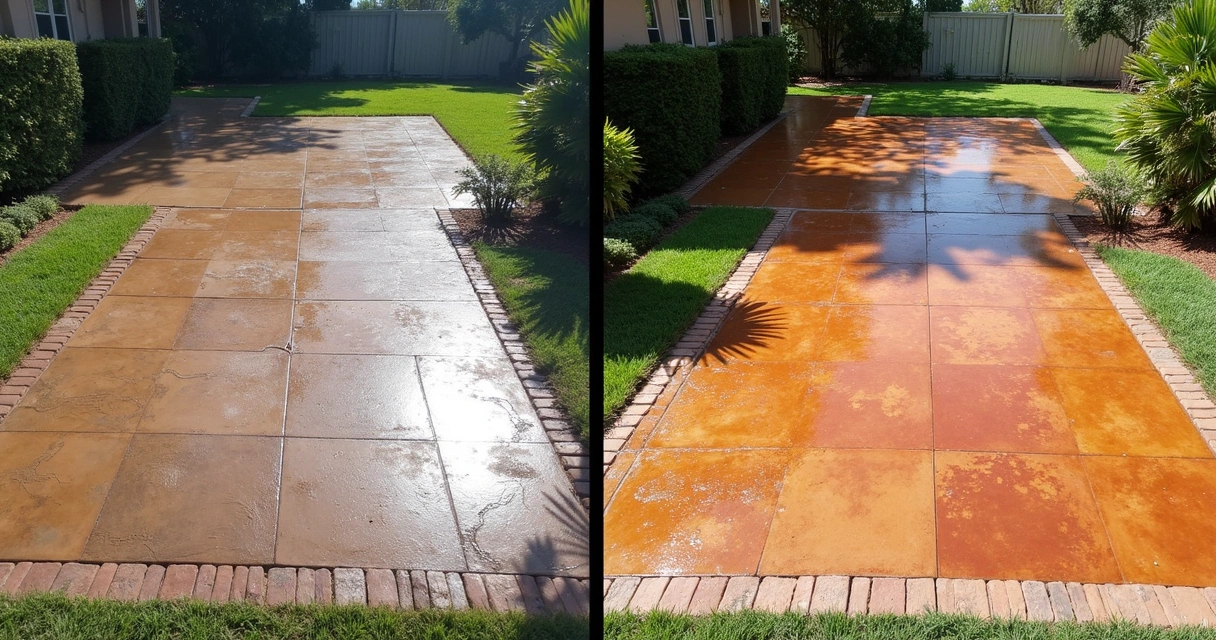
Routine resealing brings color and pattern back to life.
4. Cost: Comparing stamped concrete to alternatives
Budget is always in our clients’ minds—understandably. One reason stamped concrete is so attractive is its upfront affordability compared to full-thickness masonry or paver installations.
Generally, stamped concrete falls in the middle of the price spectrum for hardscape surfaces in Central Florida. Costs are typically higher than plain broom-finish concrete, but lower than natural stone or most brick paver installations. The more elaborate your pattern or color, or the larger the slab, the higher the price per square foot.
Factors influencing final cost:
- Size and shape of area.
- Pattern complexity and number of colors.
- Site prep (grading, demolition, compacted base thickness).
- Reinforcement (rebar/mesh), drainage solutions, and slab thickness.
- Permits and HOA communications, if required.
You’re investing not only in curb appeal, but in the foundation of a usable, lasting outdoor space. When you compare quotes, confirm the details: type of base used, thickness, finishes, reinforcement, and what warranty is included. Our detailed estimates always reflect the full scope, including prep and finish.
You can read more on choosing a reliable contractor in our guide on selecting a concrete company in Orlando, where transparency and upfront communication are key.
5. Process: Preparation, installation, and disruption
Understanding the process helps set expectations. Stamped concrete can usually be installed faster than many stone or paver options—but not instantly. Here’s what a typical project with GCM Best Services looks like:
- Design and permits: We meet, walk the area, plan drainage and choose stamps and colors. If HOA or city permits are needed, we handle these first.
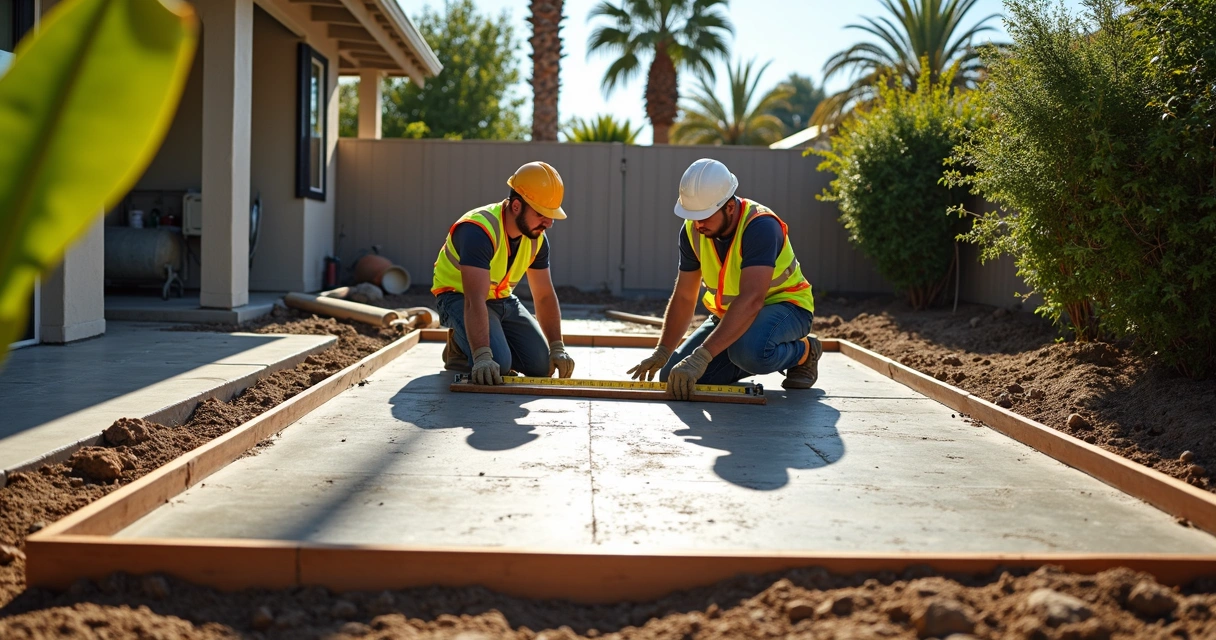
- Site prep: This can take a day or more—clearing, grading, compacting base material, and setting up forms. Good prep is the foundation for crack-free concrete.
- Pours and stamping: Fresh concrete is tinted, poured, and screeded. Then the pattern mats are placed and pressed in. Texture finish and joint cuts follow soon after.
- Curing and sealing: Concrete must cure for several days before sealing. No foot traffic for at least 24-48 hours, vehicles after 7 days typically.
- Final walkthrough and warranty: We review the work with you, supply photos and a written warranty, and provide a care guide.
Disruption is usually brief—one to five days depending on size and weather. We always keep sites clean, safe, and minimize obstacles for your household. Some clients are surprised by how quickly patios or drives can spring to life.
If concerns come up, such as rain delays or unexpected site issues (like hidden roots or existing slab removals), we address them early and keep communication clear.
Preparation prevents disappointment. Plan, then pour.
6. Longevity: How does stamped concrete age and repair?
How long does stamped concrete last? With proper preparation and care, decades. We’ve revisited patios a decade on that look sharp as ever. But aging concrete tells a story—mild surface wear can enhance texture, but neglect leads to fading or minor cracks.
When installed above code standards for thickness, reinforcement, and sealing, stamped concrete resists the roots, settling, and weather swings we see in Florida. Routine resealing helps repel moisture and block UV loss.
If repairs are needed, such as filling a crack or patching a spall, they are best done by a professional, as pattern and color matching can be delicate. Small flaws can often be disguised with staining or a new sealer layer. Larger repairs may require removing and recasting a panel.
Lots of homeowners ask if stamped concrete can be refreshed after years of use. The answer is yes: Re-coating, tinting, or overlaying can restore much of its original charm without full replacement.
For more details about concrete restoration, our article on concrete repair by licensed contractors covers options in Central Florida.
Is stamped concrete right for every project?
Stamped concrete is a fit for many—but not all—applications. In our fieldwork at GCM Best Services, we find it ideal for homeowners who want:
- Affordable curb appeal and property value boost.
- Integrated drainage and smooth transitions (with less risk of shifting than individual pavers).
- Fast installation timelines—entertaining by the weekend possible.
- Customization in color, texture, and design.
Some situations may tip the scale away from stamped concrete. Extremely high traffic or commercial driveways demanding frequent heavy loads, or sites with major root or drainage issues, may do better with other solutions. For those wanting a totally natural look and feel underfoot, brick or natural stone still win, despite the higher price.
In every case, our team weighs local soil, regulations, how you use your space, and your style preferences before recommending a path.
Stamped concrete offers beauty and strength—if it fits your lifestyle.
Making your stamped concrete project a success
If you’re ready to move forward, here’s how the process typically happens at GCM Best Services:
- We start with a free, no-pressure on-site consultation. We walk your space, listen to your ideas, and talk about what’s possible.
- We follow with a detailed written estimate, including finishes, reinforcements, drainage, and maintenance tips. Photos of similar projects help with design choices.
- Once you approve, we manage the design, permitting (including HOA if needed), and schedule work to minimize disruption at home or business.
- After installation, we guarantee your project with a written warranty and a practical maintenance guide, so you know what to expect in the years ahead.
If this sounds like the right path for you, you might be interested in learning more from our knowledge base. Our concrete blog section explores patterns, cost breakdowns, and regional installation tips tailored to Central Florida needs.
Conclusion: Decide with knowledge, install with confidence
Choosing stamped concrete involves more than picking a pattern or color. It’s about balancing design goals, real-world maintenance, local weather conditions, and budget. In Central Florida, where curb appeal and durability matter, stamped concrete can bring years of function and style—if installed by a team that knows the soils, sun, and storms we face.
If you’re still unsure, we encourage you to reach out. We’ll review your site, share our honest opinion, and recommend the best solution for your home or business—whether that’s stamped concrete or another alternative. With GCM Best Services, your project starts with the facts and ends with lasting beauty.
Ready for a professional quote? 📞 (407) 250-1948 • 24–48h • Orlando, Tampa & area. Contact us today to schedule your on-site assessment and discover how stamped concrete could transform your space.
Frequently asked questions
What is stamped concrete?
Stamped concrete is a paving material made by pouring fresh concrete and then imprinting or “stamping” it with textured patterns and colors before it fully sets. These patterns can resemble stone, brick, wood, tile, or other popular surfaces. At GCM Best Services, we use a range of customizable patterns and colors suited to Florida homes and businesses.
How much does stamped concrete cost?
The cost for stamped concrete depends on the project size, chosen pattern, color complexity, and site conditions. In Central Florida, you can generally expect the price per square foot to be higher than plain concrete but lower than full stone or brick options. When considering the cost, factor in site preparation, color options, reinforcement, sealing, and any HOA or permit fees. Contact us for a detailed site-specific quote.
Is stamped concrete worth it?
For many property owners, stamped concrete is worth the investment due to its design versatility, durability, and reasonable price. It is especially appealing if you want the look of natural stone or brick, but with less installation time and cost. As with all materials, results depend on proper preparation and regular maintenance.
How long does stamped concrete last?
Stamped concrete, when installed correctly and maintained with routine sealing and cleaning, can last decades—often 15 to 25 years or longer. Florida’s climate demands quality sealing and crack monitoring. Areas with heavy use or exposure to sun and rain may show some fading or wear over time, but resurfacing or resealing can often restore the original appearance.
Does stamped concrete need maintenance?
Yes, stamped concrete does require regular maintenance to stay looking its best. This typically means resealing every 2–3 years, sweeping or rinsing dirt and debris, and quickly cleaning spills. Annual inspections for cracks or surface wear can help prevent bigger repairs in the future. Our team supplies a maintenance guide at project completion for peace of mind.