Rebuilding patio steps is more than a weekend project—it’s about ensuring safety, comfort, and a practical welcome home. Whether your current steps are worn, unsafe, or just outdated, a careful rebuild will protect your family while adding value to your property. At GCM Best Services, we’ve seen firsthand how a well-planned approach can make all the difference for homeowners in Orlando and across Central Florida. In this guide, we’ll walk you through every step, while focusing on both access and safety.
Safe, accessible steps change the everyday experience of home.
Why safe patio steps matter more than ever
Patio steps are often used daily, yet rarely get the attention they deserve until a trip or a slip reminds us why they’re critical. According to a national survey, 70% of U.S. households have stairs with four or more steps, but 34% lack railings—an issue that increases fall risk. And when you consider that 16.7% of household spine injuries occur on stairs, it’s clear: safe, sturdy steps aren’t just a convenience; they’re a necessity.
In Central Florida, weather adds another layer. Moisture, shifting soils, intense sunlight, and temperature swings can push materials to their limit. That’s why projects like those we take on at GCM Best Services don’t just repair—they build with purpose, code, and climate in mind.
When to rebuild instead of repair
Some patio steps can be repaired with simple fixes, but others need a full replacement. Here’s when we advise rebuilding:
- Cracks more than ¼ inch wide that extend through the step
- Loose, crumbling edges that can’t be patched
- Persistent pooling water or drainage problems
- Wobbly or missing railings, especially where elevation is over 2 steps
- Change in local codes or standards that require modernization
- Accessibility upgrades, such as for aging-in-place or mobility needs
If you notice several of these issues, it’s safer and more cost-effective in the long run to rebuild rather than repair.
Planning for better access and safety
Every safe patio project starts with a solid plan. We start by asking questions:
- How are the steps used daily?
- Who uses them most—kids, adults, elderly relatives, guests?
- Is drainage an issue during storms?
- Are the current steps to code in terms of rise, run, and width?
- Would a handrail, ramp, or lighting aid safety or access?
Our approach at GCM Best Services puts a spotlight on these safety and access points:
- Consistent step height and depth for steady footing
- Non-slip finishes, such as broomed or exposed aggregate concrete
- Handrails at the right height and grip profile
- Generous width for easy passing or carrying items
- Integration with nearby drainage to prevent puddles and ice
By thinking through the actual needs of your household, we create solutions that last—and that keep you safer season after season.
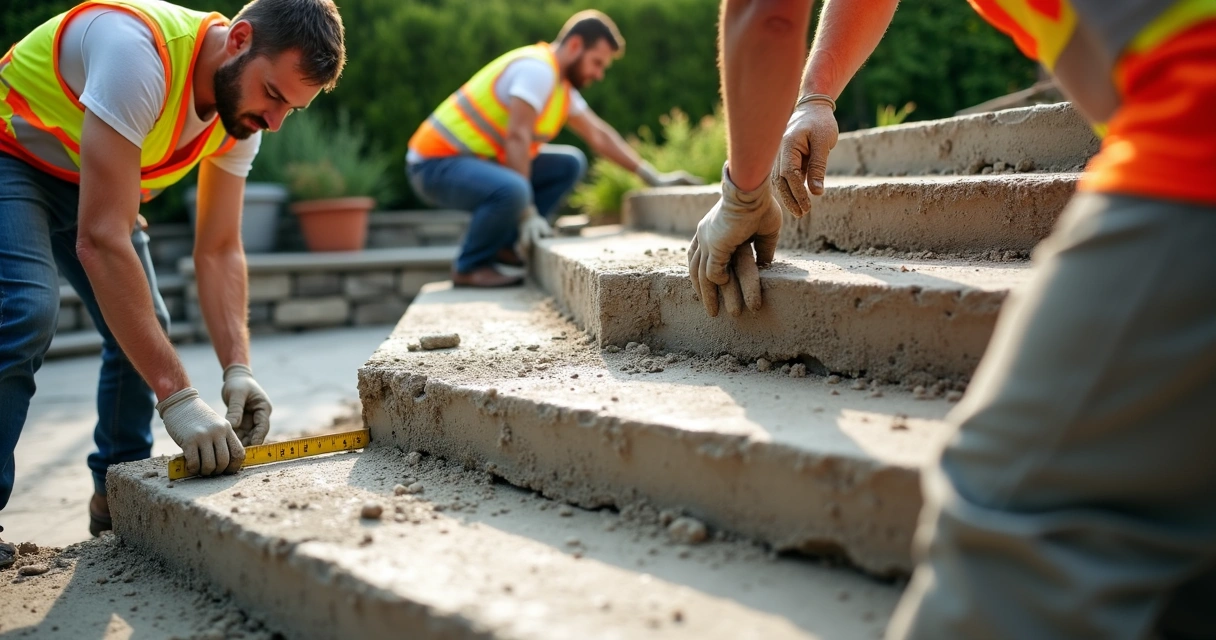
Understanding code and best practices in Florida
Building safe, lasting steps means following both quality standards and the law. Central Florida’s building codes specify:
- Riser (step height) typically 7″ maximum, and no less than 4″
- Tread (step depth from nose to nose) at least 11″
- Uniform height and depth across all steps—variations can cause trips
- Landings at the top and bottom with enough clear space
- Handrails for steps with two or more risers above finished grade
We regularly pull permits, manage inspections, and consult the latest code for every rebuild project. If you’re interested in more context about the code, our guide to patios and driveways in St. Cloud goes into detail, especially on concrete and drainage compliance.
Consistent adherence to these guidelines reduces fall and injury risks, and protects your investment if you ever sell your home.
Main materials to consider for patio steps
Material choice depends on several factors: cost, durability, appearance, safety, and integration with your existing patio and landscaping. We see these primary options in Central Florida:
Concrete steps
Concrete is the most popular choice for durability and ease of customization. We use 3,000–4,000 PSI mixes, embedded rebar or wire mesh, and a compacted gravel sub-base 6–8″ thick for stability. Common finishes include:
- Broom finish for slip-resistance
- Exposed aggregate for texture and traction
- Stamped patterns that mimic stone or tile for visual appeal
Concrete steps almost always outlast wood in Florida’s wet, hot, and humid weather.
Brick or paver steps
Pavers or bricks can harmonize with patio or walkway hardscaping. Key for safety is edge restraint—steps need a sturdy concrete or mortared frame plus polymeric joint sand to lock the surfacing in place. And since pavers can shift over time, we always address drainage and compaction, as we discuss in our hardscaping projects resource.
Stone or tile steps
Natural stone gives an elegant, upscale finish but requires extra attention to sealing and edge stability. Textured stones are safer, and for tiles, we select those with a non-slip outdoor rating.
Composite or wood steps
Less common due to maintenance and climate, but sometimes used for covered patios or decks.
Essential safety add-ons
Adding safety isn’t just about better materials. Well-designed extras make daily life easier—and safer—for everyone.
- Handrails: Placed 34–38″ high and easy to grip
- Contrasting nosing: A different color or texture at each tread edge
- Lighting: Low-voltage step lights or motion-activated units for night use
- Non-slip sealers or coatings: These add grip, especially in rainy seasons
We have seen situations where just adding lights or correcting the color contrast between treads has stopped tripping incidents that happened for years.
Drainage and step design—keeping water away
In Florida, excess water is a year-round challenge. Proper patio step design directs water away from the patio, foundation, and steps. When rebuilding, we pay attention to:
- Mild slope (about 2%) on treads to shed rainwater
- Drains or collection trenches at the base of steps
- Joints sealed against water intrusion, but still able to expand and contract
- Permeable paver options for high-risk spots
For more about this, our post on avoiding cracks and drainage issues in Florida patios covers what to watch for, including ponding and root damage.
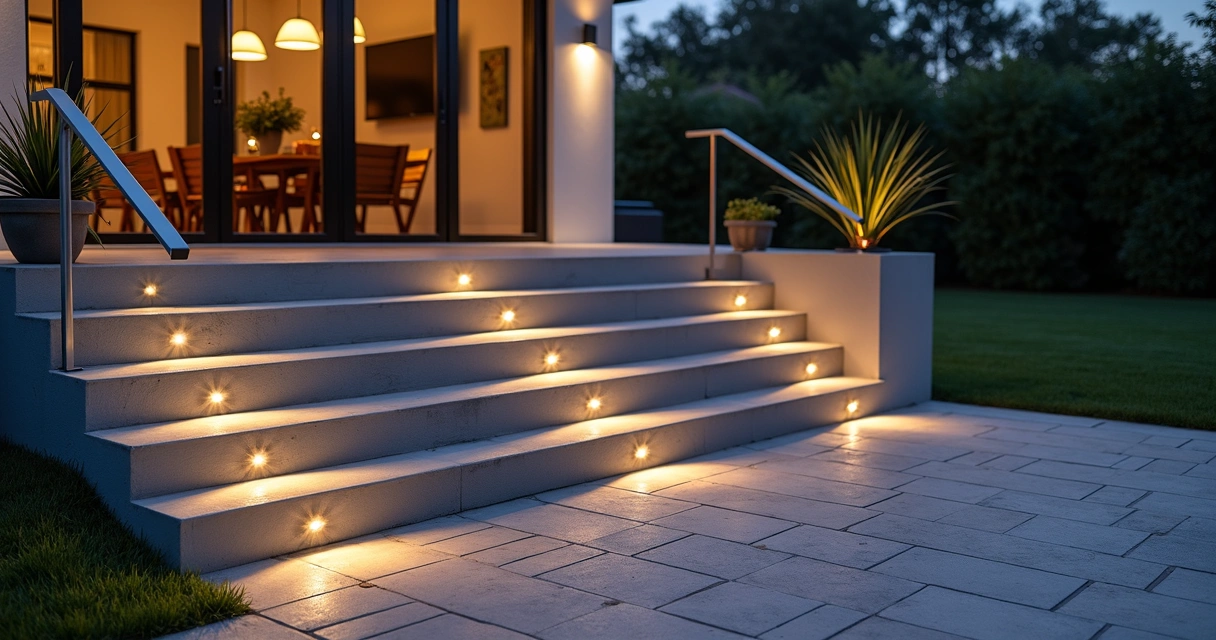
Step-by-step process: Rebuilding patio steps for safety and access
Here’s the stepwise process we follow, echoing our proven project method at GCM Best Services:
1. Assessment and design
We start with a no-obligation site visit. Measurements, drainage checks, and identifying trip hazards form the backbone of our planning. If you have HOA or city permitting needs, we handle those upfront.
2. Demolition and site prep
Old steps are broken up and removed. We then grade and compact the soil, install a gravel sub-base, and check for roots or pipes that might interfere.
3. Setting forms and reinforcement
For concrete, we anchor forms for clean, straight lines. Rebar or mesh is positioned for strength. For paver or stone steps, we build retaining edges. This stage is where details make a difference—smooth corners and correct alignment mean fewer problems later.
4. Pouring or laying new steps
With concrete, we pour and finish each tread, often adding color hardener or integral dye for aesthetics. Stamped, broom, or exposed aggregate finishes improve safety. For pavers, we place each unit carefully, locking them in with sand or mortar and checking alignment.
5. Curing, sealing, and drainage controls
Proper curing prevents cracks. We cover new pours to shield them from sun and rain, and often use curing compounds. Once set, steps are sealed as needed, and nearby drains double-checked for function.
6. Railings, lighting, and finishing touches
Handrails are measured, mounted, and checked for solid grip. Lighting and nosing accents are installed. Any disturbed landscaping is restored, and we provide a maintenance guide so you know how to protect your new investment.
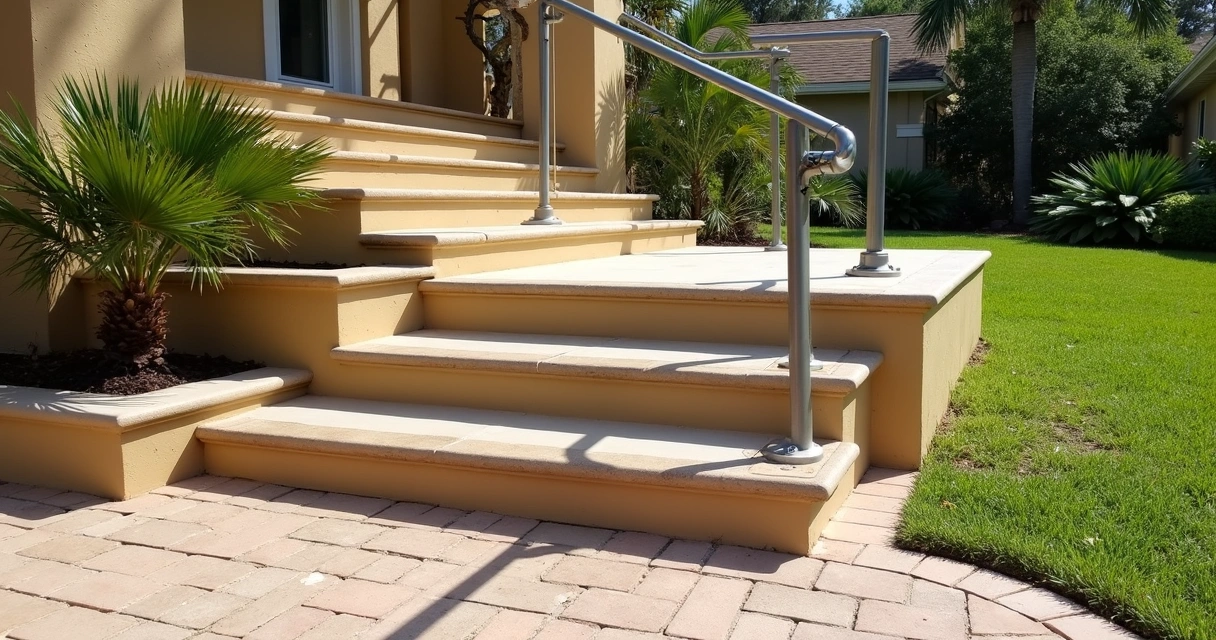
Accessible upgrades: Meeting changing needs
Many homeowners eventually need easier access for strollers, walkers, or wheelchair users. Step rebuilding is a great opportunity to add:
- Lower risers combined with longer treads for a gentler climb
- Ramp elements (where code allows)
- Extra-wide steps, so two can walk side-by-side
- Grippy, color-contrasted nosings for visibility
- Dual handrails for all users
Universal design features make your home safer now, and support aging-in-place later on.
Best practices for safe project execution
We always recommend working with licensed, insured professionals. Following ladder safety—especially for demo and finishing at height—is a must. The CDC/NIOSH ladder injury data shows the risk: 161 workplace fatalities and 22,710 injuries in 2020. Proper personal protective equipment, OSHA-compliant job sites, and clean work areas are non-negotiable in our projects.
Our team’s commitment means more than neat work—it’s families and friends using those steps every day without a second thought. We treat each site like it’s our own home, and do a full walk-through before handing over a warranty and maintenance tips.
Timelines and what to expect
Depending on size and complexity, most step rebuilds take 2–4 days for actual construction (plus cure time before heavy use). Planning, permits, and design choices may extend the process by a week or so. We keep you updated every step of the way, using photos and clear communication—part of the GCM Best Services promise.
We also coordinate with other outdoor projects, like patio upgrades or new paver walkways, which we cover in-depth in our concrete and patio resource center.
Budgeting for your project
The cost question comes up early and often. Pricing depends on materials, number of steps, access, and extras like railings or lighting. As a ballpark, simple poured-concrete steps start around $1,500, with brick, stone, or extended runs costing more. Adding high-end railings or lighting can increase the price, but good design delivers value far beyond dollars per square foot. We always provide a line-item estimate so you see where each dollar goes.
For deeper discussion, see our guide to hiring licensed contractors for repairs, which includes tips on permits, insurance, and comparing options.
Warranty, maintenance, and peace of mind
We always issue a written warranty for workmanship and materials, plus a maintenance guide. Most steps need little ongoing care except seasonal cleaning and re-sealing or re-sanding joints as needed. Watch for weed growth between pavers, inspect railings for solid mounts, and keep lights in working order. A little attention now prevents big repairs later.
Stories from the field—how safe steps changed daily life
One of our favorite stories comes from a family in southeast Orlando. Their back patio, once an afterthought, became the gateway to a thriving garden after we rebuilt uneven, crumbling steps. With wider treads, low-profile nosings, and proper drainage, both kids and grandparents could move easily—especially after a few passing thunderstorms. The homeowner shared that it “felt like adding another room to the house.” That’s what motivates us every day.
Conclusion: Safe, accessible steps for every home
Rebuilding patio steps isn’t just about fixing a structure. It’s about reclaiming comfort, peace of mind, and the simple pleasure of coming and going without a stumble. If you’re noticing uneven steps, crumbling edges, or simply want to improve access for yourself or loved ones, contact us at GCM Best Services. With a proven approach, skilled team, and a focus on Central Florida’s unique needs, we make patios safer—guaranteed.
Ready for a professional quote? 📞 (407) 250-1948 • 24–48h • Orlando, Tampa & area.
Frequently asked questions about rebuilding patio steps for safety
How to rebuild patio steps safely?
Safe rebuilding involves removing unstable or damaged steps, grading and compacting the base, installing forms and reinforcement, pouring quality concrete or carefully laying pavers, adding handrails or lighting as needed, and curing or sealing the new work according to the manufacturer’s recommendations. Each stage should align with local building code and safety best practices. Attention to rise, run, and non-slip finishes is key. If unsure, professional help ensures better results and compliance with local regulations.
What materials are best for patio steps?
In Central Florida, concrete and pavers are the most popular materials for outdoor steps because they resist rot, mold, and shifting from climate. Concrete allows a variety of safe, slip-resistant finishes, while pavers offer design versatility when installed with strong edge restraint and proper compaction. Natural stone is also an option, especially for upscale appearances, but should have rough, grippy surfaces for safety. We avoid wood due to weathering issues unless the steps are covered.
How much does rebuilding steps cost?
Costs for rebuilding patio steps vary based on size, materials, and extras like lighting or railings. In our experience, expect a range from $1,500 for basic poured-concrete steps to over $4,000 for customized multi-step, paver, or stone designs. Railings, lighting, and accessibility upgrades increase cost. We always provide a clear, line-item estimate for full transparency.
Is it worth it to rebuild steps?
In nearly all cases of major wear or outdated designs, rebuilding is worth it for improved safety, compliance with code, and appearance. When steps are uneven or lack secure railings, the risk of slips and injuries—especially for children or older adults—outweighs the upfront investment. Enhanced access, curb appeal, and property value add even more benefit.
How can I make steps more accessible?
To boost accessibility, use wide steps with short risers, contrasting nosings for visibility, sturdy handrails on both sides, and optional ramp sections if the site allows. Well-placed step lighting and textured, non-slip surfaces also help. We recommend universal design, which benefits everyone—from children to seniors to guests with mobility devices.