When we design and build concrete structures across Central Florida, there’s one element that quietly does a lot of heavy lifting—bond beams. You may have noticed their mention in scope-of-work documents, code requirements, or home inspection reports, but rarely does someone take the time to show why these reinforced concrete bands can mean the difference between a project that lasts and one with persistent problems. In our experience at GCM Best Services, understanding bond beams is key to building smart and lasting concrete works that respond well to Florida’s weather, soils, and codes.
What is a bond beam and what role does it play?
A bond beam is a continuous horizontal structural element made of reinforced concrete, typically integrated at specific heights in masonry or poured-in-place concrete walls to enhance strength, resist lateral forces, and provide a tie-in for floors, roofs, or other structural systems.Simply put, its job is to unify a wall or support system, preventing individual blocks or sections from acting alone when subjected to loads from wind, earth, or shifting foundation.
Bond beams are more than just beams lying on blocks. They are placed where structural engineers want to “lock in” a wall’s resistance. In Florida, we see them often at the top of block walls (top-out), mid-wall heights, or directly above large openings like garage doors, lanai sliders, or pool screen frames.
“Well-built structures stand together, not apart.”
When done properly, these beams don’t just look like concrete bands—they quietly hold everything together, distributing forces safely and reducing the odds of cracking and movement.
Why Florida projects depend so much on bond beams
You might wonder if bond beams are needed everywhere. In our work from St. Cloud to Orlando and Tampa, we’ve seen time and again their real value in our state’s particular environment. Florida’s soils are sandy, prone to movement and poor drainage. Extreme weather, such as hurricanes, means that lateral and uplift forces are far from theoretical.
Bond beams help Florida structures withstand wind, settle evenly, and resist the cracking and separation that often haunt local projects.
- They tie walls together, keeping them plumb during hurricane-force winds.
- They reduce settlement cracks from uneven soil shifts.
- They provide a secure anchor for floors, trusses, screen enclosures, and pool cages that need to handle uplift and vibration.
- They serve as the built-in support for attaching roof straps and hurricane ties—critical in passing local building inspections.
These are not just “nice to have”—they are expected by engineers and code officials. If you want to see more on the issues around cracking, read our Florida concrete cracking guide covering patios and driveways.
What are bond beams made of?
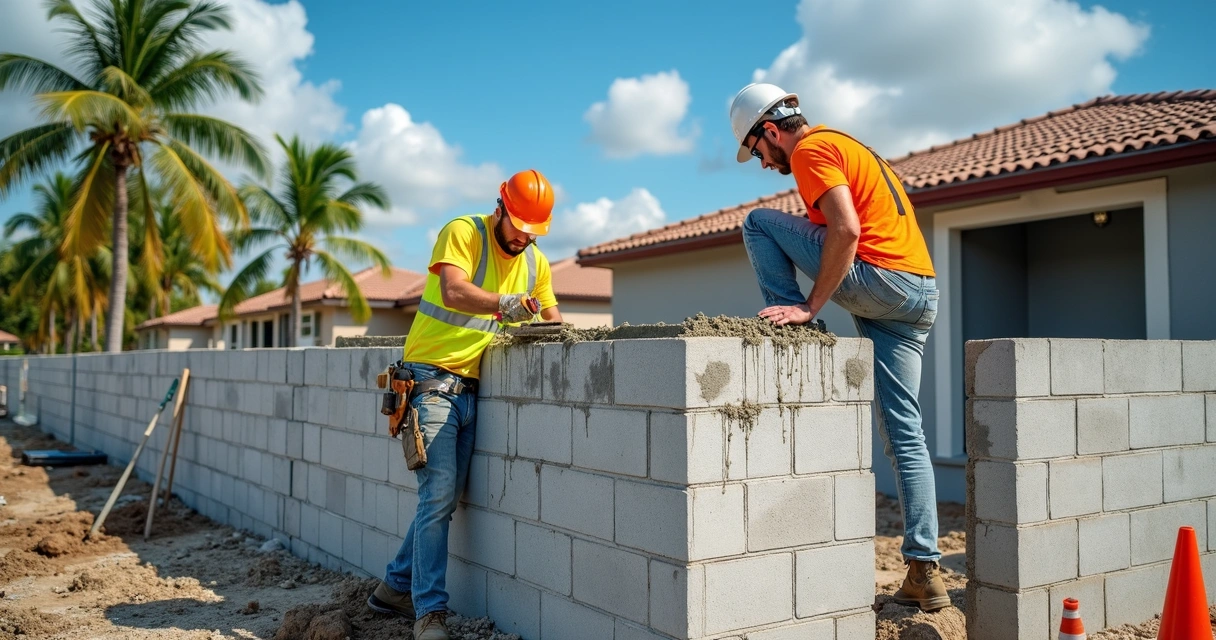
As a builder, we select components carefully based on the wall or slab, loads, local code, and the use of the space. Traditional bond beams start with hollow-core masonry units (CMUs) that are specially shaped to accept horizontal reinforcing steel (rebar). After these are set, rebar is threaded continuously through the block or formwork, and the cavity is then filled solid with concrete—usually with a higher psi and slump than typical wall grout.
Common materials include:
- CMU blocks with “U” or “knock-out” webs
- No. 4 or No. 5 rebar (typical for residential & light commercial)
- 3,000–4,000 psi concrete / grout
- Bonding agents in retrofit work
- Fiber Reinforced Polymer (FRP) for higher corrosion resistance as recommended by FDOT’s studies on FRP reinforcing bars and strands
We choose materials based on exposures—near pools, waterfront, coastal zones, or high-humidity spaces benefit from non-metallic or coated rebar, or polymer-modified concrete for longer life without corrosion or “rust-jacking.”
Types of bond beams in Florida construction
There is no single bond beam detail. We adjust designs based on what the structure needs and what local code officials require. These are the most common bond beams we encounter:
- Top-out bond beams—run at the very top of block walls, providing a secure anchor for trusses or screen enclosures.
- Mid-wall bond beams—added at intermediate heights, especially for taller walls or where soil conditions demand it.
- Lintel beams—built right above doorways, garage doors, or wide window spans, transferring weight to each side of the opening.
- Slab-embedded bond beams—placed at the edge of driveways, pool decks, or structural slabs for extra strength around perimeters or joints.
Some projects need double or triple bond beams, especially multi-story construction or hurricane-exposed structures. Each serves a purpose—strengthening against wind, supporting loads, or securing connections to the rest of the structure.
One common example at GCM Best Services is the perimeter bond beam at the top of a pool enclosure wall, required to meet wind-load resistance codes for hurricane-prone areas.
Bond beam engineering: Calculations and Florida codes
Construction in Florida does not happen by guesswork. Proper bond beam design meets specific engineering standards, such as those in Florida Building Code for wind and gravity load resistance.
- Rebar placement and diameter—must meet span, wall height, opening width, and loading needs. Often specified by a structural engineer, with ties and laps for continuity.
- Concrete strength—code-mandated minimums for psi, but we frequently exceed them for longevity. Drainage issues can call for mixes with lower permeability.
- Spacing—bond beams are usually required at every floor height, roof level, and at the top of retaining or free-standing walls over four feet tall, especially in areas of poor soils.
- Inspection and access—local inspectors look for exposed rebar, proper ties, continuous pour, and adequate consolidation to avoid voids.
Several local jurisdictions, including Orlando, Tampa, and St. Cloud, require detailed bond beam diagrams for permit approval. Incorrect or missing bond beams can result in failed inspections or structural problems after construction.
“In Florida, if your project specs call for bond beams, shortcuts invite expensive repairs.”
The Florida Atlantic University research on reinforced concrete beam designs underscores the need for corrosion-resistant designs that also protect structural performance in our highly corrosive climate, supporting the best practices we use in our own jobsites.
How bond beams are installed: Step by step on Florida jobsites
While bond beams may sound technical, their installation follows a time-tested pattern—detail matters every step of the way:
- Layout and inspection—Place the “U” blocks or create knock-outs at specified levels, verifying layout matches the engineer’s drawings.
- Rebar setting—Install horizontal steel, making sure all bars are well-tied and have proper overlap at corners or splices.
- Block cleaning and prepping—Remove mortar droppings and debris to ensure the cavity is clear for full concrete pour.
- Pouring the concrete/grout—Fill bond beam cells or forms in a single, continuous pour for structural integrity. Use of mechanical vibration as required by code.
- Finishing—Protect exposed concrete, especially in high-traffic or outdoor areas. In slab work, finish to required profile (broom, exposed, or stamped), following best practices detailed in our concrete project guides.
- Inspection and curing—Keep surfaces moist, avoid disturbance, and allow curing for optimal strength.
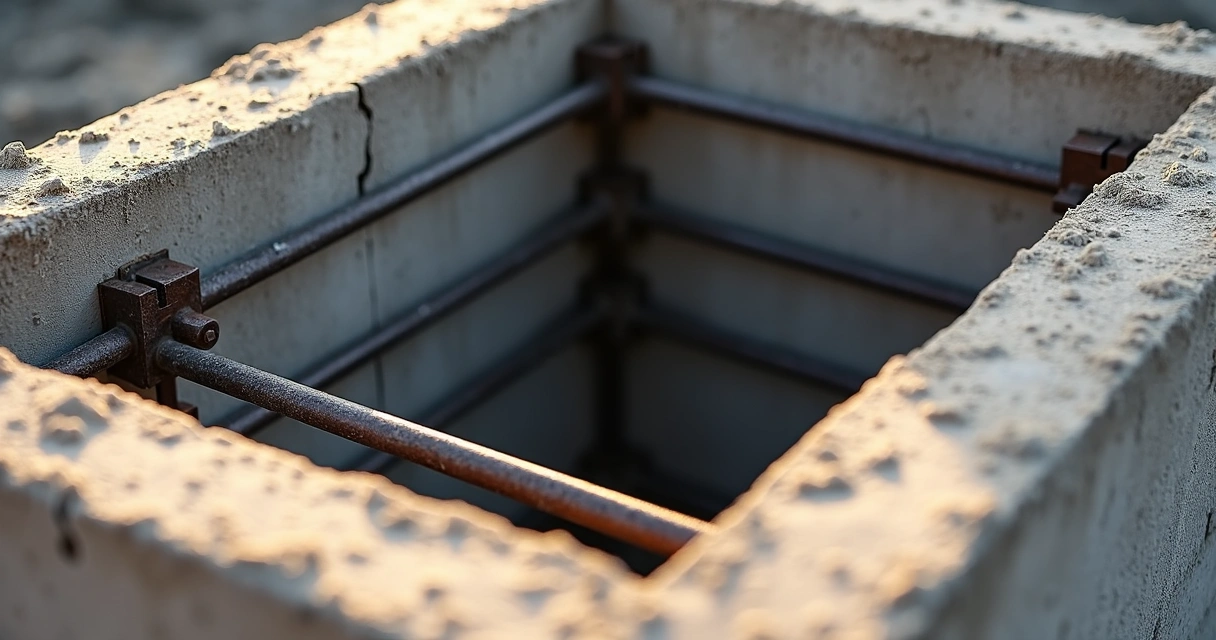
Skipping a pour, leaving rebar short at corners, or failing to vibrate the concrete leads to weak points—small mistakes here can mean large repairs later.
We’ve found it’s best to document each stage with photos and share them with our clients, reinforcing trust and providing a record for inspection or warranty work.
Bond beams for driveways, patios, and slabs in Florida
Bond beams are not only for vertical walls; they frequently play a role where flatwork meets other parts of the structure. When we design driveways, patios, and large-surface concrete slabs, adding a perimeter or edge beam—functioning as a bond beam—helps tie the slab together, control cracking, and anchor screen enclosures or summer kitchens.
- Edge beams resist movement along the perimeter, protecting against Florida’s variable subsoils.
- Bond beams may be used to support joints between two types of concrete—like slabs and driveways, or where a patio joins a pool deck.
- Integrated with drainage or irrigation sleeves, they provide space for pipes or electrical chases while maintaining strength.
For more about slab details that help prevent cracks and settlement, our concrete driveway and patio installation guide for St. Cloud explains the types of reinforcement that keep these areas looking new.
Practical benefits and real-world results
In our years working across Central Florida, we’ve seen many examples where bond beams made the difference between minor fixes and major failures. Properly installed, they bring:
- Straighter walls and slabs—fewer issues during inspections and resale
- Reduced surface and settlement cracking—especially in variable Florida soils
- Improved resistance to wind, uplift, and seismic forces
- Cleaner lines and fewer repairs for additions and upgrades
- Longer service life—one of the most cost-effective details for both new builds and repairs
“The strongest projects start with a hidden backbone.”
We sometimes meet clients who underestimated the impact of proper bond beams until repairs became necessary. For those curious about how to address existing cracks in older concrete, see our resource on concrete repairs by licensed contractors.
Common mistakes and how we avoid them
In Florida, we have seen several errors crop up repeatedly with bond beams:
- Inadequate cleaning of block cavities before pouring—leading to voids and weak points
- Gaps between rebar—reducing the beam’s strength
- Improper laps (overlap) or bends at corners and ends
- Failure to vibrate or consolidate the concrete
- Using poor-quality or corroded reinforcement near pools or coastal areas
Each of these mistakes chips away at the reliability of the structure—something we always avoid by careful step-by-step installation, inspection, and documentation.
As a licensed and insured contractor, our team at GCM Best Services follows written specifications and provides warranties, reassuring clients that bond beams (and everything tied to them) will pass inspections and serve for decades to come.
When should you consider bond beams for your project?
Most engineered concrete projects in Florida will need at least one bond beam, sometimes several. If your scope includes:
- Block walls taller than four feet
- Screen enclosures or pool cages meeting hurricane-load code
- Large openings such as garage doors or panoramic sliders
- Connecting patios, driveways, or summer kitchens to the home structure
- Projects in high-wind or flood zones
You will almost certainly require bond beams in the design. For those looking to choose a professional who understands the technicalities and practicalities of concrete in Orlando and nearby areas, our guide to selecting a concrete company in Orlando has tips on what to ask and what to look out for.
Bond beams and future-ready construction
As materials and codes evolve, so does the role of the bond beam. We see new innovations like fiber-reinforced polymer (FRP) bars and improved admixtures extending the life and durability of our concrete. These advances tackle the chronic corrosion challenges faced by Florida builders, as summarized in FDOT’s recommendations on fiber-reinforced reinforcing bars.
We keep our teams trained on these new products and installation techniques so your investment stands up not just today, but for many years.
Taking the next step: Why bond beams matter for your project
A well-designed bond beam isn’t something you see every day—but when it’s missing, problems stand out fast. At GCM Best Services, we prioritize these hidden details. Our process ensures clients have open communication, documented progress, and finished work that carries both a warranty and peace of mind.
“Bond beams are quiet protectors—they hold up homes when it matters most.”
If your project involves new walls, additions, pools, driveways, or repairs, let our experienced team recommend the right bond beam solution for your site. Start with a free on-site assessment—let’s plan your space for safety, longevity, and curb appeal.
Ready for a professional quote? 📞 (407) 250-1948 • 24–48h • Orlando, Tampa & area.
Frequently asked questions
What is a bond beam in construction?
A bond beam is a continuous horizontal structural element made of reinforced concrete and rebar, integrated into masonry or poured-in-place walls to add strength, resist forces such as wind, and tie together separate sections of the structure. In Florida, bond beams are critical for supporting roofs, floors, screen enclosures, and resisting weather-driven forces.
Why are bond beams important in Florida?
Bond beams play a key role because Florida faces strong winds, shifting sandy soils, and regular inspections for hurricane-resistance. They ensure walls do not shift, lean, or crack by tying block sections together and providing solid anchorage for structural parts above and around them. Their use reduces costly repairs and increases the lifespan of homes and commercial buildings throughout Central Florida.
How do you install a bond beam?
Bond beam installation includes:
- Laying out special block or forms at the right height or span, per engineering drawings.
- Securing horizontal rebar (and ties/splices) within the cavity for continuity and strength.
- Cleaning the cavities of all debris, ensuring a smooth pour.
- Filling with concrete/grout in a single, uninterrupted pour to minimize weak points.
- Finishing the surface, curing, and documenting for code inspection.
It’s essential to follow local codes for materials, rebar diameter, spacing, and inspection by building officials.
How much does a bond beam cost?
The cost of a bond beam in Florida depends on the width, length, concrete and rebar used, local engineering requirements, and access at the jobsite. Smaller residential bond beams may cost several hundred to a few thousand dollars per project, but costs increase for larger spans, double beams, or special corrosion-resistant designs. We always include bond beam costs up front in our estimates, with clear photo and materials documentation.
When is a bond beam required?
Bond beams are generally required:
- At the top of masonry/block walls
- Above large openings (garages, sliders)
- In taller or free-standing walls over four feet
- To anchor screen enclosures, roof trusses, or hurricane straps
- Where slabs, patios, or additions need structural ties
Design professionals and building codes dictate when and where bond beams are required, especially in Central Florida’s high-wind and flood-prone regions.