At GCM Best Services, we know how satisfying it is to see a newly finished driveway or patio. The hard surfaces, the sharp edges—everything looks strong and stable. Yet, in Central Florida, the job may not truly be finished unless we pay attention to what’s happening under the surface. Soil erosion can silently undermine driveways and patios, leading to cracking, settling, drainage issues, and costly repairs. Spotting signs early helps preserve your investment, keep your surfaces safe, and maintain your property’s appearance for years.
We’ve worked with homeowners and businesses all over Orlando and the surrounding areas, and have seen how the sandy soils, irregular rain, and heavy rains of Florida combine to make erosion a hidden risk. It’s our goal to show you exactly what to look for—and what you can do if you suspect a problem.
What you see on the surface is only half the story.
Why soil erosion happens under driveways and patios
Before you can spot trouble, you need to know why it appears in the first place.
What is soil erosion?
Soil erosion is the movement of topsoil or subsoil from its original place. In residential areas, it often occurs when rainwater flows over or around hard surfaces, gradually wearing away the soil that supports concrete, pavers, or slabs.
Soil erosion under driveways and patios becomes a bigger risk whenever water is not managed well, or when construction practices don’t match the demands of the site.
How driveways and patios increase runoff
Hard surfaces like concrete or pavers are called “impervious,” which means water can’t soak through them. According to the University of Georgia Extension, a one-inch rainfall event can send over 623 gallons of runoff per 1,000 square feet of impervious surface toward your landscape. That’s a huge volume, and it puts a lot of pressure on the soil beneath and around your driveway or patio.
If there is poor grading, missing drains, or sandy or loose soil (as we often find in Florida), this runoff can quickly lead to erosion under your new surface. Purdue Extension also confirms that impervious surfaces not only increase runoff, but also send pollutants into storm drains and local waterways—a further argument for responsible design.
Florida soils and construction
Central Florida soils are often sandy, quick-draining, and not always ideal for supporting heavy driveways or patios unless built correctly. In our work at GCM Best Services, we always compact the sub-base 6–8 inches, use high-strength mixes, and put in drainage that fits the needs of each site. This approach dramatically lowers the risk of erosion, especially when paired with features like rebar mesh, expansion joints, and careful grading.
Common causes of soil erosion under driveways and patios
We often find several factors working together to create erosion problems. Most are related to water flow, but construction practices, site conditions, and outside influences can add to the risk.
- Poor surface drainage: When your driveway or patio isn’t graded to channel water away, runoff concentrates near edges or underneath, washing away the soil.
- Absence of edging or barriers: Exposed edges allow rainwater to seep in and pull soil out.
- Faulty downspouts and gutter discharge: Roof runoff can pour directly next to the slab, causing concentrated erosion.
- Improper soil compaction: If the base was not compacted enough, voids remain. Water fills those voids, increasing the risk of settling and erosion.
- Heavy loads: From vehicles or equipment, especially on new slabs or recently disturbed soil, accelerate settling and soil movement. As noted by the U.S. Geological Survey, soil compaction from heavy use can increase erosion by making it harder for native vegetation to grow and changing how water moves.
- Tree roots and landscaping: Roots lift slabs and pavers slightly, creating gaps for water to enter and start eroding underneath.
- Extreme weather: Central Florida’s intense storms and afternoon downpours can quickly move large amounts of soil.
These issues can appear alone or combine to speed up the process. At GCM Best Services, we plan for these risks from the start—designing layouts with rows of drains, tight edge restraints, and stormwater solutions that match our soil and climate.
Visible and hidden signs of soil erosion
Spotting soil erosion early makes all the difference. Yet, not all signs are visible on day one. Erosion is sneaky—it’s silent below the surface, but it will eventually show on top.
What can you see?
According to the Northern Virginia Soil and Water Conservation District, common signs of soil erosion in landscapes include:
- Bare patches or thin grass near the driveway or patio edges
- Exposed roots or rocks
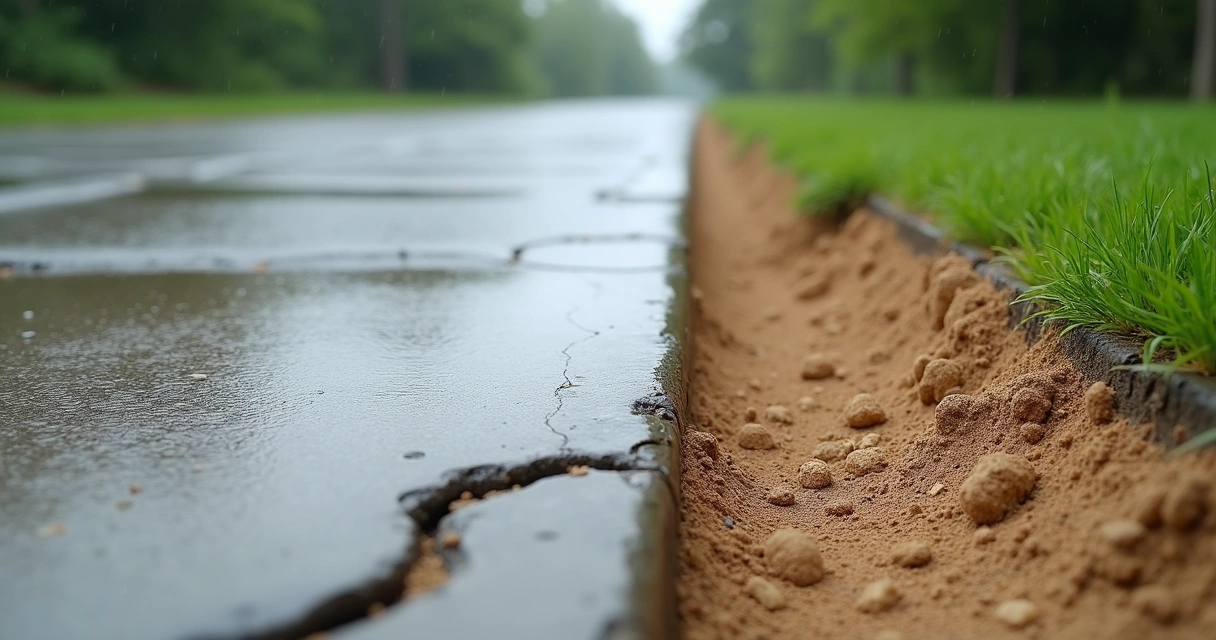
- Cracks or sunken spots on your driveway or patio surface
- Gaps forming between slabs, pavers, or stones
- Pooling water after rain (instead of draining away)
- Piles of sediment collecting at low points or on the hard surface
- Small channels or ruts forming in soil around edges
Keep an eye out for cracks, dipping corners, or persistent puddles—these are red flags for underlying erosion. You may also notice the surface feeling slightly hollow or thumping underfoot when walked on. Sometimes weeds or other plants begin growing in gaps, drawn by moist, disturbed soil.
What can’t you see?
Unfortunately, some signs aren’t visible till it’s late.
- Spaces or voids forming under the slab, sometimes only recognized by a hollow sound when tapped
- Doors or gates next to the slab sticking or dragging as the surface shifts
- Sudden appearance of ants or other insects swarming at cracks—they often follow new soil channels
- Water appearing to “mysteriously” disappear in certain patio corners (may indicate it’s washing out underneath)
We’ve seen how small shifts today can lead to big issues in months or years if ignored. Our team at GCM Best Services always encourages owners to report anything unusual, especially if your driveway or patio is still within warranty.
Inspection tips: How to check your new surfaces for erosion
If you suspect erosion, a simple inspection can reveal a lot. You don’t need expert tools—just your eyes, your hands, and attention to detail. Here’s what we recommend for owners in Central Florida:
- Walk the surface and edges after heavy rain.
Look for puddling, mud flows, exposed aggregates, or depressions around the boundary. Surface water should never stand for long.
- Check for new cracks, gaps, or movement.
Set a small object (like a ball or marble) on the surface—does it roll toward one area? This could indicate settling beneath.
- Inspect soil and grass near the slab.
Push gently with your foot or a stake around patio or driveway edges. If the soil sinks easily, it may be washing out underneath.
- Look for ants or surface material changes.
If you see ants piling sand or dust, it means there are tunnels and probably larger voids under the slab—clear evidence of erosion in progress.
If your property borders a slope or drainage swale, check those areas too—the first spots to fail are usually at the lowest points.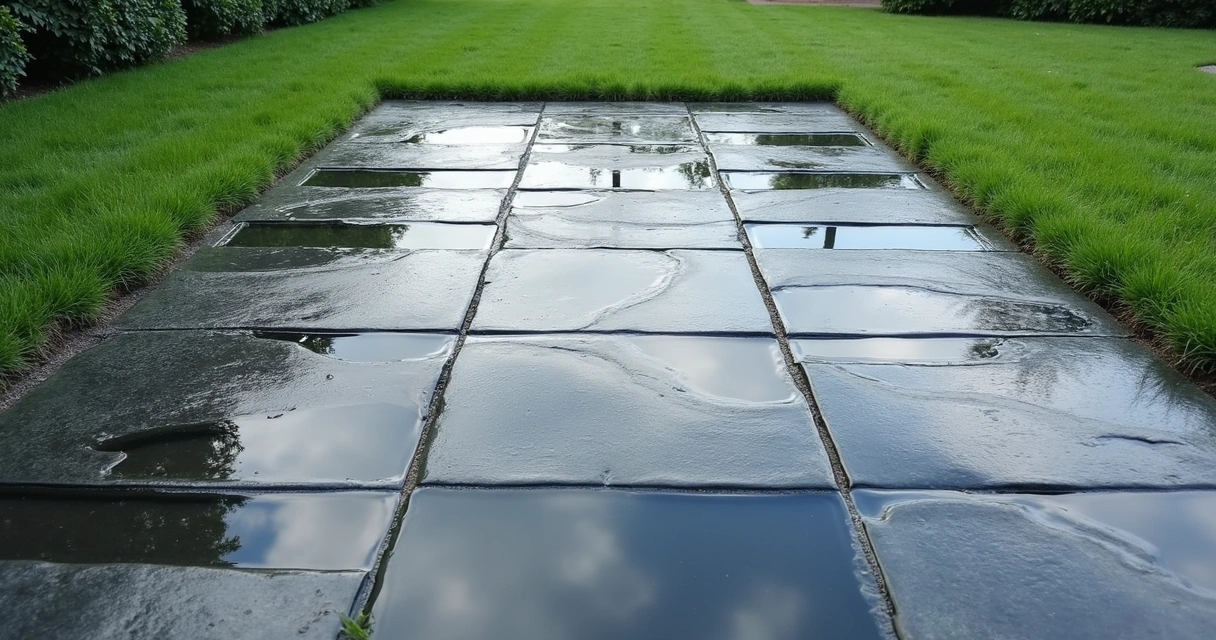
We’ve also detailed step-by-step approaches to preventing cracks in Florida concrete driveways and patios for more insight into stable construction and early warning signs.
Consequences if erosion is left untreated
Ignoring early signs can be tempting, especially if every surface still “looks good” from a distance. Unfortunately, problems escalate quickly once erosion starts.
- Loss of surface support: Voids grow beneath slabs, making them more likely to crack, break, or sink.
- Crumbling joints and trip hazards: Small gaps widen, letting in even more water and creating safety concerns.
- Drainage and flooding risks: Poor drainage now creates problems in your yard or the foundation of your home.
- Higher costs later: Surface failures, settling, and voids are much more expensive if you wait until the problem is obvious.
The cost to repair erosion is always lower if you catch it early.
Preventing erosion: The role of thoughtful design and quality installation
Most erosion can be prevented with good design and expert construction. That’s one of our core promises at GCM Best Services.
Best practices for new driveways and patios in Central Florida
- Use a properly compacted sub-base: At least 6–8″ compacted base, especially on sandy soils common in our region.
- Install edge restraints: Secure each side with concrete or flexible restraints to stop soil “fallout”.
- Include drains and slopes: Direct water away from the paved area using slight slopes (2% grade) and catch basins as needed.
- Divert gutter runoff: Attach downspouts with extensions to channel roof water far from any hard surfaces.
- Use proper reinforcement: Rebar or mesh supports load and resists shifting.
- Allow for expansion and control joints: Reduces stress on concrete and channels surface water safely.
- Finish with surface treatments: Durable sealers help keep water out and extend surface life, explained further in our driveway and patio paving guide.
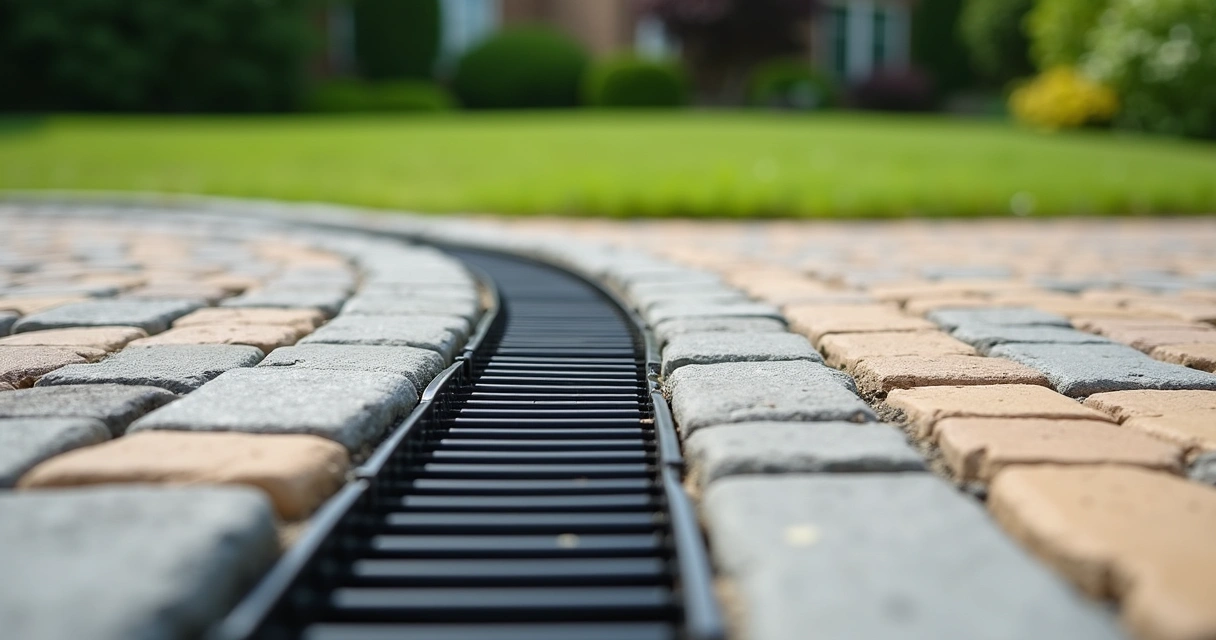
Ongoing maintenance also makes a difference, especially for brick and paver systems. Our article on effective drainage solutions for brick pavers has actionable advice for managing runoff and protecting paver installations year-round.
Steps to take if you spot soil erosion under your driveway or patio
If you spot any of the warning signs described above, quick action helps avoid bigger issues.
- Document what you see: Take photos and notes right after heavy rain, or when surface changes are noticed. This helps with warranty claims and contractor discussions.
- Check the age and warranty: If your surface is recent, reach out to your contractor for advice—they may have a process to address issues under warranty.
- Assess drainage: Is there a clear path for water to flow away? Are gutters and downspouts working? Make any simple adjustments possible (add splash blocks or extensions).
- Contact a specialist: Experienced contractors (like us at GCM Best Services) can perform a free on-site assessment, determine the scope of erosion, and suggest the right repairs for your site and budget. Learn about our concrete installation process for details.
If the damage is minor (a small hollow or gap), a patch or additional drainage may fix it. If the damage is advanced (sunken sections or ongoing washouts), you may need a more involved repair. It’s often possible to stabilize the soil underneath without full replacement.
Special considerations for paver and turf installations
Paver and artificial turf systems present their own challenges with Florida soils. They require the same water management as concrete, but have individual gaps that can allow water—and soil movement—if edge restraints or infill is missing.
With pavers, try to keep weeds from growing between pavers, since growth is a sign of erosion and moisture under the surface.
We often find that artificial turf projects can suffer from poor base installation, causing dips and water collecting beneath. Proper base compaction, drainage, and edge stabilization (all included in our process at GCM Best Services) are key.
Relationship between surface maintenance and soil erosion
Surface maintenance supports erosion control in two direct ways:
- By sealing gaps and cracks when they appear, you stop water from getting below the surface.
- Routine cleaning keeps sediment and debris from blocking drainage paths.
Both tasks are quick and low-cost, but make a real impact over time. We provide written maintenance guides with every project, so owners can enjoy peace of mind and long-lasting results.
Conclusion: Protect your investment from the ground up
Soil erosion is silent and often invisible—but it is not inevitable. With careful inspection, regular maintenance, and expert design, you can catch small issues long before they turn into bigger ones. We encourage every property owner to be proactive, to understand Florida’s unique challenges, and to trust your new driveway or patio to professionals who truly understand our local soils and climates.
Every project at GCM Best Services begins with a site assessment, detailed drainage design, and a commitment to every detail—above and below the surface.
If you suspect trouble or want to be sure your investment stands the test of time, we’re ready to visit your site, answer your questions, and recommend the best solution. Start with a professional review from our team—see just how much there is to gain by protecting your property from the ground up.
Ready for a professional quote? 📞 (407) 250-1948 • 24–48h • Orlando, Tampa & area.
Frequently asked questions
What is soil erosion under driveways?
Soil erosion under driveways happens when water moves the soil that supports the driveway, creating voids that may cause sinking, cracking, or structural failure. It is often triggered by heavy rainfall, poor drainage, or improper construction practices and leads to instability over time.
How to check for erosion signs?
You can check for erosion by inspecting your driveway and patio edges after rain, looking for visible cracks, sinking areas, exposed aggregate, or standing water. Walking on the surface to detect hollow sounds or using a stake to check for soft spots in the soil can also reveal soil movement. If you spot ants, weeds, or gaps forming, these are all signs of possible erosion.
What causes soil erosion under patios?
The main causes of soil erosion under patios include poor grading, missing edge restraints, gutter discharge near the slab, improper soil compaction during installation, heavy load traffic, and intense rainfall common in Central Florida. Sandy soils increase risk, particularly without planned drainage or regular maintenance.
Is erosion repair expensive?
Repair cost varies based on the scope of the damage. Minor issues may be fixed with patching or drainage improvements, which are relatively affordable. Significant damage, like sinking slabs or large voids, will cost more to address due to the need for stabilization or possible replacement. Costs are always lower when caught early, so prompt action is key.
How can I prevent soil erosion?
You can prevent erosion by choosing a contractor who uses well-compacted sub-bases, integrates drainage solutions, installs edge restraints, and diverts roof water away from hard surfaces. Routine maintenance to seal cracks and maintain drains will keep water moving where it should, not under your driveway or patio. We recommend yearly inspections, especially after heavy storms.