Moisture vapor barriers for garage floors may sound technical, but their role in concrete’s performance, especially in humid Orlando and Central Florida, is far from minor. In our years at GCM Best Services, we have seen how science, climate, and construction all work together. We think it’s worth looking at how the right barriers can mean a longer-lasting, better-looking, and healthier space.
Understanding moisture movement and its effects
Every slab of concrete interacts with moisture in three main ways. First, it absorbs water from the ground beneath. Second, it breathes moisture vapor from above. Third, it deals with local humidity and rain, especially in places like Orlando. Water vapor moves invisibly and persistently, threatening surfaces even when the concrete looks dry. This is why so many garage floors, especially those built before vapor barriers became standard, eventually stain, flake, or harbor mold despite regular cleaning.
Moisture may be invisible, but its damage is not.
How does moisture move through concrete?
Concrete is not as solid as it looks. It’s filled with microscopic pores. Groundwater naturally wicks upward, especially during Central Florida’s rainy seasons. Warm conditions create vapor pressure: water tries to move from areas of high concentration to low, often right up into the garage. If no barrier is present, this vapor travels freely. According to the U.S. Department of Energy, air movement can account for over 98% of water vapor movement in building cavities. Even a well-finished garage slab can’t stop vapor on its own.
Consequences of unchecked moisture
When vapor pushes through concrete, it can cause paint, epoxy, and coatings to bubble or peel. Over the years at GCM Best Services, we’ve found that floors without protection often develop surface stains, odors, and even unhealthy mold. Tools rust, finishes dull, and expensive repairs become necessary. Of course, heavy vehicles and foot traffic speed up the process. That’s why addressing sub-slab moisture isn’t just a builder’s technicality—it’s the difference between a clean, attractive space and a costly headache.
The science behind vapor barriers
So, what actually is a vapor barrier? Think of it as a physical layer below the slab, designed to stop most moisture and vapor from rising. But not all barriers work the same way. There’s genuine science involved.
The basics of vapor permeability
Vapor barriers are tested by how much water vapor can move through them. The measurement is called “perms.” The U.S. Department of Energy classifies vapor retarders into three groups:
- Class I: ≤0.1 perms (like polyethylene sheets)
- Class II: >0.1 and ≤1.0 perms (coated papers, some foam insulations)
- Class III: >1.0 and ≤10 perms (gypsum, uncoated papers)
In our experience, a true “barrier” for garages almost always means a Class I membrane, which provides the lowest permeability and nearly blocks out vapor flow entirely. This keeps the slab drier through every season, especially in locations with groundwater issues.
Physical science in action: how barriers stop vapor
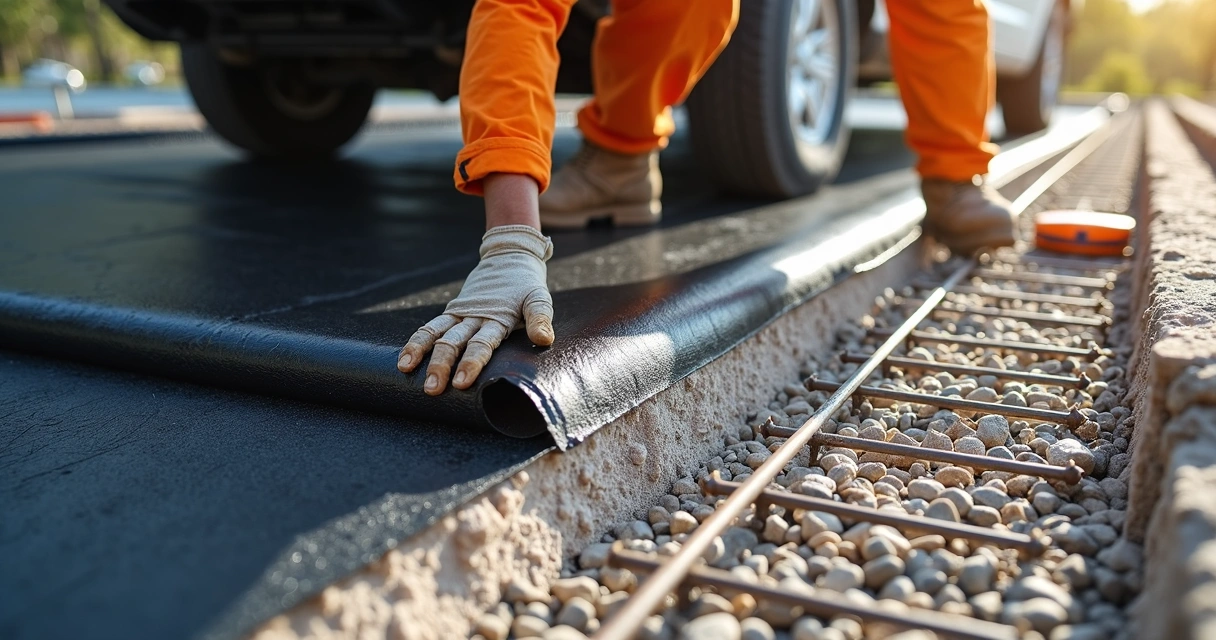
Modern barriers act like a wall, stopping liquid water and slowing even the smallest molecules of water vapor. But not all situations demand the same solution. Some garages only need moisture reduction, while others (especially on sloped or wet lots) need a near-complete seal. In Orlando, heavy rains, periodic high water tables, and sandy soils make this analysis even more important.
What happens if you skip the barrier?
We’ve often been called to treat garage floors that have developed problems years after installation. Most of these issues trace back to a missing or failed barrier. An untreated or poorly treated slab simply lets vapor pass up into the garage. The most common problems include:
- Peeling or bubbling of epoxy coatings and paints
- Persistent damp spots or dark stains on the slab
- White powder or “efflorescence” forming on the surface
- Musty odors, mold, or mildew around edges and corners
- Rust on tools, shelving, and even vehicles left parked for long periods
In some older Florida homes, we’ve found entire sections of garage floors needing patching or full slab replacement. This is why our process at GCM Best Services always begins with a thorough assessment, moisture testing, and, if needed, a full sub-slab barrier installation or repair.
Types of vapor barriers and their application
Not every project is alike. We examine the needs, age of the home, soil type, and climate factors, then recommend the right barrier system.
Polyethylene sheeting
In most new builds or major remodels, we install a heavy-duty polyethylene sheet (typically 10-15 mils thick) directly below the concrete and above the compacted stone base. This Class I material, widely recognized as the “gold standard,” stops almost all moisture and meets code in most jurisdictions.
Liquid-applied membranes
For existing garages where you can’t access under the slab, specialized liquid-applied barriers can be rolled or sprayed onto the prepared surface. These penetrate the pores and create a semi-permanent water-resistant film. It’s never quite as consistent as a sheet under the slab, but with professional application and surface repair, it brings real improvement to older spaces.
Integrated floor systems
Sometimes the solution is part of a larger renovation or waterproofing plan. This could involve built-up drainage layers, sub-slab ventilation, or multi-layer membranes. In Orlando and similar climates, combining a vapor barrier with proper drainage and grading is usually the best insurance against problems.
Moisture and garage floor coatings—why barriers matter
If you’re considering painting, epoxy, or polyaspartic coatings for your garage, a vapor barrier is not optional. Moisture breaks the bond between coatings and concrete by pushing up through invisible pores, leading to bubbles, peeling, and discoloration. Even premium floor systems won’t last long if the base is constantly damp underneath.
We’ve seen even new high-performance coatings fail in months when applied over a moist slab. For this reason, our process always includes a moisture test and a recommendation for extra protection if vapor levels are elevated.
Moisture testing before coating
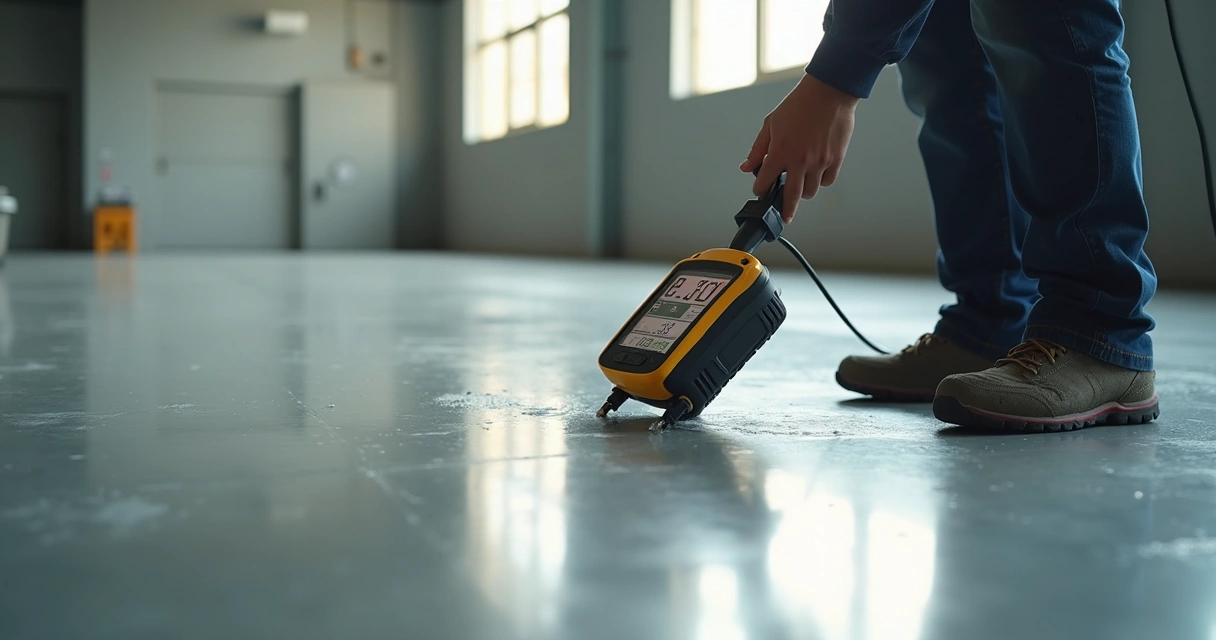
Before installing epoxy or paint, we conduct in-depth moisture testing. Rapid tests and extended calcium chloride measurements both reveal slab vapor emission rates. If the reading is high, a barrier must be added, or a different system selected. Skipping this step means gambling with the future of your investment—which we never advise.
Installation: from assessment to walkthrough
A successful barrier starts with careful planning and finishes with a clean, guaranteed result. Here’s what we do at GCM Best Services:
- On-site assessment and measurement of existing conditions
- Moisture vapor transmission testing
- Design of drainage, base compaction, and finished floor elevation
- Selection of proper barrier type (and thickness) for the conditions
- Professional installation with careful sealing and overlap (for sheets)
- Finishing the slab with joint placement, reinforcement, and surface finish of your choice
- Final walkthrough and written warranty on both materials and labor
Throughout, we keep every step transparent, share photos, and provide maintenance guides so you can keep your garage looking and performing its best for years.
We also address drainage and ponding issues in the design stage. This dramatically reduces the chance of water reaching the slab edge or undermining the barrier’s effectiveness. For more on proper drainage, our guide to preventing cracks and ponding is a useful resource.
Understanding local soil and climate: the Central Florida context
Florida’s soils are sandy, fast-draining, but prone to rising groundwater and strong rain events. We see slabs exposed to cycles the rest of the country rarely faces: drought, sudden downpours, and high humidity, all in one season.
Florida’s climate is a test for every type of construction.
That’s why most national advice on concrete or vapor barriers needs local adjustment. At GCM Best Services, our system for garage slabs, driveways, and patios always accounts for:
- Minimum 6-8″ of compacted sub-base
- High PSI (3,000–4,000) concrete mixes
- Properly installed rebar or mesh reinforcement
- Joints and surface finishes adapted to site and use
- HOA and local permitting for every installation
We are very familiar with local requirements and best practices. Our focus is always on creating long-term success in this specific region.
Repairing or updating barriers in existing garages
Working with older garages, especially those built before codes required barriers, presents a different challenge. These projects can include:
- Testing for vapor levels and mapping damp areas
- Grinding and prepping the surface for overlays or liquid-applied barriers
- Crack and joint repairs before any new protection is installed
- Choosing compatible coatings to complement the new system
We always recommend beginning with a moisture test. It’s inexpensive, fast, and tells us exactly what we’re working with. Sometimes the slab is dry enough for standard coatings, but in cases of persistent dampness, a quality barrier is necessary—and can dramatically improve both durability and comfort.
Warranties and maintenance: what to expect
Our approach at GCM Best Services is simple—deliver results, stand behind them, and make future maintenance easy. When we install a vapor barrier, you get:
- Clear photo documentation of every step
- A written warranty on both labor and materials
- A guide for future cleaning and maintenance
- Support for annual inspections or updates, as needed
Most problems that come up after install are due to exterior drainage or changes in site grading. We guide every client on future landscaping, gutter, and run-off management for the slab, so water has nowhere to pool and attack the edges.
Related services: integrating vapor barriers into your project
Whether you’re considering a full garage renovation, resurfacing, or even new driveways and walkways, we coordinate moisture protection across the site. We handle:
- Permit and HOA management for upgrades and repairs
- Matching vapor barrier, finish, and reinforcement to your planned use
- Epoxy or polyaspartic coatings over new or existing slabs
- Drainage and waterproofing consultations
As you evaluate your next project, consider reading more about choosing a concrete company or our licensed repair specialists for advice tailored to Orlando and Tampa’s conditions.
Conclusion
Most problems in garage floors don’t begin on the surface—they start with invisible moisture moving from the ground up. In our experience at GCM Best Services, the best defense is always a science-backed, code-compliant vapor barrier installed at the right time and maintained over the long term. Whether you have a brand-new garage or a decades-old slab in need of renewal, our process makes the difference between short-term fixes and lasting results. Questions about barriers, coatings, or overall garage floor health? Our team is ready to help across Orlando, Tampa, and Central Florida.
A dry garage floor is a healthy, durable floor.
Ready for a professional quote? 📞 (407) 250-1948 • 24–48h • Orlando, Tampa & area.Or learn more about our services and take the first step toward a drier, more reliable garage.
Frequently asked questions about moisture vapor barriers
What is a moisture vapor barrier?
A moisture vapor barrier is a physical layer installed beneath or on top of a concrete slab to block or slow the movement of water vapor from the ground into the garage floor. Most commonly, this is a heavy-duty polyethylene sheet or, in some retrofit cases, a liquid-applied membrane. Its primary purpose is to keep moisture below the slab and protect flooring and coatings above.
How does it protect garage floors?
By stopping vapor and water from rising up, a barrier prevents surface discoloration, peeling of paints and coatings, efflorescence, and mold growth. This keeps your floor looking new, keeps stored items safe, and reduces musty odors. It is especially helpful in humid or wet climates, where without a barrier, slab moisture is a constant problem.
Is it worth it to install one?
If you want to protect your investment and avoid recurring repairs, installing a moisture vapor barrier is strongly recommended. In new construction, it is best practice and usually required by code. For older garages with signs of moisture trouble, retrofitting with a surface-applied product can provide a significant improvement.
How much does installation usually cost?
Costs depend on garage size, barrier type (sheet or liquid), and site conditions. Typically for new builds, the barrier adds only a small percentage to total slab costs. For retrofits, the price is higher due to extra labor and surface prep. We provide free on-site assessments and estimates, detailing exactly what is needed for your project and budget in the Central Florida market.
What are the best barrier materials?
For new installations, 10-15 mil polyethylene sheets (Class I vapor retarders) are the best choice, delivering strong resistance to moisture as recognized by the U.S. Department of Energy. For renovations, specialized epoxy- or polyurethane-based liquid membranes are often used. The most suitable product depends on your particular slab and conditions, which is why we always test and make recommendations before each project.