Living in Central Florida, we know how much residents invest in their driveways, patios, walkways, and other concrete flatwork. At GCM Best Services, we see first-hand how Florida’s unique environment affects concrete durability. Scaling is one problem that can creep up suddenly—diminishing curb appeal, reducing surface strength, and inviting further problems if left untreated. In this guide, we’ll help you recognize concrete scaling, understand why it happens in Florida, and walk you through the most effective approaches for repair and prevention. Through our experience and attention to proper construction practices, we want you to keep your concrete beautiful, safe, and lasting year after year.
What is scaling and how does it appear?
Scaling is a type of surface deterioration. The protective mortar layer at the concrete’s top begins to flake, break, or peel away, leaving patches where coarse aggregate (the larger stones in the mix) are exposed. Sometimes, it starts as tiny surface blisters or thin flaking, but over time these can deepen into rough, pitted surfaces if not addressed.
“Scaling is more than a cosmetic issue—it can signal a problem within the concrete.”
The GSA’s technical guidance divides scaling severity by how much mortar or paste has worn off and whether you can see the underlying “rocks” or coarse aggregate:
- Light scaling: Thin layer lost; aggregate mostly covered.
- Medium scaling: Surface worn to depth of 1/8”; some aggregate exposed.
- Severe scaling: Loss up to 3/8”; much aggregate clearly visible.
- Very severe scaling: Surface battered and heavily eroded; deep aggregate exposure.
Identifying what level you’re dealing with shapes the right repair plan. Generally, lighter scaling can be mostly cosmetic and treatable with surface patches, while severe cases might mean deeper repairs—or even replacement—are needed.
Why does scaling affect Florida concrete?
Scaling can occur anywhere, but here in Florida, several factors combine to make it especially noticeable and rapid. Let’s break down these local pressures:
- Moisture fluctuations. Our climate brings intense summer downpours, seasonal flooding, and regular soak-dry cycles. Water that seeps into the concrete and then evaporates can force the surface layer to separate.
- Improper finishing during installation. If the surface is “overworked” with too much water or troweling, or if curing is incomplete, the top layer can become weak and vulnerable to scaling.
- Use of de-icing salts. While not as common in Central Florida, occasional freezes can lead homeowners or property managers to use chlorides or salts that eventually enter the concrete, accelerating scaling once wet weather returns.
- Sandy soils and drainage. Our local soils require special preparation so water doesn’t pond beneath slabs—which can increase hydrostatic pressure and lead to risks for both scaling and cracking.
- Poor quality mix. Using too little cement (weak paste) or high water-cement ratios (porous finish) increases risk, especially when coupled with high exposure to sun and rain.
At GCM Best Services, we have spent years educating and reminding property owners how installation practices—choice of mix, compaction, jointing, and curing—all set the stage for whether a surface will resist scaling or become susceptible. This aligns with findings from University of Florida Concrete Materials Research about how mix proportions and environmental factors influence surface distress like scaling and shrinkage cracking.
Early signs: How to identify scaling on your concrete
We find that early recognition saves homeowners money and hassle in the long run. Walking a property, we check for tell-tale warnings. Sometimes we’re called out to examine mystery “spots” or “rough patches” that grew over months.
- Light-gray or white patches that don’t disappear after cleaning.
- Local flaking, chipping, or small blisters, especially after heavy rain or a rare freeze.
- Thin layers peeling off in irregular shapes (sometimes coin-sized or smaller).
- Sandiness or granulation: when you brush your hand over the area, fine particles break away.
- In advanced cases, rough edges and the visible outline of rocks in the surface.
If left alone, scaling tends to spread, sometimes speeding up each rainy season, especially if moisture from above or beneath keeps finding its way into the concrete matrix.
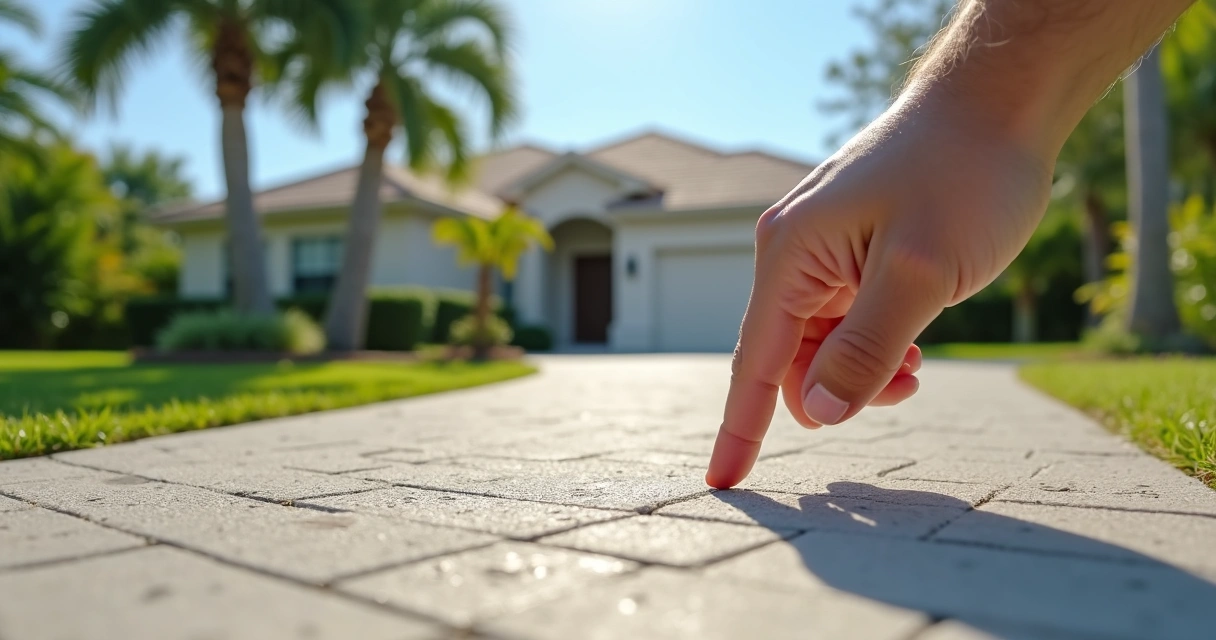
What NOT to confuse with scaling
It’s easy for property owners to blend scaling with other problems, but getting the diagnosis right is the first step toward a real fix.
- Efflorescence is a white, powdery residue caused by salts migrating to the surface—usually it brushes off easily, unlike scaling.
- Cracking or crazing creates spider-web hairlines but doesn’t usually remove the top paste in patches.
- Surface staining (rust, oil, tannin, mold) can discolor concrete without damaging the physical structure.
Scaling always involves a loss of material, changing the surface texture. We help homeowners make these distinctions during assessment visits.
Why prompt treatment matters
Some clients ask whether concrete scaling is a simple cosmetic bother or a sign of broader problems. Our answer always comes down to risk and progression. Unrepaired scaling exposes the deeper concrete layers to more water, sun, and even chemical attack, accelerating wear and making repairs harder—and more expensive—over time.
Left unchecked, scaling on a Florida driveway or patio may also weaken anti-slip protection, increase trip hazards, and lower home value. As scaling worsens, it can also cause adjacent slabs to heave or settle unevenly due to moisture cycles in local soils.
“Treating early scaling is less disruptive and keeps property values higher.”
Step-by-step: How we assess and treat scaling
Inspection: Determine severity and root cause
First, we always inspect the extent and depth of the scaling—sometimes even using coin or card tests to measure how much paste has been lost. We’ll often reference the GSA guidelines to categorize the damage. Next, we track symptoms to a cause: faulty water drainage, improper finishing, or failed curing, for example.
We gather feedback from the property owner: Did the problem appear after a weather event? Has de-icing salt ever been used? Has this driveway or patio flooded after storms?
Prepare the affected area
We never patch over dirty or poorly bonded surfaces. Our crews carefully sweep and pressure-wash the scaled area, making sure all dust, loose debris, or old sealers are removed. Where material is especially weak, we might use grinders or scarifiers to reach sound, clean concrete.
Choosing the right repair method
At GCM Best Services, we select the approach that matches both severity and placement (such as residential patio, commercial drive lane, pool deck, etc). Here’s our standard breakdown:
- Light to medium scaling: We favor polymer-modified, color-matched resurfacing compounds. These thin overlays bond tightly to the old concrete and restore the appearance. Our technicians feather the edges and texture to match existing broom, salt, or stamped finishes.
- Severe or deep scaling: If more than 1/4” of surface is gone, we cut around the affected area and patch with compatible repair mortar, sometimes reinforced with fiber mesh for added strength. For very severe scaling, full-depth slab replacement may be considered—though this is rare with early intervention.
- Patching larger zones: On big driveways and walkways with recurring issues, we may advise full-section overlays or “micro-topping” to bring the entire surface back to a uniform look and feel—especially when concrete is showing signs of aging throughout.
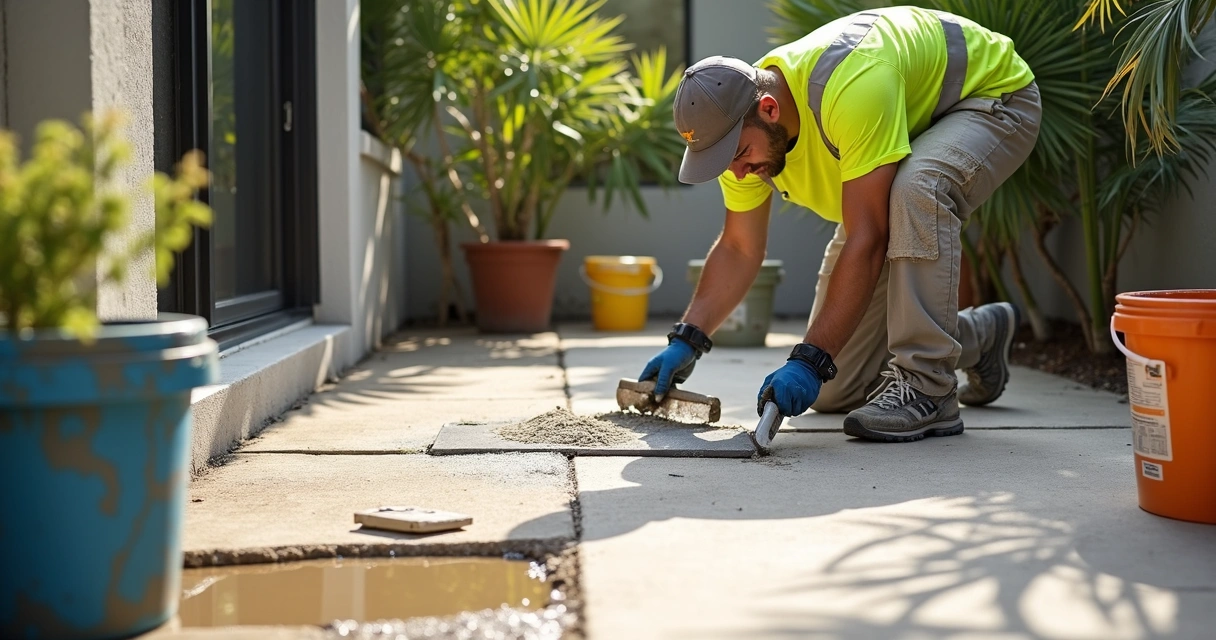
Key steps in professional scaling repair
- Diagnose scaling depth and area.
- Clean and prep to ensure a sound base and good adhesion for materials.
- Apply bonding agent or primer where needed for overlays.
- Install repair material (polymer-modified overlay or patching mortar), finished to match the surrounding concrete texture.
- Moist cure the repaired area, protecting from sun and rain for 24–48 hours.
- After full cure, apply a high-quality breathable sealer to reduce future scaling and aid water shedding.
After repairs, we walk clients through a care plan: Avoid parking or heavy foot traffic for at least a few days; check for puddling after storms; refrain from harsh chemical cleaners or salt use.
Preventing scaling from coming back
We always say that strong repairs are only half the battle. Preventing re-scaling requires fixing the underlying sources of water or vulnerability.
Here are solid approaches we use on each project:
- Proper slab drainage—add swales, French drains, or surface grading as needed.
- Restore joints and seams to keep water from infiltrating beneath the slab.
- Upgrade sealers to breathable silane/siloxane-based formulas designed for Florida’s hot, humid climate.
- Educate owners about gentle cleaning and never using hard-bristle brushes on new overlays.
Our process, from free on-site assessment through maintenance, reflects our dedication to long-term results. We see a strong connection between invested maintenance and the long life of Central Florida concrete, whether it’s a residential walk or a commercial apron. Detailed maintenance steps and product recommendations are a part of our written warranty as well.
The science behind scaling resistance: What studies show
Advances in concrete materials are making surfaces more resilient than ever. For instance, University of Florida Concrete Materials Research is developing test methods to predict how different mixes handle shrinkage and water penetration—two cornerstones in the fight against scaling. These insights have informed our use of 3,000–4,000 PSI rated mixes, proper air entrainment, rebar or mesh reinforcement, and controlled jointing for projects around Orlando, Tampa, and the region.
Incorporating these contemporary methods during both installation and repair phases means our clients benefit from the latest performance research—making scaling less likely for new and restored surfaces.
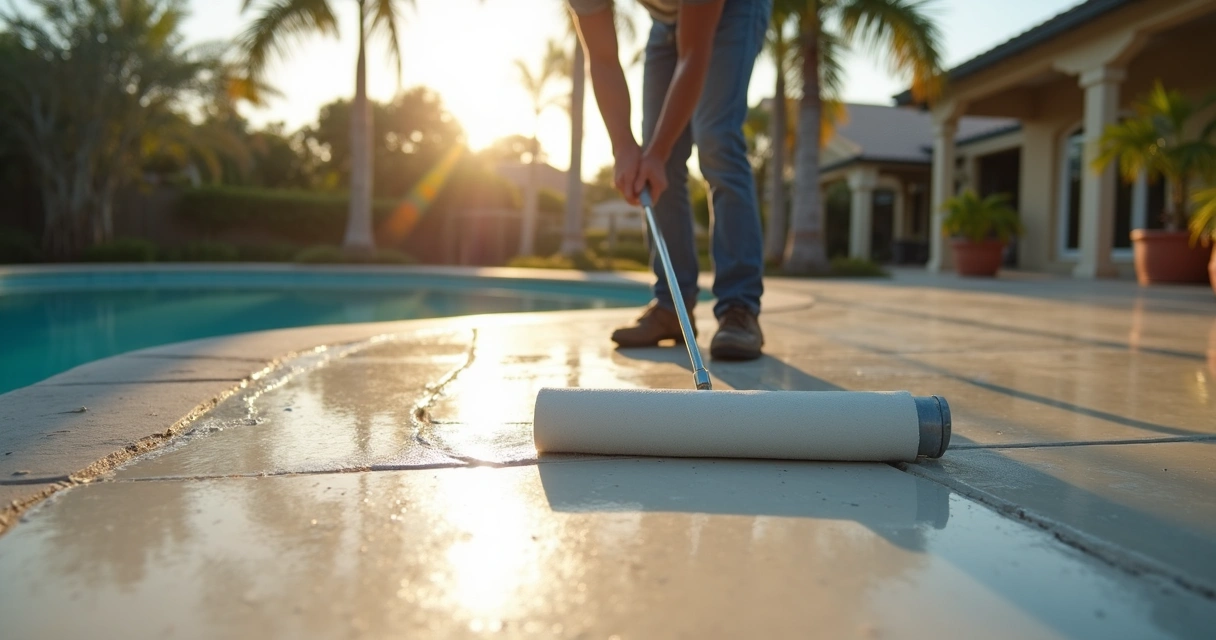
How GCM Best Services protects your investment
Our approach always starts with listening—hearing homeowner stories, checking problem spots, and matching solutions with local climate realities. We recognize how Florida’s challenging combination of water, heat, and sandy bases can affect driveways, patios, sidewalks, and commercial spaces.
When choosing a repair team, ask about:
- Experience with drainage, permitting, and HOA/inspection issues in Central Florida.
- Use of high-performance materials and concrete mixes adapted to local codes and drainage challenges.
- Clear communication, jobsite cleanliness, and written warranties on finished work.
We recommend browsing our resources on crack prevention on Florida patios and driveways and our detailed guide to concrete repair with licensed experts for a deep look at our construction standards. We are committed to “do it right the first time”—from proper base compaction to protective top layers and everything in between.
Local experience: Scaling in context
From Lake Nona to St. Cloud, Windermere to Sanford, scaling problems differ by neighborhoods—an old driveway under an oak can shed leaves and trap moisture, while a sun-drenched patio in Lake Mary sees heat, splash, and perhaps pool chemicals. We’ve helped clients in each of these situations, drawing on experience detailed in our installation guide for concrete driveways and patios.
Sometimes, property owners wonder if replacement is necessary, but in most cases, early action, professional patching, and careful sealing bring surfaces back to life and extend their service for years.
Our promise: Why details matter
At GCM Best Services, we believe in clear communication, on-time completion, and documented results—every project comes with photos and a written maintenance/warranty plan. When you address scaling promptly and correctly, you gain not only peace of mind but preserved value in your home or business.
If you want long-term results and a straightforward process for your concrete repair needs in Orlando, Tampa, or anywhere in Central Florida, we are here to help.
Conclusion
Scaling can seem like a minor surface blemish, but in our experience, it’s the first signal that something isn’t quite right with your concrete. Left too long, it spreads—and the solutions become more involved and expensive. Our crews specialize in diagnosing scaling, repairing it with the right mix and technique, and keeping it from coming back. By following current best practices and research, such as what’s coming out of the University of Florida’s concrete lab, we provide Orlando and Central Florida property owners with solutions that last.
Ready for a professional quote? 📞 (407) 250-1948 • 24–48h • Orlando, Tampa & area.Or, learn more by reading our latest articles in the concrete expertise section or see our advice for choosing a concrete company in Orlando.
Frequently asked questions
What is scaling on concrete surfaces?
Scaling is the flaking or peeling away of a concrete surface, where the top layer of mortar or paste detaches, exposing coarse aggregate underneath. It usually appears as irregular patches and can range from small, thin flakes to deeper, rough zones, depending on severity.
How can I tell if concrete is scaling?
Look for white or gray flaking patches that don’t clean off, surface roughness, or spots where fine gravel (coarse aggregate) is starting to show. If the area crumbles when brushed or if thin sheets peel off, this suggests scaling. In Florida, check after heavy storms or rare freezes, as these weather swings often reveal the problem.
What causes concrete scaling in Florida?
The main causes in Florida are frequent wetting and drying cycles, poor drainage, and improper installation (like overworked surface or inadequate curing). Sometimes, ponded water beneath slabs or use of salts during cold snaps can worsen it. Our sandy soils and high humidity make the protective top layer more vulnerable to loss, as confirmed by contemporary research on concrete resistance.
How do I fix concrete scaling?
To repair scaling, start by cleaning and prepping the area to remove loose debris and old sealers. Then, apply a compatible repair compound or resurfacing overlay matched to the depth of loss—for light scaling, thin polymer overlays work; for deeper cases, patch to the depth of sound concrete. Always finish by sealing the area with a breathable product meant for Florida’s climate. If widespread or deeply scaled, consider professional resurfacing or replacement for lasting results.
Is it worth it to repair scaling?
Absolutely. Repairing scaling early is less costly and disruptive than major slab replacement. It saves property value, boosts safety, and improves curb appeal. In cases where scaling is caught soon, skilled patching and sealing often make the surface look nearly new. Only in rare severe cases, where damage is beyond the surface, will full replacement be advisable. Our experience at GCM Best Services is that prompt, professional repairs are a smart investment for Central Florida concrete owners.