Stucco delivers a finished, weather-resistant, and attractive look for patios and walkways. In Central Florida, we see homeowners often choose stucco for outdoor living spaces, where moisture, sunlight, and shifting soils put exterior finishes to the test. When installation or repairs don’t follow best practices, minor issues can grow into significant headaches—sometimes in just a single season. At GCM Best Services, we’ve seen firsthand how improper stucco can undermine the beauty and function of patios and walks. Let’s walk through the seven most common problems we encounter, what causes them, and why it’s worth getting stucco work done right the first time.
Why stucco is popular for patios and walks in Central Florida
Many property owners in our region choose stucco because it suits the climate and aesthetic, blends with block and concrete, and offers weather resistance. When applied properly over patios or walks, stucco forms a protective skin over concrete or masonry, shielding it from the intense sun and rain cycles that we experience in Orlando and across Central Florida.
Yet, as we’ve learned through decades of hands-on work, the details of preparation, mixing, application, and finishing all make the difference. So before jumping to the specific issues, it helps to understand what happens when those basics are ignored.
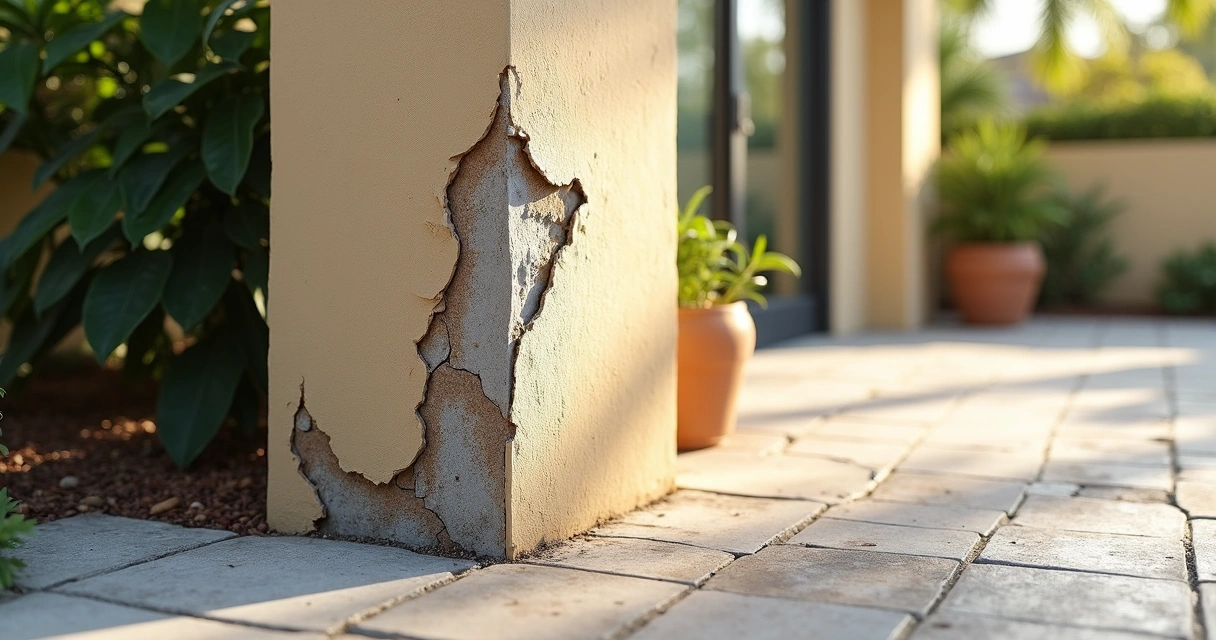
What does “improper stucco” mean?
Improper stucco, in our line of work, comes down to application mistakes, failed substrates, or skipped steps. Common culprits include:
- Poor surface prep (not cleaning/deburring or dampening substrate)
- Wrong stucco mix or not following manufacturer guidance
- Improper lath or reinforcement (missing mesh or rebar where needed)
- Skipping expansion/control joints
- Thin, uneven, or overbuilt layers
- Rushing drying times, especially in our hot, humid climate
- Ineffective water or drainage detailing
When someone cuts these corners, problems are almost certain to follow. Now, let’s break down the seven most common—and expensive—issues that result.
Problem 1: Cracking and delamination
Cracks are the #1 sign of improper stucco on patios and walks—often starting hairline, but widening over time.We commonly see cracks form within the first year after installation when:
- The base concrete or masonry was not properly cured or cleaned before stucco went on
- The stucco layer itself was applied too thick/thin or wasn’t reinforced
- There are no expansion/control joints, so thermal expansion causes stress
Delamination (stucco detaching from underlying concrete or block) often follows, especially if the stucco isn’t strongly bonded or if water gets trapped behind the coating. The result? Unsightly loose panels, safety issues from falling chunks, and a much more expensive repair.
Cracking stucco is an early warning that water may start intruding where it shouldn’t. This can lead to much greater damage if left unchecked. Guidance from the General Services Administration emphasizes that water infiltration through cracks is a primary cause of failing stucco surfaces.
Problem 2: Moisture intrusion and water staining
In Central Florida, we see rain, heavy dew, and high humidity test even the best outdoor finishes. When stucco is installed without proper flashing or drip edges, water seeps behind the surface. Over time:
- Dark, unsightly stains appear along joints, at the base of patio walls, or where the stucco meets walkways
- Mold and mildew grow behind the surface, leading to a musty smell and health risks
- The formed pool on sub-base soaks upward, damaging patio slabs and causing rot on adjacent structures
Persistent moisture causes surface damage, weakens adhesion, and exposes patio and walk surfaces to even more risk.This is confirmed in technical recommendations from industry and the General Services Administration.
We consider proper drainage design and moisture barriers a must-have in any stucco project involving patios or hardscapes, which is why it is a built-in step in every GCM Best Services exterior job.
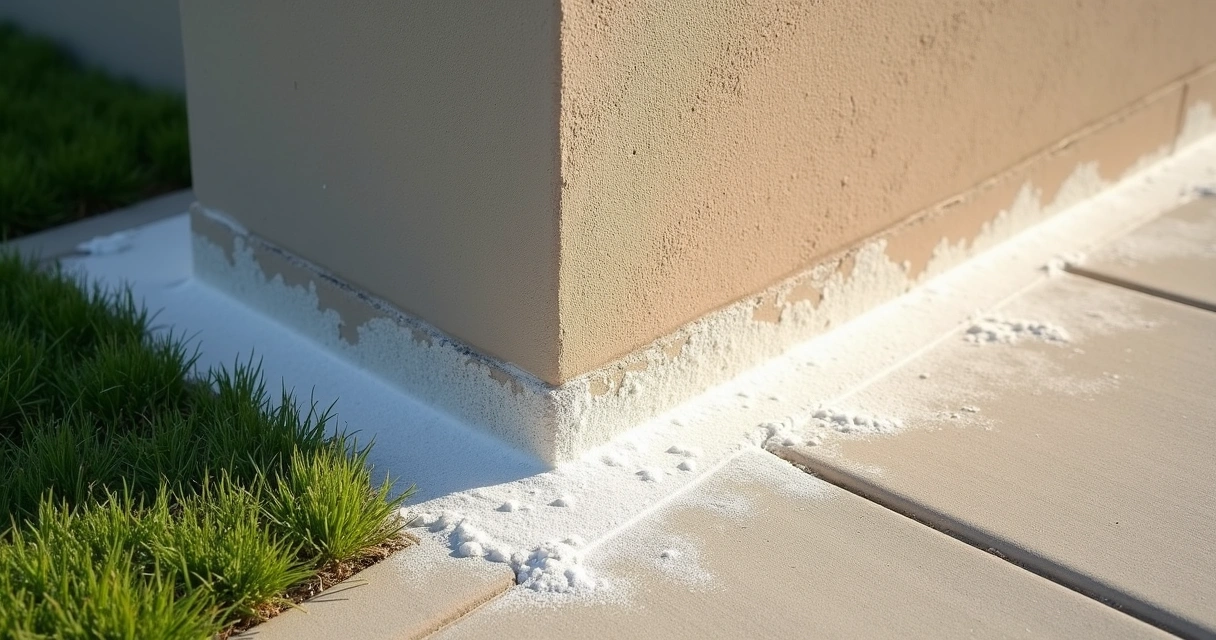
Problem 3: Efflorescence build-up
The powdery white stains you see along the base of outdoor stucco often signal a deeper issue: salts moving through and out of the mix. This condition, known as efflorescence, occurs when there’s excessive moisture behind or within the stucco layer. Causes often include:
- Improper or missing waterproofing layers
- Unaddressed leaks near gutters and downspouts
- Incorrect sloping of patios that send water toward rather than away from stuccoed areas
While efflorescence doesn’t always mean structural risk, it ruins the appearance and often precedes spalling or surface crumbling. In some cases, the build-up also signals that concrete beneath is saturated, which sets the stage for more costly repairs.
Problem 4: Surface pitting and spalling
Perhaps you’ve noticed small holes or flakes popping off the surface of patio stucco? That’s pitting and spalling—another signature result of poor prep or moisture management. This occurs when:
- Loose aggregate or poorly mixed stucco leaves “open” spots
- Improper finishing lets water collect and freeze/expand in micro-cracks (less common in Florida, but possible during rare cold snaps)
- Sub-base movement flexes the patio, breaking the stucco bond
Pitting signals a breakdown in the surface bond, and untreated spalling will eventually destroy large portions of stucco, exposing the patio or walk base.Proper compaction, using appropriate concrete mixes for Florida soils, and tight finishing protocols (as practiced by GCM Best Services) are the first steps to preventing these problems.
If you want to understand how to proactively prevent issues like these, you’ll find additional info in our guide to preventing cracks in Florida patios and driveways.
Problem 5: Detachment at control joints and edges
Patio and walkway designs often rely on expansion joints to handle movement from temperature swings and ground settling. If stucco is applied right over these joints (without flexible caulking or break lines), it detaches quickly, sometimes in long, visible strips. Key causes include:
- Skipping control joints during stucco application
- Poor adhesion at the transition between patio/walk surfaces and adjacent structures
- Hard edges or corners lacking extra reinforcement
Edges matter. They are the most fragile zone of any stucco surface.
Detached stucco at joints leaves ugly gaps and invites water inside. In our experience, repairing a badly detailed expansion joint is almost always more costly than planning for it during the initial job.
Problem 6: Freeze-thaw damage and thermal movement
Central Florida rarely gets long hard freezes. Still, even brief cold snaps combined with daytime heat cause patio bases and stucco to move at different rates. Without proper jointing and reinforcement, this movement causes the stucco to:
- Pop off the surface (in “chips” or full panels) after a rapid freeze-thaw cycle
- Form deep “map” cracks that follow the lines of underlying movement
- Lose surface texture, especially exposed or decorative finishes around walkways
Inadequate understanding of local sub-base movement is a root cause of surface failure after a cold snap.This is why our team always selects mixes and reinforcement strategies that suit Florida’s seasonal weather—an approach detailed in our St. Cloud patios and driveways installation guide.
Problem 7: Mold, algae, and biological growth
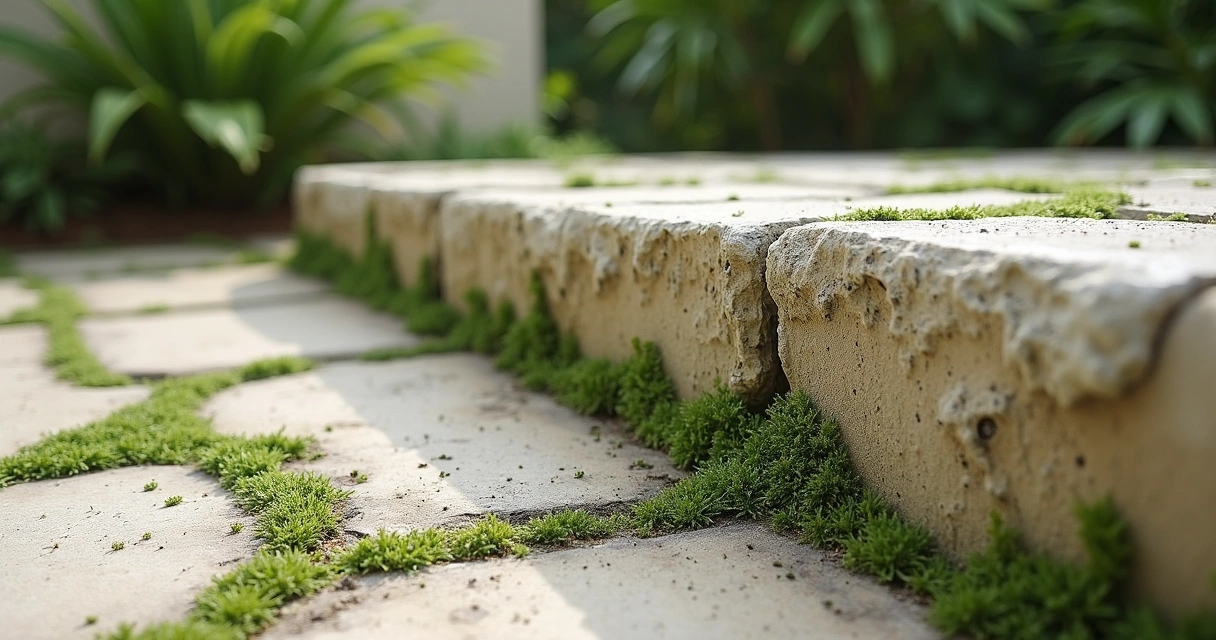
Perhaps the most unsightly of all patio and walk problems: mold, mildew, and algae. In spots where stucco is loose, constantly damp, or shaded (such as near garden beds or under overhangs), these fungi find a perfect environment. Causes and conditions include:
- Poor surface slope and standing water at the stucco base
- Loose or flaking stucco that traps moisture
- Lack of sunlight or air circulation on shaded patios/walks
- Wrong paint or coating that seals in moisture, rather than allowing the surface to “breathe”
Fungal and algal growth not only look bad—they can steadily eat away at the surface, make pavements slippery, and cause persistent odors.Once established, these organisms are tough to remove without damaging the stucco further. That’s why we always advise clients to address loose or water-damaged stucco promptly, focusing on correcting drainage issues and surface finish.
Other risks: Compromised safety and curb appeal
Beyond structural and cosmetic problems, defective stucco can lead to:
- Trip hazards from detached, bulging, or spalled surfaces
- Decreased property value and a neglected appearance
- Failed HOA or city inspections, resulting in fines or forced repairs
These consequences stress the need for skilled, licensed professionals and continuous maintenance. We sometimes see clients who attempt “band-aid” fixes, only to find that the real problem extends far beyond what’s visible on the surface. As always, an ounce of prevention is worth more than a pound of patching.
To see examples of major patio and walk repairs from our own portfolio, you can visit our licensed contractor repair overview and browse our resource articles in the concrete category.
Best practices for long-lasting stucco outdoors
Based on what we’ve learned at GCM Best Services and through industry standards, here’s what separates durable outdoor stucco from failures:
- Thorough cleaning, neutralizing, and slightly dampening base surfaces
- Choosing the right stucco mix and applying in layers no less than 3/8″ or more than 7/8″ per coat
- Following manufacturer’s rules for joint location, reinforcement, and flashing
- Including proper slope, edge restraints, and sealing details
- Allowing full cure time before painting or coating
- Addressing drainage from the start, using polymeric sand or open joints if needed for paver transitions
- Backing every job with photos, written warranties, and a clear care guide
Professional stucco installation is about layers—base material, reinforcement, jointing, attention to detail, and ongoing support.Our clients in Central Florida count on these steps, and it’s why so many call us when past stucco starts to fail.
Often, we find patios and walks that also need updates to lighting, drains, or paver borders. In these cases, integrating new stucco work with specialty hardscaping services can bring both function and good looks back to your space.
When is it time for a professional stucco inspection?
We recommend an assessment if you notice:
- Any visible cracks, holes, or “hollow” patches when tapping the stucco
- Moisture stains, efflorescence, or white/powdery surfaces
- Loose or detached sections, especially around joints and edges
- Mold, mildew, or algae growth that returns after cleaning
Your patio should look as good as the day it was finished—even years later.
Getting ahead of stucco issues saves time, money, and preserves the value and enjoyment of your property. If you need more technical details about concrete and stucco design for patios in the Orlando area, our team has you covered with guides and checklists specifically for our local conditions—take a look at our detailed installation guide for more.
What to ask a contractor before starting stucco work
- Can you provide local references or project photos of similar patio/walk stucco work?
- What mix will you use for my soil conditions and climate?
- How do you handle control joints, edge restraints, and drainage transitions?
- What written warranty and post-project care is included?
We believe informed clients make the best decisions and get the most lasting results.
Conclusion: Protect your patio investment with skilled stucco work
Improper stucco on patios and walks isn’t just a cosmetic issue—it brings water damage, unsafe surfaces, repair bills, and can even put your property at risk for citations or lost value. Each of the seven problems we described: cracking, moisture, efflorescence, spalling, detachment, freeze-thaw effects, and biological growth, highlights how essential technique, climate knowledge, and tested products are for our region.
With GCM Best Services, every stucco and hardscape project is handled by licensed, insured experts, aligned to local code, and documented by photos, clear communication, and written warranties. Our commitment is to help you get a patio or walkway that lasts—and looks great for many years.
Ready for a professional quote? 📞 (407) 250-1948 • 24–48h • Orlando, Tampa & area.
Frequently asked questions
What is improper stucco installation?
Improper stucco installation means the material was applied using incorrect techniques or without the right base preparation. This can include poor surface cleaning, using the wrong mix, skipping necessary reinforcement, lacking expansion joints, or failing to manage moisture and drainage. Improper installation increases the chance of cracks, water damage, and surface failures over time.
How does stucco affect patios?
Stucco protects patio concrete or masonry by forming a decorative, weather-resistant shell. If installed properly, it guards against water, UV rays, and minor movement. Otherwise, bad stucco work lets moisture in, cracks form, or surfaces deteriorate, reducing the lifespan of your patio. The finish quality can also improve the aesthetics and add to property value when done with care.
What problems can bad stucco cause?
Poor stucco practices can cause cracking, delamination, moisture intrusion, efflorescence (salty deposits), pitting, spalling, edge detachment, thermal damage, and growth of mold or algae. Over time, these lead to costly repairs and negatively impact both safety and curb appeal. Most stucco problems outdoors begin with inadequate preparation or ignoring local climate needs.
How to fix stucco issues outdoors?
The best way to fix stucco outdoors is to first identify the underlying cause, such as moisture problems or substrate failure. Damaged stucco is then removed, the substrate cleaned and prepped, and new stucco applied in layers with correct reinforcement and finishing techniques. Addressing drainage and joints during the repair is needed for lasting results.
Is it worth repairing damaged stucco?
Yes, repairing stucco on patios and walks is typically worthwhile, especially if the damage is localized. Early repairs stop water intrusion and prevent the need for full replacement later. In some situations, fixing stucco can restore both appearance and function, improving property value and safety.Prompt stucco repair saves money and headaches down the road.