Primary keyword: cleaning and sealing exposed aggregate
Variants: exposed aggregate maintenance, sealing exposed aggregate Orlando, how to clean exposed aggregate
Audience: Homeowners and property managers who want their exposed aggregate patios, driveways, or pool decks to last and look fresh with minimal hassle.
Pain/Benefit: Dirt, mold, and sun can dull exposed aggregate quickly, so the right cleaning and sealing schedule keeps it attractive and sturdy, even with Florida’s weather extremes.
Summary: Exposed aggregate concrete provides a slip-resistant, textured look that elevates patios, walkways, and driveways across Central Florida. Cleaning and sealing these surfaces extends their life, preserves their color, and enhances safety. In this guide, we share our tested, step-by-step process to keep your aggregate concrete looking and performing its best—using safe, effective practices for Florida homes and businesses.
- What is exposed aggregate and why do people choose it?
- Understanding the common problems in exposed aggregate surfaces
- Why regular cleaning matters for exposed aggregate
- How to deep clean exposed aggregate the right way
- Choosing and applying the right sealers for Florida conditions
- Maintaining your sealed aggregate: tips to extend protection
- Where professional help makes sense
- Conclusion & call to action
- FAQ: cleaning and sealing exposed aggregate surfaces
Ready for a professional quote? 📞 (407) 250-1948 • 24–48h • Orlando, Tampa & area.
What is exposed aggregate and why do people choose it?
Exposed aggregate is a decorative concrete finish where the top layer of cement is removed to reveal natural stone, pebbles, or decorative aggregates within the mix. We love it for driveways, patios, walkways, and pool decks because it offers:
- Unique, textured look with endless color and design options
- Excellent slip resistance, especially when wet
- Resilience against Florida’s sun, rain, and changing temperatures
- Natural ability to hide dust and light staining
Clients in Orlando and across Central Florida often choose exposed aggregate for its combination of beauty and durability. The small stones or pebbles stand out with visual depth, which brings style that simple gray concrete can’t deliver.
But this good-looking finish needs regular care to deliver its full benefits for years.
Understanding the common problems in exposed aggregate surfaces
While exposed aggregate is sturdy, we recognize a few challenges:
- Accumulation of dirt, mildew, and algae between aggregates
- Fading from harsh ultraviolet light
- Surface erosion from rain and foot traffic
- Staining from leaves, rust, and oil spills
- Loose stones if the binder wears away
In Central Florida, high humidity and summer storms are tough on concrete. If left unsealed, moisture seeps into the pores and can loosen pebbles or stain the surface. It doesn’t take long for a bright, clean patio to turn patchy and dull.
We have seen this happen on pool decks that started out stunning but ended up slippery and dark by fall. Our team at GCM Best Services works with advanced drainage and finishing techniques to reduce these issues, but regular maintenance through cleaning and sealing is always needed.
Why regular cleaning matters for exposed aggregate
Florida’s heat and humidity can fuel rapid growth of algae, mold, and mildew. Leaves stick, decomposing and leaving stains. Occasional pressure-washing may seem enough, but skipping deeper cleaning lets contaminants settle deep in the pores.
Clean concrete stays safer, brighter, and feels better underfoot.
The General Services Administration recommends using water and strong detergents, while avoiding acids that may etch the surface and create patches. They also highlight safety: always wear gloves and eye protection, and keep the area well-ventilated when using cleaning agents (GSA cleaning guidelines for concrete).
In our experience, routine cleaning:
- Lifts and removes stuck-on dirt and organic buildup
- Prevents mold, which can get slippery and unsightly fast
- Makes the aggregate colors pop again
- Prepares the surface for sealers to adhere properly
We recommend a seasonal approach: rinse debris every few weeks, and do a deeper clean once or twice a year.
How to deep clean exposed aggregate the right way
Proper cleaning keeps aggregate well-bonded and looking its best. Here’s our step-by-step process:
- Clear the area: Move furniture, planters, and other items so you have full access. Sweep away loose leaves and debris to reduce clogging drains and spreading dirt as you work.
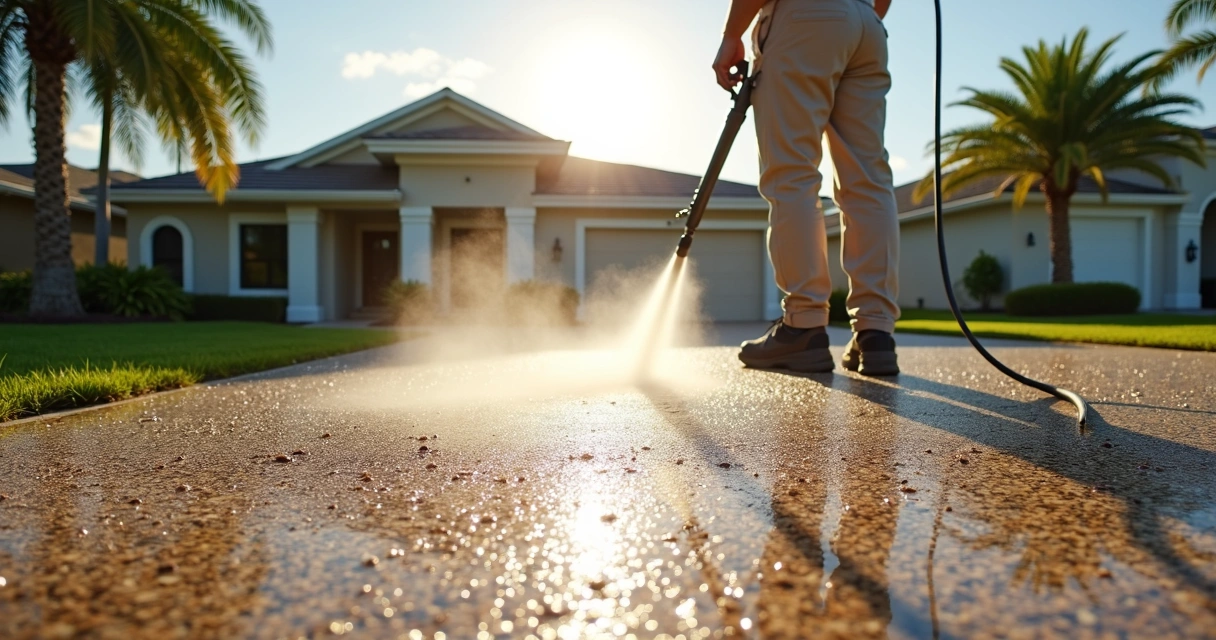
- Wet the surface: Rinse thoroughly with a garden hose or gentle pressure washer. This lifts fine dust and primes the surface for detergent.
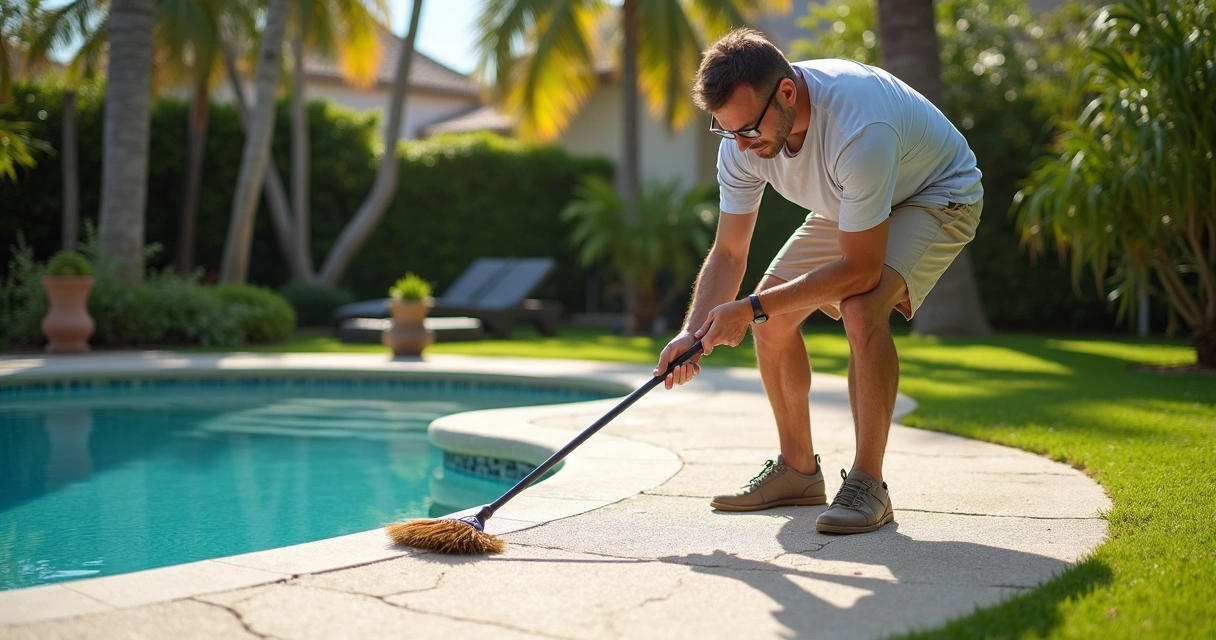
- Apply detergent: Use a concrete-safe detergent or degreaser for deeper cleaning. Avoid strong acids (like muriatic acid) that may etch the surface, per federal cleaning guidelines. Work in sections, using a soft-bristle brush or broom to scrub between pebbles.
- Power washing: For stubborn dirt, algae, or mildew, use a pressure washer on a low to medium setting. Hold the nozzle 12–18 inches away and use a fan tip—avoiding thin streams that could dislodge aggregate.
- Rinse thoroughly: Wash away all soap and loosened grime. Rinse until water runs clear.
- Stain treatment (if needed): Spot-treat oil, rust, or leaf stains with appropriate removers. Always test a small area and never mix chemicals.
- Let it dry completely: Allow at least 24–48 hours of dry, rain-free weather before moving to sealing.
Take your time to get all residue out of grooves and pores—this ensures sealers bond well and gives a uniform finish later.
Choosing and applying the right sealers for Florida conditions
Caring for exposed aggregate means choosing a sealer that suits both the look you want and the protection you need. In our region, with heavy rainfall, sun, and frequent pool chemicals, this decision really matters.
Types of sealers
We commonly use two types of sealers on exposed aggregate in Florida:
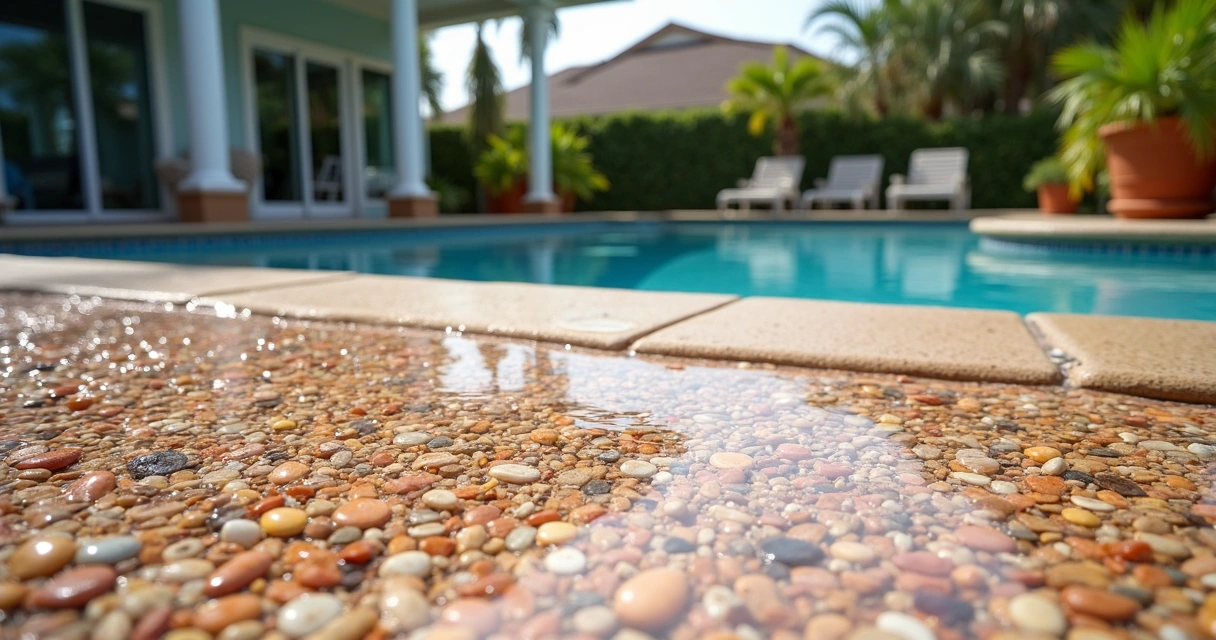
- Penetrating sealers: These soak into the concrete and provide invisible protection, ideal for a natural look. They guard against moisture, salt, and freeze-thaw cycles. Silane, siloxane, and siliconate types are common here.
- Film-forming sealers (Acrylics, Polyurethanes, Epoxies): These create a visible layer on top, adding gloss or color enhancement. They may be glossy, satin, or matte. Many also offer UV resistance and stain-repellence.
Scientific research published in the National Library of Medicine shows that surface coatings can significantly reduce abrasion and salt spray damage, keeping aggregate intact through Florida’s wet and salty seasons.
How to select the best sealer for your project
- Exposure: Pool decks and driveways need stronger resistance to chlorine, UV, and vehicle fluids.
- Desired look: For a glossy “wet” look, a quality acrylic or polyurethane is best. For subtlety, choose a clear, non-film-forming option.
- Slip-resistance: Many high-gloss sealers can become slick when wet. Look for products with slip-resistant additives or plan to add them.
- VOC compliance: Always check for low-VOC, environmentally friendly products suitable for Florida regulations.
Sealing: A step-by-step approach
Here’s the process we follow at GCM Best Services:
- Test for dryness: Concrete must be completely dry before sealing, or the product could cloud or fail to bond.
- Check the weather: Ideal sealing weather is dry and over 60°F, with no rain for 24–48 hours.
- Mask surrounding areas: Use tape or plastic to protect plants, siding, and pool coping.
- Apply sealer evenly: Work in small sections with a pump sprayer or roller. Don’t pool or overlap heavily. Watch for bubbles and back-roll as needed.
- Multiple coats (if required): Some sealers recommend a second coat for extra protection or gloss. Allow recommended drying time in between.
- Let cure fully: Most sealers need 24–48 hours before heavy foot or vehicle traffic.
Always follow the manufacturer’s instructions—surface prep, application method, and cure time can vary by product.
With proper cleaning and prep, sealing can be done every 1–3 years. Sunny areas and driveways may need more frequent attention than shaded patios.
Maintaining your sealed aggregate: tips to extend protection
Once your exposed aggregate is protected, a few routine habits help it stay that way:
- Promptly sweep or rinse off leaves, sand, and debris
- Wash with gentle detergent every few months, especially after storms
- Blot up oil, food, or drink spills right away to prevent staining
- Curtail dragging heavy items or metal furniture across the finish
- Keep flowerbeds and lawns trimmed back to prevent dirt splash
Avoid using de-icing salts, as these can accelerate surface wear. If stains or clouding do appear, professional spot treatments or resealing may restore the surface without a full re-do.
Where professional help makes sense
We know many Florida homeowners are comfortable handling rinsing and routine cleaning themselves. But it’s not unusual for us to get calls after pressure-washing takes out pebbles, or a DIY sealer job leaves streaks and cloudy patches.
That’s why our team at GCM Best Services suggests:
- Consulting a pro for large patios, pool decks, or driveways more than 500 sq. ft.
- Bringing in licensed experts if you see major cracking, pitting, or shifting—repairs should come first for best results
- Seeking guidance for irregular shapes, tight corners, or built-in features
- Following local rules for drainage and HOA standards
Learn more about our solutions for driveways, patios, and pool areas here. Our team can move quickly, and we always provide before-and-after photos, clear warranties, and maintenance guides suited to Florida’s unique demands.
Conclusion: Protecting your investment for years of curb appeal
We’ve seen neglected aggregate lose color, become slippery, or break apart in just a few seasons. But with regular cleaning and sealing tailored to Florida’s weather, exposed aggregate surfaces stay bright, safe, and inviting for many years.
Cleaning and sealing exposed aggregate surfaces is not just about appearance—it’s safety, property value, and peace of mind. At GCM Best Services, our Central Florida clients have come to trust our thorough process and detailed communication for every job. If you want to keep your driveway, patio, or pool deck looking its best and avoid costly repairs later, consider following the steps we outlined, or reach out for guidance and professional support.
Interested in discovering how our tailored methods can enhance your property’s comfort and curb appeal? Schedule your no-obligation assessment and see why so many in Orlando and the surrounding areas trust GCM Best Services for lasting results.
For sincere advice, clear communication, and first-class outcomes, we are ready to help you achieve your perfect finish.
Frequently asked questions about cleaning and sealing exposed aggregate surfaces
How do I clean exposed aggregate?
The best method is to first remove loose debris by sweeping, then use a hose or gentle pressure washer to rinse the entire surface. For deeper cleaning, apply a concrete-safe detergent or degreaser and scrub with a soft-bristle brush, paying special attention to stains or mildew between stones. Rinse thoroughly until the water runs clear. Avoid acids or harsh chemicals, as recommended in GSA cleaning guidance, because these can etch and damage the surface permanently. Allow the surface to dry completely before sealing.
What is the best sealer to use?
The best sealer depends on how you use the area and the desired appearance. For low-maintenance, natural results, penetrating sealers (silane, siloxane, or siliconate) are a reliable choice. If you want enhanced color and a glossy or wet look, film-forming acrylic or polyurethane sealers work well but will need regular maintenance and may require slip-resistant additives. A recent research study highlights the added durability of quality coatings in high-wear or salt-exposed areas, especially driveways and pool decks.
How often should I reseal the surface?
In Florida, exposed aggregate should generally be resealed every 1–3 years, depending on sun and moisture exposure. Surfaces that see frequent traffic or pool chemicals may need yearly attention, while shaded patios may go longer between applications. Regular inspections for dull spots, fading, or water absorption will help you decide when resealing is needed. If water no longer beads on the surface, it’s time to reseal.
Is sealing exposed aggregate worth it?
Yes, sealing exposed aggregate is a simple way to protect your investment and maintain curb appeal. It prevents stains, makes cleaning easier, reduces erosion of the cement paste, and enhances the natural color of the stones. Proper sealing also improves resistance to mold, UV rays, and freeze-thaw cycles. Sealing is especially important in Central Florida’s wet and sunny climate, as it helps surfaces last years longer.
Can I seal it myself or need a pro?
Many homeowners can handle routine cleaning and basic sealing of small areas if they follow directions and work carefully. However, for large or high-traffic surfaces, areas with lots of stains or repairs needed, or if you want the most uniform, professional result, hiring an experienced team (like ours at GCM Best Services) is the safer choice. We have access to commercial-grade products, advanced prep tools, and methods that guarantee long-lasting, beautiful finishes for every project.
Related topics to improve your knowledge: