Stamped concrete adds charm, style, and durability to outdoor spaces across Florida. But with our heat, heavy rains, and humidity, caring for stamped concrete takes some know-how. At GCM Best Services, we’ve spent years helping Orlando and Central Florida homeowners get the longest life and most enjoyment from their decorative concrete. Here, we share the practical tips, proven science, and local expertise you need to keep your stamped concrete driveways, patios, and pool decks looking their best, season after season.
Smart care = longer life.
In this complete guide, we’ll cover how to clean, seal, and protect your stamped concrete in our unique climate, spot signs of trouble, and make small fixes before they become big headaches. We’ll also address Florida-specific care tips, frequently asked questions, and where to get help if you want professional support or repairs. Let’s make sure your decorative concrete is ready for anything our sunshine state throws its way.
Why stamped concrete needs specific care in Florida
Central Florida environments, while beautiful, can be tough on surfaces. Our combination of sandy soils, daily showers in summer, condensed periods of high heat, and strong UV exposure create a situation where any unprotected concrete can degrade or discolor much faster.
Stamped concrete isn’t just plain concrete, it often gets colored, textured, and sealed to mimic brick, stone, slate, and even wood. The sealers and surface colors need routine attention to keep their looks and performance. Neglect, or using the wrong products, can lead to fading, peeling, spalling, or stains that are much harder, and costlier, to fix later.
According to studies from the University of South Florida, Florida’s concrete can last decades even in harsh settings, as long as reinforcement, finishing, and protection are done right. Our experience shows stamped concrete is tough, but only with good aftercare.
The main risks for stamped concrete in Florida
We see these issues most often with neglected stamped concrete, especially outdoors:
- Color fading from intense UV and rain
- Mildew, algae, or mold growth in damp or shaded spots
- Sealant breakdown from Florida’s sun, heat, or harsh cleaning chemicals
- Cracking or chipping from settlement, shifting sub-base, or overgrown roots
- Staining from leaves, rust, fertilizer, oil, or pool chemicals
Understanding these risks is step one in stopping problems before they start.
Routine cleaning: The first step to lasting beauty
In our climate, the right cleaning habits protect both the look and the health of your stamped concrete. We always advise homeowners to keep it simple but regular.
What’s the best way to clean stamped concrete?
Sweeping regularly and rinsing with a hose will remove dirt and debris. For high-traffic areas, add these steps a few times per year:
- Sweep loose matter: Sand, mulch, leaves, remove them before wet cleaning
- Pre-wet the area: This helps prevent stains from soaking in during cleaning
- Use a pH-neutral cleanser: Avoid harsh chemicals; mild soap or specialty stamped concrete cleaner works best
- Scrub lightly: Use a soft bristle broom or mop for patterned surfaces
- Rinse well: A garden hose is usually enough; use low-pressure spray for stubborn spots
- Let it dry fully before moving furniture or walking heavily on it
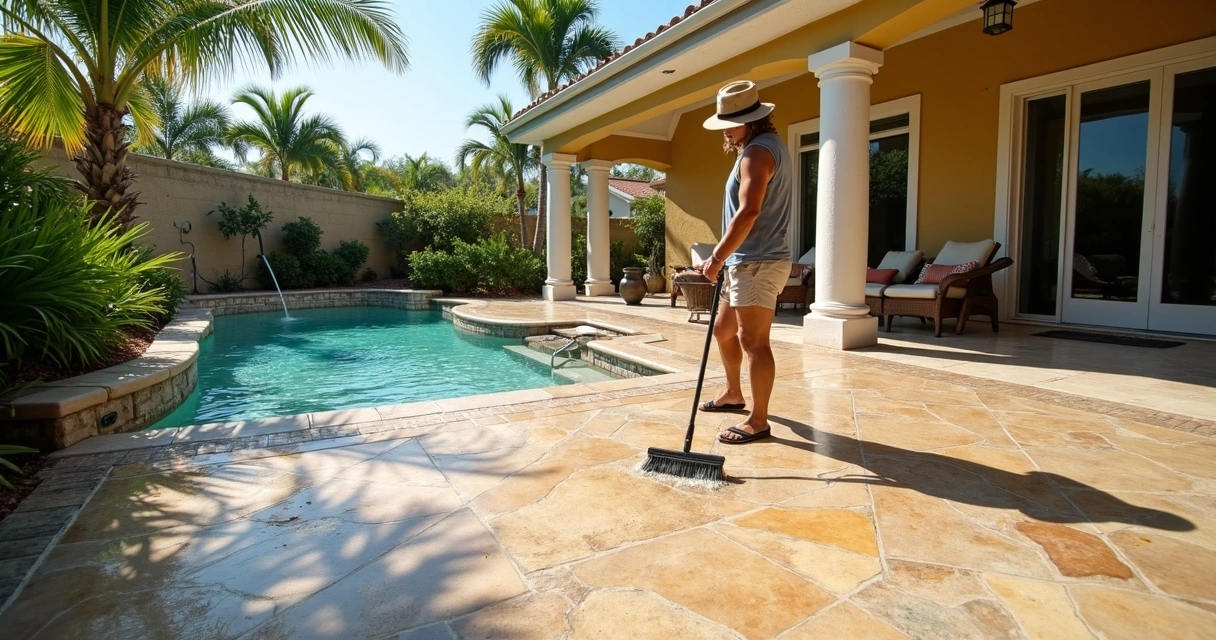
Never rely on a pressure washer’s full force, especially with colored or sealed surfaces, as this can strip sealers or etch the color. If you must use a pressure washer for mildew or deep clean, keep the wand wide and the power low, and always test in a corner first.
For oil spots or rust, act quickly. Use a gentle degreaser or a cleaner designed for concrete, but avoid acids or bleach, which can damage the surface and strip color.
Sealing stamped concrete: Why, when, and how
We can’t talk about stamped concrete care in Florida without focusing on sealers. That glossy or matte finish isn’t just for looks, it acts as a shield.
Why sealers matter so much in Florida
Sealers keep out water, oils, UV, and chemicals. They slow down fading, reduce stains, and make cleaning easier. In our sunny, wet climate, unsealed or old sealer breaks down fast, letting color and concrete underneath suffer.
Sealer also locks in the highlight colors and brings out contrasts in textured designs. Done right, it’s what makes stamped concrete “pop” and last.
How often should homeowners reseal?
Most decorative concrete pros recommend resealing every 2 to 3 years in Florida’s outdoor settings. High-traffic or pool areas might need it every 12-24 months.
How to tell it’s time? The finish looks dull, water soaks in instead of beading up, or there’s visible wear in walkways and corners. Scheduling maintenance before the rainy season starts is best for full protection.
We always use sealers formulated for Florida’s UV, humidity, and heat swings. Some formulas even add non-slip additives (especially for pool decks). When in doubt, you can ask for the technical sheet and check it specifies resistance to sunlight and rain.
Our page about preventing cracks in Florida patios and driveways includes extra sealing advice and common problems in local installations.
How to reseal stamped concrete in Florida
Since humidity and temperature matter, choose a dry stretch, 60–85°F, with no rain forecast for at least 24 hours.
- Clean the surface well: Dry, dust-free, no oils or residue
- Test a small hidden area: Some old sealers may not match well with new product types
- Apply sealer in thin, even coats using a roller or sprayer
- Let each coat dry fully: Usually 4–8 hours, but overnight is safest
- Keep off surface until fully cured: 24–48 hours for foot traffic, longer for vehicles
We see the best results with two thin coats rather than one thick one.
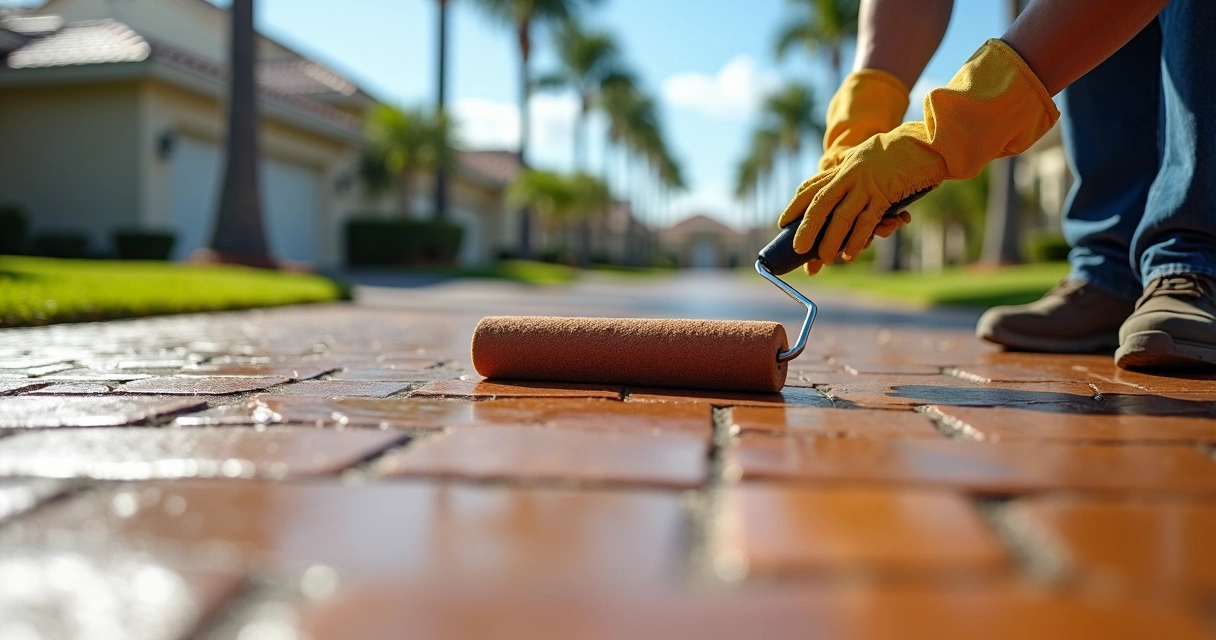
If you’re unsure which sealer is on your stamped concrete, or old sealers are peeling or cloudy, professional consultation is a smart move before reapplying.
Managing moisture and drainage around stamped concrete
One thing many homeowners overlook: How water moves on and around their concrete can make or break its life expectancy. In Florida, heavy rainfall and quickly draining sandy soils can cause undermining or surface pooling. Either issue can bring trouble.
Pooled water seeps in through sealer gaps, while erosion undermines support and invites cracking. Research from the University of Florida highlights the risks of thermal cracking and chloride penetration, both made worse by standing water or poor drainage.
Tips for keeping stamped concrete dry
Our tips, based on what works locally:
- Always slope concrete away from buildings, pools, and landscaping beds
- Keep downspouts, gutters, and French drains clear and well-placed
- Trim plants, roots, and turf edging that might trap water on the surface
- Watch for sunken areas after big storms and repair quickly
- Add joint sealant or expansion joints where slabs meet to handle shifting
If your stamped concrete is showing cracks, we cover what to do next in our guide to concrete repair options in Central Florida.
Protecting color and pattern: What to avoid and what to do
Stamped concrete’s biggest draw is its custom color and design. That means preservation is key. After finishing hundreds of projects across Central Florida, we know what causes premature wear or fading, and how to avoid it.
Five things to never do on stamped concrete
- Don’t use salt or harsh de-icers: Even if rare, these can attack color and cause flaking
- Never use metal shovels or sharp objects for cleaning
- Avoid strong acids (like muriatic) or bleach for stain removal
- Don’t drag heavy objects: Wheels or feet can gouge decorative surfaces
- Avoid letting organic matter sit (leaves, mulch, pine needles)
“Gentler treatment means longer color life.”
How to refresh faded or worn color
If stamped concrete has faded or lost vibrancy, color can often be revived with specialty tints, stains, or recoloring products designed for stamped surfaces. These require clean, dry concrete, and usually a reapplication of sealer after coloring. The process is best done when UV and rain levels are lowest, typically late fall or early spring in Florida.
If you’re seeing pattern wear (like loss of texture), more involved repairs may be warranted. Consult a decorative concrete professional to determine if re-stamping or an overlay is a smart option.
Dealing with cracks, chips, and other damage
Even the best-installed stamped concrete can develop cracks over time, especially in Florida’s shifting soils and with tree root issues.
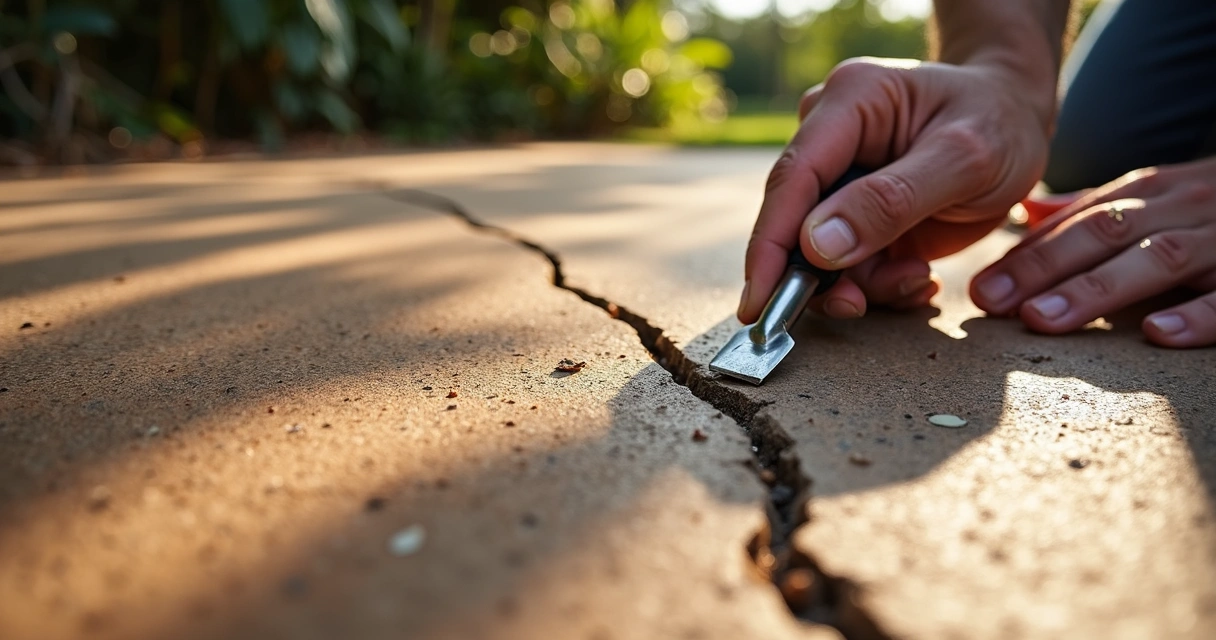
If you notice hairline cracks, small chips, or pitting, address them promptly. Small repairs can blend nearly invisibly if matched with professional colorants and texturing tools.
You can learn about the best repair strategies on our in-depth article on licensed concrete contractors’ repair methods. Major cracks, settlement, or loss of patterns often call for a free assessment, as there could be underlying drainage or soil movement to address.
For new installations, see our post about St. Cloud driveway and patio best practices, which highlights the right sub-base and joint placement to reduce cracks from the start.
Seasonal care and special maintenance in Florida
Florida weather doesn’t follow northern rules, our sun, storms, and humidity create a unique schedule for outdoor surface maintenance.
- Check for wear and sealer loss in spring and again in early fall
- Rinse off pollen, leaf stains, and debris after windy storms
- Trim back overgrown plants and roots before rainy season starts
- Remove and store outdoor furniture in advance of hurricane warnings
- Touch up joints with flexible caulk where needed to keep water out
Twice-yearly inspections and seasonal intervention prevent small problems from becoming large repairs.
Our category page on concrete care and topics covers even more localized advice for year-round maintenance in Orlando and beyond.
Expert help: When to call a pro for stamped concrete care
Every Florida property is unique. While many maintenance steps are DIY-friendly, sometimes you need a professional eye, especially if you notice:
- Pervasive, deep, or pattern-wide cracking
- Large areas of sealer peeling, cloudiness, or sticky spots
- Major fading or loss of surface color
- Recurring efflorescence (white powdery deposits)
- Drainage or pooling that you can’t fix by cleaning or caulking
GCM Best Services provides free on-site assessments for stamped concrete in Orlando and Central Florida. Our team manages everything from cleaning, resealing, and repairs, to new installations and prevention of future issues.
For those still considering decorative concrete, we explain how to select the right concrete company for Orlando projects, ensuring the best install and aftercare from day one.
Florida concrete durability: What the research says
Many homeowners wonder how well stamped concrete really holds up under local conditions. Findings from the University of South Florida highlight that with proper reinforcement and maintenance, concrete serves decades in Florida, even on waterfront or high-salt sites.
Further research from the University of Florida shows that putting care into moisture control, quality mix, and sealing is key to stopping cracking and surface breakdown. And as noted by a comparative thesis on cement blends, new high-resistivity concrete types can slow corrosion, but regular care and cracks prevention is what keeps every style looking its best.
Concrete goes the distance, with regular attention.
Conclusion: The GCM Best Services approach to stamped concrete care
Owning stamped concrete in Florida is a long-term value, blending design and durability. But it requires a little more attention than plain concrete, especially with our weather.
At GCM Best Services, we’ve seen firsthand how regular cleaning, well-timed sealing, and quick fixes can make all the difference. Small steps, done right, keep color bright, patterns sharp, and surfaces resilient, year after year. We always recommend using products and methods suited for Central Florida, and calling for help when cracks, drainage, or discoloration appear.
Ready to protect and upgrade your stamped concrete? Our team offers free professional quotes, fast service, and written warranties that fit the Florida lifestyle. Start with a no-obligation assessment today and let us help you enjoy a surface that stands out and stands up to our local demands.
Ready for a professional quote? 📞 (407) 250-1948 • 24–48h • Orlando, Tampa & area.
Frequently asked questions
What is stamped concrete?
Stamped concrete is a decorative type of concrete where the surface is imprinted with patterns, textures, or colors to resemble brick, stone, tile, wood, or slate. It’s poured like standard concrete but uses specialty molds and colorants while the material is still wet. Once set and sealed, stamped concrete combines the durability of concrete with the beauty of custom finishes. This method is popular in Florida for driveways, patios, pool decks, and walkways thanks to its versatile design options.
How often should I seal stamped concrete?
In our experience, outdoor stamped concrete in Florida should be resealed every 2 to 3 years. Pool decks, driveways, or high-traffic spaces may benefit from reapplying sealer every 12–24 months. Signs you need to reseal include loss of gloss, fading color, water not beading, or visible wear. Harsh sun, rain, and humidity in Central Florida can wear down sealers faster than in other climates.
Can stamped concrete handle Florida weather?
Yes. When installed with a good sub-base, proper joints, and the right sealer, stamped concrete performs well under Florida’s hot, wet, and stormy conditions. According to studies from the University of South Florida, concrete in our climate can last for decades if well-maintained. Regular cleaning, sealing, and drainage improvements offer the longest durability.
How do I clean stamped concrete?
To clean stamped concrete: sweep away dirt and debris, rinse with a hose, and use a mild, pH-neutral cleanser for stubborn spots. Lightly scrub with a soft-bristle broom. Avoid harsh chemicals, strong acids, and pressure washing on full blast, as they can damage color or sealer. For deep stains like oil or rust, use cleanup products designed for decorative concrete surfaces.
Is stamped concrete worth it in Florida?
We think so. Stamped concrete offers lasting beauty, style options, and proven strength for Florida homes, as long as you stick with simple, regular care and protect it from water and sun. With good installation and a maintenance mindset, stamped surfaces offer a custom look at a fraction of the cost compared to brick or stone, with less upkeep than pavers. For many of our customers, it’s a smart, stylish investment for outdoor living.