Primary keyword: fiber reinforcement in flatwork for Florida patiosVariants: concrete flatwork reinforcement, patio fiber mesh, Florida patio concrete strength
Audience: Homeowners and property managers in Orlando and Central Florida worried about patio cracking and durability.Pain/Benefit: Reduce cracking, gain weather-resistant patios, avoid costly repairs and frustrating maintenance.
Summary: Using fiber reinforcement in patio flatwork blends science with real-world results, offering resilient concrete suited for Florida’s challenging soils and relentless humidity. We at GCM Best Services believe in guiding every exterior project with clear, honest advice. This article shows the real reasons and best moments to use fiber-reinforced concrete for beautiful, durable Florida patios—and when classic approaches may work better.
Outline
- What is fiber reinforcement, and how does it work?
- The unique demands of Florida patios
- Types of fibers used in Florida flatwork
- Key benefits of fiber reinforcement for patios
- When to use fiber in your patio flatwork project
- When not to use only fiber in flatwork
- Our process: choosing and installing fiber-reinforced concrete
- Frequently asked questions
- Conclusion and next steps
Florida patios face weather and soil patterns that few other regions do.
What is fiber reinforcement, and how does it work?
Fiber reinforcement brings thousands (sometimes millions) of tiny synthetic or natural fibers right into the concrete mix, evenly distributed before the pour. These fibers act as a micro-support network—catching and holding concrete particles together while the slab sets, shrinks, and ages. This differs from the more familiar approach of steel rebar or mesh, which reinforce at a larger scale and are installed as gridwork within the slab.
In fiber-reinforced flatwork, the fibers distribute stresses and help control cracking from the inside out.
As concrete hardens, it naturally shrinks, and temperature swings make it contract and expand. Without support, this creates “plastic shrinkage” cracks, which appear before you even see a hairline on the surface. Fibers act in this early setting phase—providing thousands of microscopic ‘anchors’ to relieve stress that would otherwise create unsightly, and sometimes damaging, surface cracks.
With experience on dozens of patios across Central Florida’s varied soils, we’ve learned that fiber reinforcement acts as insurance against many of the subtle, early problems that can shorten a patio’s lifespan.
The unique demands of Florida patios
Let’s be honest: Florida’s climate can be tough on patio slabs. We see dramatic storms, periods of intense sun and heat, fast-moving surface water, and underlying soils known for shifting and holding moisture. In this landscape, patios are challenged by:
- Rapid drying from sun and wind (risking plastic shrinkage cracking)
- High humidity, often leading to surface moisture issues
- Soil movement, especially in areas with clay or sand
- Water ponding from intense rain, causing settling and heaving
- Freeze-thaw risk (lesser in Florida, but not zero in the northern regions)
Each of these factors makes crack control and slab integrity much more important for Central Florida patios than in more stable, less humid regions.
That’s why at GCM Best Services, we always start every patio project with a soil assessment, and often recommend a compacted sub-base, correct mix designs, good drainage integration, and—sometimes—fiber reinforcement for maximum service life. Our full process is outlined in our installation guide for concrete patios in St. Cloud and Orlando.
Types of fibers used in Florida flatwork
There’s no one-size-fits-all “fiber.” Selecting the right type and dosage matters for patios in Central Florida soil and weather. Here are the most common options:
- Micro-synthetic fibers (Polypropylene): Fine, hair-like fibers (<1 inch) that improve plastic shrinkage crack control.
- Macro-synthetic fibers (Synthetic blends): Thicker, longer fibers (up to 2 inches) used for larger crack resistance and sometimes as a partial substitute for wire mesh.
- Steel fibers: Rare in residential patios, but sometimes used for heavy-duty applications. Expensive and can rust.
- Nylon or blended fibers: Give extra flexibility or fire resistance but are less common for residential patios.
- Natural fibers (cellulose, coconut, etc.): Occasionally explored for eco reasons, but not common in Florida patio use.
We have found micro and macro synthetic fibers offer a strong combination of affordable, invisible crack control and long-term weather resistance for patios. They do not corrode and are well-suited for Central Florida’s humid, salty air environment.
How are fibers added and finished?
Fibers are typically added at the batch plant or on site before pouring, at rates between 1–3 lbs per cubic yard for microfibers and up to 4–7 lbs per cubic yard for macrofibers, depending on the mix design and performance target. The fibers disperse evenly with proper mixing, though care must be taken—undermixing causes clumping, and poor finishing leaves fibers poking out (a rare but fixable issue).
After placement, finishing techniques such as hand-troweling or brooming ensure the fibers are embedded below the surface, leaving the patio smooth and attractive. In our experience at GCM Best Services, finished fiber-reinforced patios look and feel just like traditional slabs, but respond to weathering and aging with fewer cracks and greater peace of mind.
Key benefits of fiber reinforcement for patios
We see several clear, proven benefits of fiber in concrete patio flatwork in Florida:
- Reduced plastic shrinkage cracking: Fibers provide a micro-anchor network inside the slab, catching early cracks (usually within the first 24 hours).
- Improved impact resistance: Fibers toughen the slab’s internal structure, making the patio less likely to chip or dent from falling objects or furniture.
- Increased flexural toughness: The patio resists bending and sudden soil shifts, especially helpful in areas with loamy or shifting soil.
- Enhanced freeze-thaw durability: While rare in most of Florida, air pockets between the fibers can sometimes relieve pressure in rare cold snaps.
- Better performance in aggressive environments: The Florida Department of Transportation notes that Fiber Reinforced Polymer materials show real benefits in aggressive, humid, and salty settings—making them well-aligned with local patio needs (FDOT FRP guidance).
- Lower likelihood of random surface cracks: Driveways and patios with fiber look newer for longer when constructed and cured properly.
Fewer cracks mean less water intrusion, less weed growth, and simpler maintenance.
These benefits—when combined with a correctly compacted sub-base, well-placed joints, and good finishing—can set a patio apart for years. We always explain that our driveway and patio paving approach brings fiber into play when we know it adds value, not just as a box to check.
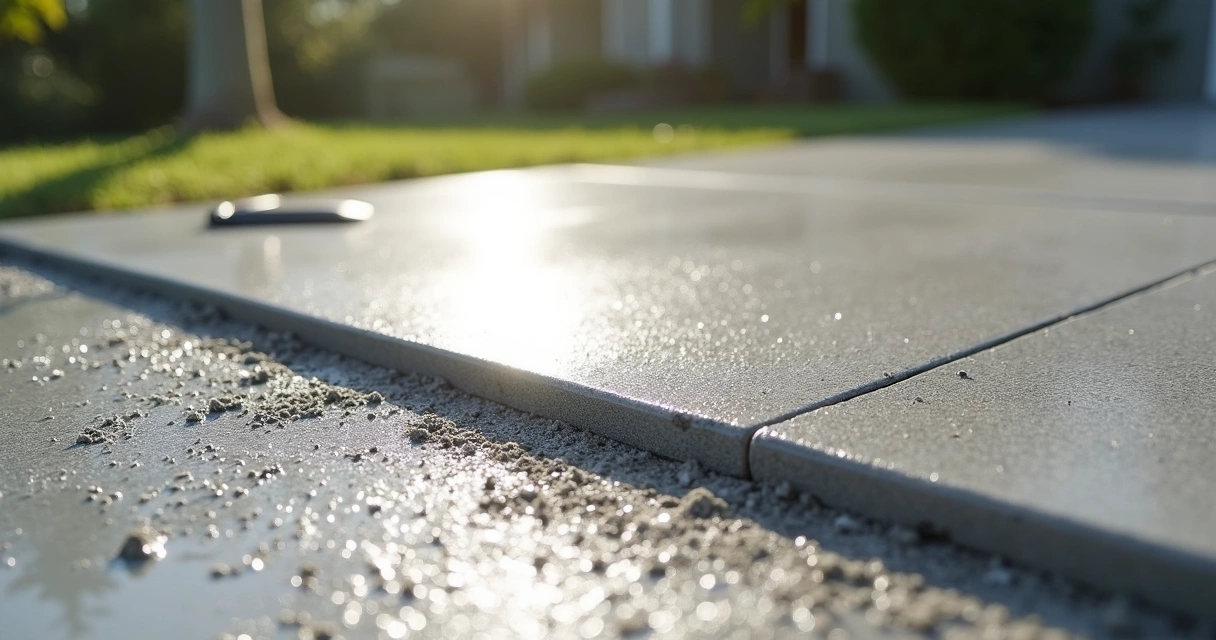
When to use fiber in your patio flatwork project
So how do we decide when a patio should have fiber reinforcement?
Fiber works best in concrete patios when:
- Your patio is exposed to fast temperature swings from shade to sun (increasing early shrinkage risk)
- The soil is sandy, loose, or “moves” with heavy rain
- The slab is thinner (less than 5 inches) or uses lower-strength mixes
- You want the best possible crack resistance, even for minor, early-age cracks
- The patio is irregular in shape, with many corners or stress points
- You seek low maintenance and “like new” appearance for more years
- Access for welded wire mesh or rebar is difficult, or the slab is small
- Drainage is known to be challenging, with moisture from above and below
In uncertain soils, fiber is an extra layer of insurance for lasting beauty and strength.
We’ve applied fiber reinforcement in Florida patios for homes, pool decks, and hospitality settings with visible benefits. Homeowners report cleaner surfaces, less weed incursion, and fewer repairs year after year.
Importantly, fiber is not a substitute for good joint planning, drainage, and the right sub-base—these basics must always come first. On every GCM Best Services project, we address these elements and then recommend fiber if it offers true added value for the client.
When not to use only fiber in flatwork
Fiber reinforcement isn’t a cure-all. There are patio setups in Florida where relying solely on fiber—without other reinforcements—is not enough. We’ve seen issues arise when:
- The patio needs to support heavy vehicles or loads (structured parking, for instance)
- The slab will span soft soils with little subgrade support
- There’s a high risk of major ground movement (settling, heaving) that could cause deep fractures
- The design calls for extra-thick or structurally loaded slabs (over 6 inches)
- Building codes or engineering plans require steel reinforcement in addition to fibers
In these situations, fibers work as a companion to, not a substitute for, classic steel mesh or rebar. For demanding patios, we often use a hybrid approach—combining mesh or rebar with fiber for a belt-and-suspenders result.
This two-pronged method is outlined in many industry guides, and often aligns with Florida’s FRP best practices for aggressive environments as studied by FDOT. Ultimately, we always look to provide solutions for crack prevention and patio durability that are honest and tailored, not cut-and-paste.
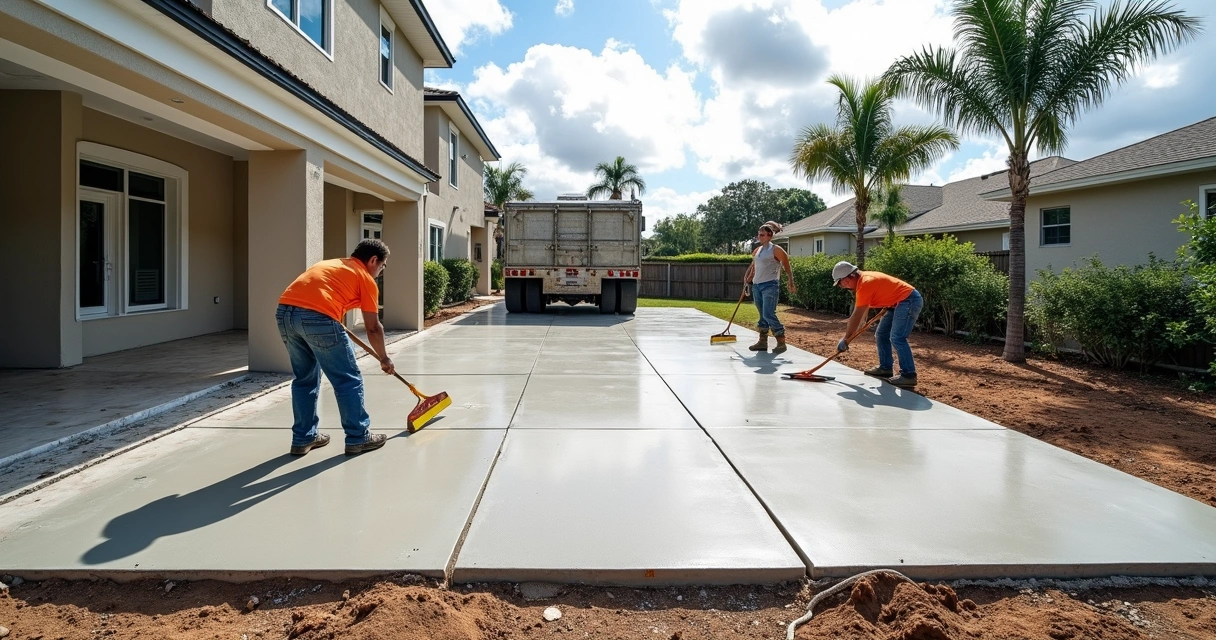
Our process: choosing and installing fiber-reinforced concrete
Here’s what guides us as we assess and install fiber-reinforced patio flatwork at GCM Best Services:
- On-site review and soil analysis: Every project starts with a walk-through, a look at drainage patterns, and a quick soil check.
- Mix design recommendation: Based on load, exposure, thickness, and budget, we recommend appropriate PSI (3,000–4,000 as standard) and whether to use micro, macro, or hybrid fibers.
- Permit, HOA, and delivery scheduling: We handle local permitting, coordinate HOA communication, and schedule the pour for the most predictable weather window.
- Fibers added in the mix: We approve the mix at the batch plant or onsite, ensuring fiber is dispersed evenly and at the correct dose.
- Proper placing and finishing: Our crews use proven techniques to work the fibers below the surface and ensure no fuzzy patches are left behind.
- Final curing and care instructions: We create a written warranty and provide owner guidance for proper curing, which is even more important for fiber slabs to reach their full crack-holding potential.
See our full explanation of how to choose a qualified Orlando concrete contractor to ensure these best practices are always followed.
By sticking to this process, we increase the odds your fiber-reinforced patio will deliver both beauty and low-stress ownership for decades.
Frequently asked questions
What is fiber reinforcement in concrete patios?
Fiber reinforcement means adding synthetic or natural fibers into the concrete mix before pouring, which helps control shrinkage cracks and toughens the slab from the inside out. Unlike rebar or mesh—which are big, steel grids—fibers are tiny, flexible strands, often made of polypropylene, that create millions of microscopic supports inside your patio surface. This helps limit early-age cracks and improves surface strength throughout the patio’s life.
When should I use fiber reinforcement?
You should use fiber reinforcement in Florida patios when you want maximum crack resistance, especially for patios built on sandy, moving soils or in areas with intense sun and humid weather. Fiber is best for slabs prone to early shrinkage, thin patios, patios with complicated shapes, and projects where simple extra crack resistance is desired. Always pair fiber with good sub-base preparation and drainage for best results.
Is fiber reinforcement worth it in Florida?
In our experience and based on research from Florida Department of Transportation, fiber reinforcement is a smart investment for many patios in Central Florida. It protects against early-age and hairline cracking, keeps your patio looking fresh longer, reduces maintenance, and adds weather resistance that’s well suited to the state’s intense sun, humidity, and rain. The added material cost is often small compared to the long-term benefits.
How much does fiber reinforcement cost?
Fiber reinforcement usually adds a small amount (often $0.15–$0.40 per square foot, depending on mix and dosage) to your overall patio cost. Prices vary by fiber type, project size, and local supply. As always, a personalized quote is the best way to know. For most homeowners, the improved crack control and appearance preservation far outweigh the one-time minor increase in material cost.
Does fiber reinforcement prevent patio cracking?
Fiber reinforcement won’t completely “prevent” all cracks, but it drastically reduces early shrinkage cracks and minimizes the size and spread of surface cracks. When combined with well-placed joints, a strong sub-base, and proper draining, fiber-reinforced patios stay smoother and last longer. It acts as an internal safety net, keeping Florida patios looking great and performing at their best.
Conclusion and next steps
Florida patios deserve extra attention. Our climate, soils, and lifestyles put more pressure—and more pride—into every concrete flatwork project. Fiber reinforcement in patio flatwork is often worth considering for anyone who wants their outdoor space to age gracefully, resist everyday cracks, and look sharp for years to come.
If you’re ready to see what fiber-reinforced concrete can do for your next patio—whether you’re in Orlando, Tampa, or anywhere in Central Florida—reach out to us at GCM Best Services. We deliver patios that outperform, with on-time schedules, transparent communication, and written warranties for true peace of mind. We’re always happy to answer questions and give a no-obligation on-site assessment.
Ready for a professional quote? 📞 (407) 250-1948 • 24–48h • Orlando, Tampa & area.