Primary keyword: ADA-compliant ramps FloridaVariants: accessible ramps Florida, ADA walkway requirements, Florida ADA ramp code
Audience: Property owners, facility managers, and HOAs responsible for public or residential site access in Central Florida wondering how to plan legal, safe walkways and ramps.Pain/Benefit: Reduce legal risk and promote comfort and independence for everyone using your spaces by building ADA-compliant paths and ramps that are practical for Florida’s weather, soil, and codes.
Summary: Making any ramp or walkway work for people of every ability takes more than measuring slope and width. Sustainable, safe access requires a blend of ADA law, smart materials, local rules, and practical site knowledge. As a Central Florida contractor, we’ve seen firsthand that putting care into every detail means not only compliance but also a better user experience. Here’s what matters most, what the codes say, and what we do at GCM Best Services to keep people safe and satisfied, whether it’s for a home, business, or public venue.
- Introduction: Why ADA compliance matters in Florida?
- Understanding the ADA and local codes
- Key ramp and walkway specifications
- Site assessment and planning
- Material choices for longevity and safety
- Drainage and weather considerations in Florida
- Details: Handrails, landings, and detectable warnings
- Permitting, inspection, and warranty process
- Common pitfalls (and how we avoid them)
- Conclusion and next steps
- Frequently Asked Questions
Building fair access is about real people, not just compliance.
Introduction: Why ADA compliance matters in Florida?
We meet property owners who want their spaces to invite everyone in. Sometimes, though, ramps and walkways are an afterthought – added because the law says so, or following an inspection checklist. In our experience at GCM Best Services, thinking only “legal minimums” is a mistake, especially in a place like Central Florida.
ADA compliance isn’t just about avoiding lawsuits or passing inspection—it’s about dignity and mobility for all. With Central Florida’s dynamic weather, unique soils, and constant growth, accessible infrastructure must withstand sun, rain, heavy use, and shifting ground. Adding local code on top of the 2010 ADA Standards for Accessible Design brings another layer. This article shares what we’ve learned to make every ADA ramp or path both compliant and comfortable in our region.
Understanding the ADA and local codes
Let’s start with the basics: the Americans with Disabilities Act (ADA) is federal law, but local rules also apply. In Florida, state law and local zoning often add or clarify requirements—sometimes making them stricter or more detailed.
The 2010 ADA Standards for Accessible Design set the baseline for all public access. For ramps and walkways, that means limits on slope, width, and landing size. But Florida brings its own requirements, like accessible parking dimensions and stricter inspection oversight (see Florida Statute 553.5041 and Florida Department of Transportation ADA guidelines).
So, when we plan a new ramp or walkway, we always review:
- Federal ADA codes (slope, width, landings, surface texture, handrails)
- Florida Building Code and your county/city requirements
- Any community/HOA rules or unique property restrictions
Accessible means a user—whether walking, rolling, or pushing a walker—can move through safely, every day of the year, in all types of weather. Central Florida’s rainfall and soil shifts make this a real challenge, underscoring our focus at GCM Best Services on robust foundations and drainage (we often write about this at our concrete services page).
Key ramp and walkway specifications
It’s easy to get lost in numbers and diagrams. Here are the core ADA and Florida requirements we see in practice.
Slope: gentle for safety
ADA sets the maximum running slope for ramps at 1:12—that’s about 8.33%. For every inch of vertical rise, you need at least 12 inches of ramp. This is so that wheelchairs, walkers, and people with balance difficulties can use the ramp without huge effort or danger. See the 2010 ADA Standards for full slope requirements.
Walkways (not ramps) are limited to a maximum slope of 1:20 (5%), per the Access Board’s ADA accessibility standards. Anything steeper than this is no longer considered just a walkway: it’s a ramp, and all ramp rules apply (rails, landings, etc.).
Width: allow room for everyone
All accessible ramps and walkways must be at least 36 inches wide in the clear path of travel. If handrails are present, this width is measured between them (Access Board guidance).
Larger, busier sites often benefit from 48-inch or wider ramps, especially where two people in wheelchairs might pass, or walkers/dogs are common. When we visit a site, we talk about the real flow you expect, not just the legal minimum.
Landings and transitions
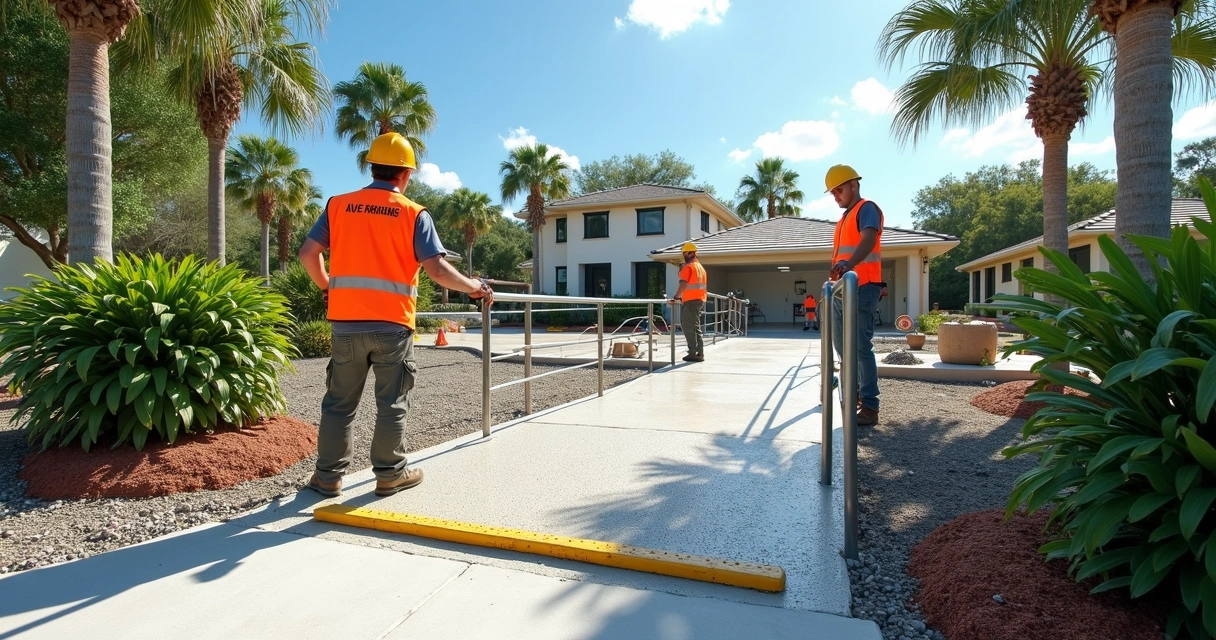
At the top and bottom of every ramp, the ADA requires a landing at least as wide as the ramp (at least 36 inches) and at least 60 inches long wherever the slope or direction changes (2010 ADA Standards). For turns or switchbacks, each turning landing must be a minimum of 60 inches by 60 inches.
Safe transitions mean freedom of movement—there’s no shortcut for space.
Surfaces and textures
Both ADA and local code require that ramp and walkway surfaces be firm, stable, and slip-resistant. Concrete is often the top pick—its performance on Florida soils, especially with rebar and proper sub-bases, makes it reliable (we share more on finishes and specs at choosing the right concrete contractor).
Surface texture is not just about looks. Broom or exposed aggregate finishes offer everyday slip resistance, while detectable warning surfaces—like truncated domes—alert visually impaired users to hazards or crossings.
Site assessment and planning
Every property is different. Sometimes, the right ramp location is clear and direct; other times, trees, grades, or old structures cause complications. We always start with an in-person assessment, taking time to look at:
- Entry points and intended destinations (parking, doors, amenities)
- Existing grades, steps, drop-offs, obstacles, and surfaces
- Drainage paths and water pooling areas
- Current walkways or routes people already use
- Where users will need level landings or passing areas
One thing we’ve learned: a good plan adapts to what’s actually possible on the lot—sometimes with switchbacks, or slightly longer routes to keep slopes gentle. During this step, we consider not just legal compliance, but also site look, traffic patterns, and even future maintenance needs.

Material choices for longevity and safety
Florida weather can be intense—heat, rain, and humidity stress any surface. For public or frequently used walkways and ramps, not all materials hold up.
- Concrete: Most common due to strength, cost, and low upkeep. We use 3,000–4,000 PSI mixes, 6–8″ compacted sub-bases, and rebar or mesh for stability (see GCM Best Services’ driveway and patio paving tips).
- Brick/pavers: Attractive for walkways, but must be set tightly with stable, permeable bases and no tripping edges. Proper compaction and joint sand is vital to minimize weed growth (read more at how to prevent weeds between pavers).
- Epoxy, coatings, and finishes: Used at times indoors (garage access) or in high-traffic spots for slip resistance. Exterior texture is key—we always test for moisture before choosing any coating.
We also weigh elements such as edge restraints, perimeter drainage strips, and UV-resistant add-ons. After all, a ramp that floods or crumbles in two wet seasons isn’t really “accessible”—not for long.
Drainage and weather considerations in Florida
Ask anyone in the Orlando area: unexpected rainwater and soil shifts can ruin even a textbook-perfect ramp. So before we break ground, drainage gets full attention.
- Set ramp/runway slightly above grade when possible
- Design walkways to gently channel water off to the sides—not pool in the path
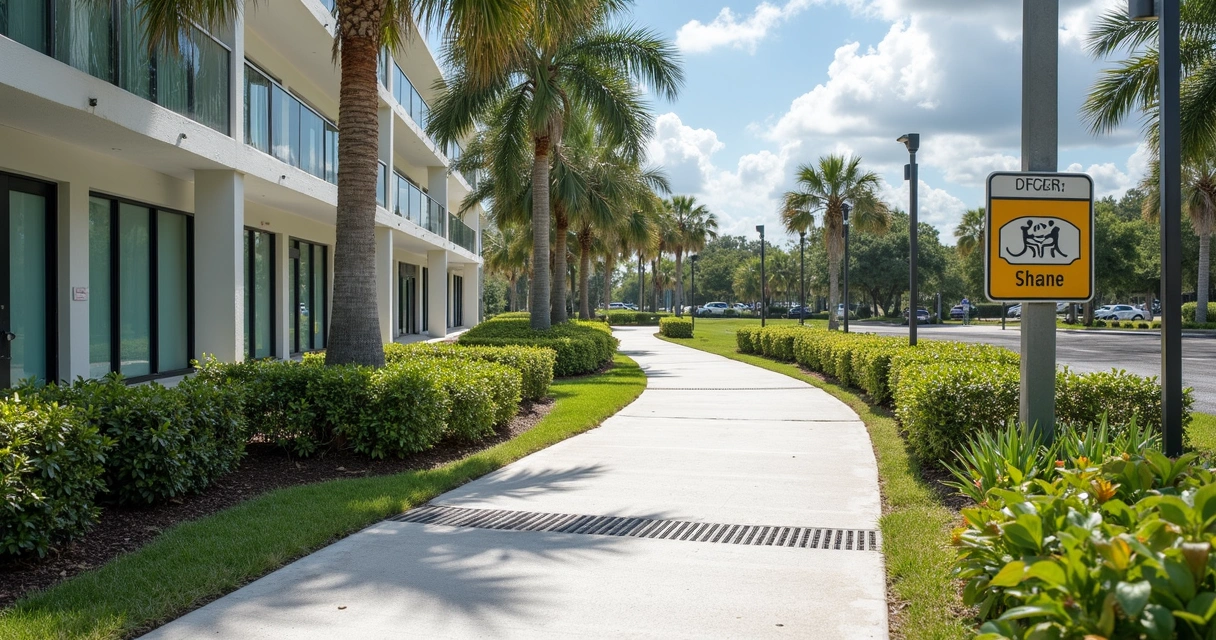
- Include French drains, retaining walls, or perimeter grates when needed
- Allow for direct tie-in with existing gutters or storm drains if available
Florida’s ADA inspections often address ponding water within 48–72 hours after rain—if your surfaces don’t dry quickly, that’s a big red flag. Some owners find this out only after an inspection, so we build “dry feet” into every layout.
Details: Handrails, landings, and detectable warnings
The law often specifies the big numbers—width, slope, length—but the small details make ramps and walkways usable by everyone day after day.
Handrails: control and confidence
ADA ramps with a rise greater than 6 inches (or a run longer than 72 inches) require handrails on both sides. Handrails must be between 34 and 38 inches tall, with continuous gripping surfaces and extensions at the landings (Access Board guidance). In Florida, we prefer powder-coated aluminum for durability, but stainless or painted steel is options as well.
Landings: rest and turning spaces
Every ramp must have a landing at the top and bottom—at least 60 inches long if the user changes direction. Landings must be level (maximum slope of 1:48) to prevent roll-away or tripping.
A few extra inches on a landing creates peace of mind—every time.
Detectable warnings
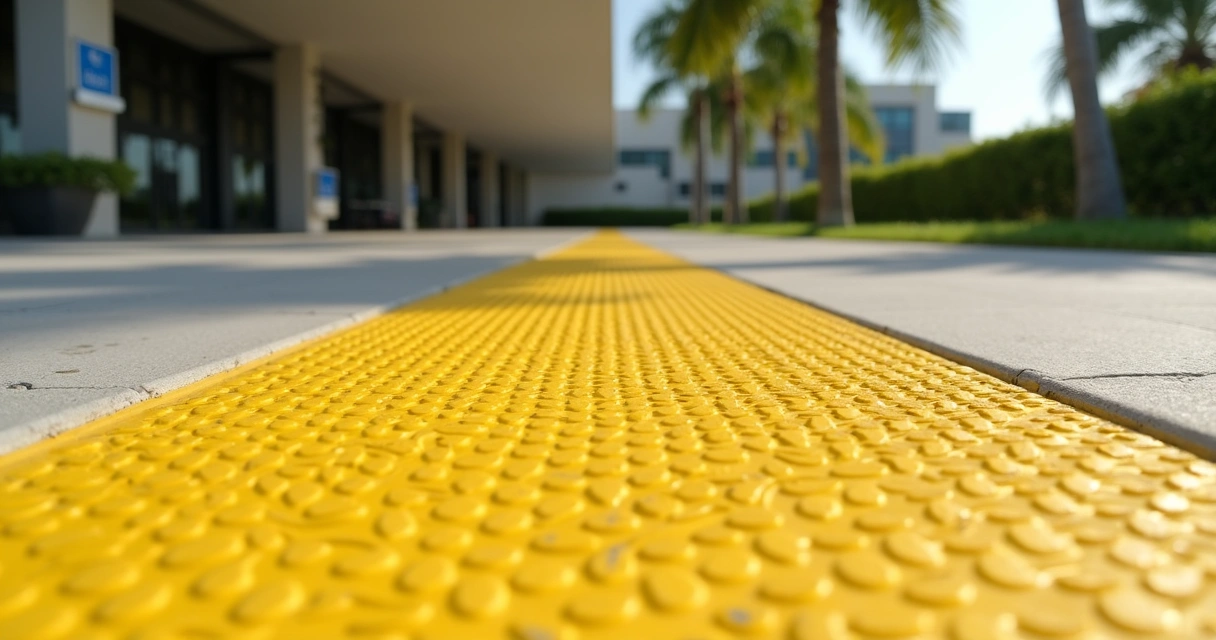
Wherever a ramp or walkway ends at a street or crosswalk, ADA (and most Florida counties) require a detectable warning surface—a contrasting color, texture, or dome pattern that helps visually impaired users recognize danger. Most use high-visibility color inserts, but some sites use stamped concrete or attached tiles. We review the local city/county rules to ensure color contrast and texture meet requirements.
On commercial properties, especially parking lots, state law requires accessible spaces and access aisles with striping and direct connection to the accessible route. See the details at the Florida accessible parking code.
Permitting, inspection, and warranty process
GCM Best Services manages every phase of your project—design, permitting, HOA approval, and inspection. In most parts of Central Florida, a permit is required any time you alter the grade, run, or surface of a ramp or walkway for public use. Commercial properties face extra scrutiny.
We coordinate with local inspectors, document all materials and methods, and provide photos for any HOA or insurance needs. After completion, we walk you through use and care, and you get a written warranty—plus maintenance tips to keep your ramp or walk safe for years (see our hardscape project page for examples and warranty info).
Common pitfalls (and how we avoid them)
No ramp or walkway is “fail-proof.” Still, some mistakes come up again and again at properties we’re asked to fix or upgrade. Here’s what we look out for:
- Incorrect slope—often too steep, forcing users to struggle
- Improper landings or missing handrails
- Poor drainage causing slippery, moldy, or washed-out surfaces
- Settling cracks on new slabs or pavers from weak sub-bases
- Weeds or heaving in paver walkways lacking edge restraints
- Painted “no parking” zones or striping that wash off or fade too soon
- No tactile/detectable warnings at crossings
We see some owners try short-term fixes—a little extra concrete, a plastic ramp, or brighter paint—but these seldom last or pass inspection. Our process guards against these troubles from the start, using local experience and ADA checklists refined by years in Central Florida.
Conclusion and next steps
Building access is a statement about values as much as compliance. At GCM Best Services, every ADA ramp or walkway gets real-world planning, durable materials, and a commitment to clear communication. We keep you informed from design to inspection, with reports, photos, and a guide to long-term care. ADA compliance? Yes—but the real win is a site where everyone moves freely, safely, and with dignity.
If you are planning a new ramp, fixing a cracked walkway, or preparing a site for inspection in Orlando, Tampa, or anywhere in Central Florida, start by scheduling a visit. We’ll assess your needs, explain your best options, and help you achieve true accessibility—on time and with warranties you can count on.
Ready for a professional quote? 📞 (407) 250-1948 • 24–48h • Orlando, Tampa & area.
Frequently Asked Questions
What is an ADA-compliant ramp?
An ADA-compliant ramp is a sloped pathway built to federal accessibility laws (ADA), ensuring people with mobility aids or disabilities can move safely and independently between changes in elevation. It must meet requirements for slope, width, landings, handrails, surface texture, and safety features as outlined in the 2010 ADA Standards for Accessible Design and local codes.
How wide should ADA ramps be?
The clear travel width of an ADA-compliant ramp in Florida must be at least 36 inches between any handrails, according to Access Board guidance. Wider ramps (42–48 inches) may make sense if two-wheelchairs need to pass or for higher-traffic public sites.
What is the required slope for ramps?
ADA ramps require a running slope no steeper than 1:12 (an 8.33% rise), meaning for every 1 inch in height, the ramp must be 12 inches long. In Florida and the rest of the U.S., anything steeper is not legal for wheelchair access.
Do Florida codes differ from ADA rules?
Florida mostly follows the federal ADA, but some requirements are stricter or clarified—such as parking space and access aisle dimensions detailed in Florida Statute 553.5041. Local permitting, inspections, and maintenance rules can also add steps. Always confirm with the local building department and a contractor familiar with ADA/Florida rules.
How much does an ADA ramp cost?
Costs vary depending on length, slope, surface treatment, handrails, drainage, demolition, permitting, and material choices. For most Orlando-area jobs, a simple poured concrete ramp starts at a few thousand dollars, but steeper terrain, extra drainage, or decorative finishes can raise costs. We always provide a site evaluation and detailed estimate, so you know exactly what’s required and included for your property.