
By Gabriel Cavalcante, owner of GCM Best Services Corp · November 28, 2026
In ShortA portable fire pit costs less to start, moves with you and suits renters, small spaces and anyone still deciding. In Central Florida it lives with rain, humidity and summer storms, so bare steel rusts and a lightweight unit has to be stored or secured. A built-in fire pit is block or pavers on a compacted base, lined with fire brick or a heat-resistant metal liner, and usually framed by a patio and a seat wall. It costs more upfront and stays where it is built, so the spot is chosen once, against distance rules, trees, wind and drainage. Before you buy or build either one, check the local fire rules: Orange County's open-burning guidance asks for at least 25 feet between a recreational fire and any building or combustible structure.
What counts as portable, and what counts as built-in
In this guide, a portable fire pit is anything you buy finished and can carry, roll or slide to a new spot. Most fall into three groups:
- Steel or cast bowls. An open bowl on legs or a stand that burns wood. Many come with a spark screen and a cover.
- Propane units. Tabletop and freestanding models with a burner fed by a propane tank, which sits inside the base or next to it.
- "Smokeless" steel pits. Double-wall steel pits designed to reduce smoke by burning the wood more completely.
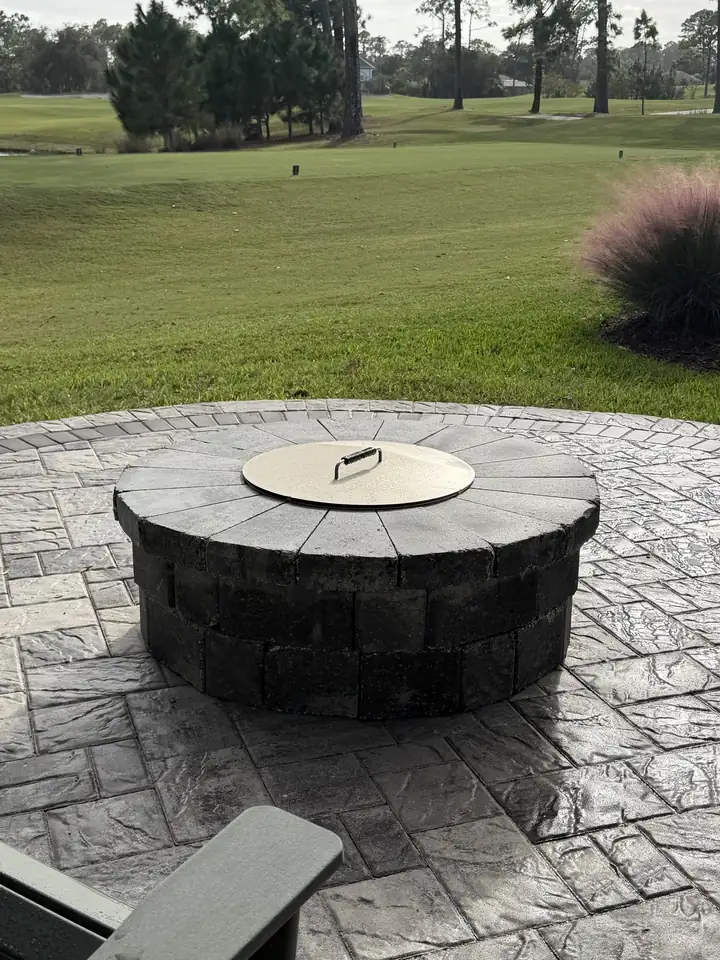
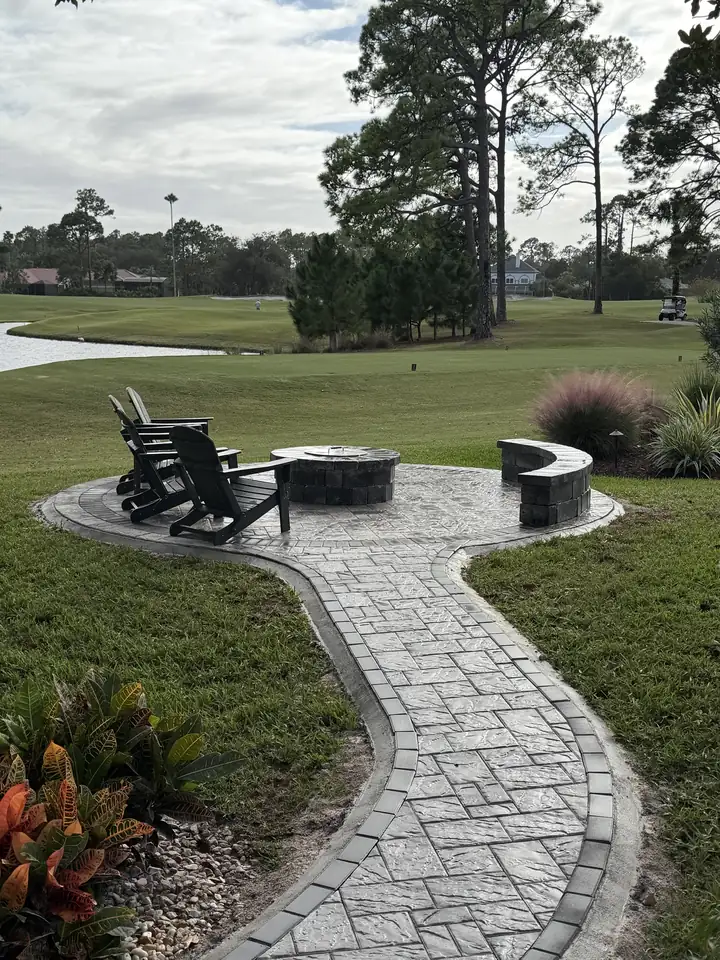
A built-in fire pit is constructed in place: a block or paver pit on a compacted crushed-stone base, lined with fire brick or a heat-resistant metal liner, capped and usually covered with a metal lid between uses. It tends to sit in a paver patio, often with a curved seat wall, so the pit, the seating and the floor are planned as one space. It can burn wood, or the patio can be laid out for a gas fire feature. Our guide to how a fire pit is built on a paver patio walks through each layer.
What Florida does to a fire pit
Anything that stays outside in Central Florida deals with water, wind, heat and a set of local rules. These five factors decide how well a fire pit holds up here.
Rain, humidity and rust. Bare steel and cast iron rust when they stay wet, and a Florida summer, with high humidity and frequent afternoon storms, keeps outdoor metal damp for long stretches. Near the coast, salt air speeds that up. Wet ash in the bottom of a bowl holds moisture against the metal, so empty it, keep the pit covered once it is cool and check what the maker says about storing it outside. A block pit has no steel shell to rust through. Its metal parts, a liner if it has one and the lid, are the ones to watch, and the lid keeps most of the rain out.
Wind and summer storms. A lightweight bowl or tabletop unit can slide or tip in a strong gust, and wind carries embers, so skip the fire on a gusty evening. Before a tropical storm or hurricane, a portable pit and its propane tank are two more things to bring inside or tie down, following the storage instructions on the tank. A block pit stays put, and only the lid and the chairs need securing.
Heat on the surface underneath. A portable pit sends heat straight down into whatever it sits on, so follow the manufacturer's clearances and set it on a heat-resistant base made for fire pits. A wood deck is combustible. Artificial turf is made of synthetic fibers that can melt or scorch from heat or a stray ember, so check the turf maker's guidance as well; a paver or concrete pad sized for the pit and the chairs keeps the fire off the turf. Pavers and concrete will not burn, but heat and soot can mark them. In a built-in pit, the liner takes the direct heat.
HOA rules. In many Central Florida communities, a visible structure needs architectural approval before work starts, and a block fire pit or a seat wall counts. A portable pit may not go through that review, but some HOA documents cover open flames, fire pits or what can sit in a yard, so read yours before you buy.
Burn rules and drought. Orange County's open-burning guidance for recreational fires asks that the fire sit at least 25 feet from any building or combustible structure, and that the fuel area stay within 3 feet across and 2 feet high unless it burns in an outdoor fireplace, barbecue grill or barbecue pit. Someone must stay with the fire, with a garden hose or other extinguisher within reach. The county's burn ban switches on automatically when the Florida Forest Service drought index reaches a set level, so check the current status before you light wood. Gas fire features follow the manufacturer's clearances and local code. Kissimmee and St. Cloud are in Osceola County, which sets its own burn rules, and a city or an HOA can add more. Whether a particular portable unit is treated differently is a question for your local fire authority, so confirm what applies to your address before you buy or build. Source: Orange County Open Burning FAQ (PDF).
Portable vs. built-in, side by side
| Factor | Portable fire pit | Built-in fire pit |
|---|---|---|
| Cost to start | Lower upfront | Higher upfront, priced per project with the patio and seating |
| What decides its lifespan | The metal, the finish and whether it stays wet; bare steel rusts in Florida humidity | The base, the block, the liner and the drainage; the liner and the lid see the most wear |
| Moving it | Goes anywhere and moves with you; has to be stored or secured before storms | Stays where it is built, so the spot is chosen once |
| Fuel | Wood, or propane from a tank, depending on the unit | Wood, or a layout for a gas fire feature (natural gas or propane); gas piping is installed by a qualified gas contractor under permit |
| Size and seating | Sized for a small patio; you bring the chairs | Sized to the yard; a seat wall adds built-in seating |
| Looks | Reads as outdoor furniture | Reads as part of the yard, designed with the patio, and stays with the house |
| Maintenance | Keep it dry and covered, empty the ash, check for rust | Keep the lid on, clear the ash, sweep the pavers |
| HOA | Some HOA documents cover open flames or portable pits | A visible structure often needs architectural approval first |
| Fire rules | Local rules and burn bans; ask the local fire authority how they apply to your unit | Local rules and burn bans; the spot is checked against them before the pit is built |
For a closer look at wood, natural gas and propane, see the fuel comparison on our fire pits page.
Which one fits your yard
A portable pit is a good fit when:
- You rent, or you expect to move in the next few years
- You have a small patio and want a propane flame, used within the manufacturer's clearances and local rules
- You want to try evening fires before you commit to building one
- You are fine storing it or tying it down every time a storm is on the way
A built-in pit is a good fit when:
- You own the home and are planning a patio anyway
- You host gatherings and want seating built around the fire
- You want a permanent focal point for the backyard
- You want a gas line planned under the patio before it goes in
- You would rather not move or store a pit every storm season
Thinking about a large fire pit?
A bigger pit seats more people, and it also takes more yard. Plan for three things before you pick a size.
The seating ring. As a general design guideline, chairs sit about 2 to 3 feet back from the edge of the pit, with room to walk behind them. A wider pit pushes the whole circle of chairs outward, so the patio grows with it. Our guide to planning an outdoor living space goes deeper on layout.
The distance. Measure from the house, the lanai, the pool cage, the fence and any shed. In Orange County, the open-burning guidance asks for at least 25 feet between a recreational fire and any building or combustible structure. In a compact backyard, that distance can decide the size and the spot before style does.
The size of the fire. The county's guidance also keeps the fuel area within 3 feet across and 2 feet high unless the fire burns in an outdoor fireplace, barbecue grill or barbecue pit. Ask your local fire authority how that applies to the pit you have in mind.
Moving from a portable pit to a built-in one
If you already own a portable pit, you have been running a test. Notice where the smoke drifts, where people pull their chairs and how many sit down, where rain pools after a storm, and whether you reach for wood or propane. Those notes shape the plan:
- The spot. Check the distances, branches overhead, tree roots, wind, slope and HOA rules. Once the pit is built, the spot is fixed.
- The base. A block pit is heavy, so its walls sit on a compacted crushed-stone base, never on loose sand. On an existing paver patio, the pavers where the pit goes usually come up so the base can be rebuilt.
- Seating. Decide between chairs alone and a curved seat wall, and leave a path to walk behind the seats.
- Fuel. A wood-burning pit needs nothing under the patio. A gas fire feature needs a gas line, installed by a qualified gas contractor under permit, and that line is far easier to run before the base goes down than to tunnel under a finished patio. Lighting wire follows the same rule.
- The surface around it. Pavers, travertine or porcelain; our patios page covers the options.
- HOA approval. Submit the layout and the material details before work starts. We prepare what the HOA asks for; the approval stays with your association.
Our fire features guide has more ideas for building a fire pit into an outdoor living space.
Fire pits across Central Florida
If you want a fire pit that stays, start with the page for your area:
For your own yard, request a free written estimate.
Frequently Asked
Which holds up better in Florida, a built-in or a portable fire pit?
A built-in block pit has no steel shell to rust and stays put in a storm, so it handles Florida rain, humidity and wind better over the years. A portable pit costs less to start and moves with you, but bare steel rusts when it stays wet, and a light unit has to be stored or secured before storms. The right choice depends on whether you own the home, how often you light a fire and how much yard you have.
Will a steel fire pit rust in Florida?
Bare steel and cast iron rust when they stay wet, and Florida humidity and summer storms keep outdoor metal damp for long stretches. Salt air near the coast speeds it up. Keep the pit covered once it is cool, empty wet ash, store it under a roof between uses and follow the maker's care instructions.
Can I put a portable fire pit on pavers, a wood deck or artificial turf?
Follow the manufacturer's clearances and use a heat-resistant base made for fire pits. A wood deck is combustible, and artificial turf is made of synthetic fibers that can melt or scorch from heat or a stray ember, so check the turf maker's guidance too. Pavers and concrete will not burn, but heat and soot can mark them.
Do burn rules apply to a portable fire pit?
Ask your local fire authority how the rules apply to your unit. In Orange County, the open-burning guidance for recreational fires asks for at least 25 feet from any building or combustible structure, a fuel area within 3 feet across and 2 feet high unless the fire burns in an outdoor fireplace, barbecue grill or barbecue pit, and someone staying with the fire with a garden hose or other extinguisher. A burn ban switches on automatically during drought. Kissimmee and St. Cloud are in Osceola County, which sets its own rules.
How much space does a large fire pit need?
Room for the pit, a ring of chairs about 2 to 3 feet back from its edge and a path to walk behind them, as a general design guideline. The pit also has to meet the local distance rules: in Orange County, the guidance asks for at least 25 feet from any building or combustible structure. The county's guidance keeps the fuel area within 3 feet across and 2 feet high unless the fire burns in an outdoor fireplace, barbecue grill or barbecue pit, so ask your local fire authority how that applies to a large pit.