Block fire pits, curved seat walls and paver patios, designed as one space and built on a base made for Florida rain and sandy soil.
A fire pit turns a backyard into a place people stay after dinner. GCM builds fire pits as part of a patio: a block fire pit, a curved seat wall, borders and a walkway, planned together so the finished space looks like one design.
We build wood-burning fire pits and lay out the patio for a gas fire feature, which needs a gas line installed by a qualified gas contractor. Every project starts with a free written estimate.
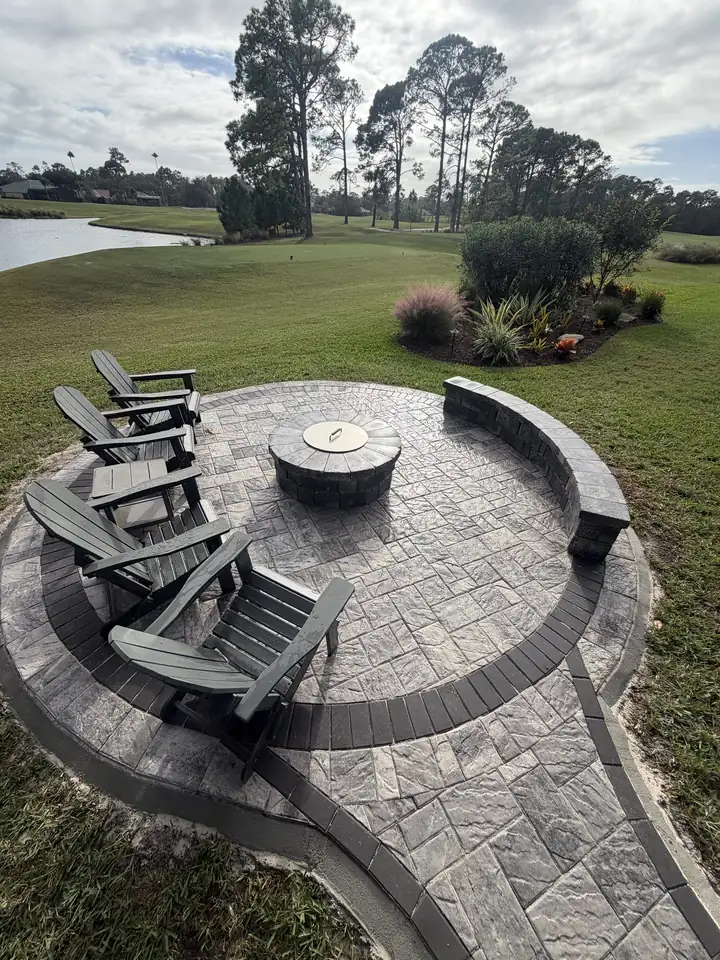
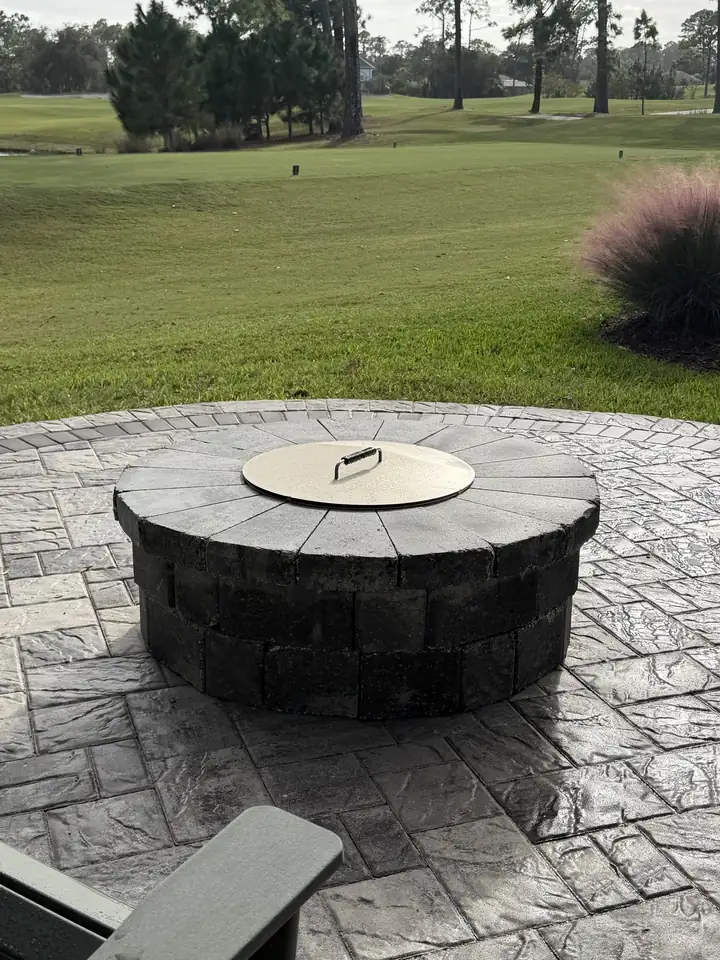
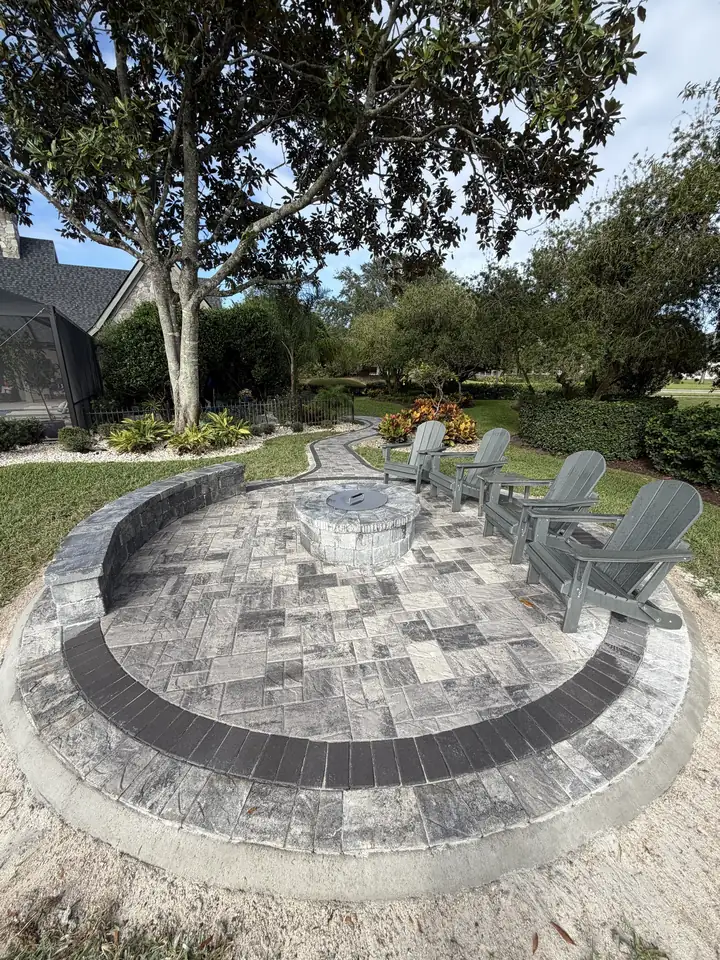
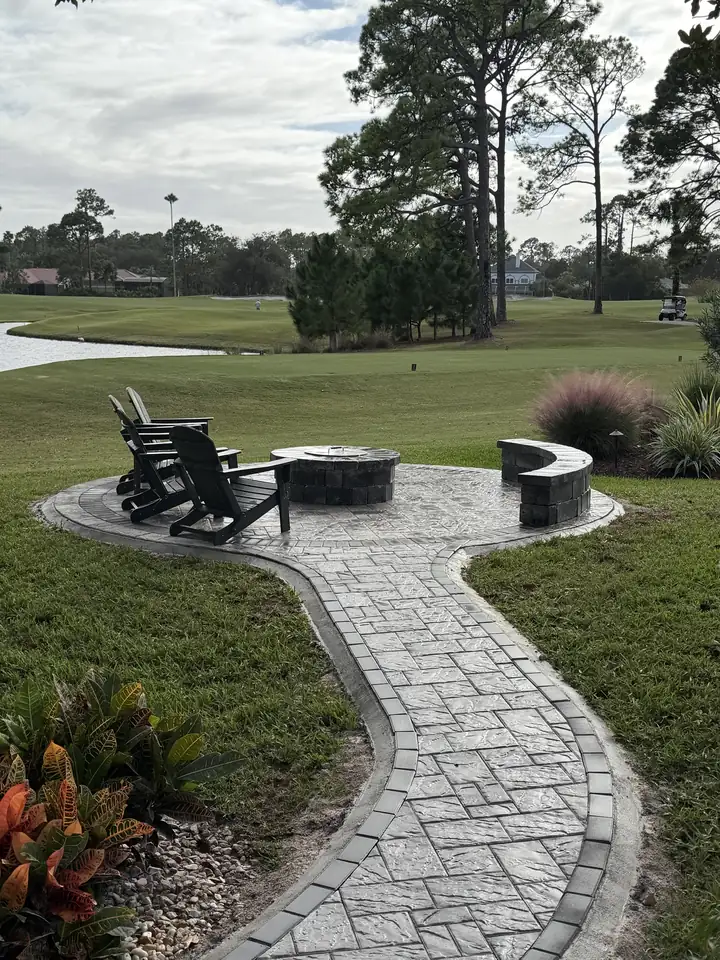
The location comes first because the fire rules, the smoke and the view all depend on it. Before we design the pit, we check:
Orange County's open-burning guidance for recreational fires asks that the fire sit at least 25 feet from any building or combustible structure, and that the fuel area stay within 3 feet across and 2 feet high unless it burns in an outdoor fireplace, barbecue grill or barbecue pit. Someone must stay with the fire, with a garden hose or other extinguisher within reach. Rules differ between cities, counties and HOAs, so confirm what applies to your address. Source: Orange County Open Burning FAQ (PDF).
As a general design guideline, seating sits about 2 to 3 feet back from the edge of the pit. Our guide to planning an outdoor living space goes deeper on layout.
A fire pit patio is a layered system, and each layer has a job:
| Fuel | What you get | What to know |
|---|---|---|
| Wood-burning | Real flame, crackle and the smell of woodsmoke. No gas line needed. | Smoke and ash. Subject to the distance rules above and to burn bans during drought. |
| Natural gas | Turns on and off at the switch, with no smoke or ash. | Needs a gas line to the pit. In Florida, gas piping is normally installed by a qualified contractor under permit, and the pit location is fixed once the line is run. |
| Propane | Clean flame without a gas line from the street. | A tank feeds the burner. The tank needs a place to sit and a way to be refilled or exchanged. |
For a gas fire feature, we plan the pit and the patio around the line, and the line itself is installed by a qualified gas contractor. Lines are far easier to run before the base goes down than to tunnel under a finished patio.
On-site visit to choose the spot and check slope, trees and the distance from the house, by appointment.
Pit style, seating and paver choices, with the details an HOA asks for.
Compacted base, pit walls, liner, patio and seat wall built as one system.
Clean-up and a walkthrough of the finished patio, with care tips.
Orange County can prohibit open fires during drought. The county's burn ban switches on automatically when the Florida Forest Service drought index reaches a set level, so check the current status before you light a wood fire. Source: Orange County Open Burning FAQ (PDF). For your own layout, request a free written estimate.
Every project is different. The size, the fuel, the patio around the pit and extras such as a seat wall or lighting all change the price. After we see your space you receive a free written estimate. For typical price ranges, see our hardscape cost guide.
Wood gives real flame and the smell of woodsmoke, but it makes smoke and ash and can be restricted during a drought burn ban. Gas starts with a switch and burns cleanly, but it needs a gas line installed by a qualified gas contractor under permit. Propane avoids a gas line and needs a tank. We help you choose based on how you will use the space.
Orange County's open-burning guidance asks that a recreational fire sit at least 25 feet from any building or combustible structure, and that someone stay with the fire with a garden hose or other extinguisher within reach. Gas fire features follow the manufacturer's clearances and local code. We check distances before choosing the location, and the fire authority for your address has the final word.
HOA approval is common for any visible structure, and a gas line needs its own permit. Fire rules also differ between cities and counties. We prepare the layout and material details an HOA asks for; the approval itself stays with your association or the local authority.
Sometimes. A block pit is heavy, so its walls need a compacted base and not loose bedding sand. On an existing paver patio that usually means lifting the pavers where the pit goes and rebuilding the base. We check the patio first and tell you what it needs.
Yes. A curved seat wall, steps and lighting can be built into the same patio so it reads as one design. Running lighting and gas lines before the pavers go down is much easier than adding them later.
Size depends on the seating. As a general design guideline, chairs sit about 2 to 3 feet back from the edge of the pit, with room to walk behind them. We lay out the patio around your furniture and the number of people you want to seat.
Let ashes cool completely before you remove them, keep a lid or cover on between uses so rain and debris stay out, and sweep embers and ash off the pavers. Keep a garden hose or extinguisher within reach whenever the fire is lit.
Book a private consultation and plan the pit, the seating and the patio before work begins.