Choosing the right slab thickness for patios and driveways can make or break the durability and longevity of your outdoor surfaces in Florida. At GCM Best Services, we see first-hand how these decisions play out over time and across the tough Florida climate. This article will walk you through the details that matter most—so your next concrete project stands on solid ground.
Why slab thickness matters for patios and driveways
Slab thickness is the backbone of performance for patios and driveways. Getting this detail right will directly affect how your surface holds up to weight, weather, soil, and even your daily habits.
In Central Florida, driveways and patios face frequent rain, hot sun, and occasional heavy vehicles. We’ve often seen surfaces with the wrong thickness crack, settle unevenly, or fail early. Some clients tell us their previous patio warped after just a few seasons. Usually, the culprit is a slab that was too thin for the intended use or laid without good preparation.
When we deliver concrete projects, we follow industry standards and align construction with local codes. Our process includes a specific sub-base, concrete strength, reinforcement, and joint design adapted to your needs. As we explain factors that influence thickness, you’ll see why every inch counts for stability and service life.
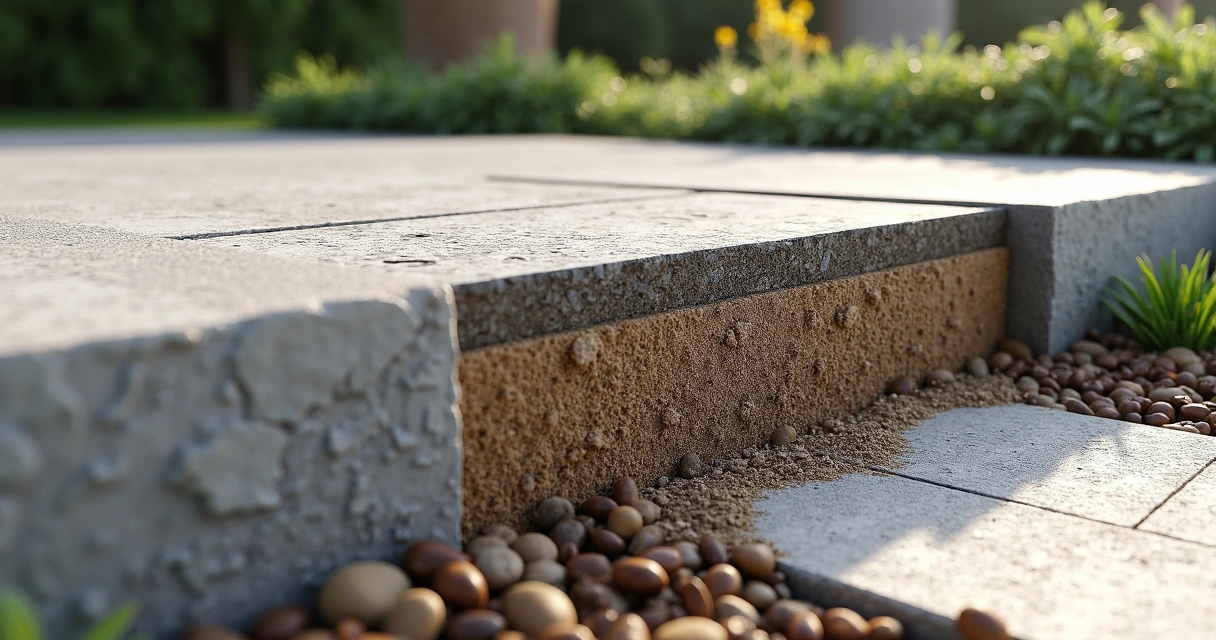
Concrete slab basics: anatomy and functions
Before comparing thickness, let’s break down what a slab actually includes:
- Sub-base: Layer of compacted material (usually crushed concrete, lime rock, or gravel)
- Reinforcement: Steel rebar or welded wire mesh to hold the slab together
- Concrete: The main structural layer (typically 3,000–4,000 PSI mix in Florida)
- Finish: Broom, exposed aggregate, stamped, or smooth
- Control joints: Grooves or saw cuts to manage cracking
The visible concrete surface is only part of the story—support comes from below. Poor preparation underneath will compromise even the thickest concrete.
What determines recommended slab thickness?
We use different thicknesses for patios and driveways for good reasons. But what drives those choices? Here are major factors:
- Intended use: Will the slab support only foot traffic, or will cars and trucks drive over it?
- Soil quality: Sandy or clay soils respond differently to weight and moisture.
- Drainage requirements: Water flow beneath the slab can wash away the sub-base, leading to sinking or cracks.
- Reinforcement: Using rebar or heavy wire mesh allows for slightly thinner slabs in some cases, but the tradeoffs matter.
- Local codes and climate: Building regulations may set a minimum, but our field experience fine-tunes the choice.
In our Orlando and Central Florida service area, we always plan for frequent rain, high humidity, and sandy/silty soils. These mean every slab needs more attention to sub-base compaction and moisture management—a lesson we’ve learned over many completed projects.
Typical slab thicknesses for patios vs. driveways
You might be asking: what numbers are right for my property? Here’s what we use as a starting guide for most residential jobs:
Florida patio slabs: 4 inches thickFlorida driveway slabs: 6 inches thick (sometimes more for heavy vehicles)
But the real answer depends on the variables above. Let’s go deeper for each type.
Patios: balancing comfort and strength
Most residential patios serve as pedestrian spaces—hosting barbecue grills, outdoor seating, or a small fire pit. For these uses, a 4-inch thick concrete slab is usually sturdy and cost-effective.
But what if you want to park a golf cart, hot tub, or rolling storage shed? That extra weight adds up. We may then suggest 5 inches or add reinforcement for peace of mind. The edge of a patio facing heavy planters or fencing sometimes needs a drop edge or extra thickness too.
Driveways: taking on heavy loads
Driveways face vehicle weight many times a day. For Central Florida, we recommend:
- 6 inches for standard passenger vehicles
- 7–8 inches for heavy-duty vehicles or RVs
- 4,000 PSI concrete for added strength when needed
The difference is easy to feel when you drive on a solid driveway slab compared to one that flexes or cracks.
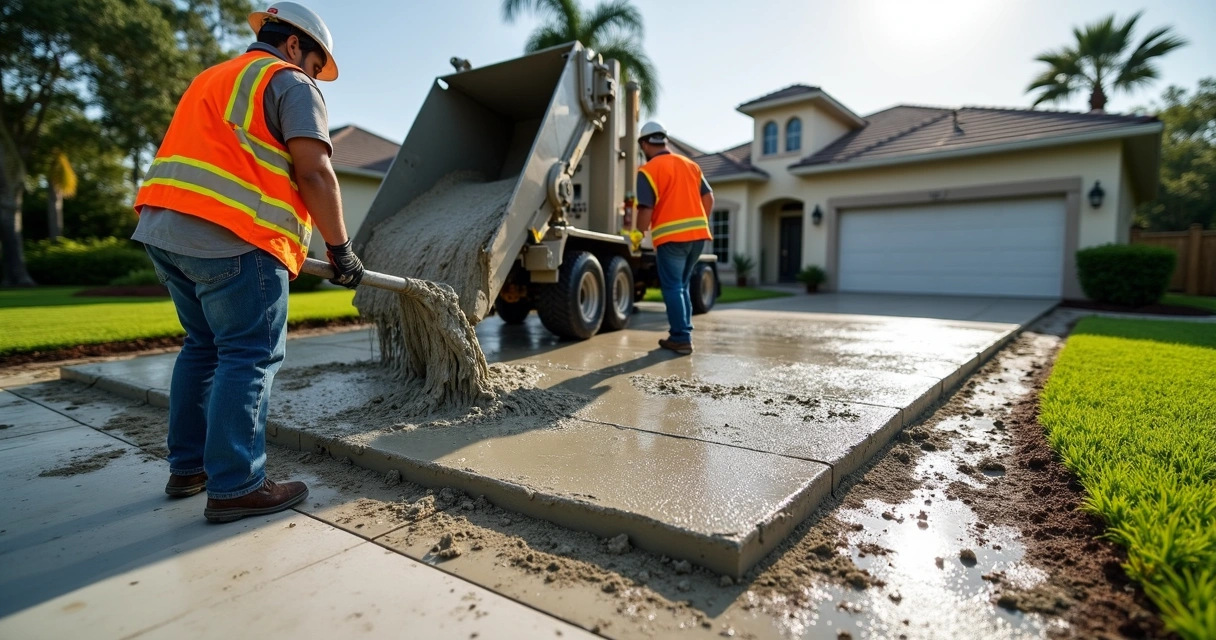
Other key elements that affect slab performance
Even with perfect thickness, a slab project can fail if short-cuts are taken on:
- Sub-base preparation: 6–8 inches of well-compacted fill is the standard for Florida’s shifting soils.
- Control joints: Joints direct cracks to harmless locations, rather than random unsightly breaks.
- Slope and drainage: Ensures water runs away, keeping the base dry.
- Reinforcement placement: Too high or low in the slab, steel won’t work as intended.
- Proper curing: Retaining moisture helps concrete reach its full strength.
We pay close attention to these steps every time at GCM Best Services. The result is a patio or driveway that stays level, safe, and attractive for years to come.
Comparing slab thickness: how to make your decision
When homeowners and property managers ask us for advice, we walk them through this mental checklist to compare slab thickness options:
- List expected uses: Walking, driving, RVs, entertaining, or storage?
- Check your soil: Washed-out sandy soil means reinforcing and extra base depth matter even more.
- Look up local code: Minimums are only a starting point, not the final answer.
- Factor in reinforcement: Rebar may allow a slightly thinner slab than wire mesh depending on traffic expectations.
- Consider upgrades: If you want stamped concrete or heavy furniture, err on the higher end for thickness.
- Understand costs: More thickness means a higher material/labor cost—especially with expensive decorative finishes.
We believe comparing options out loud is the best way to find your fit—not just following generic charts online. For those who want even more detail, our concrete installation guide in St. Cloud is a solid resource.
Case study: slab thickness failures and wins
Let’s bring this to life. Not long ago, we were called to repair a patio where the surface had buckled and large cracks had formed after a few years. On inspection, we found the slab was barely over 3 inches thick on the edges, poured over loose sand with no reinforcement. The homeowner’s patio furniture had started to tilt, and water pooled in the middle, making outdoor gatherings frustrating.
A thin slab poured on unstable ground will always betray your trust sooner or later.
We replaced it with a 4-inch slab, placed on 6 inches of compacted gravel, reinforced with mesh, and finished with a waterproof sealer. Today, that space hosts family gatherings, and the owner no longer worries after heavy rain.
On driveways, we’ve seen early failures from contractors using light-duty patio specs—sometimes just 4 inches of concrete where a full-size truck parks every day. We always clarify uses and recommend durable materials upfront. That’s the difference proper planning and professional craftsmanship make.
Cost considerations when choosing slab thickness
Cost and value come into play once you compare slab thickness:
- Every extra inch of concrete adds cost in material and labor.
- Larger projects (big patios, long driveways) magnify that difference quickly.
- But underbuilding to save money leads to repairs, replacements, and safety issues faster than you expect.
Choosing the right thickness is an investment in fewer headaches down the road. When we prepare bids, we break down these tradeoffs and the benefits for you, with clear estimates and no hidden surprises.
Upgrades and finishing options: How they relate to thickness
Decorative finishes (like stamped concrete or exposed aggregate) sometimes affect minimum thickness. Patterned surfaces or heavy paver overlays need extra concrete depth to prevent cracks. Want to combine your patio with artificial turf or low-voltage lighting? Planning for this in the slab design prevents later problems.
If you’re interested in paver driveways or patios, we also plan for correct base and bedding thickness. Learn more about driveway and patio paving options here. We often integrate artificial turf for yard areas or use blended designs for pool decks—each has its own thickness standards to get things right.
Local knowledge and weather: The Florida angle
Florida’s weather is famous—for both beauty and unpredictability. We witness the effects of storms, flooding, and the region’s unique soil every season. Our clients are often surprised how fast improperly built patios settle or crack. Slab thickness must be adapted to sandy soils and frequent rain. That’s why our sub-base is always compacted to 6–8 inches, and we slope surfaces to direct water away from your home’s foundation.
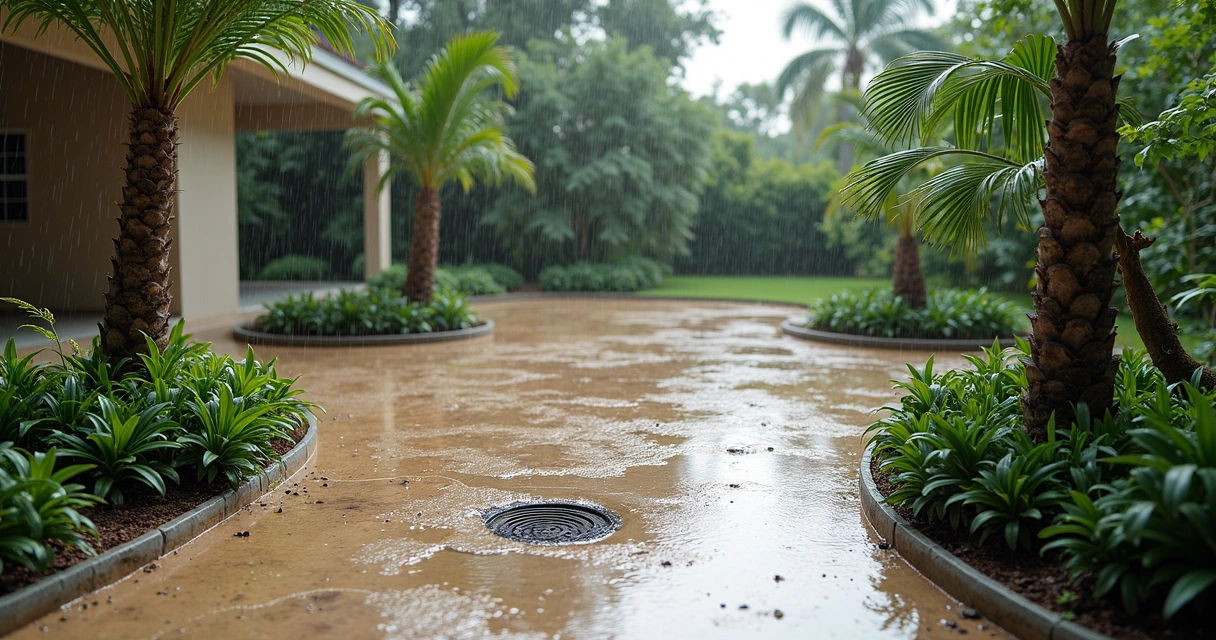
To further understand slab issues in Florida, the article about preventing cracks in Florida concrete patios and driveways can give you a sense of what we’re regularly dealing with.
How reinforcement changes thickness decisions
Using steel rebar or mesh inside your slab can significantly support the concrete against cracking. For heavy traffic, we always recommend 1/2-inch rebar grid set on chairs through the slab. Patios with only foot traffic may use mesh, but we take soil and expected use into account.
- Rebar: Best for driveways, large patios, or areas prone to shifting.
- Wire mesh: Suitable for standard patios, improves crack resistance, but not as strong as rebar.
- Fiber reinforcement: Tiny fibers mixed into the concrete can help, but rarely replace steel entirely for driveways.
Reinforcement allows for improved slab performance, but is never a substitute for proper thickness or a stable sub-base. We always align reinforcement with design needs. Decorative overlays or epoxy coatings also depend on a sound, thick slab below.
Comparing slab thicknesses: A step-by-step example
Let’s say you want a new patio and a new driveway. Here’s how we would compare options with you at the initial site visit:
- Discuss your intended use (barbecues, furniture, RV parking, etc.).
- Check soil type and drainage patterns around your home.
- Measure available space and existing slab or base (for replacements).
- Walk through finish options: stamped, colored, broom, or smooth.
- Recommend thickness: 4 inches for the patio, 6–7 inches for the driveway, adjusted for specific vehicles or soil challenges.
- Outline reinforcement: mesh for patios, rebar grid for driveways or hot tub slabs.
- Create a detailed quote, including any upgrades, sub-base work, and warranty terms.
We guide you through each step and answer all questions along the way. The GCM Best Services blog shares insights and scheduling tips for every season in Central Florida.
Permits, inspections, and written warranties
Every city in Central Florida has its own set of rules for patio and driveway slabs. We handle all permits, coordinate with HOAs, and ensure inspection standards are met. This is when slab thickness often gets attention—local inspectors want to see that thickness meets code and is appropriate for the specific use.
We also back our work with written warranties. Slab cracking or settling due to improper thickness or base prep can be a nightmare, so our process helps you avoid that scenario entirely.
How to compare slab thickness: Key questions to ask your contractor
When planning this kind of project, we always recommend these questions to help you compare choices:
- What sub-base depth and compaction method do you use?
- What slab thickness do you recommend for my project and why?
- Are you using wire mesh, rebar, or fibers as reinforcement?
- How do you ensure water drains away from the slab?
- What warranties will you provide for thickness, materials, and finish?
You deserve clear, professional answers every time. That’s how we build trust—and long-lasting surfaces—for every GCM Best Services customer.
Conclusion: Making the best decision for your home
Comparing slab thickness for patios and driveways is about finding the right balance for your space, your planned uses, and the demands of the Central Florida environment. When you work with GCM Best Services, you get a team with local knowledge, technical know-how, and a passion for getting things right. We guide you through every step: assessment, design, permitting, and building—so you end up with a surface that looks great and lasts for years.
If you’re planning a new driveway, patio, or outdoor upgrade, learn how to choose the right concrete company in Orlando or contact us directly. Ready for a professional quote? 📞 (407) 250-1948 • 24–48h • Orlando, Tampa & area.
Frequently asked questions
What is the ideal slab thickness?
The ideal slab thickness depends on use: in Central Florida, 4 inches is typically used for patios with foot traffic, while 6 inches (or more) is best for driveways with vehicle loads. This can be increased for heavier vehicles or specific site needs. Always pair thickness with good base preparation and reinforcement.
How to compare slab thickness options?
Start by listing your expected uses, checking your soil quality, and understanding local codes. Compare the thickness required for those uses—like patios (4 inches) versus driveways (6–8 inches). We recommend speaking with professionals who know your area, like our team at GCM Best Services, to fine-tune thickness based on your exact conditions and goals.
Is a thicker slab worth the cost?
A thicker slab increases both strength and longevity, especially when exposed to heavy vehicles or poor soil. The extra upfront cost is typically offset by fewer repairs and longer service life, making it a smart investment if you expect heavier use or want to protect against soil movement and weather.
What impacts slab thickness choice?
Key factors include type of use (vehicles versus foot traffic), expected maximum weight, soil stability, drainage needs, reinforcement, finish options, and adherence to local building codes. Details like nearby trees, slopes, and even design choices may also influence final thickness recommendations.
Where to find slab thickness guidelines?
Slab thickness guidelines can be found in local building codes, professional installer recommendations, and reputable resources such as the official website and blog of your contractor. Reliable installers like GCM Best Services provide clear, written recommendations and stand behind them with photos and warranties for each completed project.