A dusty concrete driveway isn’t just an eyesore—it can track into your home, create slipping hazards, and even signal deeper problems with your slab. In Central Florida, where heavy rain, sandy soils and humidity meet intense sunlight, dusting usually means something’s gone wrong above or below the surface. At GCM Best Services, we’ve seen how quickly driveway dust can snowball into cracks and costly repairs if left unchecked.
With years of experience serving Orlando and the surrounding areas, we want to help homeowners and business owners pinpoint the exact causes behind persistent driveway dust. If you’re tired of sweeping without results, understanding why concrete sheds powder is the critical first step to solving it for good.
Dust is the driveway’s way of telling you something is off.
Below, we’ll break down the seven most common sources of dusting, explain the science behind them, and offer practical advice on fixing—and preventing—them. We’ll also tie in proven research and our own on-site discoveries so you can trust the solution you choose.
What is concrete dusting?
Dusting happens when the concrete surface deteriorates or fails to bind properly, so fine powder—mostly cement paste—rubs off under very light friction. While it may look like simple dirt, this powder actually comes from the concrete itself, not from the environment around it. If left unchecked, it can wear down the slab prematurely and lower your property’s value.
Understanding concrete in Florida’s climate
Central Florida’s hot sun, frequent rains, and sandy soils make our area unique for concrete work. Our team at GCM Best Services routinely designs mixes and installation processes to match local weather and ground conditions. This means integrating the right ratio of water, cement, and aggregate, and perfecting surface finishing against the elements—otherwise, dusting issues surface soon after installation.
The seven main causes of a dusty concrete driveway
1. Too much water in the concrete mix
The old saying “just add water” doesn’t work with concrete. Excess water dilutes the cement paste, weakening surface bonds and reducing the strength by up to 40% if overdone. In Central Florida, some installers add water to improve workability or compensate for hot, windy pours. But this creates a soft surface layer with too many pores.
- Water raises the water-cement ratio, promoting laitance—weak, powdery material at the surface.
- Drying shrinkage cracks let more dust escape as the weak surface breaks into fine particles.
- Overworked or re-tempered mixes (that is, mixes to which water is added after the initial pour) usually dust within months, not years.
Our crews at GCM Best Services monitor mix water on every Florida driveway, never exceeding the recommended limits even on sweltering days. According to best practices for concrete work in Central Florida, strict water control is one of the strongest defenses against dusting.
2. Inadequate curing practices
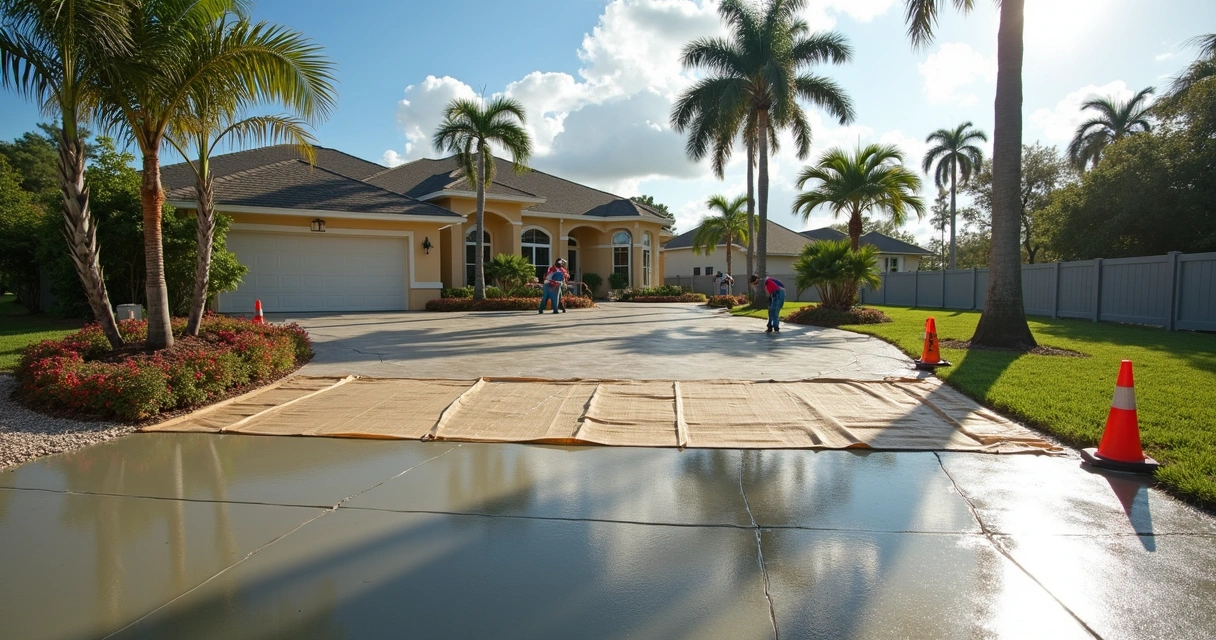
The new concrete driveway is only as strong as its curing process. Curing is about slowing down water evaporation to help cement fully hydrate and develop strength. If the surface dries out too fast—from sun, wind, or simply not covering/keeping it moist—uncured surface paste turns into dust.
- Common errors are skipping curing compounds, not using plastic sheeting, or removing forms too soon.
- Direct sun, especially in Orange, Osceola, and Seminole counties, can bake moisture out in less than an hour.
We always cure concrete as per manufacturer and ASTM guidelines, and explain to clients how to protect slabs for at least 7 days after pouring. Poor curing is one of the most avoidable causes of dusting, particularly on the shaded sides of driveways where it might go unnoticed for weeks.
3. Poor surface finishing and timing
Driveways finished with improper tools, or at the wrong time in the set, are prone to dusting. For instance, excessive troweling before bleed water evaporates essentially traps water just below the surface. The result: a thin, weak layer that dusts at the first sign of use.
- Power troweling too early or broom finishing on still-wet concrete is common, especially for crews racing storms.
- Adding dry cement on top to “fix” a too-wet or uneven surface (also called “dusting” the surface) almost guarantees weak, dusty spots weeks later.
Our own policy means monitoring the surface sheen, not the clock, and only working concrete when it’s ready. This patience, along with using proper finishing tools and techniques, prevents the creation of soft surface layers that dust and erode.
4. Incompatible or weak concrete mix
Not all driveway concrete is created equal. In Florida’s sandy soils and high water table, a weak mix (below 3,000 PSI) or the wrong aggregate can spell dusting trouble. Aggregate that’s too smooth or not well-bonded with the cement can break loose, leaving surface paste to crumble away.
- Low-cement mixes and poor-quality sand or gravel don’t stand up to years of summer sun, traffic, and rainfall.
- Scaled-down DIY mixes often lack the reinforcing properties of professionally batched concrete—no mesh, rebar, or properly graded sand. This accelerates dusting.
- In our work, we always select mixes between 3,000 and 4,000 PSI, adjust for sub-base conditions, and reinforce with rebar or mesh as specified. This ensures a durable finish that bonds tightly long-term.
5. Environmental abrasion and exposure
Orlando’s driveways see plenty of mechanical wear—from car tires, trash bins, even mail trucks. Additionally, fine sand and grit carried by wind or rain act as miniature sandpaper, breaking down surface cement.
- Frequent sweeping, vehicle turning and parking can wear away the surface paste, especially on elbows or where water drains slowly.
- Exposure to salt (from de-icing agents) or lawn fertilizer runoff also chemically weakens the surface, letting dust form faster.
- If the surface was already weak from overwatered or undercured concrete, environmental abrasion is enough to turn light chalking into visible powder trails.
We design driveways at GCM Best Services with drainage in mind, sloping away from garages and sidewalks to reduce standing water and abrasive run-off. Our surface treatments—like broom or exposed aggregate finishes—are chosen for both traction and resistance to mechanical abrasion.
6. Lack of sealing or surface protection
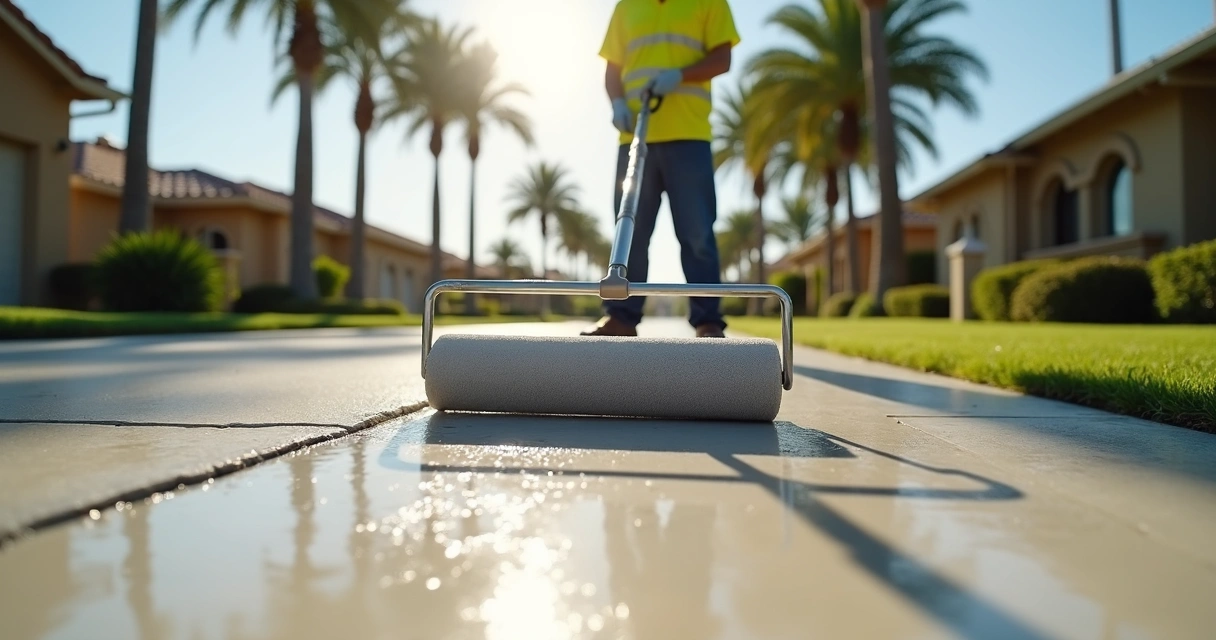
- Concrete is a porous material; without a breathable sealant, rainwater and oils push tiny cement particles to the surface as they evaporate.
- Sealers also shield against UV rays, which slowly dry out and break down the cement matrix.
We recommend sealing new driveways 28 days after installation, and reapplying every 2–3 years. Proper sealing not only slows dusting—it makes cleaning easier and extends the slab’s lifespan. For more on the science behind sealers, see our concrete repair and protection guide.
7. Underlying moisture problems and poor drainage
Water beneath or beside your driveway is a hidden but common culprit. If downspouts, gutters, or poorly compacted sub-bases let water run under the slab, this moisture wicks up through the concrete during sunny weather. As it evaporates, it brings minuscule cement particles with it, leaving telltale dust on top.
- Soil movement or subsidence often creates fine fissures, which turn into dust-collection grooves over time.
- Central Florida is notorious for “ponding” (standing water) after summer storms on driveway edges or seams; this keeps the bottom of the slab moist and vulnerable to dusting.
At GCM Best Services, we address drainage right from design, sloping slabs correctly and using proper sub-base compaction (6–8″) so water leaves, not lingers. Some older homes may need French drains or gutter rerouting—details covered in our crack-prevention guide.
How improper surface grinding and repair can raise dust
Not every dusty driveway started out that way. Sometimes, aggressive grinding—often during repair or leveling—raises enormous clouds of fine crystalline silica dust. Studies have shown that workers grinding or sawing concrete can be exposed to silica levels many times over the recommended safety limits (NIOSH findings).
When homeowners or untrained personnel grind driveways to smooth bumps, patch holes, or remove stains, improper dust control can leave a white film on surfaces, cars and shrubbery. According to research documented in PubMed, respirable silica levels during dry sawing can be up to 200 times higher than NIOSH’s limit.
NIOSH recommends using local exhaust ventilation shrouds and, when possible, incorporating wet-cutting techniques. Wet cutting has been shown to lower airborne silica dust by up to 85% (PubMed research).
Dust in the air is a warning sign: protect your health as well as your driveway.
What should I do about a dusty driveway?
A small amount of harmless dusting may happen after new installation due to minor settlement or weather changes; however, visible chalky patches, consistent powder tracking, or rapid surface wear need investigation. If you’re seeing these signs, take these steps:
- Check recent weather (did rain, wind, or cold snap follow your pour?).
- Note where dust is coming up: Is it uniform, at expansion joints, or near the garage?
- Look for surface flaws: “soft” patches, pitting or scaling, moisture collecting at the edges.
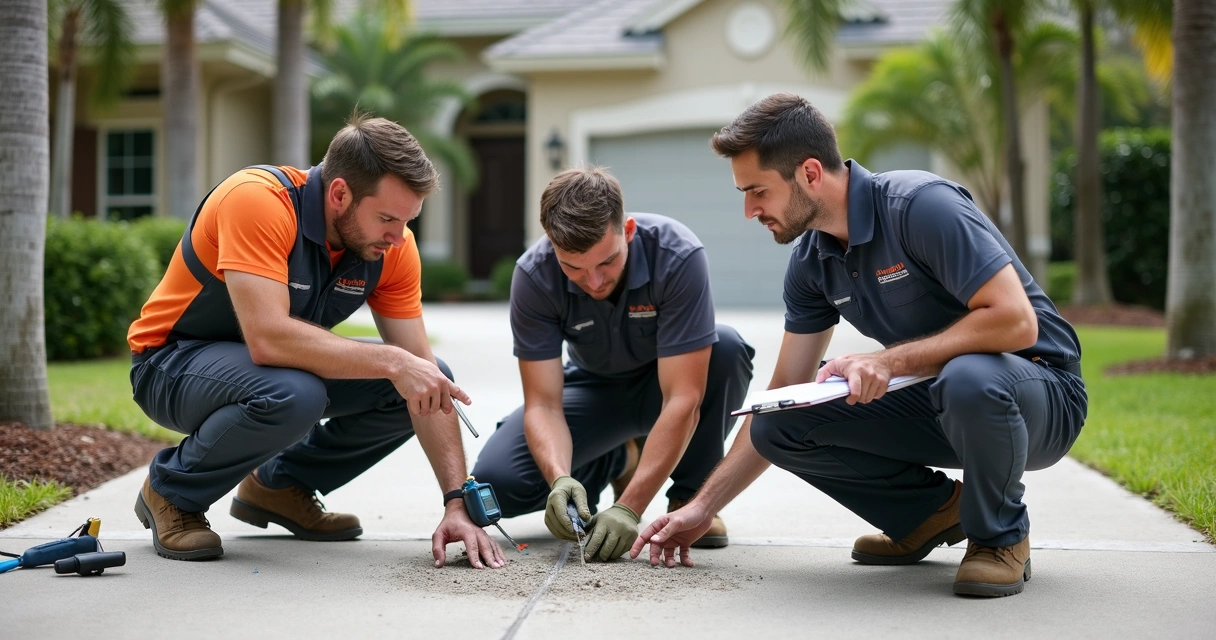
- Contact a trusted contractor, like GCM Best Services, for on-site assessment and core testing if needed.
It’s usually possible to repair most dusting driveways with surface treatments or overlays if the slab below is solid. Only advanced, deep-seated issues need full replacement. Our concrete resources address dozens of those scenarios for Central Florida.
When to call a professional (and what to expect)
Many small dusting problems can be managed with good cleaning, followed by a penetrating silicate densifier or a quality sealer. However, persistent or worsening dust may call for professional evaluation.
- We check thickness, rebound, permeability, and chemical conditions before recommending fixes.
- Solutions range from resurfacing, applying densifiers, patching, or—rarely—removal and replacement.
Our team at GCM Best Services always starts with a free on-site assessment, delivers a written estimate, and walks you through the process before work starts. Learn what makes a licensed contractor the right choice for your concrete driveway or patio project in Orlando and beyond.
How to prevent dusting in the future
The best prevention is always an expert installation and early intervention. We suggest these practical steps:
- Choose a concrete mix suited to Florida’s climate and soil (3,000–4,000 PSI, with proper aggregates).
- Hire licensed, insured contractors who control water content and follow proper finishing/cure protocols—see how to choose the right pro.
- Seal the driveway after 28 days, and keep up a maintenance schedule.
- Avoid using harsh de-icers or lawn chemicals near the surface.
- Don’t grind, saw or pressure-wash aggressively unless using dust control (see NIOSH recommendations for worker safety too).
- Direct rainwater away from the slab with downspouts, drains, or landscape grading.
Bringing it all together: Don’t ignore driveway dust
Dusty driveways aren’t just a daily nuisance—they’re early warnings of weakness in your concrete. If you know the root cause, you can address it and avoid cracks, stains, and expensive repairs down the road. At GCM Best Services, we see every driveway as an opportunity to deliver durable, beautiful surfaces backed by photos, warranties, and clear communication.
If your driveway is always dusty, let us help you finally solve it. You deserve a clean entrance that lasts for years—minus the mess and worry.
Ready for a professional quote? 📞 (407) 250-1948 • 24–48h • Orlando, Tampa & area.
Frequently asked questions
Why is my driveway always dusty?
Driveway dust usually means the top layer of your concrete is weak and breaking down, either from too much water in the mix, poor curing, surface abrasion, or a lack of sealing. Environmental factors in Central Florida—like frequent rain, sandy soils, and intense sun—can accelerate dusting if the installation or upkeep isn’t right. Diagnosing where and when the dust appears helps pinpoint the exact cause.
How can I stop concrete dusting?
Stopping concrete dusting means strengthening the surface and blocking moisture or abrasion from making it worse. Start with a thorough cleaning (use a wet mop or shop vacuum), then apply a silicate densifier for minor cases, or a high-quality concrete sealer if the base is sound. For deeper issues, you might need resurfacing or professional patching. Long-term, fix drainage problems and set up regular inspections with a trusted concrete contractor like GCM Best Services.
What causes concrete driveways to dust?
Common causes of dusting are excess water in the mix, undercured surfaces, poor finishing techniques, weak or incompatible concrete mixes, mechanical wear, absence of sealer, and unresolved moisture under the slab. Any one—or a combination—of these factors reduces surface density and lets cement paste powder off under friction. Environmental exposure and repair work without dust control can also play a role.
Is it worth sealing my driveway?
Absolutely. Sealing your driveway guards against water, stains, abrasion, and UV—while dramatically slowing dusting and extending the surface’s lifespan. We suggest sealing new concrete after 28 days, with re-application every 2–3 years. The long-term savings in repairs more than cover the up-front cost, and driveways stay cleaner day-to-day.
How much does concrete sealing cost?
In Central Florida, professional driveway sealing usually runs between $0.75 and $2.50 per square foot, depending on surface condition, material type, and prep work needed. The price can increase for larger repairs or advanced coatings. At GCM Best Services, we provide a detailed, written estimate after an on-site assessment, so you’ll always know what to expect before work starts.