When planning a new screen enclosure, summer kitchen, or outdoor living upgrade in Central Florida, lighting is never just an afterthought. Choosing HOA-approved lighting controls is a must for homeowners who want ambiance, safety, and efficiency—without frustrations from approval boards or maintenance headaches. At GCM Best Services, we find that nearly every Homeowners Association (HOA) decision comes down to appearance, code compliance, neighbor relations, and energy responsibility. The right controls make everyone happy: residents, guests, and the HOA.
Controls make the difference between an ordinary enclosure and a striking, efficient, community-friendly space.
In this article, we’ll show you eight types of lighting controls our team recommends and that consistently receive HOA approvals for screened enclosures, lanais, patios, and outdoor living areas. We’ll discuss why these controls win over boards, where they fit best, and how their energy savings, safety, and customization stack up against older or more intrusive approaches. If you want your Central Florida project approved quickly, this guide has you covered.
Along the way, we’ll link to resources and results, including key research on lighting controls and industry adoption rates. We’ll connect our experience as GCM Best Services to real impacts for homeowners and HOAs, and include smart internal and external references for further reading. For the latest on enclosures, paving, artificial turf, or hardscape work in Central Florida, our hardscape section and hardscaping guides can help you learn more.
Why HOAs specify approved lighting controls
Every HOA has a different set of rules, but most place priority on:
- Preventing nighttime glare and light trespass affecting neighbors
- Cutting wasteful energy use and lowering utility costs
- Ensuring lighting fixtures and switches blend with community aesthetics
- Supporting safety after dark—without creating complaints or hazards
- Reducing “always on” lights that draw insects, annoy nearby residents, or fail to meet dark sky compliance guidelines
We regularly see that lighting controls—any device or system that automates, limits, or customizes lighting operation—help homeowners and HOAs match these goals. Controls offer convenience for the user and peace of mind for the board.
According to a Lawrence Berkeley National Laboratory meta-analysis, occupancy sensors alone trimmed lighting energy by 24%. Other controls produced even higher savings, up to 38% when multiple approaches are combined. HOAs take note of this, seeing controls as clear evidence of responsible planning.
What makes a lighting control HOA-friendly?
In our experience at GCM Best Services, the best controls share a few characteristics:
- Simple visual impact: No bright, visible parts on the enclosure exterior
- Operation by schedule, sensor, or app—no fiddly or frequent manual switches
- Compliance with Florida Building Code and local ordinances
- Shielded, adjustable, or “warm” lights to keep neighbors happy
- Documented, spec-based products that boards understand and trust
- Clear documentation for inspections and sign-off
Let’s look at eight specific categories, ranked from most common (and often fastest to get approved) to those gaining popularity in modern HOA communities across Orlando and Central Florida.
1. Motion sensors
Motion sensors, sometimes called occupancy sensors, activate lights only when someone walks into the defined area. We install these controls around doorways, walkways, pool entries, or garage-adjacent enclosures. The logic for HOA approvals is clear: motion-activated lighting means no risk of wasted power or unwanted night glare for neighbors.
- Sensitive only within user-defined boundaries
- Shuts off (usually within 1–10 minutes) when no movement is detected
- No constant glow—matches dark sky compliance goals
According to reviewed studies, these sensors produce reliable energy reductions and are simple for HOA boards to understand.
2. Photocell (dusk-to-dawn) controls
Photocells register ambient light and switch fixtures on only at sunset, off at sunrise. They’re popular with HOAs because they guarantee:
- No daytime operation, lowering electric bills
- Predictable, uniform light schedules across homes or enclosures
- Consistent neighborhood aesthetics—everyone’s lights behave the same way
We find dusk-to-dawn controls work best for step lights, paver lights, path lighting, and some wall sconces. As a bonus, integrating photocell-based controls with high-quality paver installations (like those discussed on our driveway and patio paving page) creates a seamless, low-maintenance experience in any Florida enclosure.
3. Timers (mechanical or digital)
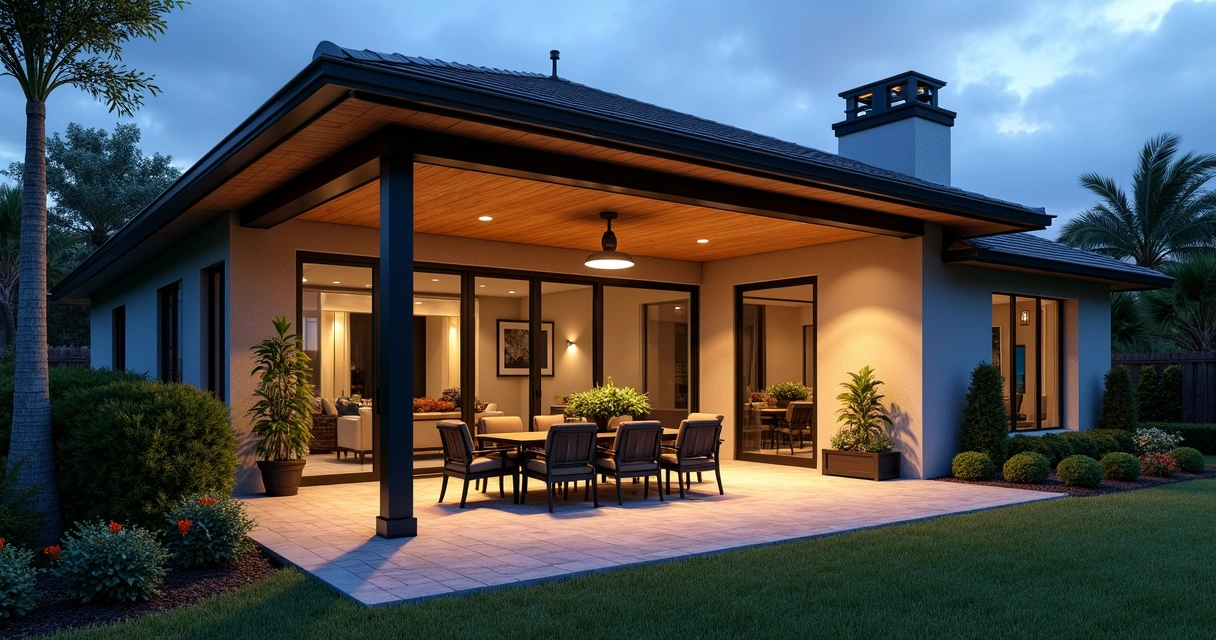
Timers, familiar to any homeowner, turn lights on and off at set intervals. Today’s digital options allow for complex scheduling, syncing with sunrise/sunset, weekends, and holidays.
- Prevents accidental “always on” lighting
- Enforced off-hours reduces nuisance light and neighborhood complaints
- Fits both hardwired and plug-in setups, making replacement or upgrades hassle-free
Timers are popular in both standalone pavilions and integrated enclosures, making them a frequent request during permit approval. When we include detailed spec sheets as part of the design packet for the HOA, boards almost always green-light these solutions.
4. Wall-mount dimmers with lockout
Adjustable dimmers help users pick the right light level for parties, meals, or quiet evenings, but not all dimmers are equal for HOA installation. Using lockout-enabled dimmers prevents users from leaving lights at full brightness, which is often an HOA’s biggest fear.
- Presetting ensures maximum output won’t annoy neighbors
- Lockout discourages tampering by guests or renters
- Works with low-voltage and color-tunable LED installations
In our experience, boards appreciate the “guard rails” that lockout dimmers provide, giving them confidence in long-term compliance. For projects that include not only enclosures but also artificial turf and landscape work, a coordinated dimmer plan supports overall outdoor safety and appeal.
5. Multi-zone controls for enclosures and landscaping
Modern outdoor lighting isn’t always “one switch fits all.” Multi-zone controllers split the lighting into different areas (patio, pool, walkway, grill station, lounge). This is especially valued in mixed hardscape projects with diverse lighting needs.
- Allows fine-tuned scheduling and dimming by location
- Keeps path lights on for safety longer than pool party accent lights, for example
- Reduces wasted light and supports flexible use without violating restrictions
We often pair multi-zone controls with landscaping or drainage redesigns (details on our concrete and slab work section), where both path and enclosure lighting may be required for permitting.
6. Mobile app–enabled smart lighting (when HOA allows apps)
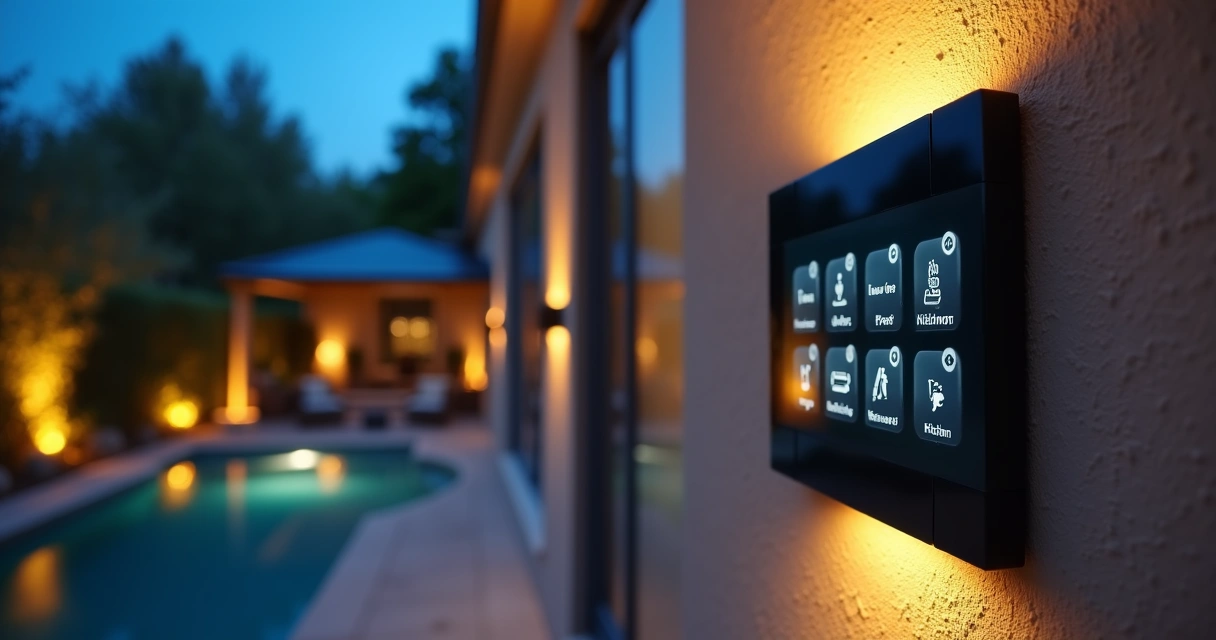
Many HOAs are warming up to smart controls operated by phone or tablet. Why? Because settings can be preprogrammed and shared with the board during review. Mobile-enabled controls offer:
- Easy demonstration for HOA during walk-through and inspections
- Remote shut-off for accidental “left on” incidents (even while traveling)
- Instant compliance with curfew or holiday lighting hours
When adding a smart control proposal to your enclosure or summer kitchen, we recommend a clear “Board Mode” option—preset scenes that comply with all restrictions for brightness and operating hours. This added transparency builds trust, resulting in faster signoff.
7. Wireless advanced lighting controls
Wireless controls are no longer just for new builds. In fact, the U.S. General Services Administration found wireless advances produced up to 54% energy savings when retrofitting fluorescent systems, and even more when switching to LEDs. What does this mean for Florida enclosures?
- Low-profile or nearly invisible installs—no ugly boxes or extra cabling
- Retrofitting older or historic enclosure structures without damage
- HOA and owner can monitor status without unsightly hardware
Wireless controls cut clutter, cost, and complaints.
We now see wireless lighting controls approved regularly for both new builds and upgrades, especially in communities with strict visual standards or mature landscaping.
8. Low-voltage and shielded lighting solutions
Low-voltage lighting inherently limits output, lowers safety risks, and is compatible with all of the above controls. Equally relevant, modern shielded or recessed fixtures minimize glare for neighbors, a top HOA request in dense communities.
- Reduced hazard of electrical overload or arc
- Subtle glow instead of harsh brightness
- Consistent with International Dark-Sky Association best practices
This control category often appears on HOA checklists as a non-negotiable for community pool cages, driveways, or walkways that are lit after sunset. Projects described in our hardscaping solutions often mention this requirement when submitting plans to HOA boards.
What controls do HOAs rarely approve?
As a brief aside, we find certain lighting setups are almost always rejected on first application:
- “Always on” wall packs or floodlights facing neighboring lots
- Colored (blue, red, purple) floods intended for parties or special events
- Unshielded or glaring fixtures visible from community streets
- DIY automation kits using extension cords or ad hoc wiring
Why? They increase energy waste, cause neighbor complaints, and fail most local code clauses. Our goal at GCM Best Services is to help you avoid wasted time and instantly meet approval standards.
Energy savings and HOA approval: what the numbers say
A review by Lawrence Berkeley National Laboratory examined 240 estimates from 88 different studies and reported energy savings from 24% to 38% depending on the control strategy. Combining multiple controls pushes further gains. In larger commercial buildings (over 50,000 sq ft), occupancy sensors had been adopted by 55% of sites by 2015, compared to only 16% in smaller, residential environments.
HOAs in Orlando and Central Florida are closing that gap, rapidly embracing these technologies in new enclosure builds. Likewise, wireless advanced controls—once reserved for commercial use—are now common in residential projects, credited not only for savings but also for less visual clutter inside enclosures and patios. Combining these systems with new LED fixtures brings combined energy savings over 70%, per U.S. General Services Administration research.
The HOA approval process simplified
Worried about paperwork? In our projects for clients in Central Florida, we guide every customer through:
- Collecting clear fixture and controls documentation for HOA review
- Demonstrating compliance with community light level and operation standards
- Switching from non-compliant systems to approved, durable, low-impact controls
- Coordinating inspections and providing maintenance plans
We recommend proposing controls that are both approved by the manufacturer for outdoor use and recognized as energy-saving by respected industry research. This gives your HOA confidence to sign off on your project faster, and with fewer “resubmit” cycles.
Conclusion: Lighting controls bring better living and fast HOA approval
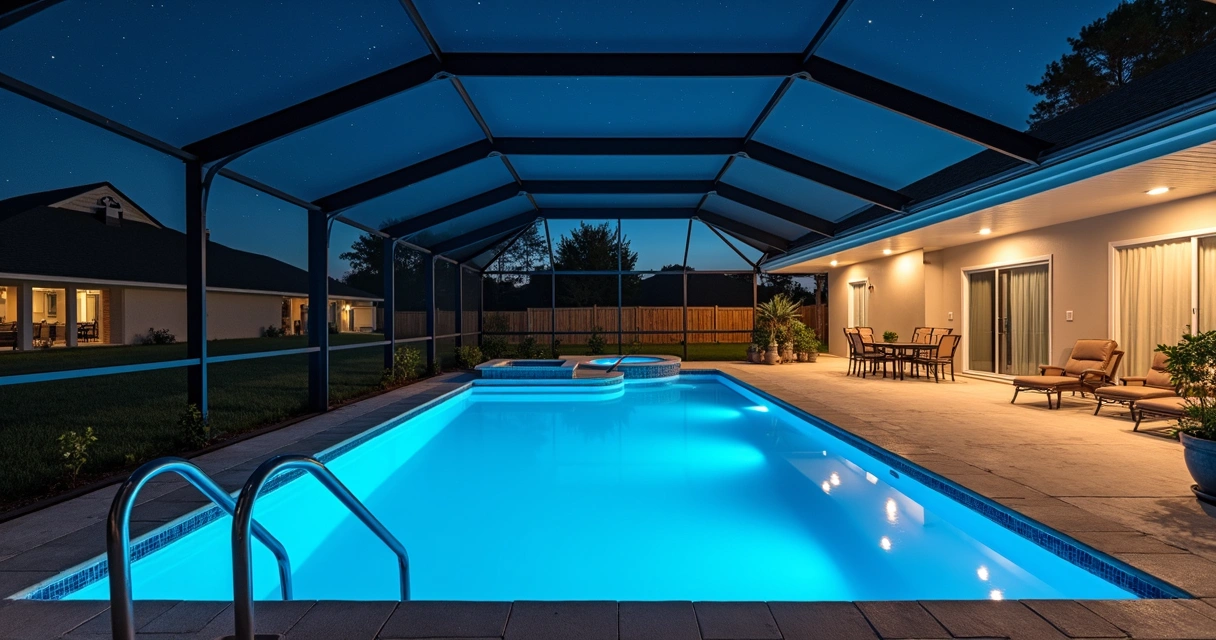
At GCM Best Services, we’ve watched hundreds of enclosure projects gain fast HOA approval in Orlando and all across Central Florida when the right lighting controls are planned from the start. Whether you want a pool cage that glows only when in use, a patio that blends seamlessly with the neighborhood, or a driveway that’s safe after dark but never overlit, these eight control approaches deliver community-friendly, energy-smart solutions.
Smart lighting controls don’t just save energy–they help avoid disputes, make spaces feel safer, and give homeowners convenience with every use. If you’re considering a new enclosure or upgrading your outdoor living area, now is the ideal time to add these features to your design and approval package.
Ready for a professional quote? 📞 (407) 250-1948 • 24–48h • Orlando, Tampa & area. Discover the GCM Best Services difference: responsive, on-spec, and HOA-ready.
Frequently asked questions
What are lighting controls for enclosures?
Lighting controls are devices or systems that manage when and how lights turn on, off, or adjust brightness within a screen enclosure, pool cage, patio, or outdoor space. Common controls include motion sensors, timers, photocells, dimmers, mobile app remotes, multi-zone panels, or automated systems. Their main purpose is to make sure outdoor lights are only on when necessary, to suit your needs while matching HOA and code requirements. Good lighting controls bring both convenience and energy savings.
How to choose HOA-approved lighting controls?
We recommend starting with your HOA’s written guidelines about fixtures and controls, then choosing controls that have a low visual impact and reliable documented features (like motion sensors or timers). When in doubt, present product specifications and clear manufacturer info to the HOA before purchase. Well-known types—motion sensors, photocells, timers, low-voltage dimmers, and multi-zone panels—are almost always accepted. Finally, work with licensed contractors familiar with HOA processes, who can submit documents and manage revisions quickly.
Are smart lighting controls allowed by HOAs?
Many Central Florida HOAs now allow smart, app-based lighting controls if they are professionally installed, preprogrammed, and can be demonstrated to the board. It’s helpful to create “scenes” or “presets” that meet HOA standards, limit maximum brightness, and restrict hours of operation. Some traditional HOAs still require hardwired switches or prefer to avoid WiFi-connected controls, so always double check local rules before selecting a product.
How much do lighting controls cost?
Costs vary by type: Simple mechanical timers or plug-in photocells start at about $20–$50 per fixture, while motion sensors often run $40–$100 per light. Smart multi-zone panels, app-enabled dimmers, and advanced wireless controls can range from $150 to $500+, depending on complexity and installation difficulty. These prices do not include labor. However, energy savings and reduced maintenance often pay back the investment over two to four years, as found in studies from the U.S. General Services Administration.
What are the benefits of lighting controls?
Lighting controls save energy, cut utility bills, prevent light trespass that might disturb neighbors, and extend bulb life by reducing burn hours. They also boost safety by ensuring walkways and enclosures are illuminated only as needed, which supports both homeowner comfort and community approval. With controls, enclosures look tidier, fit dark sky goals, and comply with HOA or city rules much more easily, speeding up the approval process for new projects and renovations.