Cracks in garage floors raise questions for every Central Florida property owner. Will they get worse? Is structural integrity already at risk? Most of all, can a fresh epoxy coating be the answer—or does the presence of cracks mean a more serious repair is needed first?
As a licensed and insured contractor serving the Orlando and greater Central Florida region, we at GCM Best Services work with these concerns daily. Our clients want clarity, peace of mind, and results that last. In this article, we break down what epoxy coatings can (and cannot) do for cracked garage floors—including the science, the process, and real-world expectations.
Understanding concrete cracks: More than just lines on your floor
Before we talk about coatings, let’s clarify what types of cracks we’re dealing with in garages across Florida.
- Hairline cracks – Usually under 1/16” wide, these appear as fine surface lines. Common after concrete cures or from minor settling.
- Shrinkage or crazing cracks – Random patterns from rapid drying or improper mixing. Usually shallow.
- Structural cracks – Wider, deeper, or running through control joints and load points. Caused by soil movement, inadequate base, or structural shifts.
- Active cracks – Still expanding due to ground movement or ongoing stress.
Each crack tells a story. Some are cosmetic. Others hint at drainage issues or deeper structural movement. That’s why we always start with a close evaluation. For more on assessing foundations and cracks, our licensed contractor’s concrete repair guide can help.
What epoxy coatings offer: Seal, strength, and style
Epoxy coatings have earned a reputation in Central Florida garages for being tough, glossy, and easy to clean. But their true benefit goes deeper.
- Moisture resistance – Protects the underlying concrete from water and stains, slowing down some types of crack development.
- Chemical protection – Shields against garage fluids like oil, brake fluid, and cleaners.
- Slip resistance – Texture can be built-in for safety, even when floors are wet.
- Aesthetics – Flakes, quartz, and custom colors transform plain gray concrete into a showroom look.
But the core question remains: Can an epoxy coating truly fix existing cracks in the floor, or is it just hiding the problem?
Epoxy and crack repair: How does it really work?
The answer depends on the crack’s type and what product or process is used.
Most commercial-grade epoxy coatings—like the 100% solids systems we apply at GCM Best Services—are designed to adhere strongly to solid, prepped concrete. However, they are not flexible enough by themselves to “bridge” or stretch across a moving or widening crack over time.
If you simply apply epoxy over an untreated crack, the crack (and the epoxy above it) is likely to reappear. That’s because movement beneath the coating will eventually transfer through, causing the finish to break, chip, or separate along the former crack line.
The General Services Administration states epoxy resin injection restores the structural integrity of cracked concrete, and the cured adhesives can reach tensile strengths up to 8,000 psi. This points to the power of epoxy when it’s used as a filler, not just a paint-on product.
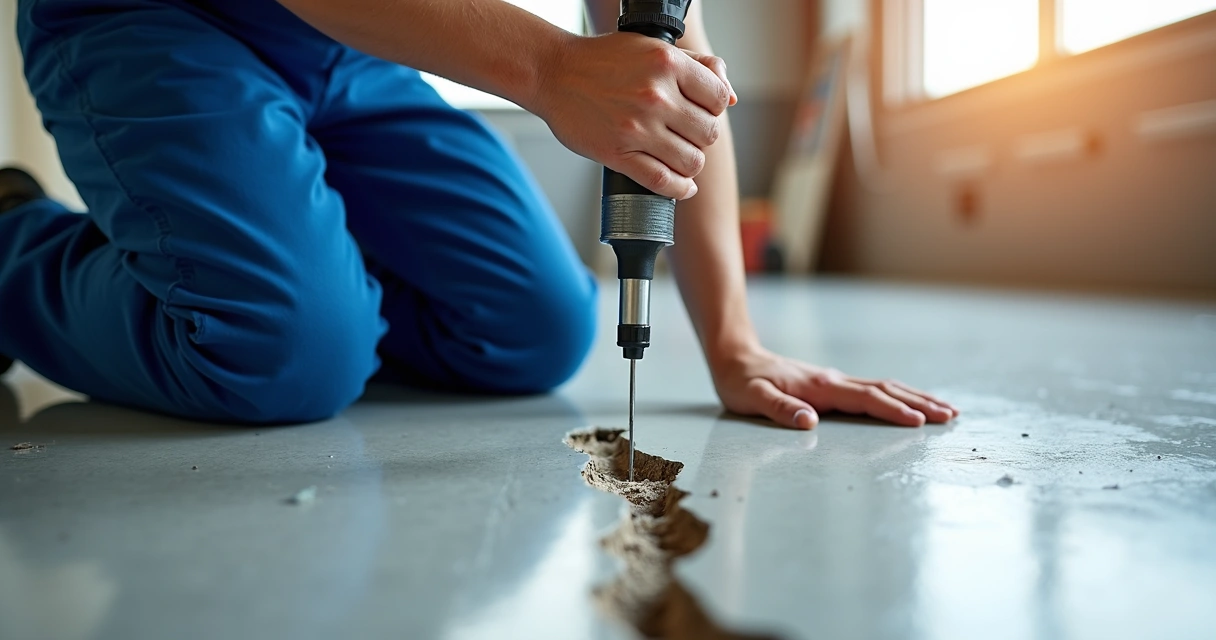
Pressure-injected epoxy: Structural repairs behind the scenes
When we discover cracks larger than hairline width—especially those wider than 0.002 inches—our protocol typically involves a two-step approach:
- Repair the crack using pressure-injected epoxy resin or compatible crack filler.
- Prep the entire floor for the final epoxy coating, blending the repaired area smoothly.
According to the Texas Department of Transportation, this method can address cracks as small as 0.002 inches, restoring both appearance and function. The process also guards against moisture and chloride intrusion, which can hasten further concrete deterioration.
In our experience, repairs like these—using high-strength, moisture-tolerant epoxy—can blend invisibly under the topcoat. Once cured and ground flush, they become part of the load-bearing slab.
Strong foundations start with smart repairs.
Surface fill vs. deep injection: Which is right for your garage?
For homeowners, the technical details can sound overwhelming. That’s why we walk clients through the following key decision points.
- Are the cracks active, growing, or related to slab movement?
- Do the cracks show signs of water intrusion, efflorescence (white powder), or spalling?
- How wide and deep are the cracks?
- Is the goal structural repair, cosmetic improvement, or both?
Most hairline cracks (less than 1/16” wide, with no ongoing movement) may only require surface fill. Wider or deeper cracks—especially those showing stains or shifting, or that run through control joints—usually need deeper treatment. Our team uses moisture-testing and structural evaluation as the first step, ensuring each solution is right for Florida’s unpredictable soils and weather patterns. See how proper crack prevention methods in Florida concrete can play a major role long before coating is considered.
The role of coatings after repair: Added strength and protection
So, can an epoxy coating “fix” cracks on its own? The evidence says no—it needs the right prep first. However, combining repairs with an epoxy topcoat is a winning strategy. A review from the National Center for Biotechnology Information found that combining defect filling with surface coatings can raise long-term success rates from 30% up to 50%. When we handle projects, it’s this blend of science and hands-on craftsmanship that delivers real, visible improvements.
An epoxy coating locks in the repair, delivers a unified appearance, and adds a waterproof, chemical-resistant shield over both the old floor and the repaired crack.
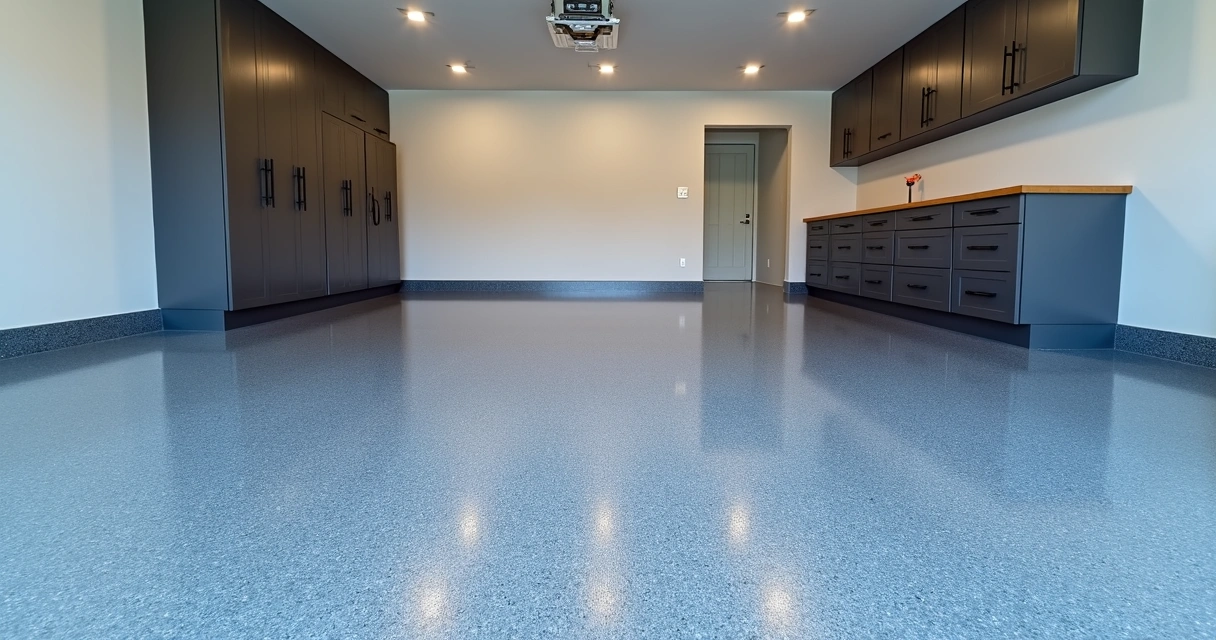
Preparing your floor: What happens before the epoxy goes on?
If you hope for long-lasting results, the coating itself is only one piece of the process. Professional prep makes the ultimate difference.
- Moisture and crack assessment. We use meters and visual inspection to detect hidden issues—trapped water, hydrostatic pressure, or hollow spots.
- Crack chasing and repair. Cracks are routed (opened slightly), cleaned, and filled with the right epoxy or polyurea material. Wider cracks may be injected. All repairs are left to cure fully before the next stage.
- Surface grinding. We mechanically grind the concrete to remove old coatings, oils, and dirt, creating a surface profile for maximum bond. Diamonds of specific grits ensure even results.
- Dust removal and cleaning. All debris and dust must go. We use industrial vacuums and have a rigorous check at this point.
- Primer and base coat. Depending on moisture readings and surface type, a primer may be needed for difficult floors.
- Epoxy or polyaspartic application. Coating systems are applied, sometimes in several layers. Flakes, color quartz, or anti-slip media can be broadcast here for design and safety.
- Final topcoat. The last layer seals everything in. It gives the floor its shine—whether matte or glassy—and helps with resistance to tire marks and fading.
Following each step is what takes a floor from “patched up” to “brand new.” We train our crews in the latest coating techniques, materials, and safety, ensuring results that match our written warranties.
Limitations and when to get expert help
Not every garage floor crack can be permanently “fixed” by epoxy coatings alone. There are rare situations, especially with advancing settlement, serious soil movement, or deep structural damage, where epoxy repair and coatings serve only as a temporary improvement.
- If cracks are continuing to grow, or if there’s significant movement, the underlying cause must be addressed first. This can involve sub-base repair, drainage correction, or even slab replacement in worst-case scenarios.
- Some cracks can transmit moisture from below. If hydrostatic pressure exists, it may push off any new coating unless specialized mitigation products are used first.
- Repeated crack recurrence may call for flexible expansion joint rebuilds, paver overlays, or a full concrete replacement.
Personal experience tells us: Honest upfront assessment saves property owners time, money, and headaches later.
When is epoxy coating the best answer?
Epoxy coatings are most successful for cracked garage floors when:
- Cracks are non-structural, hairline, or isolated.
- Moisture control is possible, with no history of groundwater seepage.
- Repair is carried out thoroughly, with the right fillers or resins.
- Homeowners or businesses want to upgrade both looks and protection—sealing out future stains, dust, and chemical spills.
We see the best, longest-lasting floors when epoxy systems are thoughtfully matched to both the slab condition and the demands of daily use—whether for a home garage, a retail setting, or a high-traffic workshop.
For those preparing a new install or looking for the best practices in concrete work, see our guide on selecting a concrete company in Orlando.
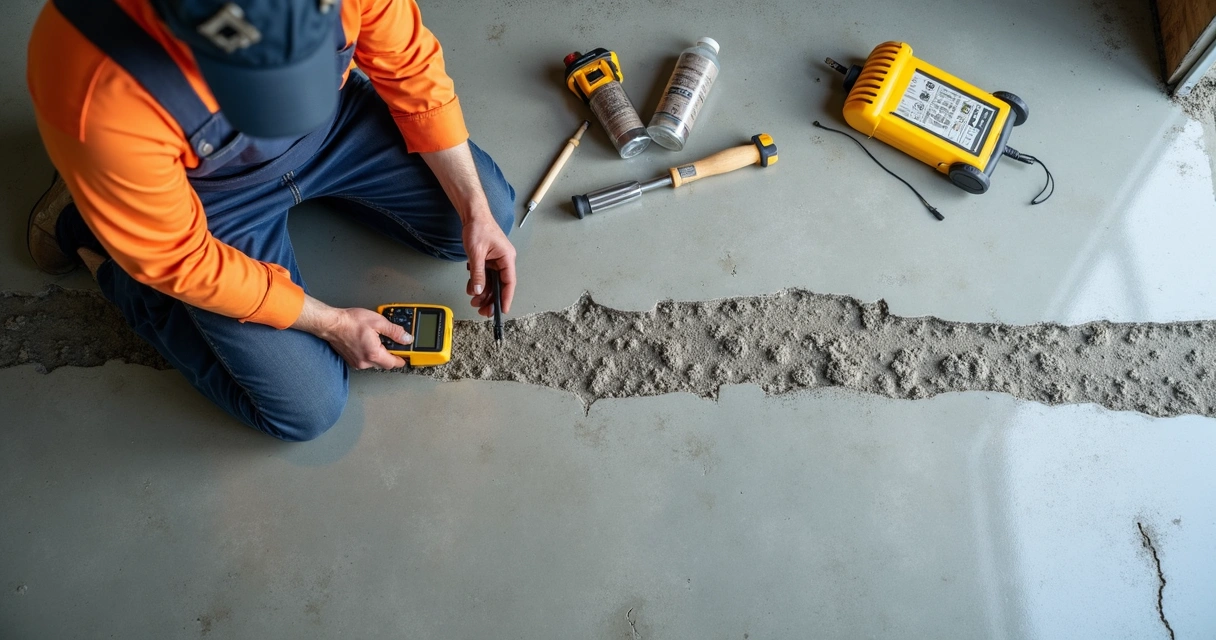
How we at GCM Best Services tackle cracked garages
Our process is built on detail. There are no shortcuts, whether it’s a fine crack you can barely see or a visible fault line from edge to edge. We:
- Conduct a free, on-site assessment with moisture testing and structural review.
- Create a written estimate with solutions tailored to each situation—never a one-size-fits-all.
- Work with HOA and permitting where required, providing photo updates at each step.
- Use industrial-grade 100% solids epoxy and polyaspartic, with proper grinding, crack repair, and quality control.
- Deliver every floor with a written warranty and maintenance plan—because Central Florida weather demands it.
From the sub-base to the surface sealer, we stand behind every project. Our driveways, patios and garage floors blend drainage, durability, and great looks. See more on the steps and technology behind our full process at our installation guide for concrete driveways and patios.
If you’re interested in options like brick pavers, turf upgrades, or combined exterior improvements, our concrete services portfolio has inspiration for every property.
Florida’s conditions: Why cracks form and what epoxy can do
Florida weather is relentless—soils shrink and swell, storms dump inches of rain, and high humidity works its way into every slab. The most common garage cracks we see are caused by:
- Soft or inconsistent sub-grade preparation.
- Expansive clay or sandy soils shifting with seasons.
- Heavy vehicle loads or impact.
- Freeze-thaw cycles (less in Central Florida but occasionally a factor).
We account for all of this in our assessment and solutions, favoring thicker 6–8” sub-bases for new concrete, high PSI mixes, and drainage design that channels water away from your foundation.
Epoxy locks out a lot of what Mother Nature throws at a slab, but the best repair starts below the coating itself.
Scientific backing: What studies tell us about epoxy repairs
We rely not only on years of field crafting but also on proven results from outside testing.
- The General Services Administration documents epoxy injection’s ability to restore lost strength, with ultimate tensile strengths up to 8,000 psi.
- The Texas Department of Transportation found even the finest cracks (0.002 inches wide) can be structurally bonded via pressure-injected epoxy resin, preventing further infiltration and failure.
- A review on defect repair methods concludes the combination of thorough crack filling and a quality surface epoxy coating significantly raises success rates and durability, as compared to coatings alone.
Epoxy coatings are not a magical fix, but in expert hands, they offer one of the strongest, longest-lasting repair bases available for concrete garage floors.
Our results at GCM Best Services align with this data, and our warranty-backed installations reflect best practices you can trust.
Stories from the ground: Real-world outcomes
Recently, we were called to repair a 20-year-old Orlando garage with long surface cracks from both settling and poorly routed water runoff. The owner was tired of dust, stains, and seeing the cracks widen each year. After moisture correction and pressure-injected epoxy repairs, we ground the slab, installed a flake epoxy system, and sealed the whole floor.
Six months later, the cracks have not returned—just a clean, bright, resilient surface.
This isn’t unusual; it’s standard when coatings work hand-in-hand with real repairs.
Conclusion: Is epoxy coating the fix for garage floor cracks?
Epoxy coatings can fix existing cracks in garage floors when paired with the right repair method first. On their own, coatings only mask the symptoms, not the root problem. For Florida homeowners and businesses, the smart route is clear: Assess, repair, then coat.
At GCM Best Services, we deliver more than a glossy finish. We deliver floors that last—waterproof, stain-resistant, and free of cracks reappearing. Let’s make your garage a clean, sealed, and stylish space that stands up to every season.
Ready for a professional quote? 📞 (407) 250-1948 • 24–48h • Orlando, Tampa & area.
Frequently asked questions
Can epoxy fill cracks in garage floors?
Epoxy can fill many types of cracks in garage floors, but how effective it is depends on the crack’s width, depth, and activity. Hairline or non-moving cracks can be routed, cleaned, and filled with epoxy-based products, blending almost invisibly under a coating. For deeper or wider cracks, pressure-injected or specialty fillers are used. When applied by trained professionals, these repairs restore both appearance and strength.
How to prepare floor before epoxy?
Floor preparation is the key to epoxy performance and durability. Steps include thorough cleaning, moisture testing, routing and filling of cracks, degreasing, mechanical grinding to remove contaminants and open pores, vacuuming all dust, and applying primer as needed. The best results come from slow, staged preparation with the right equipment and materials at each phase. We train our crews on this sequence for every job.
Is epoxy coating worth it for cracks?
If cracks are properly repaired first, an epoxy coating is absolutely worth it as a long-term protection and finish for garage floors. It seals out moisture, chemicals, and dust, making maintenance easier and delaying new cracks. Combined with crack repair, studies show success rates for durable floors can rise significantly. Coatings alone—without repair—will not stop cracks from returning.
How much does epoxy floor repair cost?
Epoxy floor repair and coating costs vary depending on the size of the area, crack condition, and materials chosen. Minor repairs and basic coatings might start in the low thousands; extensive crack injections, grinding, and commercial-grade coatings will increase the investment. We provide written quotes after on-site assessment, factoring in both repair and long-term value. Every floor is unique, and we tailor pricing to both needs and expectations.
Do I need to fix cracks before epoxy?
Yes, cracks should always be repaired before applying a new epoxy coating for the best, most lasting results. Coatings applied over untreated cracks are very likely to fail, as movement or moisture below will cause the coating to lift or split. Proper crack repair forms a stable base for the coating to bond, giving you durable, beautiful floors you can trust.