Living or building in Central Florida means working with the land as much as possible. Here at GCM Best Services, we’ve spent years helping customers design concrete and outdoor spaces to withstand the region’s unique challenges. Chief among them: the high water table. This hidden force beneath our feet plays a bigger role in concrete longevity than most may think. In this article, we’ll share what we know, what recent studies reveal about Florida’s groundwater, and practical steps you can take to protect your concrete—whether for a driveway, pool deck, or patio—from damage below the surface.
Understanding Florida’s high water table
For those new to the concept, the water table is the underground boundary between soil surface and the area where groundwater saturates spaces between sediments and cracks in rock. In Central Florida, the table often lies worryingly close to the ground surface. During rainy seasons—or with nearby lakes, wetlands, or poor drainage—the water table can rise abruptly, causing shifts or even lifting poorly protected concrete structures. According to a 2024 USGS study, these groundwater levels in the Floridan aquifer system ebb and flow with both rainfall and human activity, impacting how stable any ground-level structure truly is.
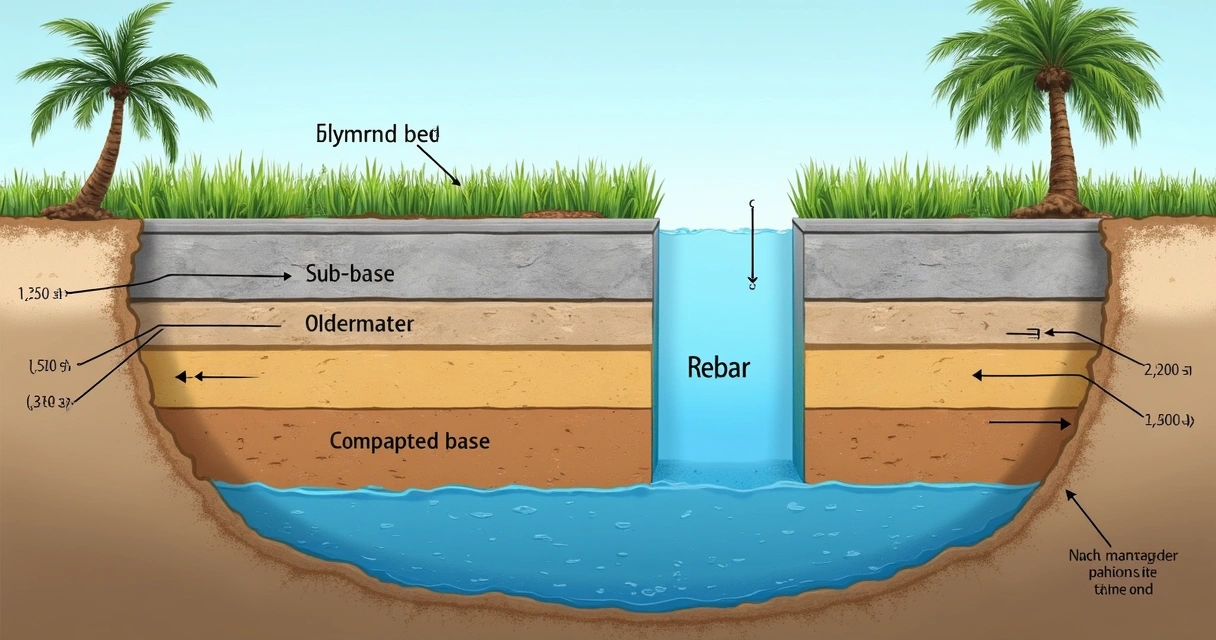
The real concern from a builder’s viewpoint is when this water table rises into the range of your concrete slab or foundation. Moisture can intrude, destabilizing the base, causing cracks, or even leading to sections heaving over time. Areas near wetlands may be especially at risk, as Florida Statute 373.4211 spells out, with guidelines for hydric soils and hydrologic indicators that also shape regulatory compliance. Yet, even in established neighborhoods with no visible wetlands, sudden rainfall or irrigation can push the subsurface water dangerously high.
Common ways high water table can damage concrete
In our experience working with hundreds of sites across Orlando and its surroundings, we’ve seen the same problems surface again and again:
- Cracking and heaving: As the ground swells and shrinks with changing water table levels, pressure on concrete slabs varies—sometimes causing uplift or sunken sections.
- Surface and joint spalling: Water working its way into weak spots in the slab—especially at poorly sealed joints—can freeze (though rare in Florida), or deposit salts and minerals as it evaporates, breaking down edges.
- Loss of support: When the compacted base beneath the slab becomes waterlogged, it loses strength. This can cause voids beneath the concrete, making it more likely to crack.
- Efflorescence: That white powder you sometimes spot on surface concrete? That’s often minerals dissolved and carried upwards by water, migrating through tiny holes and capillaries in the slab.
It’s rarely just surface water that causes damage. The problems almost always start below.
Why Florida’s soils make things trickier
It’s not only the water table itself, but the type of ground beneath you. Florida’s characteristic sandy soils allow rain to percolate quickly, but areas with clay layers or organic muck can behave differently. According to studies on low hydraulic conductivity beds, these layers can trap water above, causing localized high water table pockets even if average readings say otherwise. As we plan any new concrete installation in Central Florida, we pay close attention to the site’s composition for accurate risk assessment.
The USGS hydrologic and geologic analysis confirms that Florida’s subsoils—from sand to shell, clay to peat—directly impact drainage rates and concrete resilience. No two sites are exactly alike, which is why we always recommend a site-specific review.
Proper site evaluation: The foundation of protection
Assess the site risk
A successful project starts with understanding the area’s unique hydrology. When we evaluate a site for new concrete in Central Florida, we include:
- Checking ground elevation against nearby water bodies
- Looking up local historical water table data, when available
- Examining soil samples and looking for signs of hydric soils—gray mottling, organic layers, or moisture just below the surface
- Evaluating drainage slope and surface runoff patterns
- Determining flood risk, as suggested by Sea-Level Impact Projection (SLIP) criteria for coastal projects
At GCM Best Services, we view this step as the key to either a short-lived repair job or a concrete slab that holds up for decades.
Hydrostatic pressure and localized surges
We sometimes encounter properties that appear dry most of the year, but experience sudden problems after extended rains. According to the USGS 2024 study, these changes can be sharp, especially with seasonal storms or increases in irrigation. It is not only about persistent exposure: even one bad event can weaken a poorly prepared slab.
Designing concrete for high water table areas
Building the right sub-base
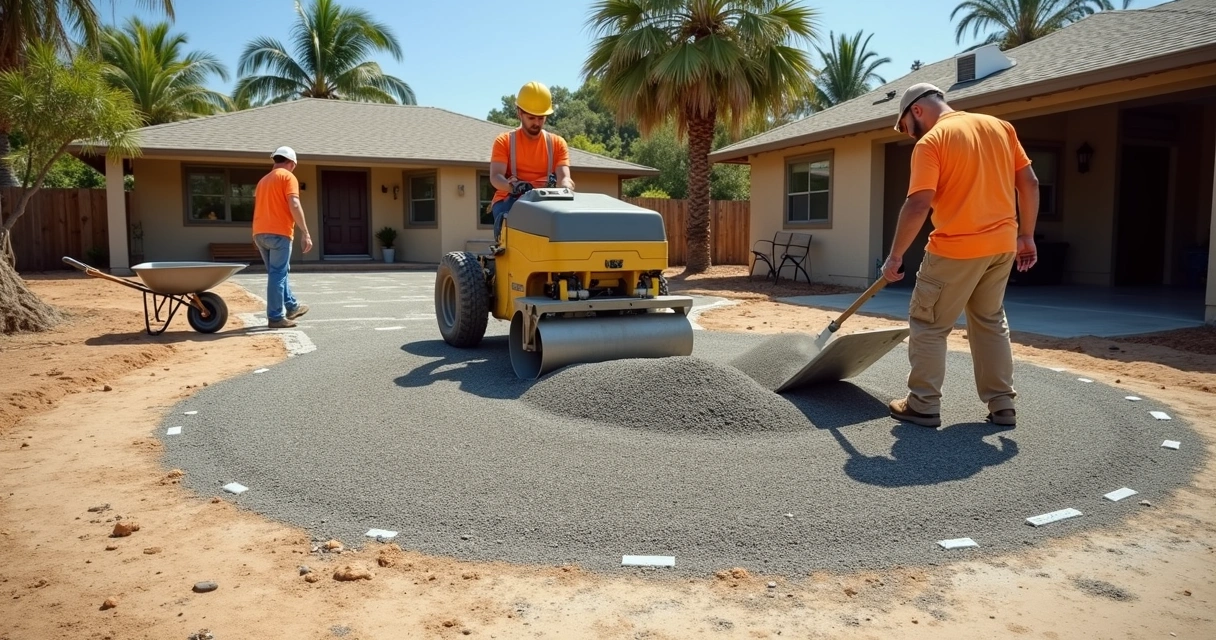
The most important thing you can do for long-lasting concrete in Florida’s water-prone soils is to create a properly compacted, free-draining sub-base. For almost all of our projects at GCM Best Services, we use 6 to 8 inches of well-graded crushed stone, compacted in layers. This delivers both drainage and structural support, so that sudden rises in groundwater do not leave the slab floating or unsupported.
- Use a sub-base material that drains: Clean crushed limestone or granite works well. Avoid clayey, organic, or silty fill that holds water.
- Compact in thin layers: We often compact the base in 2-inch increments rather than all at once.
- Review for proper pitch: The sub-base must be level, but slightly sloped to nearby drains or swales, as appropriate.
Choosing concrete mix, thickness, and reinforcement
We specify concrete strengths of 3,000 to 4,000 PSI for exterior slabs in Florida. For garage floors, warehouse spaces, or anywhere there’s a chance of moisture intrusion, a higher PSI can be wise. But material alone is never enough. Rebar or welded wire mesh is used as required by design and load conditions, ensuring the slab holds together even if minor settlement occurs.
- Thicker slabs for high-risk areas: 4 inches is standard, but driveways or pool decks near wet spots may call for 5 inches or more.
- Proper joint placement: Control and expansion joints give the slab areas to move with changing ground conditions.
- Install vapor barriers: Heavy-duty polyethylene sheeting can stop water vapor from rising up through the slab.
Vapor barriers act as an invisible shield, keeping moisture and minerals out of your finished surface.
Managing surface and subsurface drainage
Perhaps this is where many projects fall short. Good drainage around concrete is not just about sloping the finished slab. We ensure water is led away efficiently:
- Install French drains alongside driveways or patios—these underground pipe runs help direct groundwater away from critical spots.
- Connect downspouts and gutters to piped drains rather than dumping surface water at the slab’s edge.
- Ensure grading slopes away from all concrete for at least 5 feet, with no low points where puddles or hidden soaks might linger.
A dry edge is worth more than the cost of a French drain.
How we protect new concrete with coatings and sealers
Why sealing is worth it
Everyone wonders if sealing concrete is worth the trouble in Central Florida. We believe it is, especially for near-grade slabs exposed to periodic wetting. A good sealer or coating forms a water-repellent barrier on the surface and, depending on type, penetrates slightly below, holding moisture and dissolved salts at bay.
Our most popular choices include:
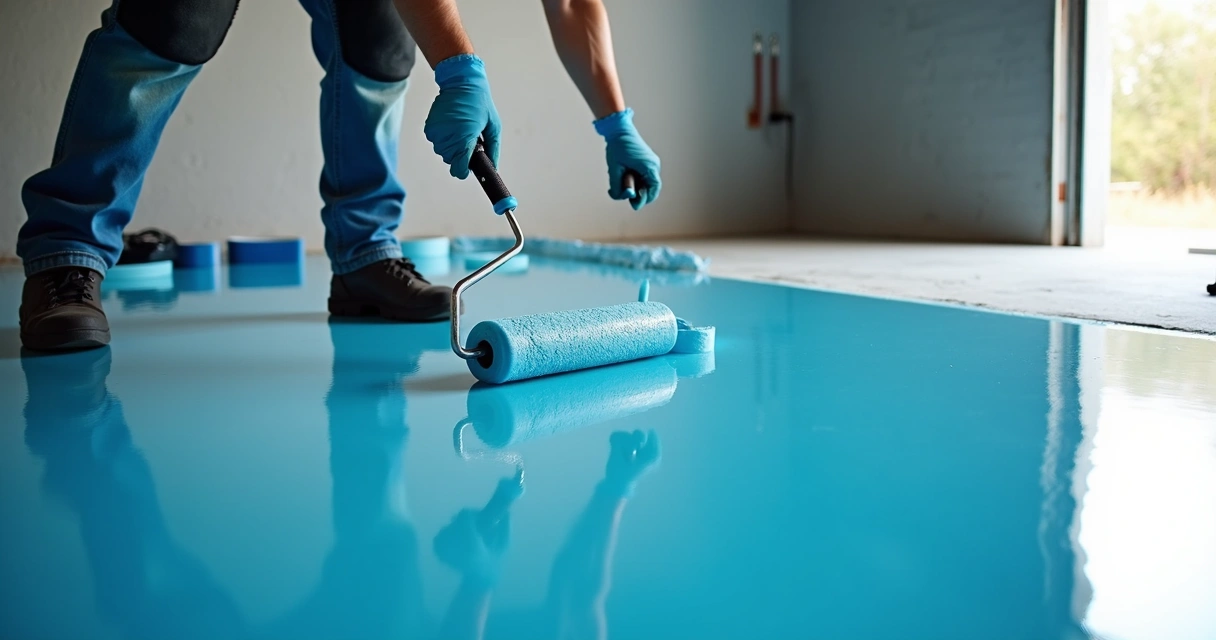
- 100% solids epoxies—great for garage floors, providing chemical and water resistance.
- Moisture-tolerant polyaspartic coatings—these allow a fast return to service and strong abrasion resistance, ideal for commercial or high-traffic areas.
- Silane/siloxane sealers—these are invisible, soak deep, and block water while allowing vapor to escape.
We always prep the surface thoroughly: grinding, filling cracks, removing laitance, and conducting moisture tests. Without the right surface prep, no sealer or coating performs at its best.
Other ways to keep concrete safe from Florida’s high water table
Smart project timing and seasonal awareness
We schedule major slab pours during periods of stable weather. While concrete can be poured in nearly any condition, avoiding times when groundwater is high—or when heavy storms are forecast—reduces risk. We also watch for sudden water table surges after hurricanes or long rainy periods before starting major work.
Using pavers and turf for trouble spots
Sometimes, despite our best site prep, water table levels simply make some zones too risky for traditional poured concrete. In those cases, we recommend pavers set on a well-prepared, permeable base with polymeric sand and proper edge restraints. These systems allow small movements without damage, and drainage can be managed more flexibly.
Artificial turf is another option for yards or play areas where water sits high in the soil. When installed over a thick, crushed stone base with the right border and infill, turf stays dry, resists erosion, and works well alongside or in place of hard concrete.
Regular inspection and prompt repairs
Even perfectly installed concrete needs a checkup from time to time. We recommend homeowners look for signs of water pooling, settling, or visible cracks. Early crack repair prevents water from working deeper, stopping minor issues before they become big headaches.
For clients wanting more guidance, we’ve created a step-by-step resource outlining how to prevent cracks in Florida concrete patios and driveways. It walks through early warning signs and DIY fixes, too.
Permits, codes, and insurance
Projects in flood-prone or wetland-proximate areas often have extra permit or code requirements. We handle HOA paperwork, municipal permits, and stay aligned with Florida’s shifting construction standards. This proactive work keeps you compliant—and your insurance valid—if trouble ever does hit.
Real-world examples from our projects
One Orlando patio we worked on in 2023 began showing cracks after only a year. Our review found that the nearby retention pond had pushed the water table above the bottom of the slab after summer storms, saturating the base. We removed and rebuilt the affected section:
- Installed 8 inches of compacted crushed stone
- Placed a heavy-duty vapor barrier atop the sub-base
- Installed French drains to capture and redirect groundwater
- Poured a reinforced 4,000 PSI slab with proper control joints and siloxane sealer
A year later, not a single return call about this fix—just the way we (and most homeowners) prefer.
What to look for in a contractor for Florida concrete projects
Protecting your next slab isn’t about hiring the biggest outfit. In our experience, local expertise with water table and drainage challenges always wins out—someone who knows not only how to trowel a smooth finish, but why certain soils and seasons matter.
- Review their portfolio for similar high water table jobs
- Ask about sub-base methods and drainage planning
- Ensure they address permits, HOA, and warranty up front
- Check if they offer photo documentation and written service guarantees
- Request references in your own neighborhood
We believe in transparency from start to finish. Our installation process and warranties, detailed on the St. Cloud installation guide and service pages, were designed specifically for homeowners navigating the demands of Central Florida soils and water tables.
Conclusion: Protect your investment below the surface
Concrete in Florida will always face hidden risks from groundwater. Still, that doesn’t mean “concrete” has to mean “trouble.” With the right sub-base, thoughtful drainage, proper materials, and ongoing care, your slabs can last the lifetime we all expect. At GCM Best Services, we don’t just pour concrete: we deliver long-lasting surfaces—and peace of mind—through real expertise and care.
If you’re planning a new driveway, patio, or outdoor living area and want it built right from the ground up, reach out for a free assessment. Our team is here to give you clear recommendations, fair quotes, and finished projects that look good and survive Florida’s unique challenges for years to come.
Ready for a professional quote? 📞 (407) 250-1948 • 24–48h • Orlando, Tampa & area.
Frequently asked questions
What is a high water table?
A high water table means that the depth between the ground surface and the point where soil becomes fully saturated with groundwater is small—sometimes just a few inches or feet in Florida. It’s the hidden line beneath your yard where dry soil meets persistent moisture. When the water table rises, it can pressurize, destabilize, or saturate anything resting close to ground level, including concrete slabs. According to a USGS 2024 report, this level in Central Florida varies with rainfall, nearby bodies of water, and even heavy local irrigation.
How to waterproof concrete in Florida?
Waterproofing in Florida starts with good site prep. First, build a well-compacted, free-draining crushed stone base (typically 6–8 inches thick). Next, install a high-quality vapor barrier under the slab. For extra protection, add French drains or surface swales to direct water away. On top, use penetrating concrete sealers or high-build coatings such as epoxy or polyaspartic blends. Thorough cleaning, repair of existing cracks, and moisture testing before sealing are all needed—something we take seriously on every GCM Best Services project.
What are the risks of high water table?
A high water table can destabilize concrete slabs, especially if subsurface drainage is poor. Common risks include cracking, heaving, loss of support as base material becomes waterlogged, and efflorescence—white mineral stains pushed through by moisture. Over time, hydrostatic pressure may cause concrete sections to lift, leading to uneven driveways and trip hazards. Some projects near wetlands, as defined by state hydric soil criteria, carry added compliance risk and should always undergo professional site assessment first.
Is it worth sealing concrete here?
Absolutely—it helps prevent moisture intrusion, stains, and surface decay. In Florida’s wet climate, a quality sealer extends your slab’s appearance and lifespan. If you rely on your concrete for garages, patios, pool decks, or walkways, sealing also makes routine cleaning easier. As we discussed earlier, the best results come from careful surface prep—so trust this to pros who understand the region’s unique needs.
How much does concrete protection cost?
Costs vary by project size and risk. Here in Orlando and Central Florida, building with a proper sub-base, vapor barrier, drainage, and high-quality sealer often adds 10%-20% to basic slab costs. For a typical single driveway or patio (say, 400 square feet), this may range from a few hundred to around a thousand dollars extra, considering local soil and water table needs. For larger or more complex installations, or where SLIP studies or advanced drainage are required (per Florida DEP Resilient Florida guidance), costs will reflect those extra steps. For a tailored quote—including permit, design, and material guidance—you’re always welcome to contact the GCM Best Services team or explore these topics further at our guide on choosing a concrete company in Orlando.
Thanks for sharing. I read many of your blog posts, cool, your blog is very good. https://accounts.binance.com/ES_la/register-person?ref=VDVEQ78S