When it comes to building homes in Central Florida, the way we install and place rebar makes all the difference in how long concrete work will last. From driveways to slabs and patios, correct rebar placement is what helps concrete resist cracks, shifting, and water damage. At GCM Best Services, we’ve spent decades working with Florida’s unique soils, codes, and weather—fine-tuning rebar methods that hold up in the Sunshine State.
Homeowners and property managers often ask about rebar: Why use it? Which type is right? How much do I need? How close should it sit to the surface? We’ll answer those questions and more. We wrote this guide to help you understand every step of rebar placement so you can make informed choices for your structure, your investment, and your peace of mind.
Stronger concrete starts with smarter rebar placement.
Why rebar matters in Central Florida’s homes
Central Florida sits on sandy, shifting soils. Our climate serves up heavy rains, muggy humidity, quick-drying sun, and the occasional tropical storm. All these factors work together to make concrete vulnerable unless it’s designed for these challenges from the ground up.
Rebar, or reinforcing bar, is the steel backbone inside concrete. Its job is simple and powerful:
- It holds concrete together under pressure and prevents cracks from growing.
- It helps slabs flex and recover when the ground moves.
- It strengthens driveways and patios against heavy loads and wear.
- It supports long spans, like walkways, lanai floors, and pool decks.
Without rebar—or with poorly placed rebar—concrete develops hairline cracks, sags at the edges, or even breaks into chunks. And once cracking starts, water gets in. In Florida, water trapped under slabs leads to shifting, sinking, and faster deterioration.
At GCM Best Services, we think through each slab’s use, loading, and drainage. The right rebar, in the right place, makes concrete strong enough to handle our region’s toughest tests.
The basics: What is rebar, and how does it work?
Rebar comes in long, ridged steel rods, typically 20 feet each. Its ribbed surface helps it bond with concrete. Once set, the two materials act as a single, strong system: concrete resists compression, and the steel resists pulling or bending forces.
In practice, rebar is installed in a grid or as individual bars. The size, spacing, and placement depend on several factors:
- The slab’s thickness
- How much weight it must carry
- Soil conditions and drainage
- Required building codes
With proper planning, rebar transforms concrete from a brittle, breakable slab into a long-lasting platform ready for Florida’s weather.
Common rebar sizes and types
In Florida homes, the most common rebar sizes are #3 (3/8″), #4 (1/2″), and #5 (5/8″). For heavy driveways or larger structural elements, we sometimes use heavier sizes. There’s also wire mesh, often combined with or used in place of rebar for secondary support.
Why cover, spacing, and layout matter
Rebar must be embedded deep enough in concrete so it’s protected from air and water, but not so deep that it loses effectiveness. This is called “cover.”
- Typical cover in slabs is 2″ from the surface, more if in contact with the earth.
- Too little cover? The steel will rust and expand, cracking concrete.
- Too much? It stops helping against tension where it counts most—near the slab surface.
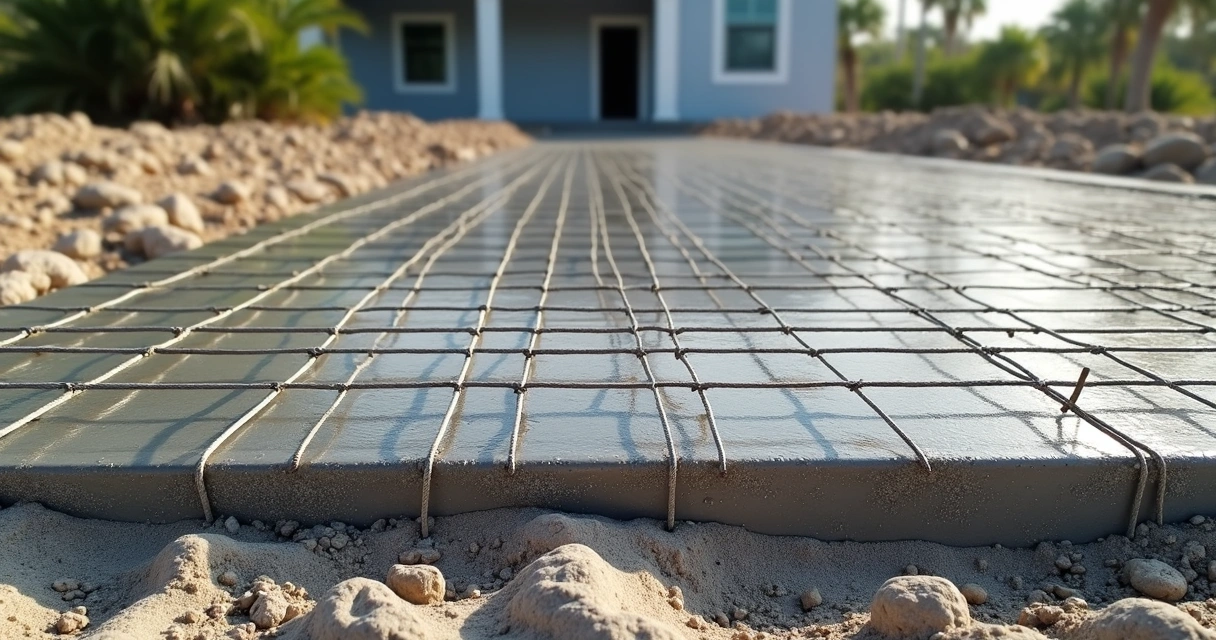
Equally important: spacing. If bars are too far apart, the slab may crack between them. The grid must be placed as close as possible to the tension zone usually at the bottom third of the slab for floors and driveways.
Planning rebar: Key considerations before placement
Every city and county in Central Florida follows codes based on the Florida Building Code (FBC). Codes mandate minimum slab thickness, rebar or mesh size, layout, and placement to make sure slabs will resist shifting and cracking. But meeting code alone is just the starting point. At GCM Best Services, we always consider site-specific factors:
- Soil compaction: loose sand or fill requires deeper, tighter rebar grids
- Drainage: concrete in wet or flood-prone areas needs extra strength at edges, plus rebar tied into footers
- Traffic load: driveways meant for trucks need heavier rebar than garden patios
- Slab shape: curves, corners, and edges need special attention to prevent cracking
- HOA and permit requirements: some neighborhoods have stricter rules for visible slabs and finishes
This is where an experienced contractor becomes valuable. We have seen firsthand how small differences in planning make big changes in durability. That’s why we do on-site assessments before every estimate. We want to look at the real soil, measure slopes, and review your drainage—so we can suggest the right rebar and pour methods.
Step-by-step: How we approach rebar placement
Every job begins before concrete ever hits the site. Here’s our step-by-step process for perfect rebar placement in a typical Central Florida home project, whether for a driveway, patio, or structural slab.
1. Site inspection and slab design
We start by reviewing plans and codes, outlining the slab’s purpose, and marking its footprint on site. Our team checks for utilities, roots, and any obstacles that may interfere with layout.
2. Soil preparation and compaction
The base matters as much as the slab itself. For Florida soils, we use 6–8 inches of compacted, stable sub-base (like crushed concrete or lime rock) to reduce settling. Drainage slopes are added as needed, directing water away from foundations and slabs.
3. Rebar layout and grid
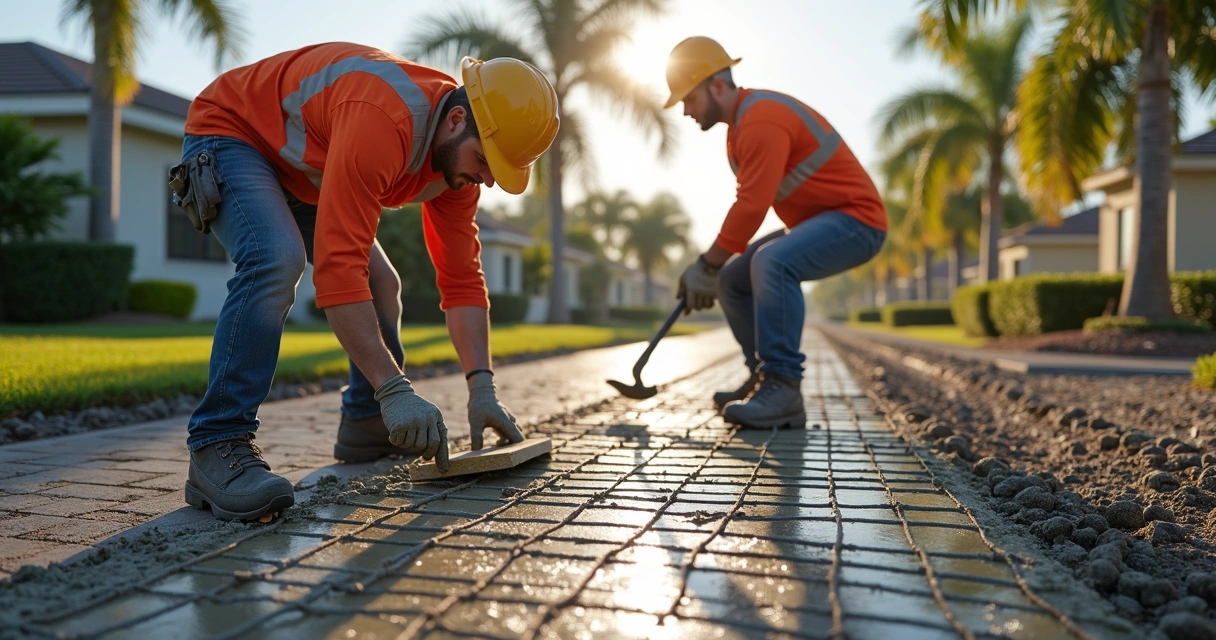
Bars are measured, cut, and placed on “chairs” (plastic or metal supports) so they sit at the right height above the sub-base. For driveways, a typical grid uses #4 rebar at 16″ intervals both directions. Patios may use smaller bars or wider spacing, while pool decks get tighter grids, sometimes mixed with mesh.
We overlap rebar at least 12 times the bar’s diameter (called “lap splice”) for full structural strength, and tie all intersections with wire for a unified grid.
4. Edge and joint preparation
- Extra rebar is placed at edges, corners, and high-traffic areas.
- Control joints—shallow grooved lines—are laid out to help manage shrinkage cracks.
- Expansion joints (with foam fillers) may be added between building and slab if needed.
5. Pre-pour check
We double-check cover, spacing, and ties before concrete delivery. All permitting, HOA, and municipal inspections are arranged at this stage.
6. Concrete pour and finish
Concrete is poured, vibrated, and finished in one continuous process. We keep the rebar fully submerged and away from the surface. Broom, exposed aggregate, or stamped finishes can be applied to match your preference and HOA rules.
7. Curing and final inspection
Slabs must stay moist and protected while curing, which takes several days. We cover slabs when needed, monitor for cracking, and keep traffic off until full strength develops. Only after a final walkthrough do we consider the job done.
For more resources on selecting licensed concrete contractors and processes, our licensed contractors’ guide to concrete repair explains common requirements and steps.
Key rules: Rebar placement tips for Central Florida
Through experience—good and bad—we’ve learned several rules that make a big difference for rebar strength and longevity in our area:
- Always maintain a minimum 2″ cover for slabs on grade. Edges exposed to soil or weather may need 3″ or more.
- For driveways, use at least #4 bars on a 16″ grid, or tighter if heavy loads are expected.
- In areas with high groundwater or drainage risk, tie rebar into footers, and consider double mats in critical spans.
- Overlap bars generously. Don’t let splices sit near slab corners or edges where cracks often begin.
- Avoid placing rebar directly on earth; always use supports or “chairs” to achieve correct height.
Well-placed rebar can add decades of life to your concrete, while mistakes can be costly to fix and often go unseen until problems develop.
Common mistakes: What to avoid in rebar placement
Even experienced homeowners sometimes underestimate what’s involved in quality rebar placement. Some common mistakes we’ve seen on repairs or failed slabs:
- Skipping compacted sub-base and laying rebar on soft or loose soil.
- Poor tying of bars, leading to movement during pouring.
- Inadequate cover or bars exposed at the edge—rust will quickly follow.
- Not respecting lap splice requirements, weakening the slab’s middle or edges.
- Improper joint layout, which can exaggerate crack patterns.
- Poor drainage planning, leading to standing water and slab movement.
In our experience, concrete slabs need preparation and inspection at every stage, not just at the pour.
If you’re still deciding whether to repair or replace a cracked slab, our Florida guide on preventing cracks in patios and driveways can help you decide the right timing and approach.
Special cases: Rebar for patios, walkways, and more
While driveways see the most stress, patios, walkways, and pool decks need thoughtful rebar placement too. Here’s how we approach common Florida projects:
- Patios and lanai slabs – Slabs must support outdoor kitchens, heavy furniture, and foot traffic. We use #3 or #4 bars on a tight grid, sometimes combined with mesh, depending on site conditions.
- Walkways and paths – For narrow paths, a smaller bar size with close spacing reduces edge cracks and trip hazards from shifting sections.
- Pool decks and screen enclosures – These areas need both structural reinforcement to resist settling, and special anchors for screens and enclosures. Proper drainage is key.
In every case, tying rebar into main foundations and adding more support at corners or transitions is part of our process.
Rebar and finishes: How placement affects appearance
The placement of rebar affects more than strength, it influences how finishes look and perform. For broom, stamped, or exposed aggregate slabs, rebar must be set deep enough so it never shows through finished concrete. In exposed finishes, mesh may be used instead of rebar in the top layer, while the main bars sit deeper.
Finishing and curing always begin with perfect rebar placement. Otherwise, cracks and rust patterns may show at the surface, ruining appearance as well as structure.
Homeowners often ask about integrating rebar with pavers and lighting. When we prepare sites for a blend of pavers, slabs, and lighting, our team coordinates trades and ensures all structural reinforcements are in the right place from the start. For project inspiration and tips, see our concrete project gallery.
Permitting, inspections, and warranties in Central Florida
Concrete slabs that include structural rebar, such as driveways or any home addition slab, require permits in most Florida municipalities. During construction, inspectors check sub-base compaction, rebar type, depth, spacing, tie quality, and overall layout before any concrete is poured.
Passing inspection isn’t just a requirement—it guarantees long-term safety and performance.
At GCM Best Services, we handle all permitting, arrange inspections, and provide written warranties and maintenance guidance upon project completion. We pride ourselves on clear communication and transparency, you’ll get photos and updates at each step.
If you’re choosing a concrete company in Orlando, our guide on what to look for in a local concrete contractor may help you compare your options and understand what to expect from site prep to permit closeout.
Long-term care for reinforced concrete
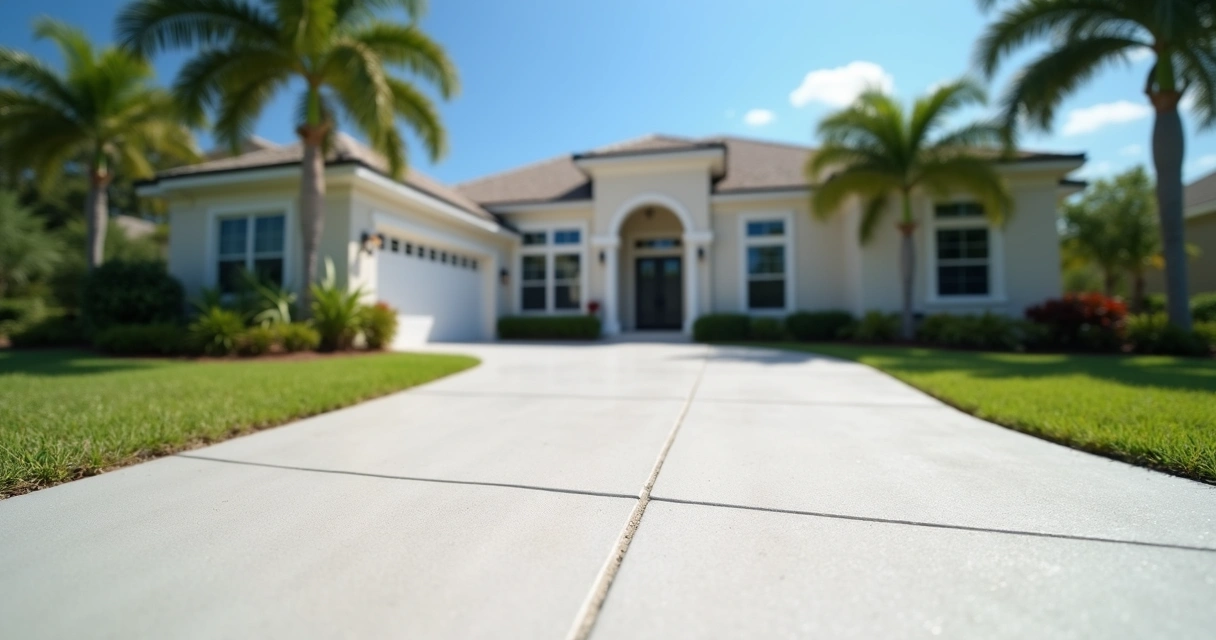
Once your slab is poured, the right care ensures it delivers decades of service. Here’s what we recommend:
- Keep new slabs damp and avoid heavy loads for seven days.
- Inspect for hairline cracks in the first weeks. Small cracks can be sealed to stop water intrusion.
- Clean and re-seal surfaces as needed, especially if exposed to pool chemicals or automotive fluids.
- Watch for signs of rust or spalling (flaking) concrete. Early repair prevents deeper damage.
Our guide to driveways and patios in St. Cloud includes more detailed care tips, especially for high-traffic or exposed concrete.
Conclusion: Why rebar placement is worth your attention
We believe that rebar placement isn’t just a building step—it’s peace of mind for Florida homeowners. The best time to plan for strong, beautiful, and resilient concrete is before the first shovel of dirt is moved. At GCM Best Services, we combine honest assessments, detailed site checks, and proven rebar practices to deliver results that last. If you’re considering a new driveway, patio, or slab in Orlando or anywhere in Central Florida, we’d love to offer no-obligation guidance and customized solutions.
Ready for a professional quote and trustworthy advice? Contact us at 📞 (407) 250-1948. Our team responds in 24–48 hours, serving Orlando, Tampa, and the surrounding area. Discover the right way to build strong—GCM Best Services is here for you.
Frequently asked questions about rebar placement in Florida homes
What is rebar placement in homes?
Rebar placement refers to arranging steel reinforcing bars within concrete before it is poured, to improve the slab’s strength, flexibility, and resistance to cracking. The correct position, depth, and spacing of these bars is crucial for homes built on Florida’s sandy, moisture-prone soils, helping the concrete resist settlement and long-term wear.
How much does rebar installation cost?
The cost of rebar installation depends on slab size, thickness, bar size, grid spacing, site access, and local labor rates. In Central Florida, materials and labor typically add $1.00–$2.50 per square foot to the project, with larger or heavily loaded slabs costing more. For a detailed, location-based estimate, we always provide free on-site assessments as part of our process.
Is rebar required in all Florida homes?
Most structural concrete components in Florida homes, such as driveways, main slabs, or pool decks, require rebar installation to meet code. However, some thinner or lightly loaded flatwork (such as small walkways) may use mesh or fiber reinforcement instead, depending on municipal guidelines and planned usage.
How to choose the right rebar size?
The right rebar size depends on the slab’s thickness, expected load (vehicle or pedestrian), and site conditions. For typical home driveways in Central Florida, #4 (1/2″) bar spaced at 16″ intervals is common; patios may use #3, while heavily loaded commercial areas require larger bars or tighter grids. Consult an experienced local contractor who can evaluate your project’s needs and soil characteristics.
Where to find best rebar contractors?
For homeowners in Central Florida, look for a licensed, insured contractor with proven experience in local terrain and weather. GCM Best Services specializes in concrete and exterior projects tailored for our region’s soils and codes. We invite you to schedule a free assessment and see how quality planning sets the stage for lasting results.