Primary keyword: Retaining walls and patiosVariants: Patio with retaining wall, retaining wall ideas, patio design Central Florida
Audience: Orlando homeowners and property managers longing for beautiful and functional outdoor spaces that last.
Benefit: Long-lasting, compatible with Florida soils and climate, and tailored to your family or customers’ needs.
Retaining walls and patios do more than add beauty—they boost usability, solve drainage, and help curb appeal. We’ve built outdoor living solutions all around Orlando that stand up to weather and HOA rules, using proven design ideas informed by local experience.
- Setting the foundation for successful walls and patios
- 1. Tiered retaining walls with integrated steps
- 2. Curved seating walls for social patios
- 3. Raised planters and softscape integration
- 4. Multi-level patios with functional walls
- 5. Drainage-focused wall and patio combinations
- 6. Walls and patios with lighting for evening use
- Conclusion
- FAQs
Setting the foundation for successful walls and patios
Every attractive outdoor space begins with proper planning and the right building techniques. Without these, patios discolor, settle, or fail; retaining walls begin leaning or cracking under pressure. In Central Florida, where soil shifts and summer storms are as common as sunshine, our GCM Best Services team insists on a thorough process from permits to drainage.
Retaining walls hold back soil and prevent erosion. Patios provide level, usable space and invite relaxation outdoors. Combining the two creates dimension and interest in a yard, but each element needs careful consideration.
The best look is no good without a strong base beneath.
Texas Department of Transportation guidance on geotechnical design of retaining walls reminds us that lateral pressure often rises by roughly 40 pounds per square foot for every vertical foot of wall height—a number easy to overlook during a simple backyard project. Ignoring drainage or base compaction? Cracks and bowing tend to follow.
At GCM Best Services, we manage permits, compaction, sub-bases, reinforcement, and finishing—so you can enjoy your yard for years, not months. Let’s look at six practical, creative retaining wall and patio design ideas that we’ve seen work beautifully in Central Florida.
1. Tiered retaining walls with integrated steps
Florida yards aren’t always flat. Even a gentle slope behind your home can limit usable space and cause water runoff. Tiered retaining walls create level terraces, opening up multiple “rooms” in your garden.
What makes tiered walls stand out? It’s their ability to tame gradients without creating tall, blank slabs. By breaking up the height into several short walls separated by plantings or walkways, they appear softer and more integrated with nature.
Adding wide, sturdy steps between these levels connects your patio to each terrace, blending beauty with function.
- Use matching or complementary materials (concrete block, natural stone, brick) for both wall and step faces.
- Illuminate step edges for safety and evening charm.
- Mix in native plants for a low-maintenance, lush effect.
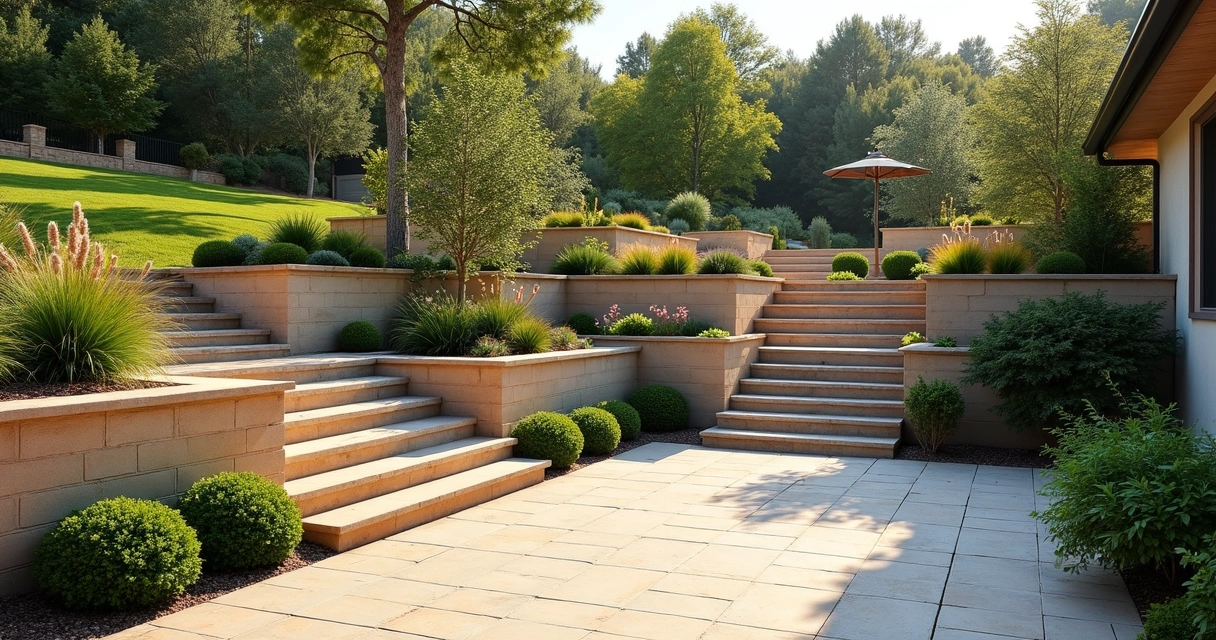 In our experience, clients love tiered solutions for sloped yards, especially those who want a mix of open lawn, seating space, and garden areas. Learn more about sub-base and drainage essentials for patios in our detailed installation guide.
2. Curved seating walls for social patios
Few outdoor elements match the inviting touch of a curved seating wall. Whether you host friends for summer barbecues or want a peaceful spot for morning coffee, curving the wall around a firepit or main gathering area adds intimacy and warmth.
Why choose curved seating walls with your patio? The arc draws people together naturally, guiding them to face each other and enjoy full use of the space. It softens the overall structure, avoiding the “boxy” feel that straight lines bring.
Curves make conversation easier.
- Extend the patio hardscape several feet beyond the wall so furniture fits easily.
- Add a smooth concrete or stone cap for comfortable sitting and easy cleaning.
- Incorporate planters at the ends for color and shade.
Clients often choose exposed aggerate or stamped finishes here so the patio surface becomes as stylish as the walls themselves. When paired with paver patios, we often recommend sealing to keep the area clean and protected from Florida rain and sun.
For more patio design inspiration, see our project gallery on driveway and patio paving.
3. Raised planters and softscape integration
Retaining walls don’t have to be purely functional. Combining them with planters or garden beds turns a plain fence-line into a green, living edge. In the Orlando area, we see rising interest in edible gardens and low-water plantings, both of which suit raised beds perfectly.
Raised beds make gardening accessible and help control soil and roots. You can grow vegetables, herbs, or flowering bushes with less bending and fewer weeds. The wall keeps soil contained and elevates your plants to eye level, complimenting any patio.
- Mix textures—use smooth, poured-concrete walls paired with rough stone for the planter tops, or vice versa.
- Ensure weep holes and drainage so roots never get waterlogged during summer storms.
- Plan the planter depth and width for the largest plant type you’ll grow.
We often tie in irrigation during construction, and blend artificial turf between patio and beds to keep mowing and maintenance low. Our hardscaping overview page outlines additional ways we integrate these features.
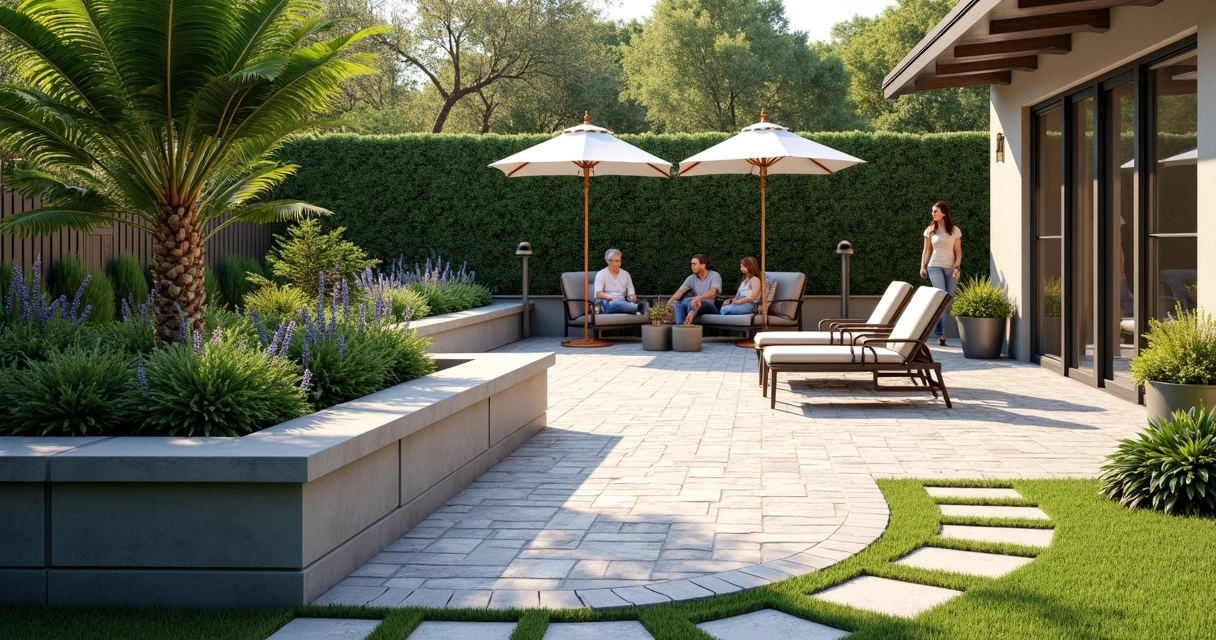 4. Multi-level patios with functional walls
Sometimes, a single patio level can’t provide all the desired amenities. Elevation changes—either natural slope or planned risers—create opportunities to build more interesting outdoor rooms.
For example, a higher dining deck can overlook a lower sunken fire pit or lounge area. Retaining walls between levels become both backdrop and boundary, separating activities while complementing the view.
What should be considered for multi-level patios? Every transition needs to be gentle yet secure. Railings, wide steps, or low seating walls help guide movement between spaces and make the scene feel well organized.
- Combine concrete patios on one level, pavers or turf on another, for contrast.
- Use lighting and paint or stain to give each section a unique feel.
- Include drainage channels at the wall’s base to avoid pooling water.
We tailor these spaces for guests who want separate zones for eating, cooking, or relaxing with a view. The key is a seamless blend—matched finishes, aligned edges, unified wall heights, and careful attention to how people move and gather.
If concerns about settling or cracks have held you back, find maintenance and prevention tips in our article on avoiding cracks in Florida patios and driveways.
5. Drainage-focused wall and patio combinations
Water can be a patio’s worst enemy, especially in Central Florida’s sudden downpours. A drainage-focused design manages water right from the start. Retaining walls with built-in drain tiles, weep holes, or embedded pipes direct runoff away from both the patio and the building.
Good drainage means no puddles, no mud, and longer-lasting finishes.
How do we address patio drainage in wall designs? We slope patio surfaces gently away from the house and toward a drain or open area. Where the patio meets a wall, we make sure water shed by the wall can flow freely, with no blockages or washouts.
- French drains behind retaining walls prevent pressure build-up and root intrusion.
- Polymeric sand in paver joints sheds water and keeps weeds away.
- Custom channel drain grates at patio edges manage water overflow attractively.
Not all soils absorb water equally. We design for both sandy and clay-heavy sites. Local, real-world experience is key—in our hardscaping projects, we’ve learned which materials and finishes work best for drainage, as opposed to just what looks good on a plan. The state’s geotechnical guidance guides our structural drainage calculations whenever site-specific load or pressure needs to be factored in.
6. Walls and patios with lighting for evening use
Evening is when Central Florida patios really shine. Lighting built right into the walls or patio edges extends your usable time and adds atmosphere to gatherings or solo relaxation.
What are the benefits of integrated outdoor lighting? Safety first: no stumbling on steps or edges. Then, ambiance—soft light beneath wall caps or within paver joints creates a resort-like feel.
- Low-voltage LED strip lights cost less to run and last longer than traditional bulbs.
- Colored or dimmable fixtures offer options for celebrations and quiet nights alike.
- Motion sensors at entry points improve security.
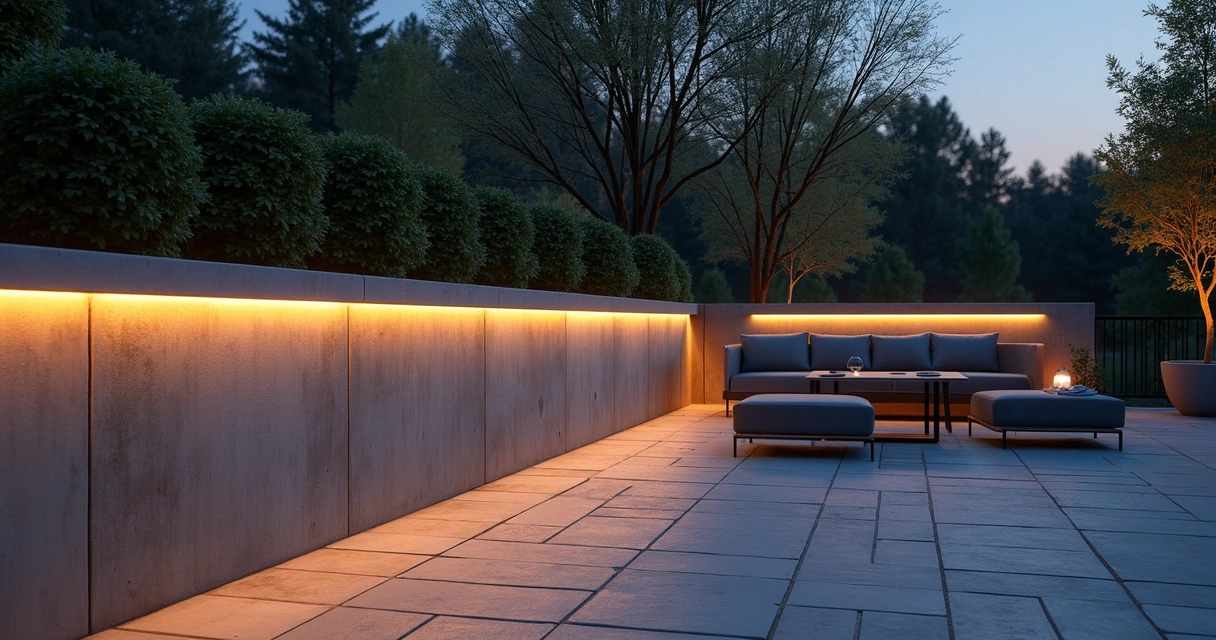 We ensure all wiring and fixtures meet code and that lighting never creates unwanted glare. For more general ideas for hardscaping upgrades and their costs, see our posts in the hardscaping section.
Conclusion
Florida backyards should be places you love to use—not just look at through the window. When we design and install retaining walls and patios, our goal is lasting function, easy care, and a result that fits your lifestyle. The right approach prevents headaches like cracked concrete or drainage issues before they start. Most of all, a great outdoor space adds years of enjoyment and increases property value. GCM Best Services is proud to serve Orlando and Central Florida with projects that blend style and substance, using the best materials and locally-tested building methods.
Are you ready to see what your outdoor space could become? Let us help. Ready for a professional quote? 📞 (407) 250-1948 • 24–48h • Orlando, Tampa & area.
Frequently asked questions
What is a retaining wall?
A retaining wall is a structure designed to hold back soil and prevent it from moving downslope due to gravity. These walls come in many forms, from short garden borders to tall landscape features. They are built using materials like concrete, brick, stone, or engineered wood. Their main purpose is to stabilize sloped ground, create level spaces, and manage water runoff. In Central Florida, retaining walls are especially useful where homes are built on uneven lots or need separation between patios, lawns, or planting beds.
How to design a patio with walls?
To design a patio with retaining walls, start by evaluating your yard’s slope, drainage patterns, and sun exposure. Then, decide how the patio will connect to existing features like walkways and gardens. We recommend defining the use of each area—seating, dining, play—before picking materials or layouts. Walls can outline the patio, create raised seating, or separate zones. Steps, lighting, integrated planters, and waterproofed surfaces should be part of the plan from the beginning. Our process includes permit management, base compaction, reinforcement, and homeowner association cooperation for a smooth installation.
Is it worth it to build a patio?
For most Orlando-area homeowners, a properly-built patio adds significant value, usability, and enjoyment. Patios offer a clean, comfortable place for entertaining or relaxing, extend your living area outdoors, and reduce maintenance compared to turf or bare soil. When paired with retaining walls, you gain bonus usable space by flattening slopes or dividing your yard into distinct “rooms.” Real estate studies consistently show that upgraded outdoor spaces increase property value and curb appeal, especially in climates where people spend lots of time outside.
What materials are best for retaining walls?
The best materials for retaining walls in Central Florida are those that stand up to moisture, sun, and soil movement. These include reinforced poured concrete, segmental (interlocking) concrete blocks, and engineered bricks or stone. We often recommend concrete block systems for their stability and design flexibility. Brick or natural stone walls bring classic beauty but need proper drainage to prevent shifting over time. Wood can work for short garden borders, but is less suitable for taller walls in our humid climate.
How much does a patio with retaining wall cost?
The cost of a patio with a retaining wall varies widely based on size, materials, height, drainage needs, and project complexity. In Central Florida, small projects may run $6,000–$10,000, while larger or multi-tier installations with lighting, special finishes, or custom features can go far higher. Material quality, site conditions, and local code requirements all play roles. We provide detailed estimates following a free on-site assessment so you can plan with confidence—contact us for a no-obligation quote that includes an itemized scope and warranty.