Root barrier | root barrier for patios | root barrier installation | tree root protection
Primary audience: Homeowners and property managers concerned with patio longevity and tree-related damage.Pain point: Worry that tree roots will crack or heave patios, walkways, and driveways, leading to constant repairs.Benefit: Knowing how root barriers work helps protect hardscape investments, drainage, and landscape health.
Summary: Is your patio at risk of cracking or lifting from nearby trees? Root barriers are an effective solution to keep roots from invading and damaging concrete, brick, or paver patios. In this article, we explain what root barriers are, how they work, which types suit Florida’s soils, and tips for reliable installation—supported by local science and our hands-on experience at GCM Best Services.
- Why root barriers matter for patios
- How roots damage patios—and what makes Florida unique
- What are root barriers and how do they work?
- Types of root barriers for patios
- Planning and placement strategies
- Installation process and best practices
- Cost considerations and maintenance
- Root barrier impact on landscaping and drainage
- When to use a root barrier and when not to
- Root barrier FAQs
Ready for a professional quote? 📞 (407) 250-1948 • 24–48h • Orlando, Tampa & area.
Why root barriers matter for patios
For anyone who’s invested in a concrete or paver patio, there’s a persistent worry: tree roots creeping beneath, lifting the slabs, cracking the joints, or pushing pavers up one by one. Living and working in Central Florida, where both mature trees and lush plantings are cherished, we see this scenario far too often.
According to data analyzed by Michigan State University Extension, annual sidewalk and hardscape repair costs due to tree roots can easily reach $3 or more per tree—adding up quickly for property owners and managers.
Roots will find weakness—unless we guide them otherwise.
Root barriers set just below the surface at the right location can block or redirect those invading roots, sparing patios, driveways, and walkways decades of trouble. At GCM Best Services, we regularly see the savings root barriers generate across both commercial and residential properties.
How roots damage patios—and what makes Florida unique
The behavior of roots under patios surprises many people. Tree roots always grow toward water, nutrients, and looser soil—often near patio slabs where irrigation and rain trickle underneath. In Florida, our sandy and sometimes poorly draining soils amplify this effect:
- Roots follow the water, sometimes traveling horizontally from surprising distances.
- Our hot weather encourages aggressive root growth, especially for oak, magnolia, pine, and ficus trees common in the Orlando area.
- Soil movement—periodic saturation, high water tables, and seasonal drying—creates cracks or gaps that roots exploit.
Once inside a fracture or joint beneath a slab, the process accelerates. As roots thicken, they exert pressure, eventually shifting slabs or lifting entire patio corners.
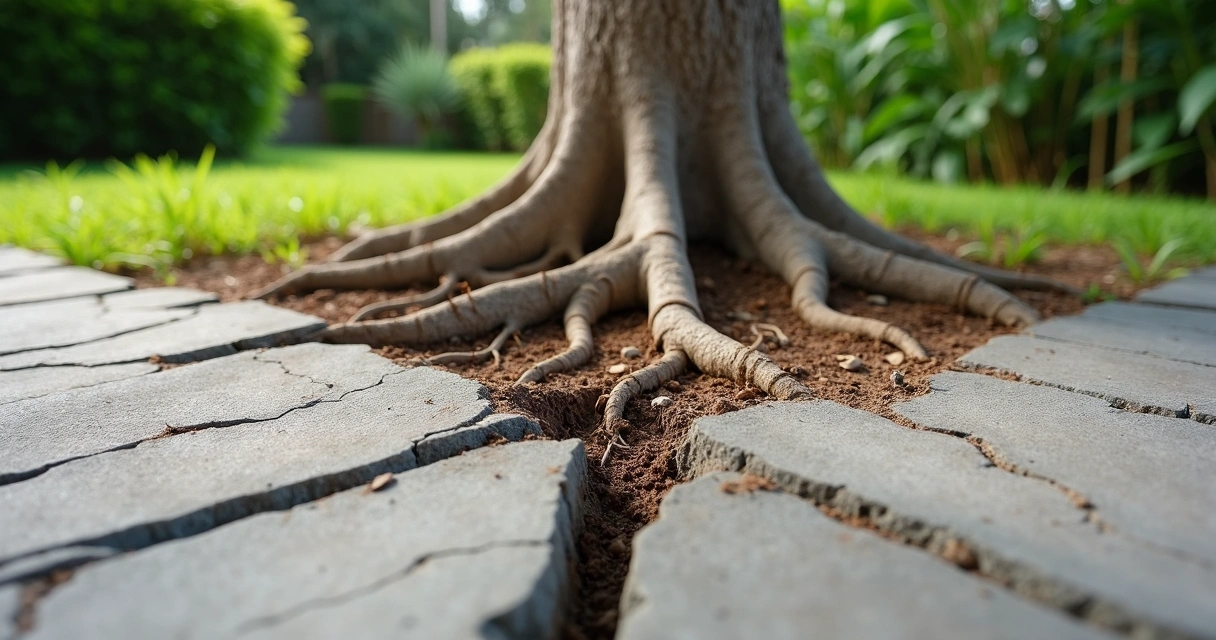
This is why we frequently refer to prevention methods for cracks in Florida patios—addressing roots is foundational.
What are root barriers and how do they work?
In simple terms, a root barrier is a physical or chemical zone intended to block, redirect, or slow the advance of roots toward sensitive areas. We rely primarily on physical root barriers for hardscaping in Florida due to effectiveness and sustainability.
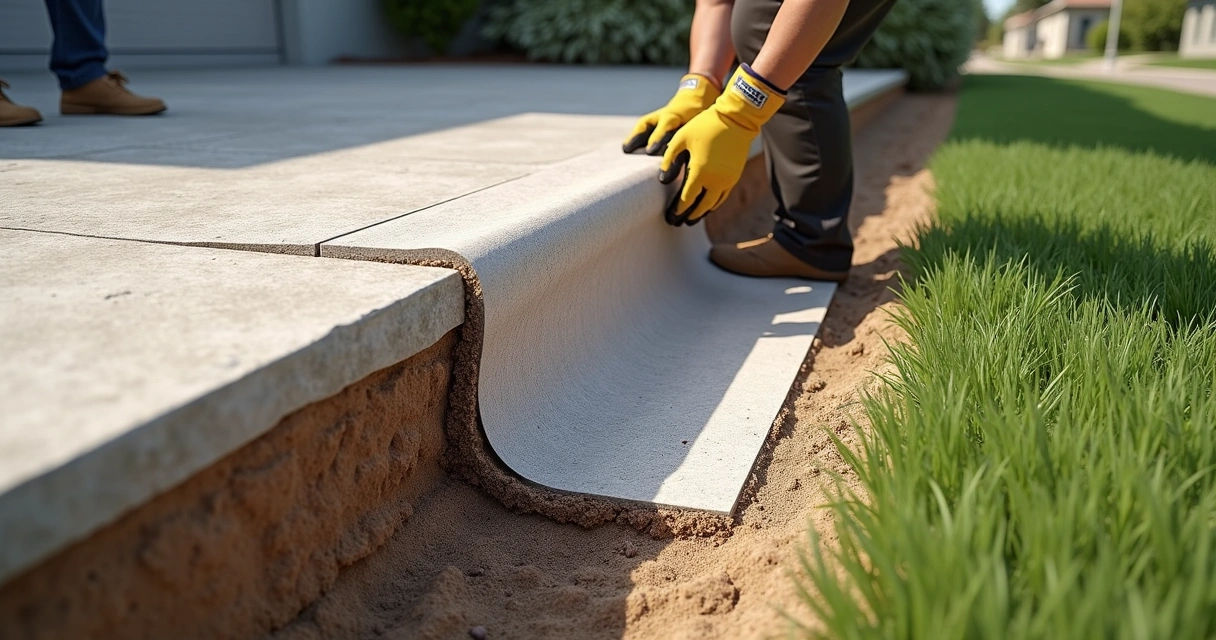
According to University of Florida IFAS Extension guidance, root barriers are installed vertically (or at an angle) to force roots downward or away from patios, driveways, or walkways. Most often, the barrier is buried several inches to several feet deep, forming a continuous line parallel to the protected structure.
Root barriers do not kill roots—they deflect or guide them along a new path. This distinction is key: barriers allow the tree to remain healthy while keeping hardscapes stable and crack-free. No herbicide or trenching is intended to harm the tree if the barrier is installed at the right place and depth.
Where and why root barriers succeed
Installing root barriers works best when:
- They are set at time of patio installation, but can be retrofitted with some excavation.
- A mature tree or known root system exists within 10–20 feet of a patio edge.
- The soil is loose, sandy, or subject to frequent moisture, encouraging roots to travel horizontally near the surface.
We have seen many older properties where the cost to repair patio heave reaches thousands of dollars. In comparison, a preventative root barrier costs far less and preserves tree health.
Types of root barriers for patios
Choosing the right barrier is more than picking a plastic sheet and digging—a fact often overlooked. We group root barriers for patios into several main categories, each with its intended use, pros, and cons.
- High-density polyethylene (HDPE) panels: Thick, rigid sheets, 18–48 inches deep, most popular for residential use. These are durable, impermeable to roots, and chemically stable.
- Geotextile fabrics with copper agents: Special fabrics, sometimes impregnated with copper, work by discouraging root growth at the boundary but are less robust for powerful tree species, and their use is being reconsidered for environmental reasons.
- Reinforced concrete strips: Used in commercial or large-scale settings, these barriers double as edge restraints for patios, combining structural support with a root barrier. More expensive, but very effective especially when integrated with the patio’s base (see details at the St. Cloud installation guide).
- Metal root barriers (aluminum or steel): Sometimes employed along narrow patios, but less common due to potential corrosion in wet soils.
With our Central Florida climate, HDPE is the most frequent choice, balancing performance, lifespan, and cost. Reinforced concrete strips are preferred in commercial settings or high-end residential patios.
Planning and placement strategies
Placement makes all the difference. University of Florida IFAS Extension recommends that root barriers be installed several inches to several feet away from patios and not pressed directly against the structure.
These are proven strategies we use at GCM Best Services for patio root protection:
- Install barriers 18–36 inches away from the patio slab where possible. This gives roots some space before reaching the restriction, reducing the risk of sudden root death or “girdling.”
- The depth should match the dominant species root profile. For most large trees in Central Florida, 24–36 inch depth is enough. For smaller ornamentals or palms, 18 inches may be sufficient.
- Barriers must be continuous with overlaps or sealed joints—one small gap means roots will sneak through over the years.
- Position barriers outside of key drip lines and major root flares if protecting tree health is a concern.
We plan root barrier placement with an eye on both patio design and the property’s entire “root zone”. This is crucial for long-term success, especially when working with new paver installations or complex hardscapes (see info about hardscape integration).
Installation process and best practices
Root barrier installation, when paired with new patio construction, is straightforward. Retrofitting older patios is also possible, though it requires careful excavation to avoid damaging utility lines, irrigation, or the patio itself. Our process at GCM Best Services follows these essential steps:
- Assessment and planning: We consider root species, patio construction, water flow, and proximity to utilities.
- Trench excavation: Remove soil to proper depth (18–36 inches) and width (minimum 2 inches on either side of the barrier).
- Barrier placement: Panels or fabric barriers are installed vertically, with the top edge slightly above ground level to stop roots sneaking over the top.
- Sealing seams: Where multiple sheets are joined, we overlap by at least 6 inches and use manufacturer-approved tape or mechanical fasteners.
- Backfilling and compacting: We backfill gently to avoid shifting the barrier, and ensure proper compaction to reduce air pockets and settling.
- Finishing: Inspect for exposed sharp edges, restore any disturbed landscaping, and verify that drainage flows remain unimpeded.
In our experience, the entire process can often be handled in less than a day per typical patio side—especially when coordinated with new paver or slab installations. Where patios abut mature trees or challenging soil conditions, install time may be longer, and we might coordinate with arborists for best results.
Cost considerations and maintenance
Cost varies according to barrier material, project length, depth, and site conditions. On average, for a basic residential patio in Florida:
- HDPE root barrier (24–36 inches deep): $17–$35 per linear foot installed.
- Reinforced concrete strip: $50–$80 per linear foot (mostly commercial or premium projects).
- Site prep, excavation, and any landscaping restoration may add to this base figure.
By comparison, recurring repair of cracked patios may exceed these costs within just a few years. Studies such as local data from Michigan State University Extension suggest that even modest annual root-related repair costs add up quickly, making prevention appealing.
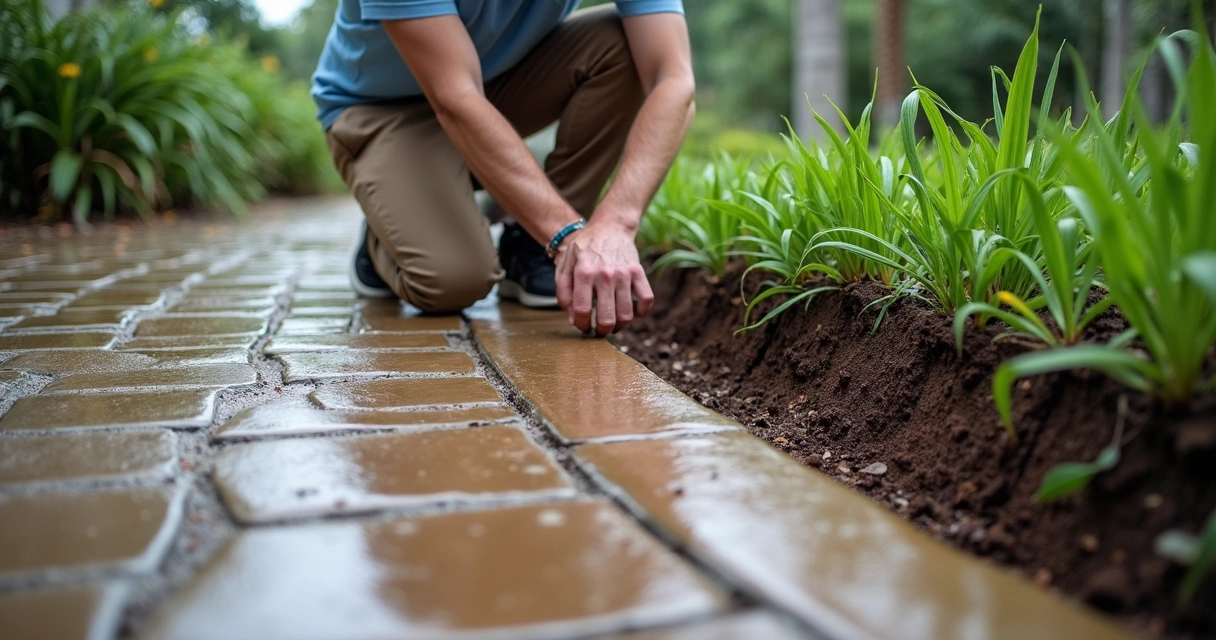
We rarely see “maintenance” required for correctly installed HDPE root barriers. A visual inspection every few years, especially after hurricanes or flooding, is usually enough. Signs of trouble include new cracks, settling or heaving near the protected edge, or roots surfacing beyond the barrier’s reach.
Root barrier impact on landscaping and drainage
It’s natural to worry about the impact of root barriers on yard drainage and plant health. In most cases, a well-installed barrier makes patios less prone to water ponding and preserves trees.
All patios—especially in Florida—need thoughtful drainage management. Root barriers help by preventing root mats from blocking French drains or patio base stone (explore our approach to drainage beneath paver installations). When placing a barrier, we always design to preserve the natural water flow across the landscape.
If a barrier redirects roots downward, trees usually adapt and send roots deeper, stabilizing soil and reducing surface lifting. For highly sensitive species or sites, we sometimes coordinate with certified arborists to create root paths or aeration gaps to balance tree health and patio safety.
If you ever wonder about impact to your other plants, rest assured: the barrier only restricts roots approaching from the protected direction. Other parts of your yard—flower beds, turf, or shrubs—will not be affected as long as the barrier placement is planned with care.
When to use a root barrier and when not to
We advise root barriers for patios under these conditions:
- Large or mature trees within 10–20 feet of a patio or structure
- Patio is concrete, paver, or brick slab with little elevation (not on piers or stilts)
- History of root-related damage on property or in neighborhood
- Drainage issues or high soil moisture in the installation area
Root barriers may not be necessary when:
- No trees or only small, shallow-rooting shrubs are nearby
- Patio is constructed on an elevated deck or pier foundation
- Regular root pruning or mechanical edging is already successful
For most installations in Central Florida, especially on older properties with oak or magnolia trees, root barriers are often the best solution. Our assessments at GCM Best Services always weigh both tree value and patio protection—working to preserve both wherever possible.
If you are planning a new patio, check our comprehensive driveway and patio guide or reach out for site-specific advice that takes into account both drainage and trees.
Conclusion: Prevent costly patio repairs with smart root barrier installation
At GCM Best Services, we believe an ounce of prevention is worth a pound of repair—especially when it comes to patio longevity and your enjoyment of outdoor spaces. Root barriers, installed with care and local knowledge, can spare you the frustration of cracked or lifted patios for years to come.
We help Central Florida property owners combine practical hardscape design with real-world strategies for tree and patio harmony. If you want a patio that stands the test of time, or you’re dealing with existing root problems, contact us for a personalized consultation and professional installation—from assessment to warranty. Your patio deserves it.
Ready for a professional quote? 📞 (407) 250-1948 • 24–48h • Orlando, Tampa & area.
Frequently asked questions about root barriers for patios
What is a root barrier for patios?
A root barrier for patios is a physical or chemical barrier installed underground to prevent tree roots from growing beneath and damaging patios, driveways, or walkways. In our experience, HDPE panels and reinforced concrete strips are common types used to keep roots from causing cracks, lifting slabs, or displacing pavers.
How do root barriers work for patios?
Root barriers work by blocking, redirecting, or slowing the advance of roots toward protected hardscape areas. Installed vertically in a trench beside the patio, the barrier causes roots to grow downward or away from the slab, preserving both patio structure and tree health. According to studies from the University of Florida IFAS Extension, these barriers are best installed several inches or feet away from the patio edge for the greatest benefit.
Is it worth it to install root barriers?
Yes, in most Florida installations near mature trees, root barriers are a sound investment. Studies such as those by Michigan State University Extension show that annual hardscape repair costs can quickly add up, often surpassing the initial root barrier cost within just a few years. Installing a barrier can prevent recurring, costly repairs and maintain both patio appearance and safety.
How much do root barriers cost?
The installed cost of root barriers for patios ranges from $17–$35 per linear foot for HDPE systems in Florida, and up to $50–$80 per linear foot for reinforced concrete strips on premium or commercial jobs. Pricing depends on depth, project length, access, and landscaping factors. We are happy to provide a custom estimate based on your home’s needs.
Where can I buy root barriers?
Root barrier materials can be sourced from landscape supply stores, some garden centers, and hardscape-focused distributors. However, for professional-grade, warrantied installation that considers tree species, patio design, and drainage, we recommend contacting experienced contractors like GCM Best Services who specialize in patio and hardscape solutions tailored for Central Florida conditions.