Primary keyword: Tree roots under driveways
Variants: driveway root damage, prevent tree root intrusion, root barrier installation
Audience: Homeowners and property managers in Central Florida concerned about driveway longevity and root-related damage
Pain/Benefit: Driveway lifting, cracking, or shifting can threaten safety and curb appeal. Learning to prevent and repair root issues protects your investment and your property’s look.
Summary: Tree roots under driveways are a concern throughout Central Florida, especially in areas with mature landscaping and older concrete or paver installations. By understanding the behavior of roots and the best techniques for prevention and repair, homeowners can avoid unsightly damage and long-term costs. We at GCM Best Services share practical advice for recognizing root problems, choosing construction options, and restoring surfaces—while protecting both your trees and your driveway.
What happens when tree roots invade your driveway?
Driveways are a big part of any property’s first impression. But even the best-looking concrete or pavers can shift, crack, or heave if tree roots decide to make themselves at home underneath. In Central Florida, where sandy soils meet rapid plant growth, this scenario can play out sooner than you’d expect.
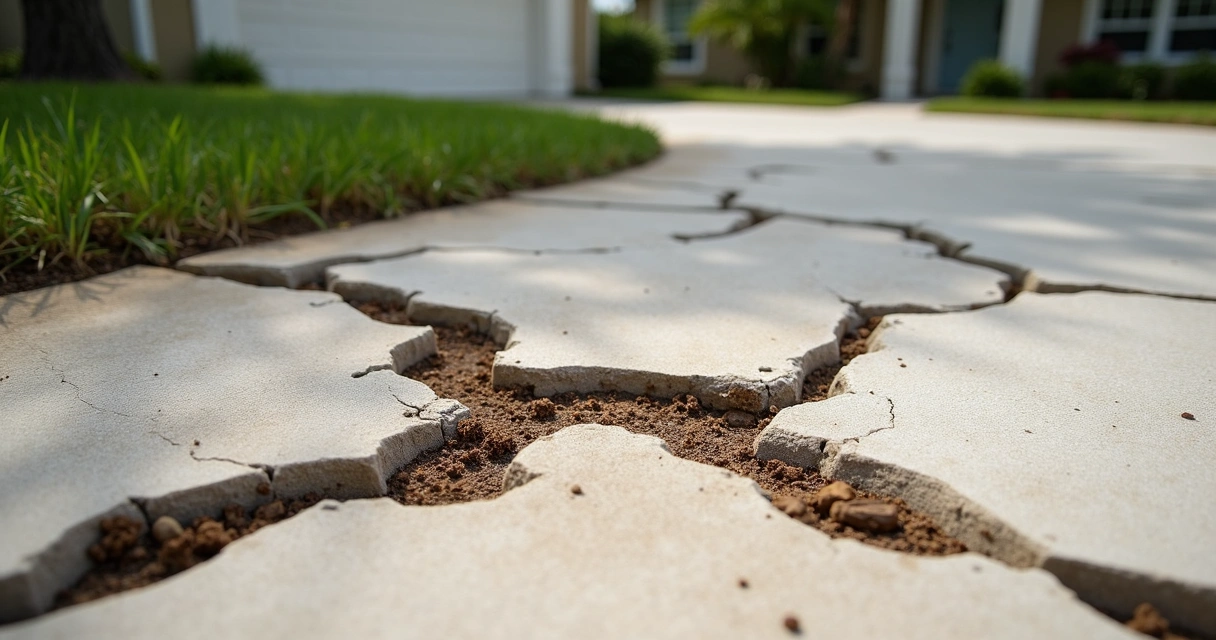
Roots don’t seek out concrete. They’re after water, oxygen, and nutrients, typically found in loose, moist soil. Driveway cracks, expansion joints, or poor drainage give roots a path of least resistance, enabling them to creep beneath the surface. As the roots grow and thicken, they press upward. This forces slabs or pavers to lift or break.
Property owners often notice warning signs like imperfect elevations, new cracks, or visible bumps before entire sections become trip hazards or eyesores. And when you think about the average cost of sidewalk repairs in U.S. cities being over $23 million annually, as reported by a study from the U.S. Forest Service, it’s clear that these issues aren’t to be ignored. Early intervention makes the biggest difference.
Why do roots target driveways?
Tree roots are living, growing structures. Their job is to anchor the tree and find moisture. In the wild, they snake through sandy soils, avoiding obstacles. But in a suburban landscape, pavement can actually attract their growth.
- Compacted soil under driveways can keep water near the surface, encouraging shallow roots.
- Driveways often block rainfall, channeling runoff to the edges where thirsty roots cluster.
- Cracks or poor slab construction create easy entry points for root tips to invade.
- Poor drainage or heavy Florida rains may keep soils wetter under the driveway for longer periods.
The result? Large, surface-seeking roots from oaks, maples, and even palms that lift, disrupt, and crack even well-built driveways.
Signs your driveway has root problems
You might spot root-related damage long before it’s obvious. We always encourage our Central Florida clients to watch for:
- Cracks that widen over time, especially in a pattern radiating outward.
- Sections of driveway that slope up or appear bumpy, even after rain.
- Gaps growing along edges where roots are forcing concrete or pavers up.
- Pavers that wobble, shift, or no longer sit flush with neighbors.
- Trees unusually close (within 8–10 feet) to the surface or visible encroachment of large roots at concrete edges.
When we diagnose damage, a careful look at the pattern tells us a lot. “Spidery” cracks and coordinated lifting with nearby trees are telltale clues. Sometimes, a little root exposure at the surface provides all the evidence we need.
Risks of ignoring root-related driveway damage
Putting off root repairs rarely pays off. The reasons are clear:
- Cracked or heaved driveways become trip hazards.
- Water follows new cracks, making them wider and creating a cycle of damage.
- Small cracks invite weed growth, further breaking apart your surface.
- Loose pavers or broken slabs become an entry point for more roots and more moisture.
- Insurance claims and property values suffer if damage is ignored.
Sometimes, the tree itself suffers. Roots cut or constrained incorrectly can kill or destabilize your mature landscaping, even months after the repair. According to the University of Florida, cutting even small roots may severely harm the tree as most roots are just below the surface.
Choosing the right prevention methods
Stopping roots starts with good planning and professional installation. Our approach at GCM Best Services combines several proven tactics for long-lasting results:
1. Select tree species carefully
Some trees naturally develop aggressive surface roots. Oaks, maples, and some ficus ranks high for root issues. Palms, small flowering trees, and deep-rooted varieties are often safer. Choosing wisely pays off for decades.
2. Mind the spacing
Whenever possible, large trees should be planted at least 8–12 feet from any driveway or paved area. Smaller species can be closer, but even then, buffer zones are smart. Installing new landscaping? This calls for a site-specific design—something we provide during each driveway or patio estimate.
3. Compacted sub-base and proper construction
Some root problems begin with a soft base. Our concrete driveways rely on a 6–8″ compacted sub-base, 3,000–4,000 PSI mixes, and rebar or mesh as specified. Stronger slabs resist root intrusion and heaving far better than thin, undersized installations.
4. Drainage design
Driveway drainage isn’t just about rain—it’s about root health, too. Preventing water accumulation near the slab keeps root growth deeper and away from surfaces. This is a topic we dissect further in our article about drainage and brick pavers.
5. Root barriers
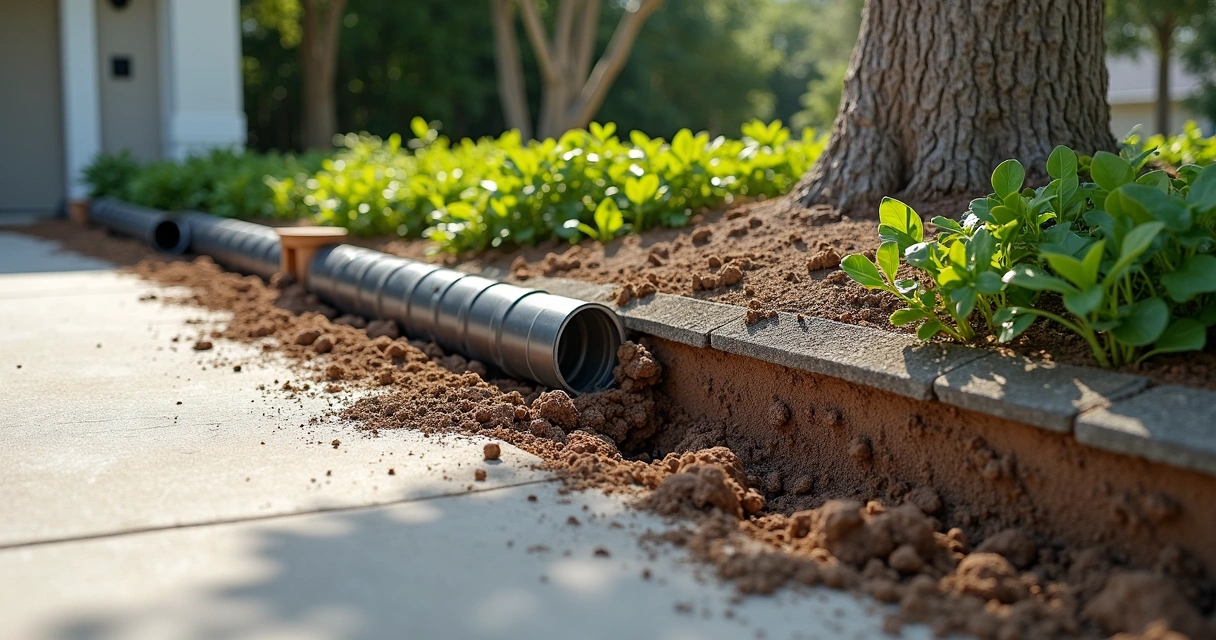
Installing a root barrier at the edge of your driveway can direct roots downward and away, reducing the likelihood of surface cracking. The Iowa State University Extension recommends barriers at least 18 inches deep, made from hard plastic or commercial fabrics. Barrier installation works best before roots make their way under your driveway and is especially recommended when planting new trees.
6. Permeable pavements
Research including a six-year field experiment shows that permeable pavers and gravel layers can encourage roots to grow deeper, away from the surface interface. These pavements are ideal for keeping roots away from the critical fracture zone right beneath the driveway.
Driveway installation: how we guard against root issues at GCM Best Services
Our decades of experience in Central Florida driveways shape every recommendation we make. Here’s what we do, step by step, to make sure roots don’t cause problems down the road:
- Assess existing trees and root zones during the first site visit—checking both the species and distance from the intended driveway.
- Plan driveway footprints and shapes to protect mature trees whenever possible.
- Remove or relocate invasive roots, using trenching only if it won’t compromise tree stability—always seeking input from clients about priorities.
- Excavate old soil and set a new compacted sub-base—this reduces future heaving or settlement.
- Install root barriers along the driveway edges, especially where old tree roots are visible.
- Design and install proper surface drainage to draw water away from both the slab and tree root zones.
- Pour a concrete slab with sufficient thickness and reinforcement, finishing with broom/exposed/stamped surfaces as requested.
- Build in expansion joints, control joints, and paver edge restraints to help surfaces flex with root movement (instead of cracking suddenly).
- Perform a final walk-through and document every step with photographs—so you have proof of a well-executed job.
We stand behind every driveway we pour, offering a written warranty and maintenance plan. Learn more about our standard process in our guide to concrete driveways and patios in St. Cloud.
Options for repairing driveways with root damage
Even the most careful planning can run up against hidden roots in Florida’s mature neighborhoods. When that happens, quick and effective repair is often vital. What can we do to restore your driveway as painlessly as possible?
Assess the damage before deciding on repairs
Small, localized cracks or minor heaving may be handled with target repairs. Major damage or dangerous lifting often calls for section replacement. We believe every repair starts with a clear-eyed inspection.
Repairing small cracks and minor lifting
- Crack injection or sealants. Flexible fillers close minor lines and keep out water, but only work if root pressure stops.
- Surface grinding. Raised spots on concrete can sometimes be leveled without total replacement. This is most effective if the underlying slab is thick and roots are no longer growing.
- Small paver resets. Lifting a few sunken or tilted pavers, trimming roots beneath, and resetting with proper compaction can extend their life.
When larger repairs or replacements are needed
- Full panel replacement. For wide cracks, deep heaving, or sites where roots have created multiple failure points, we remove the damaged section and replace it following all current standards for new driveways.
- Root excavation with care. If roots must be cut, we follow guidelines from the University of Florida for minimizing harm to mature trees—striking a balance between your property value and your landscape’s health.
- Edge zone redesign. Sometimes, regrading, replanting, or installing new drainage works hand-in-hand with root removal to prevent repeat problems.
Surface replacement: concrete vs. paver driveways
It’s easy to assume that concrete is always the answer, but pavers offer some flexibility. A well-installed paver driveway is modular—if roots lift a section, repairs are as easy as relaying the affected area. Our article on driveway and patio paving explains more about material choice and how it affects maintenance and repair over time.
Sealing your investment
When concrete or pavers are repaired or replaced, we always suggest professional sealing. This keeps moisture out, limits weed intrusion, and gives your driveway a polished look.
How to balance root removal and tree health
Removing roots isn’t something we rush into. Trees and driveways can coexist peacefully, as long as repairs don’t threaten the stability of mature plants. Our process is careful, involving:
- Trenching by hand near mature trees, to avoid over-cutting roots critical to tree health
- Limiting root cuts to one side of the tree only
- Monitoring trees after repairs for signs of stress (leaf loss, dieback, or instability)
- Using tree-friendly practices aligned with university recommendations
Whenever possible, we find that proper base prep and root barrier installation are less invasive solutions that preserve both your hardscaping and your landscaping investment.
Best practices for long-term protection
Repairing and preventing root damage isn’t a “set it and forget it” operation. Here’s how you can keep your driveway healthy for years to come:
- Inspect driveways annually for cracks, unevenness, or changes, especially after storms or rain events.
- Keep trees pruned and remove weak or invasive species when possible.
- Add mulch and ground coverings to direct surface water away from driveways and paver edges.
- Address standing water with grading or drainage fixes, explained in our post about effective driveway and patio drainage.
- Call for a professional assessment if old driveways show new or rapid changes—what looks minor today can cause much bigger problems tomorrow.
Living with Florida soils: why techniques matter
Central Florida’s sandy soils, quick-draining surface, and subtropical trees make root issues different from elsewhere. When we prepare driveways at GCM Best Services, we don’t just use thicker slabs. We rely on:
- Thorough site assessment—checking for past root problems or hidden drainage issues
- Concrete mixes suited for 3,000–4,000 PSI strength, as we cover in our preventing cracks guide for driveways and patios
- Expansion and control joints, to handle natural movement without surface failure
- Edge restraints and polymeric sand, when installing pavers, to lock in place and discourage weed and root invasion
The cost of root-related repairs—and when to call in the pros
The costs vary significantly. Minor crack repairs might be affordable, while replacing large sections can cost thousands—especially if trees or landscaping are at risk. According to the U.S. Forest Service study, urban communities spend tens of millions each year dealing with root-related infrastructure repairs. Investing in prevention is almost always less expensive in the long run.
In our experience, the decision to call professionals usually comes down to these factors:
- Extensive or repeating cracks that don’t respond to simple fillers
- Heaving that creates steep or hazardous driveway conditions
- Mature or valuable trees whose roots pose a risk to hardscaping
- Old driveways or pavers that have failed in more than one spot
- Concerns about drainage, grading, or HOA requirements
Conclusion: protect your driveway and your trees—without compromise
Tree roots and driveways will always be neighbors. In Central Florida, it’s our job to make sure they remain good ones. Thoughtful planning, professional construction, and targeted repairs can prevent or fix nearly all root-related driveway problems before they spiral out of control.
At GCM Best Services, we know how to keep your property attractive, functional, and safe—from compacted sub-bases and root barriers to surface drainage and paver resets. If you notice new cracks, uneven spots, or trees getting too close for comfort, we’re here to help. Request a site assessment and protect both your landscape and your investment for years to come.
Healthy roots, smooth driveways, and peace of mind are just a call away.
Ready for a professional quote? 📞 (407) 250-1948 • 24–48h • Orlando, Tampa & area.
Frequently Asked Questions
How do I prevent roots under driveways?
The best way to prevent tree roots from reaching under driveways is a combination of smart tree placement, physical root barriers, and using a thick, well-reinforced driveway slab. Barrier materials (installed at least 18” deep as suggested by the Iowa State University Extension) guide roots downward or away from driveways. Choosing trees with smaller, deeper root systems and placing them at least 8–12 feet from paved areas also reduces risks. Proper surface drainage and regular inspections are essential steps.
What are the signs of root damage?
Signs include cracks that spread or widen, lifted or uneven driveway sections (especially near trees), gaps along edges, loose or tilted pavers, and visible roots near surfaces. If areas become unsafe or trip-prone, root damage is often the culprit.
How can I remove tree roots safely?
Removing tree roots must be managed with care. University of Florida research explains that cutting roots under driveways can harm or destabilize trees, even if roots seem small. If root removal is necessary, trench only on one side and stay as far from the tree trunk as possible. Always consult a pro if mature trees are involved, and monitor plant health for months after any root work is done.
Is it worth replacing the driveway?
If your driveway shows broad, severe cracking, ongoing heaving, or unsafe conditions that can’t be corrected with minor repairs, full replacement is often the best solution. Replacement allows for new root barriers, a stronger sub-base, and improved surface drainage—minimizing the risk of repeat problems. Compare costs and discuss longevity with your contractor to decide what’s the best fit for your property.
What trees are best near driveways?
Trees with smaller and deeper root systems work best near driveways. Good examples include many palm species, crape myrtle, dogwood, and some oaks bred for compact root growth. Avoid planting large shade trees, like laurel oak or silver maple, closer than 8–12 feet from pavement. Always consider your soil, drainage, and long-term goals for shade and aesthetics when selecting a species.