If you have ever seen a driveway buckle after a storm, or a patio start to show its first hairline cracks in just a couple of years, you know that concrete work in Florida asks a question: what is going on under the surface? We at GCM Best Services think about these issues daily, because hidden inside every slab, paver, or walkway is a simple truth: rebar and mesh are the quiet heroes for long-lasting concrete in the Florida climate.
In this article, we will examine what reinforcement choices—namely rebar and mesh—truly offer the results Florida homeowners and commercial clients want. We will cover how concrete interacts with our environment, what kind of corrosion challenges are unique to Central Florida, and how material choice and placement impact your project’s future.
By the end, you’ll have a clear map for choosing the right reinforcement for your concrete, whether you are building a driveway, a patio, or a commercial slab. You’ll also find helpful tips for assessing your contractor’s recommendations, and useful resources for further guidance—all with the region’s codes and needs in mind.
The right reinforcement makes the difference between years and decades.
Why Florida needs a special approach to concrete reinforcement
In most ways, Florida is unlike anywhere else in America. Our heat, humidity, occasional salt exposure, and poor-draining soils challenge even the best-laid slabs. Reinforcement choices that might seem “good enough” in other states are, frankly, risky here.
- Salt-laden air and high groundwater cause rebar corrosion faster than most inland regions.
- Clay and sandy soils swell, shift, and don’t drain well, making cracks and settling more likely.
- HOA requirements and regional codes often set stricter standards for reinforcement and drainage.
- Storms and ordinary rains frequently test the drainage and load-bearing potential of every square foot of your concrete.
At GCM Best Services, we see how often people underestimate the demands of our climate. When we consult on exterior concrete projects, our goal is prevention: we apply methods learned from research and hands-on experience to avoid costly repairs later. Sometimes, that means suggesting upgrades to spec sheets or using different reinforcement types that stand up better to Florida’s unique stresses.

Understanding rebar and mesh: the basics and beyond
Concrete is strong but brittle. Imagine a chocolate bar: hard, but snap it, and it shatters cleanly. Now imagine a net of wire or a piece of steel inside the chocolate—the bar suddenly resists breaking. That is what rebar (short for “reinforcing bar”) and mesh do: they act as bones and tendons within concrete, helping it withstand weight, flexing, and temperature compaction without letting cracks turn into splits.
Types of reinforcement used in Florida
- Rebar (steel bar): Individual metal rods, placed in a grid or pattern, tied together before concrete is poured. Common sizes for residential work include #3 to #5 bars (meaning 3/8″ to 5/8″ thick).
- Welded wire mesh (WWM or wire mesh): Sheets or rolls of welded steel wires, making a square or rectangular grid, laid flat in the middle height of the slab or pad.
- Fiber reinforcement: Synthetic (polypropylene) or steel fibers mixed directly into the wet concrete. Extra strength mostly for minor shrinkage or microcracking, not as a substitute for rebar or mesh in Florida driveways or patios.
Our experience suggests this: for exterior slabs, driveways, and other applications exposed to Florida weather, steel rebar or mesh should be considered a baseline, not a luxury. Relying on concrete alone invites trouble long-term.
How rebar and mesh work
- Rebar is placed in a crisscross pattern, supported on “chairs” or blocks so that it’s centered within the slab depth. It absorbs tension and flex from above—say, a car driving over your driveway or the subtle lifting and sinking of soil after heavy rain.
- Mesh forms a continuous layer of support, best for spreading load across a broad area. It’s faster to lay, and a good fit for bigger, thinner slabs or patios with lighter vehicles or foot traffic.
Choosing between the two is often a question of strength, budget, and the kind of loads expected. We’ll get into the details below.
How Florida’s climate challenges concrete work
Why are Florida’s soils and weather such a worry for reinforced concrete? It’s not just the heat. Our salt air, recurring storms, high water tables, and rapid dry/wet cycles all threaten steel inside concrete—unless it’s chosen and protected properly.
Corrosion: the silent enemy
The Federal Highway Administration’s study of stainless steel and MMFX-2 corrosion-resistant rebar found that Florida-like high-chloride environments destroy untreated steel faster than most people think. Standard (black) carbon-steel rebar rusts early when exposed to salt or moisture intrusions, which are all too common here, especially within 10-15 miles of the coast.
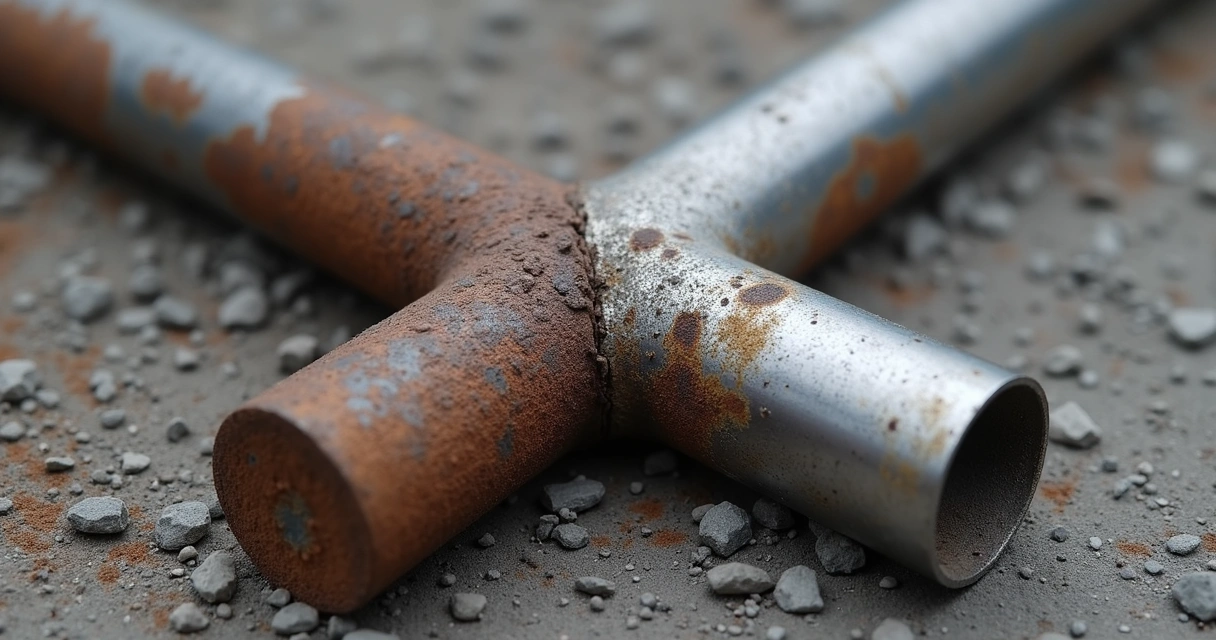
Rust causes the steel to swell, which cracks and stains the surface. Eventually, it weakens the whole slab. For high-risk locations, stainless steel rebar (316L or duplex 2205 alloys) lasts far longer, but at significantly higher upfront cost. For most residential projects, additional barrier coatings or careful concrete coverage help, but that’s never a guarantee if there’s poor drainage or installation.
Soil movement and poor drainage
Florida soils move. Between clay’s swelling and sand’s compression beneath weight or after heavy rains, concrete needs help to resist flexing. That’s why proper rebar or mesh is not optional, but a basic line of defense. GCM Best Services always pairs drainage grading with reinforcement layout—no shortcuts.
Poor drainage leads to ponding, which sits above the concrete and also sneaks in from below. This is the fastest way to corrode steel inside the slab. If you want more advice on managing water around concrete, see our guide on preventing cracks in Florida concrete patios and driveways.
Choosing the right rebar for Florida concrete jobs
In our estimation, picking rebar is about seeing into the future. We ask, “Where will the water flow? How much weight will this area bear? How close are we to the coast? How well will it be maintained?” The answers decide both rebar type and placement.
Standard black steel rebar: practical with care
For most driveways and residential slabs away from severe salt exposure, traditional (ASTM A615) black steel rebar in #3 to #5 sizes is economical if paired with:
- Slab thickness of 4″ for patios, 5″+ for driveways.
- 6″ to 8″ of compacted sub-base under the concrete.
- Chairs or dobies to keep rebar centered off the bottom.
- 2″ minimum concrete cover between steel and the slab’s surface.
- Plastic-coated (epoxy) rebar if higher chloride (salt) expected, for projects closer to the coast or with irrigation/rain intrusion risks.
We sometimes suggest stainless or higher-quality bars for elevated slabs, pool decks, or luxury installations. Recent FHWA research supports the value of higher confinement and reinforcement indexes, reducing failure in thinner or lighter concrete. Stainless bars cost more, but often pay off for clients prioritizing long-term durability.
Specialty rebar: when to upgrade
- Stainless steel alloys (316L, 2205): Virtually immune to corrosion, recommended for premium projects near ocean or intracoastal water, or for locations enduring frequent wetting-drying cycles. See the FHWA’s corrosion-resistant bar studies for more data.
- Epoxy-coated rebar: Inexpensive upfront but prone to coating damage during installation. Used selectively.
- Galvanized or MMFX-2 alloy: Used on some public works; offers good protection for bridges and infrastructure.
We balance cost, project life, and location needs before recommending these upgrades. Homeowners mostly see best returns with improved base prep and drainage rather than only top-tier steel, but the option remains when the stakes are higher.
Wire mesh: where it fits and where it falls short
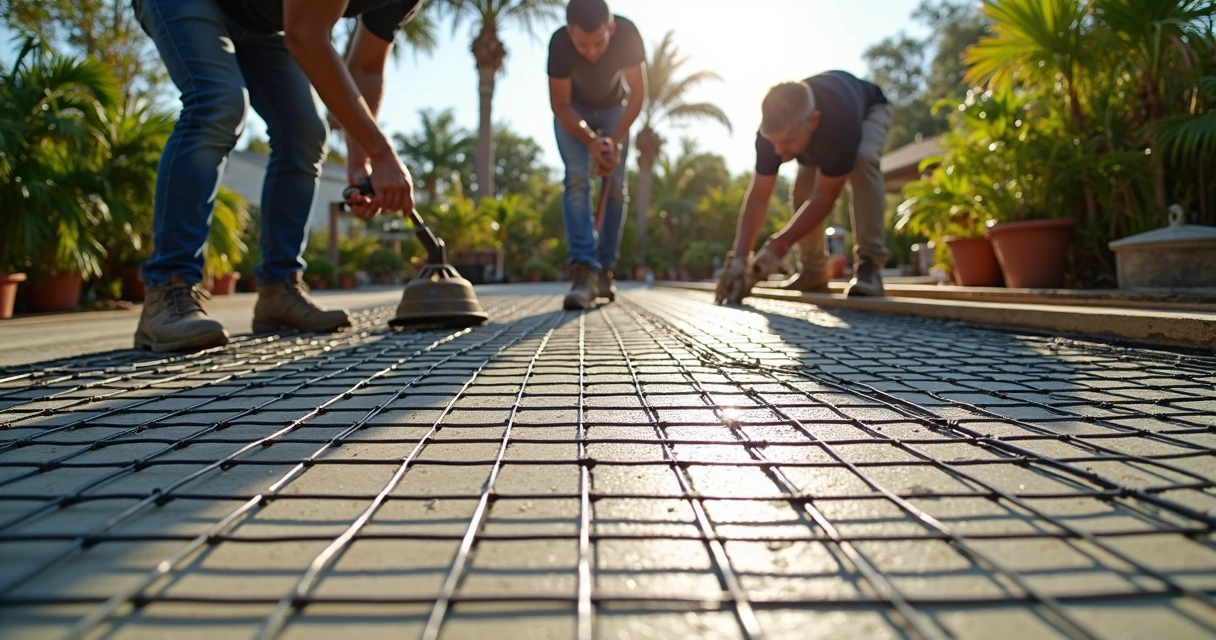
Welded wire mesh (typically 6×6 gauge W1.4 or W2.9) is a common sight in Florida patios, pool decks, and garage slabs. The greatest strengths are:
- Quick installation, especially for broad areas without heavy vehicle loads.
- Better crack resistance for lighter traffic, walkways, and patio spaces.
- Great for supporting concrete during the curing process, helping with shrinkage and preventing random cracks.
The downside, as many Florida homeowners discover, is that mesh alone is rarely enough for driveways or slabs expected to hold heavy vehicles—especially with our soils. Our team at GCM Best Services routinely installs mesh with added rebar in driveways and carports for this reason.
For residential patios, mesh works—if there is a proper base and drainage, and if it’s installed midway within the concrete’s depth, not left at the bottom. Contractors skipping this step are a main source of early failure, a topic we covered in our licensed contractors’ guide to concrete repair.
When to use mesh on its own
- Sidewalks and walking paths with little to no vehicle loading.
- Backyard patios or pool surrounds, especially with slab thicknesses 4″ or less, so long as heavy equipment will not cross frequently.
- Areas where initial cost is the top driver and project size is large (big patios versus small high-load driveways).
If you are trying to decide for your property, consider how you use the space and what lies underneath the concrete—a judgment call we always make on site inspections.
Concrete design: why proper layout prevents cracks
There are many ways to do reinforcement wrong, and all of them catch up to you sooner or later. Proper layout is about more than grabbing whatever steel is at hand. It’s a deliberate practice guided by site conditions, use case, and Florida code.
The most common mistakes we see
- Positioning mesh or rebar on the ground, rather than suspended within the slab, resulting in poor performance.
- Using undersized or widely spaced rebar, creating “soft spots” that flex faster on car tires or after a soaking rain.
- No integration of slab joints or control joints, allowing cracks to form wherever tension is greatest instead of on visually planned lines.
- Poor sub-base compaction, meaning the slab flexes, regardless of steel amount inside it.
Following local code, using experienced installers, and asking for on-site walk-throughs are your best protections against these mistakes. If you’d like to know more about regional contractors’ processes, our advice about choosing a concrete company in Orlando, FL may help your decision.
Concrete mixes, new technologies, and advances for Florida
Concrete itself has gotten stronger and smarter. The Florida Department of Transportation explores Ultra-High Performance Concrete (UHPC) for public works, which pairs super-strong mixes with advanced rebar layouts, making longer-lasting bridges and roadways. Recent FHWA research also highlights UHPC’s superior bond with reinforcement—meaning steel and concrete act as one, resulting in more stable, crack-resistant projects.
Though residential customers rarely use UHPC due to costs, the lessons influence our day-to-day work: smarter mix design, full integration of drainage, and tight attention to slab reinforcement pay real dividends. GCM Best Services incorporates these advancements into our everyday installations, ensuring that our driveways, patios, and slabs are always aligned with local expectations and innovations. If you’re getting a new installation in St. Cloud or nearby, you might enjoy our step-by-step guide for St. Cloud concrete driveway and patio installation.
How we specify rebar and mesh at GCM Best Services
When our team at GCM Best Services reviews concrete plans, here’s how we break down our decisions, always keeping Florida’s climate at the top of mind:
- Driveways: 6″–8″ compacted base, minimum #4 rebar grid at 12″ centers both ways, or 6×6 W2.9 wire mesh with #3 rebar at stress points; always elevated in the slab not left on the soil.
- Patios and pool decks: 6×6 wire mesh for most, with #3 or #4 rebar in high-stress or edge zones, base thickness and drainage graded to suit intended use and local codes.
- Sidewalks and walkways: Mesh for light duty, rebar for longer runs or where tree roots and soil movement are a concern.
- Premium and salt-exposed zones: Stainless or epoxy-coated rebar, increased concrete cover, more robust drainage planning.
What we rarely do: mix-and-match leftover or too-small steel, or skip the “overkill” on sub-base compaction. The up-front saving often vanishes with a first repair call.
Field-proven combination: mesh plus rebar
For larger or higher-stress slabs (like RV parking or commercial aprons), we often specify both mesh and rebar—mesh for general crack control, and rebar for load paths. This dual approach acts like a two-layer defense system, and is especially worth considering in unpredictable Florida soils.
Conclusion: confidence comes from choosing the right reinforcement, not just the right concrete
In Florida, concrete strength is only as reliable as the steel hidden within it. At GCM Best Services, we believe in showing you what is going inside your driveway, patio, or slab—from the sub-base to the topcoat. We want our customers to ask about rebar and mesh, to demand details on placement and material type, and to see before-and-after photos of the jobsite. This transparency, paired with lessons learned from federal and state research, gives every project the best shot at a long, trouble-free life.
Whether you are replacing a cracked driveway, adding a new outdoor living space, or planning a commercial upgrade, the correct reinforcement will stand the real test: a Florida summer, a hurricane-season rain, and the years in between.
Strong foundations mean peace of mind for years to come.
Ready to find out what goes into a truly lasting concrete project? Our team at GCM Best Services invites you to request a professional assessment. Start your project right, from the ground up—let’s talk about what your concrete will look like years from now.
Ready for a professional quote? 📞 (407) 250-1948 • 24–48h • Orlando, Tampa & area.
Frequently asked questions about rebar and mesh for Florida concrete
What is the best rebar for Florida?
For most projects in Florida, stainless steel rebar (such as 316L or duplex 2205) offers the highest protection against corrosion, according to research summarized by the FHWA. However, due to cost, many residential slabs use traditional black steel rebar with sufficient concrete cover and proper drainage. For areas close to the coast or with frequent salt exposure, stainless or epoxy-coated rebar is often worth the investment. Always consider your specific soil, drainage, and exposure conditions first.
How does mesh compare to rebar?
Mesh is great for controlling minor cracks and spreading load across wide, thin slabs like patios, but rebar provides much stronger protection against major cracks caused by heavy vehicles or shifting soil. In Florida, using only mesh for driveways or high-load areas is usually not enough, but mesh does have a useful place in sidewalks, patios, or lightly loaded surfaces. Sometimes the best option is a combination of both for critical projects.
Where to buy rebar and mesh locally?
Many local building supply and home centers across Central Florida carry standard sizes of both rebar and mesh, as well as specialty products for larger or coastal projects. When GCM Best Services manages your project, we source directly from vetted suppliers to match local codes and material quality. If you are purchasing yourself, ask for delivery options to the jobsite and verify material grade per local code.
How much does rebar cost in Florida?
Prices fluctuate with steel markets, slab size, labor, and whether you need standard black, epoxy-coated, or stainless rebar. As of this writing, standard #4 black steel rebar in Florida often ranges from $0.65–$1.15 per foot (before labor or delivery), with stainless options many times higher. Mesh typically costs a bit less per square foot, but keep in mind installation and lifespan differences. GCM Best Services always breaks down costs clearly on our estimates.
Is mesh or rebar better for driveways?
For most Florida driveways, rebar is stronger and more reliable than mesh alone because it better resists soil movement and heavy vehicle loads. Mesh helps control minor cracks, but driveways benefit from a combination, or at minimum, rebar installed in a grid with the right spacing and coverage. Proper sub-base, drainage, and slab thickness are just as important in determining a driveway’s longevity.