When we pour a new driveway, slab, or patio in Central Florida, we face a unique challenge: humidity. Florida’s high moisture and unpredictable rain can slow down concrete curing, making it more difficult to stay on schedule. Over the years at GCM Best Services, we’ve developed methods to help concrete set faster while still achieving lasting strength and a great finish.
We want to share what we’ve learned, so your next project can be strong, resilient, and ready as soon as possible. If you’re planning a job in Orange, Osceola, or anywhere in Florida’s subtropical climate, these ten tips will help speed up curing, without cutting corners or risking durability.
Better curing means a longer-lasting finish and less hassle down the road.
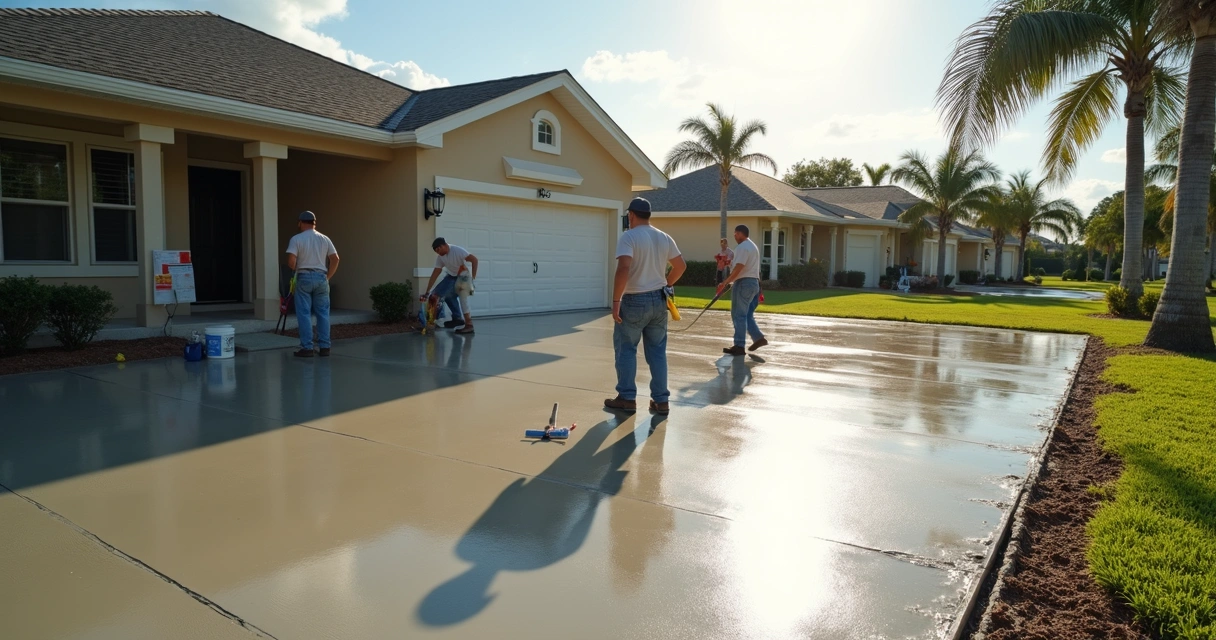
Why concrete cures slowly in Florida
Florida’s climate is both a blessing and a curse for concrete work. The warmth is helpful, but continuous humidity presents some unexpected obstacles.
- High humidity slows the evaporation of water from fresh concrete. This can delay curing, keeping the concrete soft for longer.
- Frequent rainstorms risk over-wetting the surface, sometimes causing the top layer to weaken or crack later.
- Warm temperatures can help with curing, but only when paired with controlled water content and proper technique.
In our experience, balancing moisture and temperature is the key to faster, stronger concrete curing in Florida.
You might also want to investigate our guides to preventing cracks in Florida concrete patios and driveways as part of your research.
Tip 1: Choose the right concrete mix for fast curing
We always start by selecting a mix suited for Florida’s weather. Not all concrete is equal: some are formulated to set up faster, others are made slow to allow for complex work or high heat.
- For fast curing in humid conditions, we recommend a 3,000–4,000 PSI mix with additives that accelerate setting, such as calcium chloride or non-chloride accelerators.
- Consider low water-cement ratios; less excess water means there’s less to evaporate, which speeds strength gain.
- Work with your ready-mix supplier to tailor the blend: Florida-ready mixes often anticipate humidity, but always double-check.
The correct mix is the foundation for every successful fast-curing job in our experience at GCM Best Services.
Tip 2: Control water at every stage
Moisture plays a key role in curing. Too little water and the surface cracks; too much and curing drags on for days.
- Measure and monitor the amount of water added to the mix – don’t eyeball it or rely strictly on “feel”.
- Avoid adding water at the site to improve workability; use plasticizers or superplasticizers instead, which make the mix more workable without increasing water content.
- If rain is expected, plan pours around showers or use covers to prevent extra water absorption.
Too much water in the mix always slows down curing, and makes the end result weaker.
Tip 3: Pour in the morning or late afternoon
Timing is a simple but powerful lever. Florida afternoons are unpredictable, with sudden rain and rising humidity. Our best results usually come from:
- Starting pours early in the morning, when humidity and temperature are lower.
- If that’s not possible, aim for late afternoon to let the surface set up overnight under gentler conditions.
Strategic scheduling also helps avoid labor rushes and lets the concrete cure when it’s less exposed to direct sun and surprise showers.
Tip 4: Prepare a stable, well-drained base
Up to half of future slab problems can be traced back to poor site prep. We always:
- Compact the sub-base 6–8 inches; a stable base prevents water from pooling under the slab, which would keep the bottom wet and slow curing.
- Check slope and add drainage to prevent ponding.
- Lay vapor barriers if the site is notoriously soggy or below grade.
If you would like more technical details, our experience with concrete work in Central Florida covers this ground in depth.
A dry, well-drained foundation is the quickest path to reliable curing.
Tip 5: Use curing compounds and evaporation retarders
When humidity is sky-high but surface winds dry out the slab, we reach for high-performance curing products:
- Chemical curing compounds (sprayed or rolled on) form a thin membrane that traps moisture below, allowing the concrete to cure “inside-out” without outside evaporation.
- Evaporation retarders are useful if a breeze is picking up; these can be misted over the surface as a temporary shield.
- Always choose low-VOC, Florida-approved options for residential or HOA work.
Modern curing compounds can dramatically speed up curing while keeping the top layer strong, and reduce finishing defects like dusting or crazing.
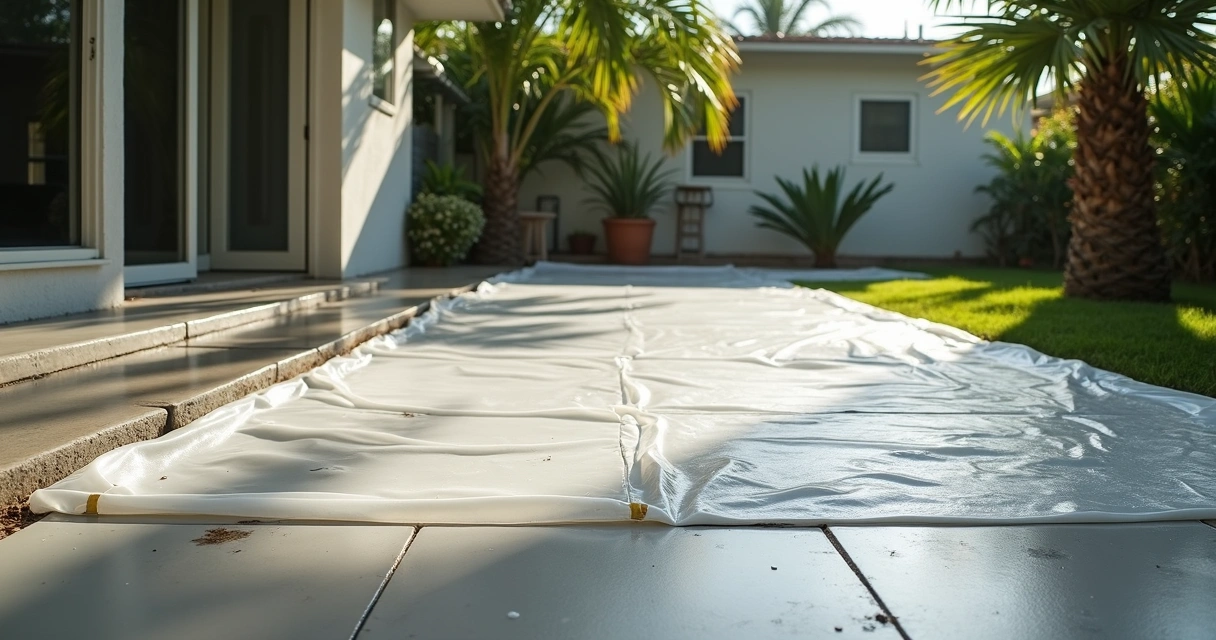
Tip 6: Protect the slab from Florida’s sudden rain
Rain can undo hours of smart planning in under ten minutes.
Keep an eye on the forecast, and always have plastic sheeting or waterproof tarps on site, just in case. Our field crews have had their share of close calls but have avoided major headaches by acting fast when dark clouds loom.
- Cover the slab before, during, and after showers as needed, but don’t let plastic touch the wet surface directly, which can leave marks.
- Build makeshift frames or “tents” with rebar, wood, or buckets to keep covers above the fresh slab.
- If rain hits between finishing and initial set, wait for the sheen to disappear and rework the surface if necessary.
A little paranoia with the weather can mean the difference between a perfect slab and a costly re-do.
Tip 7: Use fans and controlled airflow wisely
This tip often surprises our clients. Since Florida air is already saturated, you might think fans won’t help. But the right airflow can help surface water evaporate during the early cure, as long as it’s gentle and indirect.
- Aim fans across, not directly at, the slab surface for the first few hours.
- Never use hot air blowers or direct sun lamps that might dry out the top too fast and cause crusting.
- Check humidity and temp frequently; if the surface starts to “crust” before the underlying slab hardens, slow down the airflow immediately.
With practice, gentle airflow can strike a balance: helping excess moisture leave, but not so fast that the surface cracks or dusts.
Tip 8: Accelerators and admixtures for humid climates
Modern admixtures work wonders for speeding up curing time, especially when site conditions aren’t ideal.
- Non-chloride accelerators are common in Florida; they boost set time without risking rebar corrosion.
- Adds like silica fume or fly ash can sometimes help by reacting with water and improving density, which leads to faster set and better weather resistance.
- If you’re new to admixtures, talk to a knowledgeable contractor or supplier about what’s available for your project and climate.
If you want to know what else makes Florida slabs last longer, this licensed contractor’s concrete repair guide breaks down our region’s best practices.
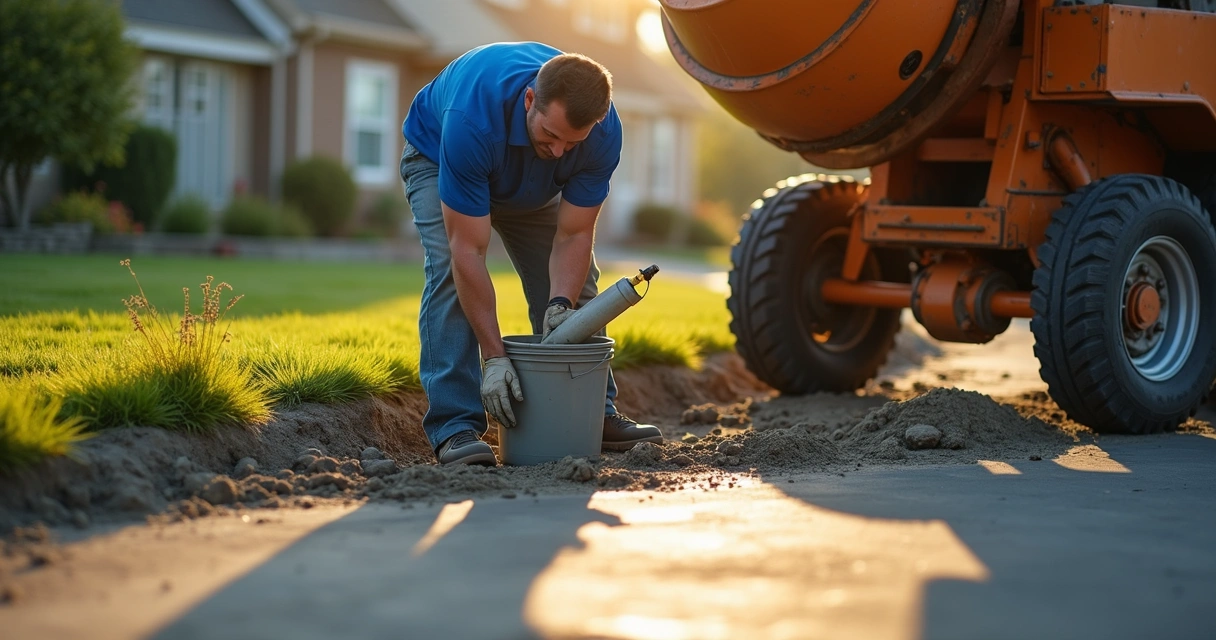
Tip 9: Finish with care, and avoid reworking the surface
It’s tempting to “touch up” concrete again and again, especially when setting seems slow. Don’t! Over-troweling pushes water to the top and delays curing.
- Use the broom, finishing, or stamping tools just once, right as bleed water disappears.
- If surface water lingers, blot it with towels instead of troweling it back in.
- For exposed aggregate or patterned finishes, move quickly but gently so you don’t disturb the setting process.
Leave finished concrete undisturbed, every extra touch weakens the finish and slows curing.
Tip 10: Plan for traffic and cover times
In humid Florida, even after concrete “looks dry,” it may need extra time before it’s ready for foot or vehicle traffic.
- For patios and sidewalks, cover and keep off for at least 24–36 hours, then test for firmness before full foot traffic.
- Driveways and garage slabs may require 3–7 days before cars can be driven over, even with fast-curing mixes and accelerators.
- Using a handheld moisture meter or scratch test can confirm readiness, especially if rain has been frequent.
Patience beats a cracked surface, waiting those few extra hours or days pays off for years down the line.
Putting it all together: Our Florida concrete process
At GCM Best Services, we’ve built our approach around these tips, and our process always includes clear communication, careful planning, and safety at every step.
- We start with a no-obligation assessment and a detailed estimate, factoring in Florida’s unique weather patterns.
- Next, we help with HOA paperwork, permitting, and schedule your work for the most favorable window.
- On the big day, our crews arrive early, prep the site for drainage and weather, and set up covers and equipment.
- We monitor temps, humidity, and forecast, adjusting technique for cloudbursts, sun, or sudden heat.
- Every job ends with a walkthrough, maintenance guide, and a written warranty so your slab, driveway, or patio keeps looking great for years.
Our experience isn’t just for commercial jobs; we’ve helped countless homeowners in Central Florida get the best possible concrete. For more on picking the right contractor, find out what to look for when hiring in Orlando.
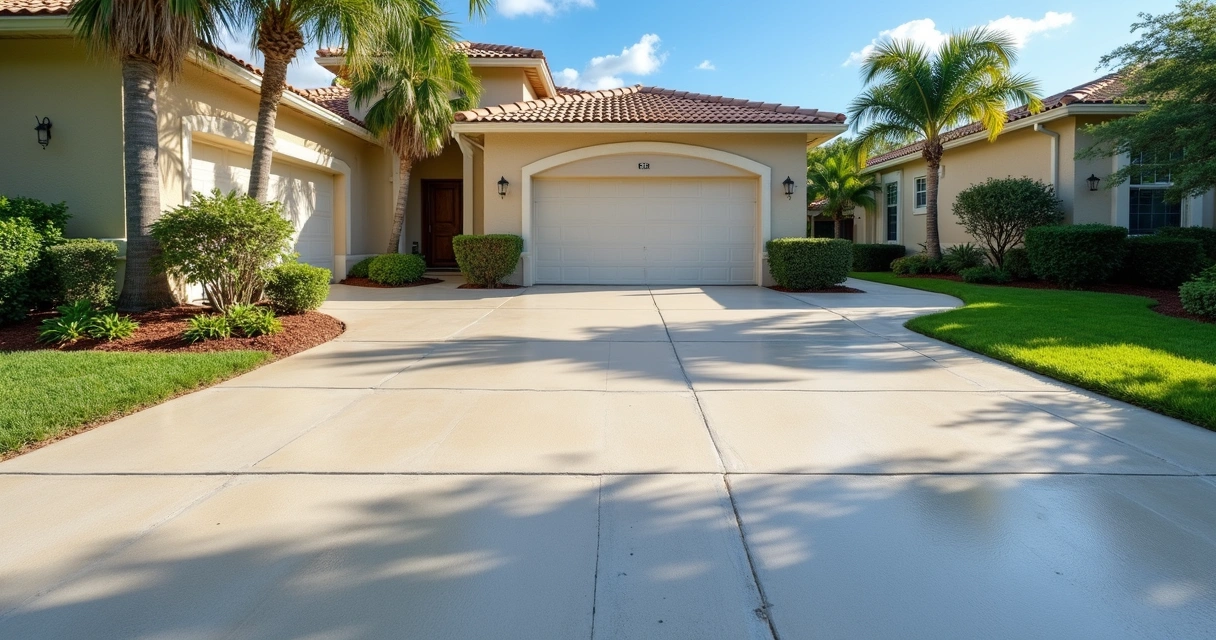
Extra tips for Florida homeowners
– Always alert your neighbors when a big pour is coming up, so cars and foot traffic stay away long enough.- Avoid landscaping or pressure washing near fresh slabs for at least a week.- Keep sprinklers off (or redirected) so your slab doesn’t stay wet and slow the cure.- For decorative work, discuss with your contractor how Florida’s humidity may affect color curing or stamping results.
Case study: A summer kitchen slab in Osceola County
Let’s share a short story from a recent project. In late May, we poured an outdoor slab for a summer kitchen in Osceola County. The customer was worried about delays, they had a party planned for the following weekend. Morning humidity was nearly 90%, but we started at 7:30 a.m., used an accelerator, and set up shade tents as the forecast warned about a sudden afternoon thunderstorm.
By covering the fresh slab right after finishing, then misting it lightly during the hottest part of the day, we got the surface to set up tight by evening. Despite an inch of afternoon rain, no surface flaws appeared, and the client was grilling burgers the next weekend as planned. Small details can make or break a schedule, especially when Florida’s weather isn’t on your side.
If your project is in a similar area, this guide to St. Cloud driveway and patio installation might be helpful.
Conclusion: Planning and patience beat Florida humidity
We understand that Florida’s humidity feels like a foe for anyone pouring concrete. But working in this climate for years has taught us that speed and quality can happily meet, as long as you use smart techniques, the right materials, and a bit of patience.
If your next project is a patio, driveway, sidewalk, or commercial slab, choosing a licensed, insured contractor like GCM Best Services helps avoid the pitfalls and headaches, and gets you back to enjoying your new space sooner.
Ready for a professional quote? 📞 (407) 250-1948 • 24–48h • Orlando, Tampa & area.
Frequently asked questions
What is the fastest concrete curing method?
Using a fast-setting mix with accelerators, keeping a dry, well-prepared base, and applying a curing compound or plastic sheeting will deliver the quickest cure without sacrificing strength. Hot air or rushing the process may cause cracks or weak spots, so balance speed with careful technique. We see best results by combining morning pours, quality admixtures, and surface protection.
How to cure concrete in high humidity?
In high humidity, minimizing excess water is most important. Use a formulated mix, cure under shade, and employ chemical curing compounds to trap the right moisture for hydration. We also recommend airflow that isn’t too strong to avoid crusting the surface. Keeping the slab covered, but ventilated, helps the inside cure while protecting from rain or dew.
Is it worth using curing compounds?
Curing compounds are a worthwhile investment for faster curing and long-term durability in humid Florida. They help the concrete keep enough moisture to gain full strength, even in unpredictable weather. We reach for them on almost every project to keep timelines on track and prevent surface defects.
What are the best tools for faster curing?
Some of our most effective tools include moisture meters to check surface dryness, quality plastic sheeting to shield from rain, gentle airflow fans, and commercial-grade curing compounds. For large jobs, humidity sensors and surface thermometers help fine-tune the timing.
How much does quick-set concrete cost?
Quick-set concrete mixes cost a little more than standard alternatives, typically $1 to $3 more per bag or a slight premium per cubic yard for ready-mix. Additives and accelerators increase the price a bit more, but they’re usually a small part of the total project cost compared to the benefits of faster turnaround and fewer weather delays. For an exact quote based on your location and timing, we recommend contacting us to discuss options.