Outdoor concrete can last decades—if we treat it right. But too often, we see good surfaces take a beating from well-intentioned cleaning methods that do more harm than help. At GCM Best Services, we’ve seen firsthand what happens when the wrong products or tools are used. If you want your driveway, patio or walkway to look good and serve you for years, you need to stop making the most common cleaning mistakes with outdoor concrete.
This is not just about stains or curb appeal. The right maintenance can prevent cracks, surface erosion, discoloration, even costly repairs. We’ll break down what you should avoid, how concrete really works in Florida’s climate, and safer methods based on expert research—including government and university guidance. Our advice comes from the field, from science, and from delivering street-to-pool perfection across Orlando and Central Florida.
Concrete is tough, but bad cleaning can weaken it fast.
Why outdoor concrete in Florida is different
We see concrete everywhere in Central Florida: driveways, patios, pool decks, sidewalks. But our region’s sun, rainstorms, sandy soils, and humidity set us apart. Surface problems here can be different from other places because our concrete faces unique pressures.
- Heat expands surfaces while humidity encourages mold, algae, and mildew.
- Florida’s heavy rains can push water—sometimes acidic—from soils or yards onto your slabs, feeding stains and surface damage or drying unevenly.
- We see white “efflorescence” (from rising salts), and iron stains from groundwater more often here than in northern states.
- Pool decks and lanais get splashed with chlorinated or saltwater, adding another layer of cleaning decision.
Long story short? Concrete in Central Florida is always under attack—from the weather, water, and biology. That’s why how you clean it—and what you should stop doing—matters so much.
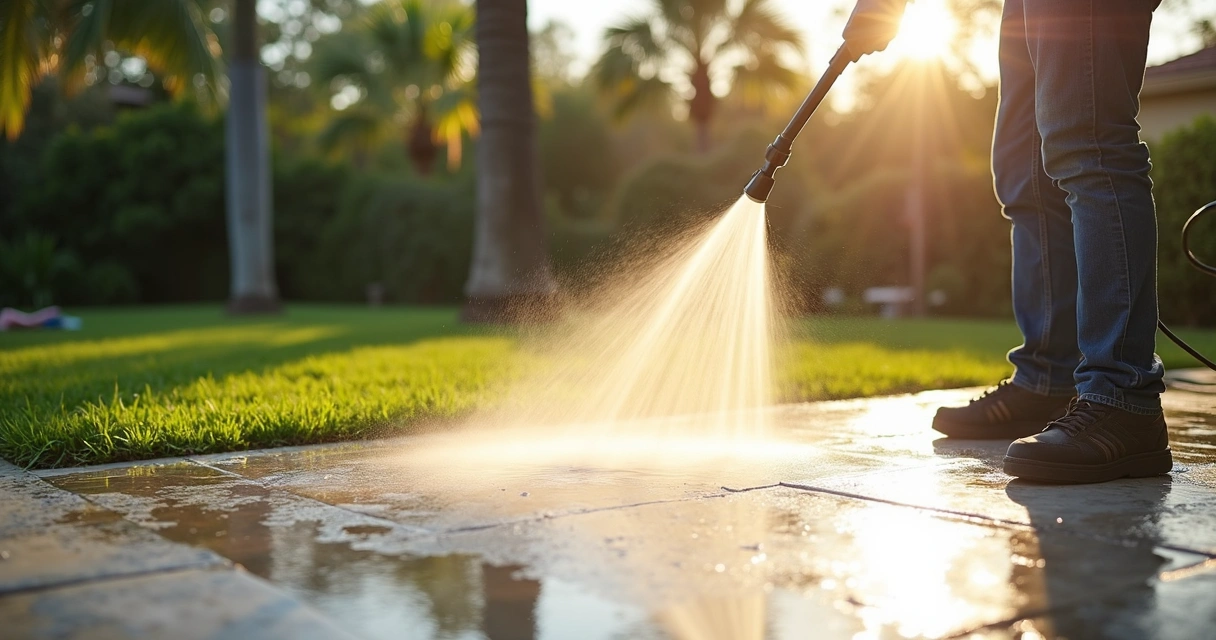
What you should stop doing when cleaning outdoor concrete
We want you to clean your driveway or patio the right way—not in a way that causes cracks, soft spots, or unsightly stains that never go away. Let’s get straight to the point: these are the cleaning habits we wish people would quit instantly.
Stop using high-pressure washers the wrong way
Yes, pressure washing can blast dirt and mildew away. But too much pressure or using a “zero-degree” tip will eat into the concrete. This strips away the densest top layer (the “cream”), exposes rough sand and aggregate, and makes future stains bond deeper. We see this “scarring” effect all over Orlando—sometimes making new concrete look old in a single afternoon.
- Never use a pressure washer above 2500 psi on outdoor concrete, and use a wide-angle tip.
- Keep the nozzle at least 8–12 inches from the surface.
- Avoid holding the spray in one place—keep it moving in a gentle, controlled sweep.
Studies from the U.S. General Services Administration stress gentle washing methods. Always test a small area before going all in.
Stop reaching for bleach or harsh acids
Sodium hypochlorite (bleach) looks like an easy fix for mold, but it’s not good for concrete. It breaks down the cement paste, fades color, and creates tiny pits. Muriatic acid, even diluted, can etch and damage concrete. After bleach or acid, rinsing is critical if you ever use them, but we do not recommend these for routine cleaning.
- Acids can soften concrete or leave burn marks if not rinsed aggressively, according to guidance from the U.S. General Services Administration and the Getty Conservation Institute.
Bleach and acids can do permanent damage… sometimes invisible at first.
Stop using metal wire brushes
Concrete seems tough enough to handle steel-bristled brushes, right? Wrong. Metal bristles scratch, gouge, and loosen surface particles. The tiny grooves fill with new dirt and make cleaning harder every time you go back.
- Use nylon or soft-bristle brushes instead.
- If you must scrub, go gentle—don’t grind.
Stop ignoring hidden stains—like oil, rust, and fertilizer burn
Many homeowners just “wash and move on.” The reality: Some stains, like oil or iron, soak deep and need special treatment before washing, or you’ll just spread them around.
- Oil stains can penetrate several millimeters below the surface; only approved degreasers will help here.
- Rust and fertilizer can etch or dye the slab permanently unless you address them quickly.
- Letting stains linger makes permanent discoloration or pits more likely.
Stop letting harsh cleaning runoff flow into soil or drains
We see this all the time after big spring cleans. Chemicals or slurry from washing flow straight into flowerbeds or stormwater drains—eventually harming local water quality or even eroding the edge of your slab.
- The University of Maryland MOST Center warns about washout and runoff: contain wastewater, avoid polluting swales and drains, and never dump cleaning wastewater on the lawn.
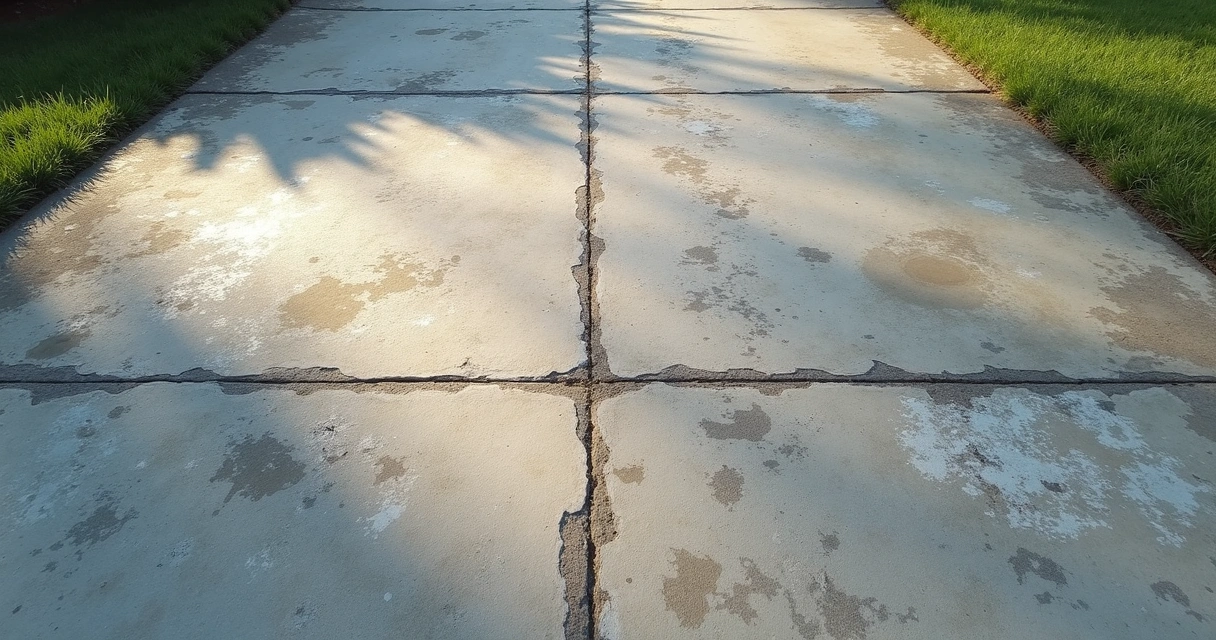
Understanding Florida concrete: Why it reacts so quickly
Outdoor concrete in Central Florida uses mixes and finishes designed for fast-draining soils and intense sun. The sub-base (6–8″ compacted sand or lime rock) plus a 3,000–4,000 psi mix is tough, but it’s surprisingly sensitive to:
- Softening from retained moisture or standing cleaning solution
- Scouring or loss of cream from abrasive techniques
- Whitening (“ghosting”) from salt, acid, or fertilizer
The Federal Highway Administration explains that diagnosis and long-term health of concrete relate not just to mix design, but to maintenance and what’s used on the surface. Poor cleaning habits can start or accelerate distress, shrinking the life expectancy of your driveway or patio.
Most “surface problems” start invisibly—beneath the layer you see.
The right way to clean outdoor concrete
Having told you what not to do, let’s give you a path to better, longer-lasting cleaning. GCM Best Services maintains and restores hundreds of concrete slabs each year, and here’s what actually works (and follows federal guidelines on historic and new concrete):
Step 1: Remove loose dirt with a broom or blower
- Avoid wetting the surface at first. Dry removal won’t force particles into cracks.
- Pay extra attention to corners, joints, and borders with grass or pavers.
Step 2: Wash with mild pH-neutral detergent and a gentle brush
- Choose mild soaps, not degreasers or citrus- or acid-based products.
- Dilute the detergent with water and gently scrub. Rinse thoroughly when done.
This is aligned with the Getty Conservation Institute’s guide for both modern and historic concrete surfaces.
Step 3: Spot-treat stains before general washing
- Use poultices or cleaning pads specifically designed for oil, rust, or grease. These often require dwell time (20–60 minutes), then gentle rinsing.
- Never “power wash” a deep stain—it just spreads it out and can drive it deeper.
Step 4: Power-wash with care (or skip it entirely)
- Set the washer to 2000–2500 psi, use a 40-degree tip, and stay moving. Hold 8–12 inches from the surface. If in doubt, don’t use the washer.
- Pressure washing is not mandatory every time you clean concrete. Many surfaces only need it once a year, or just for major soiled areas.
CDC and NIOSH guidance on power tool safety for concrete also highlights the need for proper PPE: dust mask, eye protection, gloves, and shoes that handle slipping or splashes.
Step 5: Rinse completely—then dry the slab naturally
- Standing rinse water can soak into pores and trigger efflorescence or scaling if left for hours, especially at dusk when humidity spikes.
- If possible, clean on a breezy morning and allow the slab to dry before dark.
Common myths about outdoor concrete cleaning
We’ve been asked pretty much every cleaning question you can imagine. Let’s set the record straight on a few myths that always come up:
- “Concrete is indestructible—just use strong cleaners.” In reality, chemical residue and rough scrubbing can erode the slab and trigger color problems.
- “More pressure means better cleaning.” Actually, high-pressure can cut grooves, break off the cream, and reduce the lifetime.
- “Bleach will solve all mold and algae forever.” Bleach can actually increase surface vulnerability and fade colored finishes.
- “Any brush will work on concrete.” Metal or ultra-stiff brushes shorten the time until you see rough patches or new stains.
What to use and how often should you clean?
Orlando homeowners often ask: how much is too much? The key is gentle, regular cleaning—not blasting or scrubbing harshly every month.
- For driveways or high-traffic patios: Sweep weekly, wash every 2–3 months.
- Spot-treat stains as soon as you notice them—not on a fixed schedule.
- Pressure wash yearly if needed, but never more unless heavy buildup returns quickly.
- Pool decks may need extra rinsing after storms or heavy pool use.
We always check the finish integrity before recommending any new round of cleaning. If you’re restoring color, prepping for paint, or seeing cracks, pause the cleaning and talk to a professional. The right maintenance can help prevent larger problems—read more about how to prevent cracks in Florida concrete patios and driveways or find a qualified concrete repair guide here.
Don’t rely on a “miracle” product—good surfaces are built by gentle hands, not shortcuts.
When professional help is needed
Even with careful cleaning, some issues are beyond what DIY can solve—deep oil stains, rust from irrigation, major mold blooms or what looks like surface “delamination.” At that stage, a licensed, insured contractor like GCM Best Services should check the slab. We use specialized stain removers, mechanical grinding (with full silica-control per NIOSH recommendations), or, if needed, surface sealing or repair.
- We include photographic documentation, drainage checks, and warranty-backed restoration on all projects.
- Our approach always meets local permit, HOA, and inspection standards.
If you’re ready to restore, upgrade or re-coat a concrete surface, see our guide on all things concrete, or check out how to choose a reputable company in Orlando.
How GCM Best Services supports long-term concrete health
We believe that every homeowner and business in Central Florida deserves better answers about their concrete, not just a stack of warnings. Concrete can stay strong and attractive for decades—if you treat it right from the start. That’s why:
- We install, repair, and maintain concrete following best practices for Florida’s soils, sun, and drainage.
- All work includes guidance on safe maintenance tailored to your finish, location, and use.
- We integrate permitting, inspection, and warranty support—so you don’t have to guess about cleaning or repairs.
If you’re planning new projects—driveway, patio, pool deck, or pathways—check out our practical installation guide for St. Cloud and the region. For long-term appearance and value, nothing matters more than using the right methods from the start.
Conclusion: Protect your investment the right way
Concrete is strong. But it’s not indestructible. Over years of restoring and building concrete across Orlando and Central Florida, we’ve learned that most surface problems are caused by a handful of cleaning mistakes: too much pressure, harsh chemicals, wrong tools, or simply forgetting about stains for too long. The right approach isn’t harder or more expensive—it’s gentler, smarter, and safer for Florida’s unique environment.
Avoid the mistakes we’ve covered, and your concrete will not only look better, it will last longer. And if you need professional help, GCM Best Services stands ready with local knowledge, trusted processes, and a warranty you can count on.
Cleaning smarter, not harder, makes concrete last for years to come.
Ready for a professional quote? 📞 (407) 250-1948 • 24–48h • Orlando, Tampa & area.
Frequently asked questions
What is the best way to clean concrete?
The safest way to clean outdoor concrete is to sweep away loose debris, then use a mild pH-neutral soap or detergent with a soft bristle brush. Rinse thoroughly with clean water. For stubborn stains, spot treat with an appropriate cleaner first. Pressure washing is optional, but if you do it, keep the setting below 2500 psi with a wide-angle tip and hold it a foot from the surface, moving in a steady, sweeping motion. Harsh acids and metal brushes are not recommended for routine cleaning.
Can I use bleach on outdoor concrete?
Bleach (sodium hypochlorite) can kill algae and mold, but it often does more harm than good. It can weaken or discolor concrete, leave residue, and—even if well-rinsed—may harm your landscaping or local drainage. If used at all, it should be very diluted, rinsed immediately, and only for spot treatments, never for general cleaning. There are safer alternatives for most common issues.
How often should I clean concrete surfaces?
For most homes in Central Florida, sweeping weekly to remove grit and washing with gentle soap every 2–3 months will maintain both appearance and surface integrity. Pressure washing is best reserved for annual or biannual deep cleans, or when there’s heavy buildup. Do not overclean—this can actually shorten the life of the slab.
What cleaning products damage concrete?
Products to avoid include harsh acids (like muriatic or hydrochloric acid), bleach, industrial degreasers not approved for concrete, or products containing ammonium compounds. Citrus-based and solvent-based cleaners can etch or discolor concrete if left on too long or not rinsed fully. Stick to pH-neutral soaps designed for masonry.
Is power washing concrete surfaces safe?
It can be—but only when done carefully. High-pressure washing with the wrong tip or held too close will erode the surface, scar the finish, and open pores to future staining. Always use the lowest pressure needed to remove dirt, a wide (30–40 degree) tip, and keep the nozzle moving at least 8–12 inches away from the surface. Avoid power washing “just because”—gentle cleaning is often enough.
Your enticle helped me a lot, is there any more related content? Thanks!